

In July 2026, two private missions were launched into space with the aim of extending the operational life of satellites in geostationary orbit. Instead of replacing a multimillion-dollar spacecraft with depleted fuel tanks, an external propulsion system is installed on it. The technological approaches differ, but the goal is the same, and demand for such services is growing rapidly.
A Space Mechanic
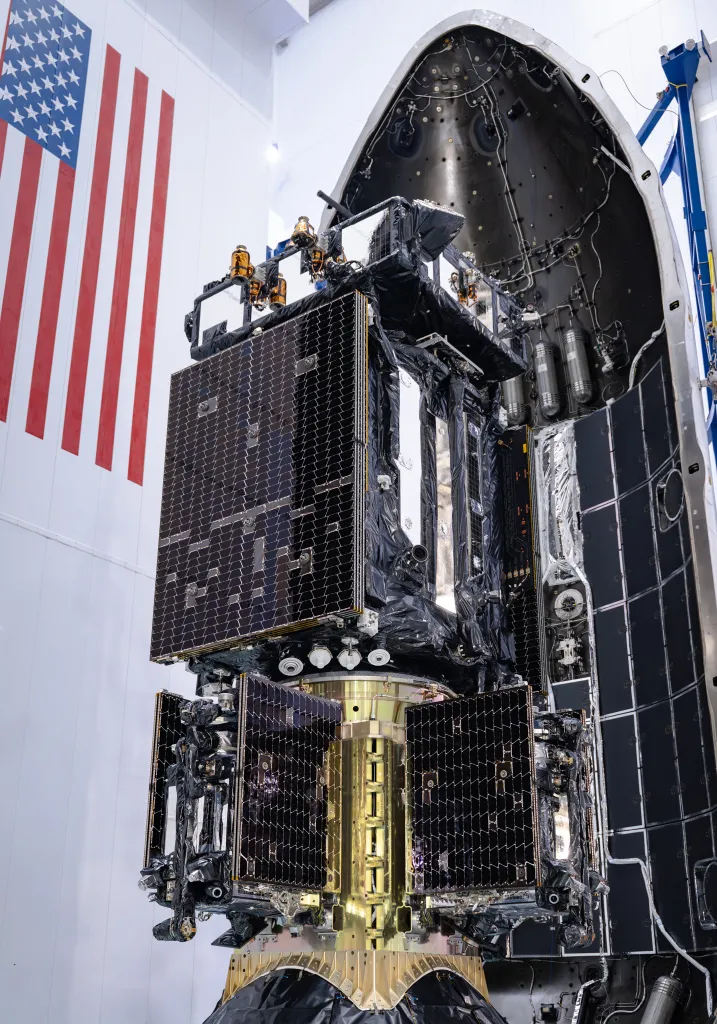
The Mission Robotic Vehicle (MRV) is comparable in size to a minivan, while its nine-meter robotic arms are capable of capturing modules and attaching them to a satellite’s body. It was developed by Northrop Grumman through its subsidiary SpaceLogistics, SpaceNews reports.
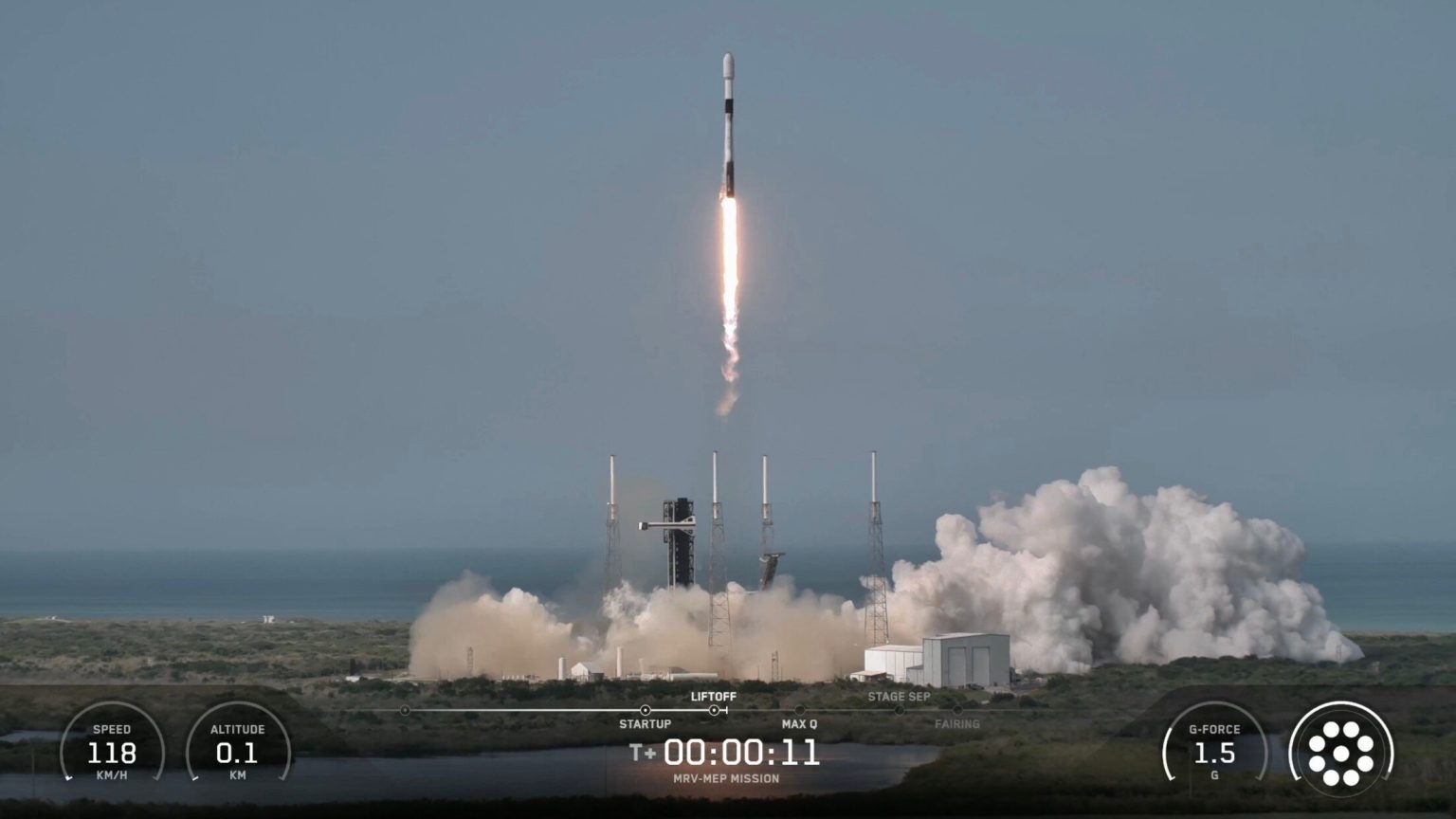
A Falcon 9 rocket lifted off on July 21 from the U.S. Space Force base at Cape Canaveral carrying the MRV and three propulsion modules. The spacecraft were placed into geosynchronous transfer orbit, from which they will independently travel to geostationary orbit, located approximately 36,000 kilometers above Earth. They are expected to reach their operational positions by mid-2027.
An Installer Instead of a Permanent Tug
Once there, the MRV will operate as a mobile installer. It will first collect one of the three Mission Extension Pods, or MEPs, each approximately the size of a washing machine, approach a customer’s satellite, and attach the module to a structural ring at the rear of the spacecraft.
It will then proceed to the next satellite. The customers—Intelsat, with two orders, and Australia’s Optus, with one—expect each spacecraft to receive approximately six additional years of operation.
A Propulsion Module Without Fuel Transfer
The purpose of the MEP is not to refill the satellite’s fuel tanks. Instead, the module uses xenon-powered electric thrusters to maintain the spacecraft’s orbital position and assist its attitude-control system. No fuel is transferred.
This solution saves operators tens of millions of dollars that would otherwise have to be spent on replacing the satellite.
It is the modular architecture that distinguishes the MRV from its predecessors. Northrop Grumman previously launched two Mission Extension Vehicles that docked with satellites and remained attached to them for years.
The new platform operates differently. After installing a module, the MRV travels to another customer. It is designed for approximately 15 years of operation. The robotic system was developed with the participation of DARPA under the Robotic Servicing of Geosynchronous Satellites program, with the government agency funding the development of the robotic arms.
Rescue of the Swift Gamma-Ray Observatory
Meanwhile, another private company, Katalyst Space Technologies, is preparing to rescue the Neil Gehrels Swift Observatory, which NASA launched in 2004. Because of increased solar activity, the observatory is losing altitude faster than usual and could fall as early as this autumn, according to Phys.org.
The Link spacecraft, launched on July 3, is expected to raise Swift back to its original altitude of 600 kilometers. NASA will pay $30 million for the operation, significantly less than the cost of building a new gamma-ray telescope of the same class.
Link is already overcoming initial communications and navigation difficulties, while specialists are transmitting software fixes to the spacecraft. If the maneuver succeeds, the telescope, valued at approximately $400 million, will be able to continue studying the most powerful explosions in the Universe for many years instead of becoming debris in the atmosphere. Northrop Grumman provided Link with a Pegasus rocket for its launch into orbit.