

In 2028, the European Space Agency (ESA) plans to send the ExoMars Rosalind Franklin rover, assembled by Airbus in Stevenage, UK, to Mars. The spacecraft is expected to arrive at the Red Planet in 2030. The rover’s main mission is to answer the question of whether life beyond Earth ever existed and whether we and hypothetical Martian life might share common origins.
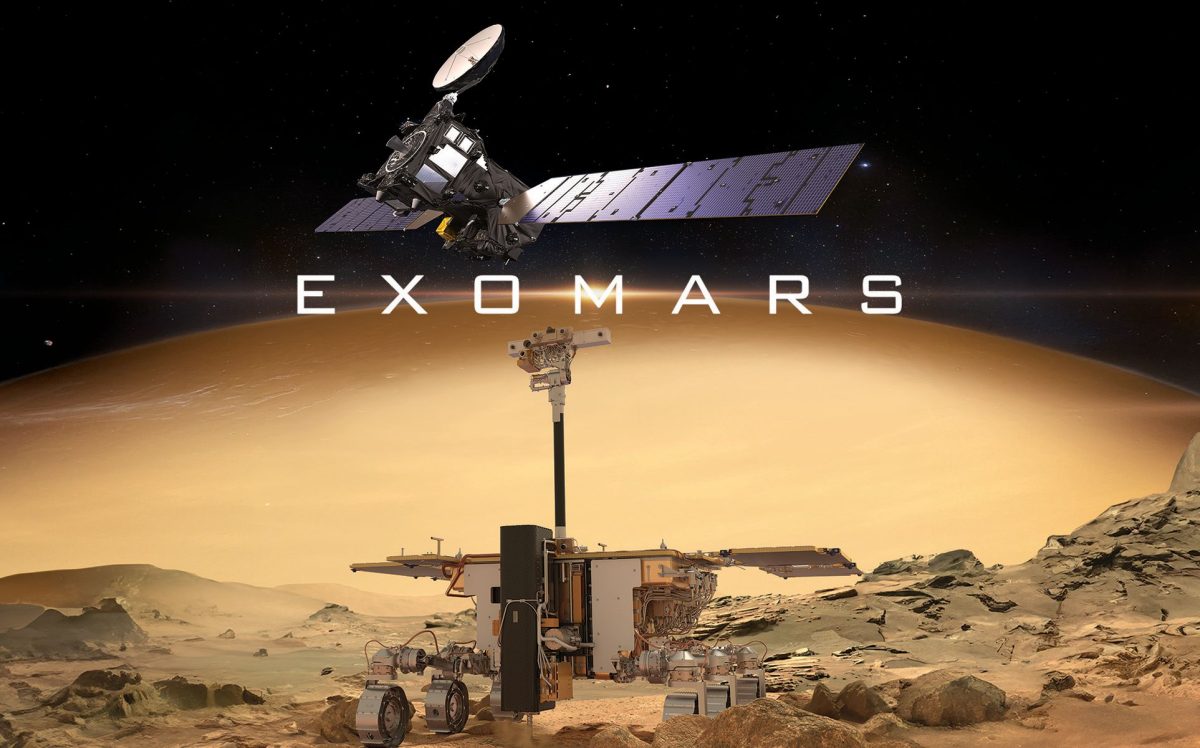
The main technological advantage of Rosalind Franklin will be its unique drill, capable of penetrating up to 2 m beneath the surface.
All previous Mars rovers studied samples taken from the surface or from only shallow depths. However, the Martian surface has been continuously bombarded by solar and cosmic radiation for billions of years, destroying any organic material. At a depth of 2 m, rocks have remained untouched and protected from radiation.
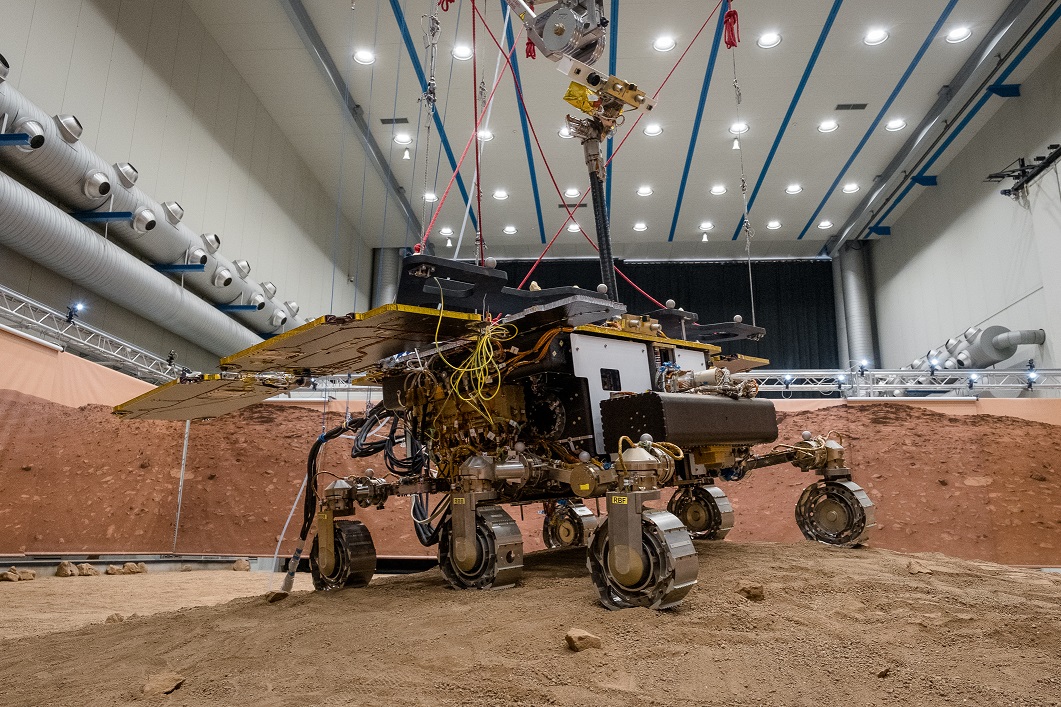
Scientists do not expect to find living organisms. The rover’s goal is to detect biosignatures: chemical, molecular, or structural traces of ancient biological activity from the time when Mars was wet and habitable.
Panspermia and Common Ancestors
One of the mission’s most important questions concerns the panspermia hypothesis. During the early stages of the Solar System, around 3.8–4.1 billion years ago, Earth and Mars experienced intense meteorite bombardment. Rocks blasted into space by powerful impacts could have traveled between the planets.
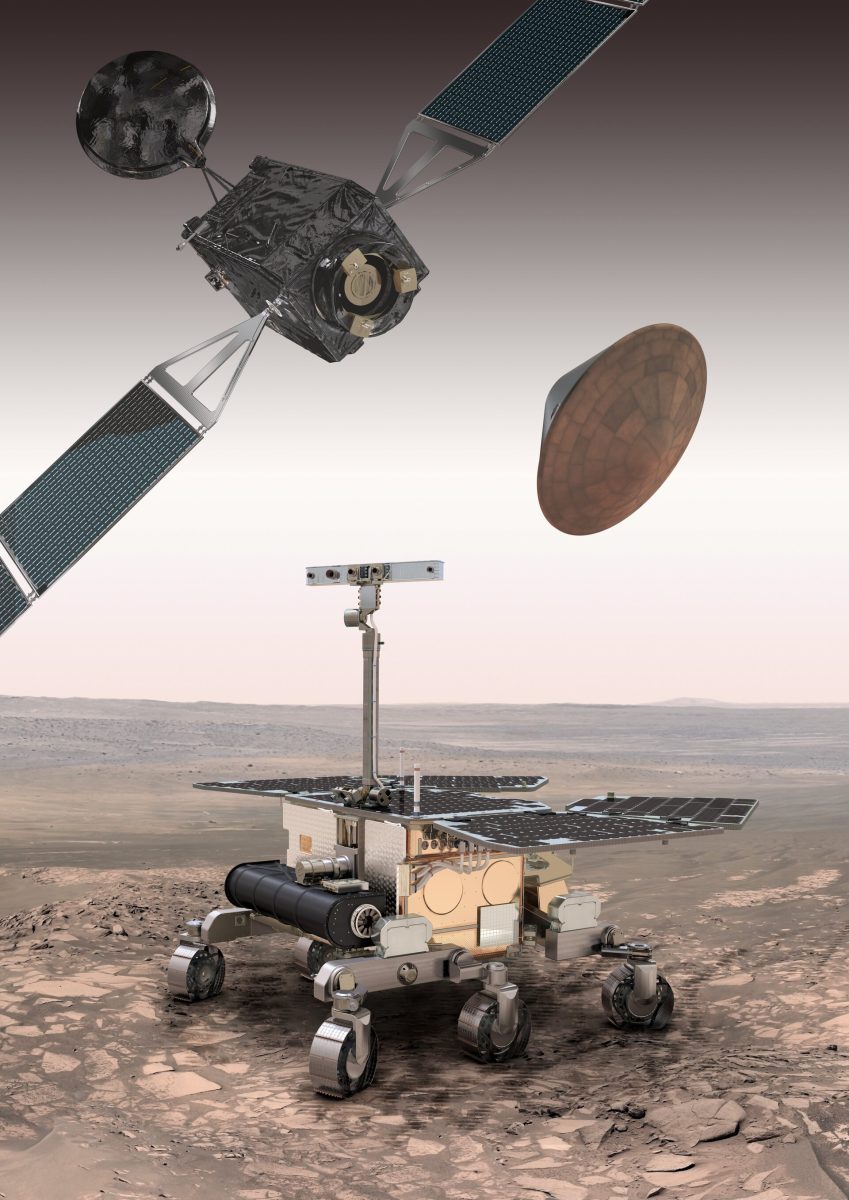
According to Professor of Planetary Mineralogy Susanne Schwenzer, if Martian biosignatures turn out to be similar to those on Earth, this could indicate the existence of a common ancestor. If, however, life on Mars is found to have emerged independently, it would show that biology in the Universe is a natural and widespread phenomenon when suitable conditions are present.
Oxia Planum
The rover will land near the equator in the Oxia Planum region. This location was chosen because of its rich deposits of ancient clay, which formed under prolonged exposure to water about 4 billion years ago. Clay minerals are excellent at preserving organic compounds.
To select the exact drilling site, the rover will use an entire suite of instruments:
- a panoramic camera from University College London to analyze the terrain;
- an infrared spectrometer from Aberystwyth University to determine mineral composition;
- a subsurface sounding radar to assess rock layers before the drill penetrates them.
Independent Decisions from Millions of Kilometers Away
Real-time control of the rover is impossible. A radio signal from Earth to Mars takes between 4 and 21 minutes, depending on the relative positions of the planets. Because of this, Rosalind Franklin will have a high level of autonomy.
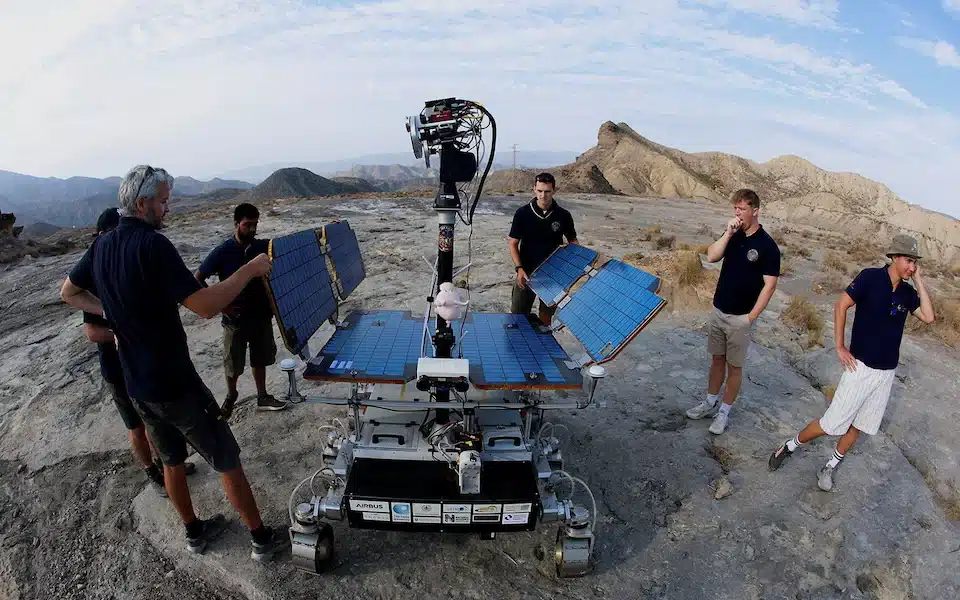
The control center in Turin, Italy, will send general instructions, but the rover will independently avoid obstacles, choose its route, and carry out drilling. Engineers are currently testing autonomous driving and soil-sampling algorithms in Spain’s Tabernas Desert, whose dry terrain closely resembles that of Mars.
Previously, we explained why humanity is searching for life on Mars.
Based on materials from Daily Galaxy