

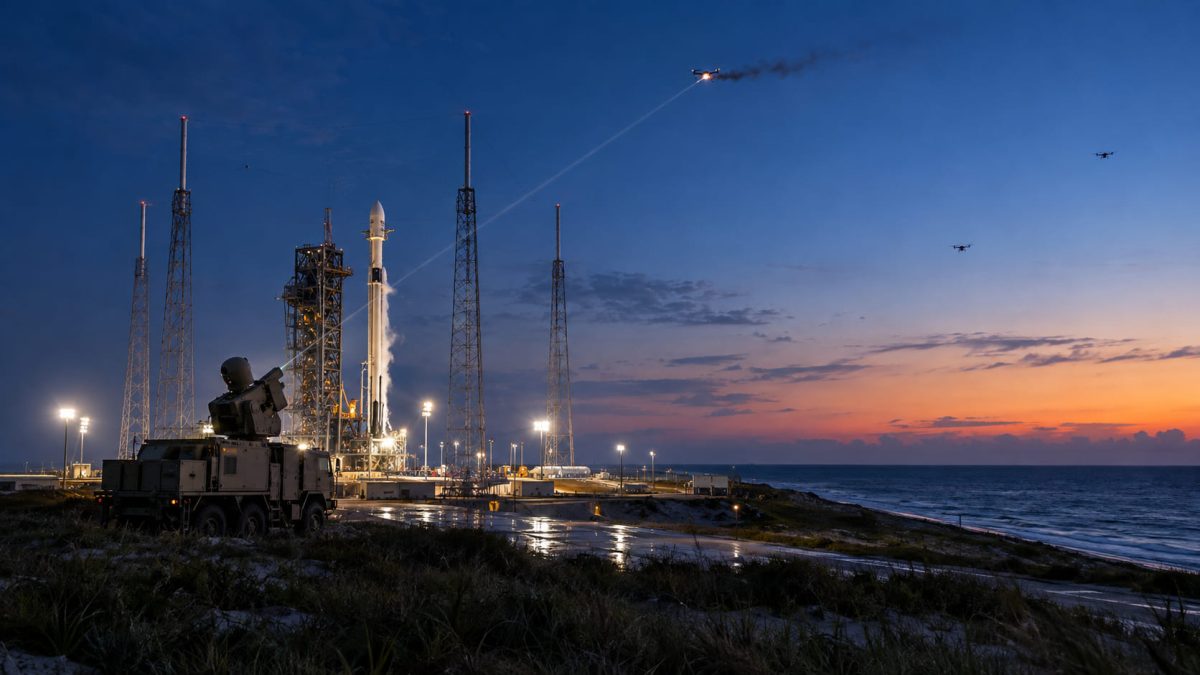
The busiest U.S. spaceport is expanding its counter-drone defenses beyond jamming to include systems capable of physically destroying unmanned aircraft. The military is bringing electronic jamming, automated airspace surveillance, and weapons together into a unified defense system. The upgrade comes amid an increasingly busy launch schedule and unauthorized drone flights in the area.
The Spaceport’s Launch Tempo
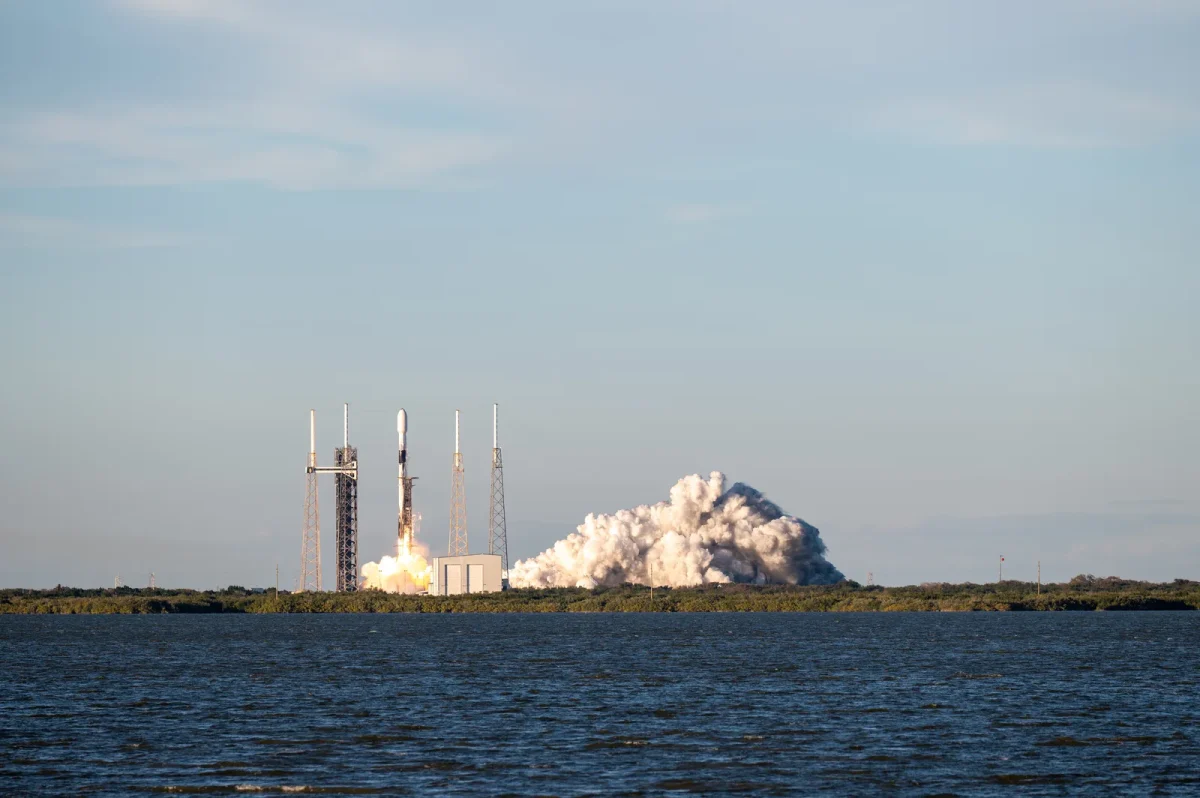
According to DroneXL, Cape Canaveral supported 109 orbital launches in 2025. Col. Brian Chatman, commander of Space Launch Delta 45, which oversees U.S. Space Force launch operations at the Cape, believes the Eastern Range could support more than 300 such missions annually. The range includes the radar and communications infrastructure used to track vehicles as they fly over the Atlantic Ocean.
Last year’s launch rate averaged roughly one liftoff every 80 hours. At 300 launches a year, that interval would shrink to approximately 29 hours, with rockets taking off almost daily.
From Jamming to Destruction
The first phase of the upgrade was announced in December 2025. According to Breaking Defense, the unit announced a multimillion-dollar radio-frequency counter-drone system designed to disrupt drone control links without interfering with civilian aircraft.
A laser works differently. Instead of disrupting radio communications, a directed-energy weapon physically destroys the drone in flight. Chatman discussed plans for the system with Florida Today in September.
The spaceport is also due to receive new equipment from the Pentagon’s Joint Interagency Task Force 401. Neither the military nor the task force has disclosed what that equipment will be.
Radars for Smaller Targets
The spaceport’s existing radars can reliably track aircraft ranging from a light Cessna to much larger planes. Chatman told Defense One on September 18 that he needs coverage extending from a Boeing 747 down to a quadcopter.
Lattice, a software platform developed by defense company Anduril, is intended to help close that gap. It combines information from military radars and other sensors into a single three-dimensional picture, automatically detecting and tracking drones and coordinating a response.
Lasers in Civilian Airspace
The use of military lasers in U.S. airspace has a short and troubled history. In February 2026, a Pentagon laser shot down a U.S. Customs and Border Protection drone near El Paso. The Federal Aviation Administration cleared military use of such systems in U.S. airspace in April.
Next to the spaceport lies Port Canaveral, which handles cruise ships, defense cargo, and spacecraft components. Port officials reported more than 500 unauthorized drone flights over the port in 2025, including flights filming rocket launches from above. The port authority has not published the criteria it used to classify a drone flight as an incursion.
