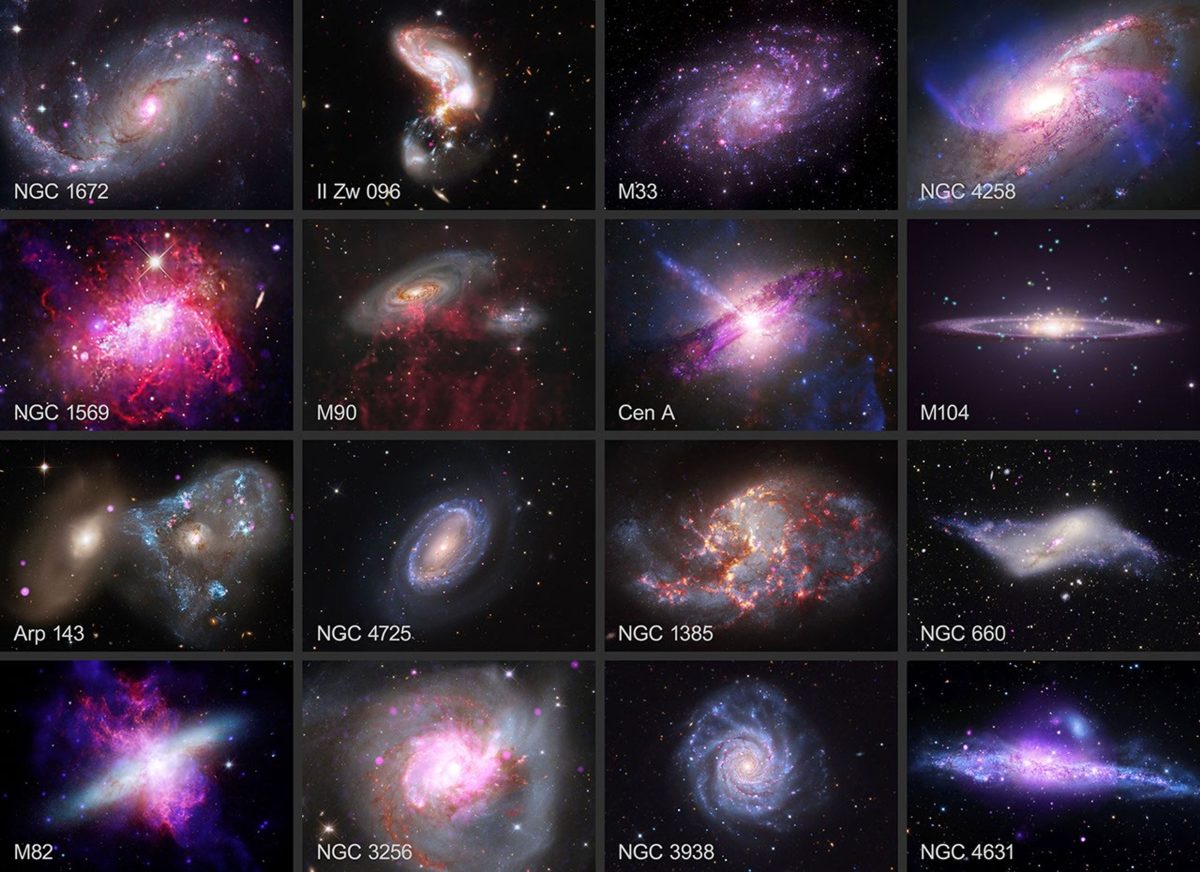
Galaxies are often compared to cosmic jewels. They are enormous collections of stars, gas, dust, and dark matter, with each system having its own unique structure and history. NASA’s Chandra X-ray Observatory, together with the James Webb, Hubble, NuSTAR, and IXPE telescopes, has presented a new gallery of 16 processed images revealing hidden energetic processes in the Universe.
The gallery features a collection of 16 images of galaxies obtained with the Chandra telescope and other telescopes. Source: NASA/CXC/SAO
While most observatories detect only visible light, Chandra operates in the X-ray range. This makes it possible to see extreme phenomena: gas heated to millions of degrees by stellar winds and supernova explosions, as well as gigantic outflows of matter. These processes disperse heavy elements throughout space that are necessary for the formation of new planets and life.
From Classical Spirals to Stellar Factories
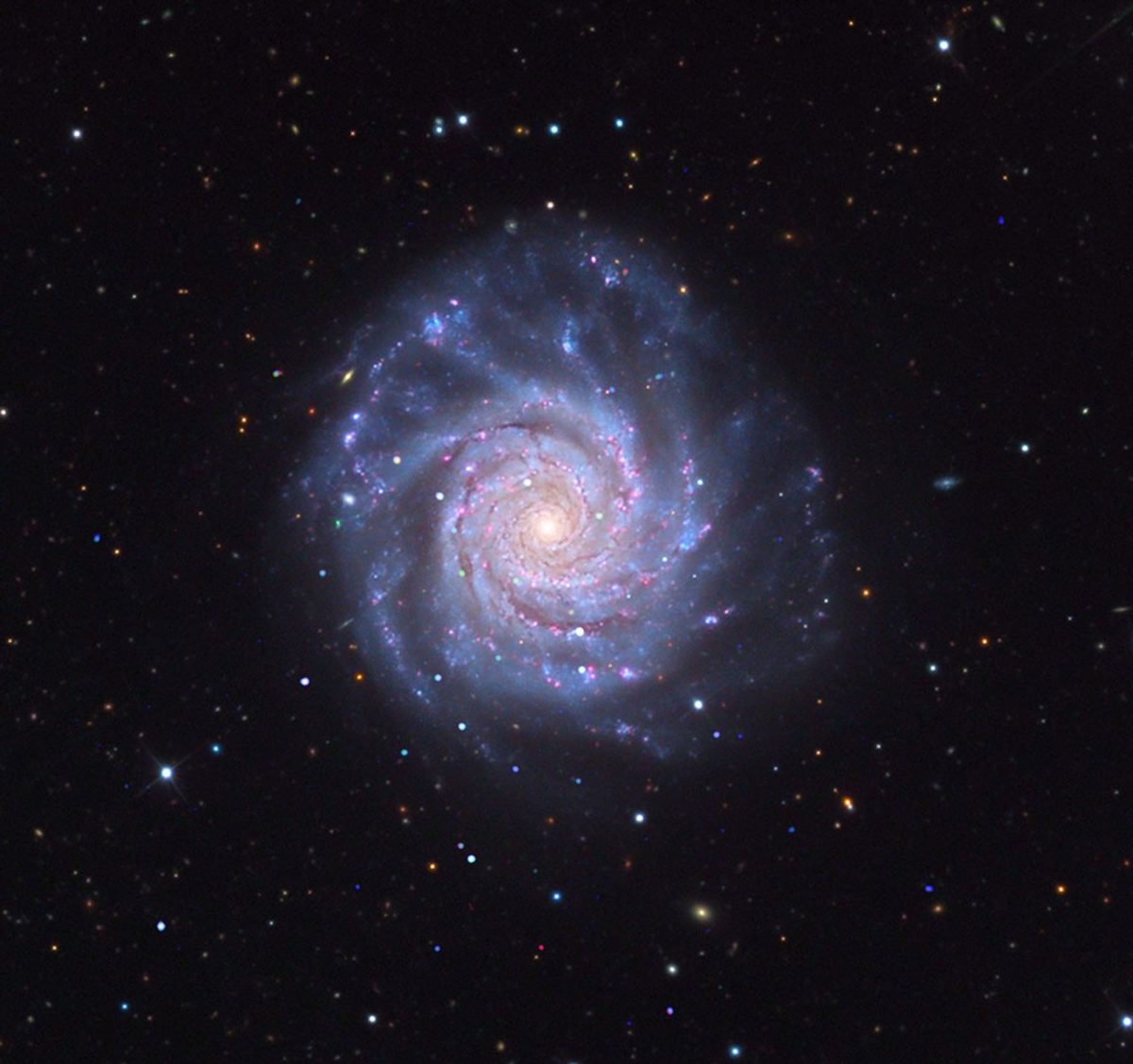
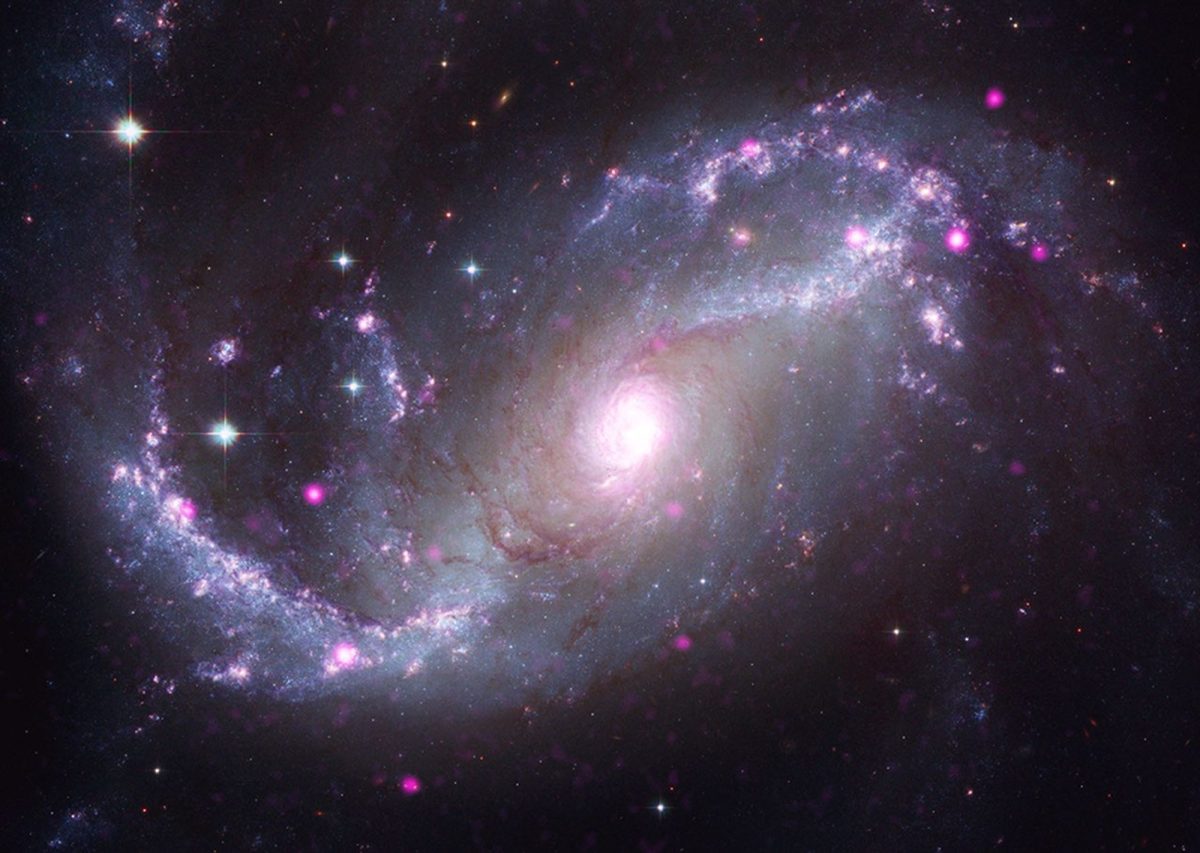
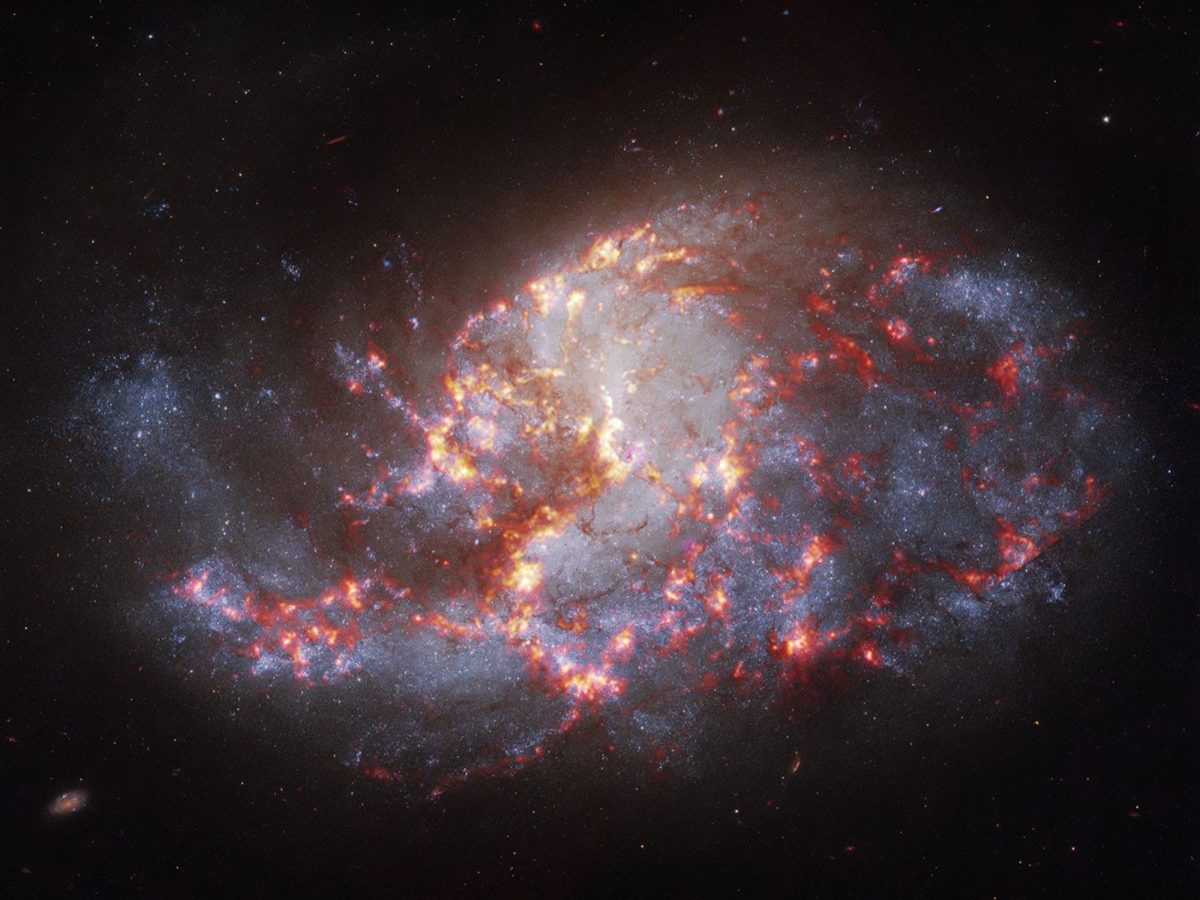
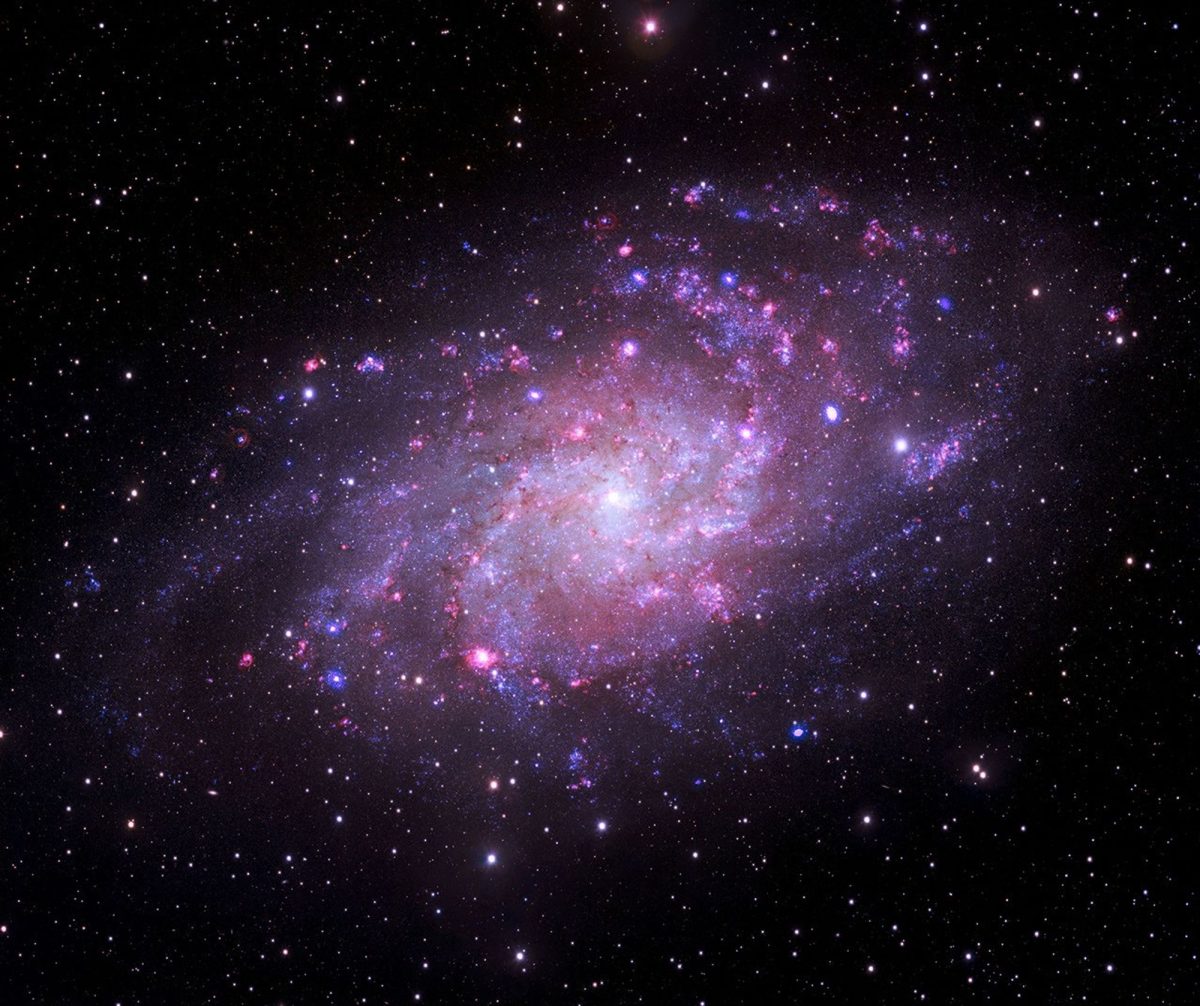
Astronomical classification divides galaxies into spiral, elliptical, and irregular types. The new images emphasize this diversity. For example, in the face-on spiral galaxies Messier 33 and NGC 3938, X-rays highlight bright stellar pairs and remnants of explosions in their arms. In barred galaxies NGC 1672 and NGC 1385, central structures channel gas toward the nucleus, triggering bursts of star formation.
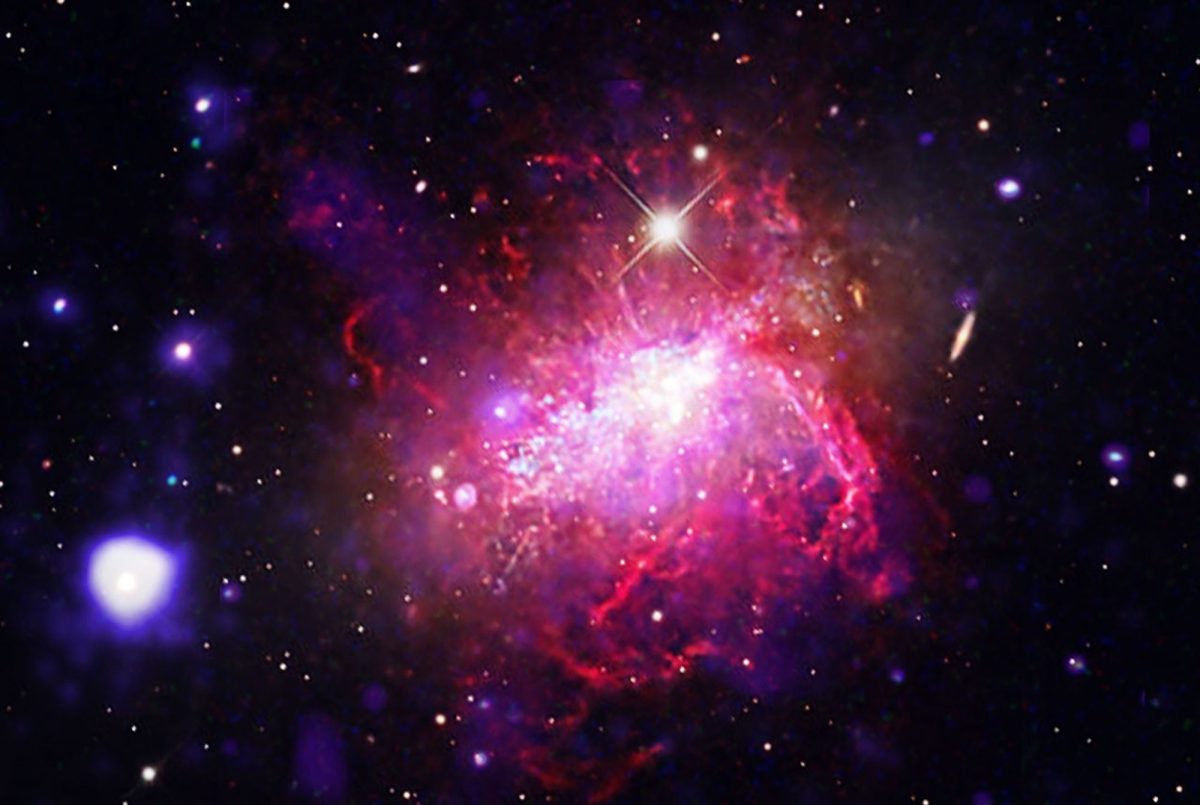
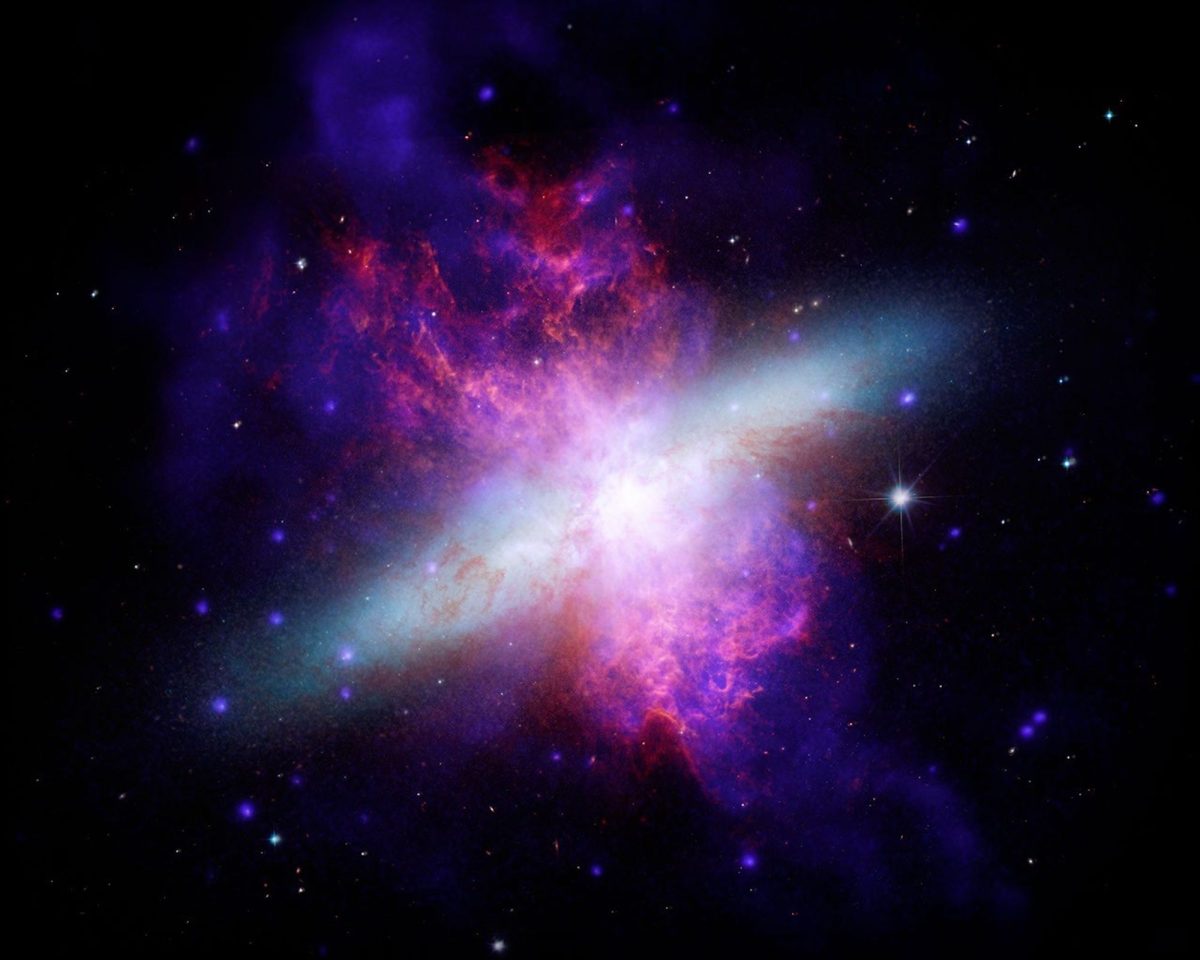
Edge-on spiral galaxies such as NGC 4631 and Messier 82 demonstrate so-called superwinds. These are enormous clouds of gas with temperatures of millions of degrees that are pushed thousands of light-years into space by the pressure of stellar explosions, enriching the intergalactic medium.
The Hearts of Central Monsters
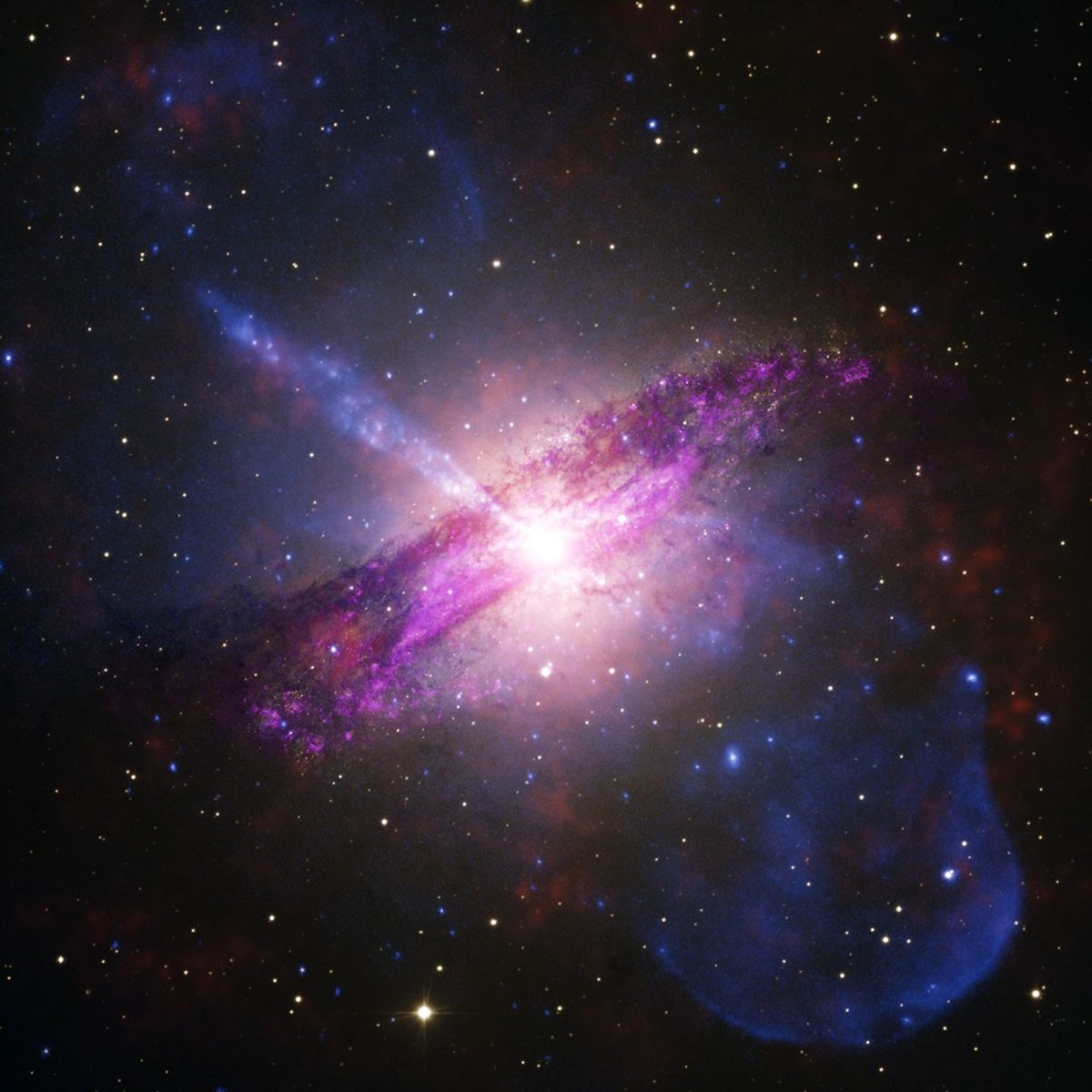
At the centers of many galaxies are active nuclei — supermassive black holes consuming surrounding matter. In Centaurus A, combined data from Chandra and IXPE captured a powerful jet of particles extending for tens of thousands of light-years.
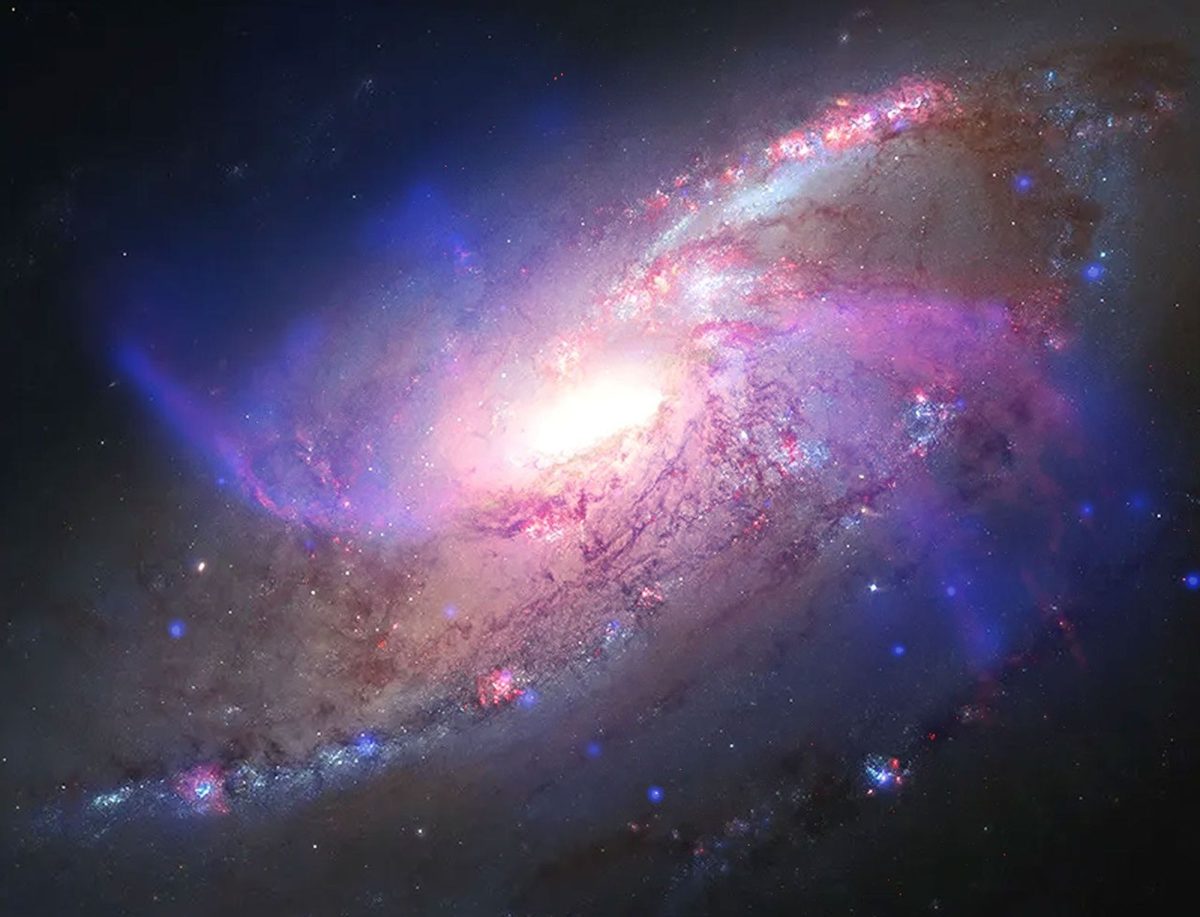
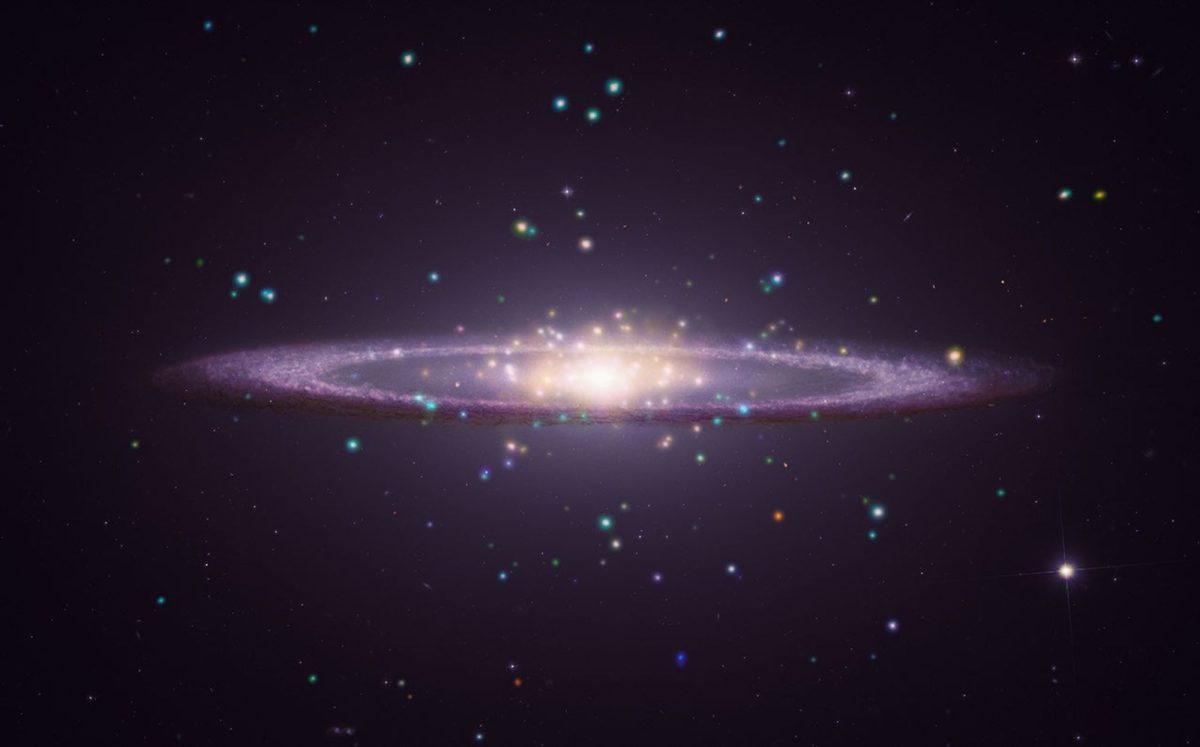
In the Messier 106 system, the black hole heats the surrounding gas, forming anomalous spiral arms unlike ordinary stellar structures. And in the Sombrero Galaxy (Messier 104), the supermassive object is surrounded by a diffuse gas halo with a temperature of about one million degrees, enveloping its famous dust lanes.
Cosmic Collisions and Rare Transformations
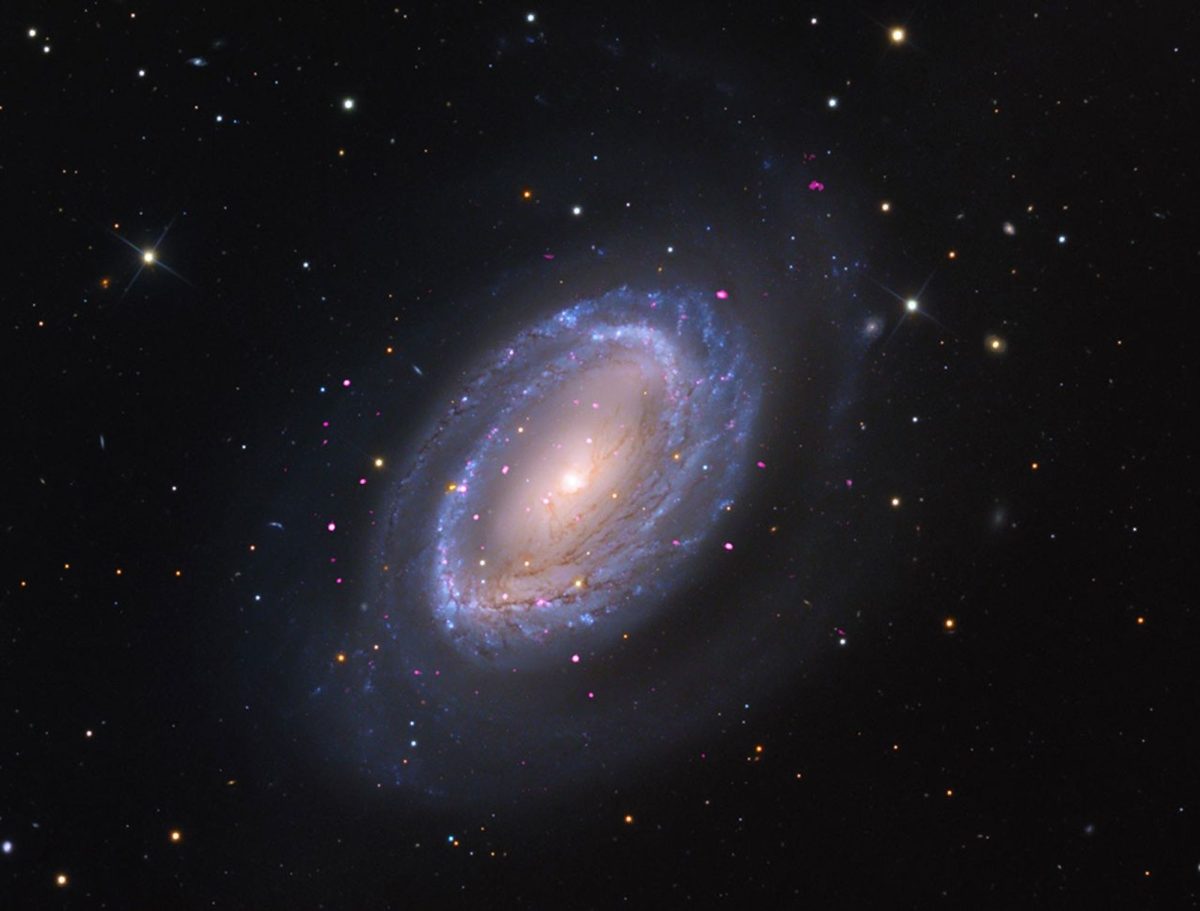
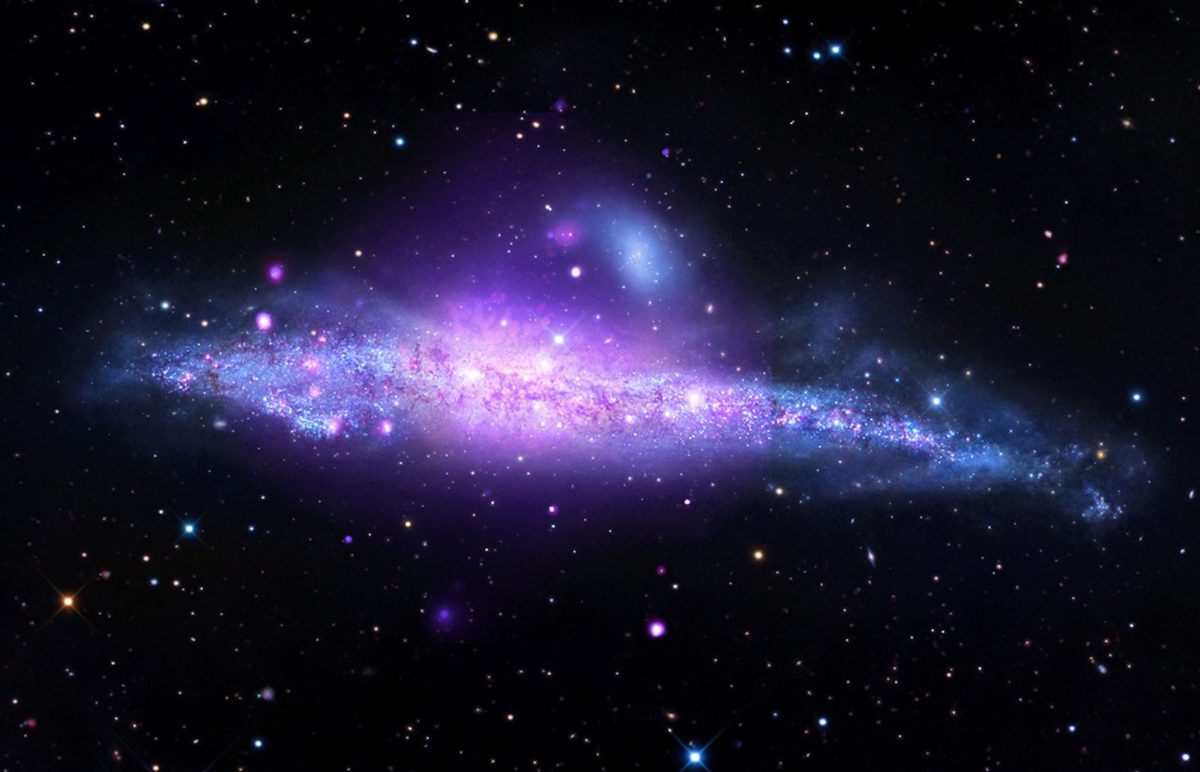
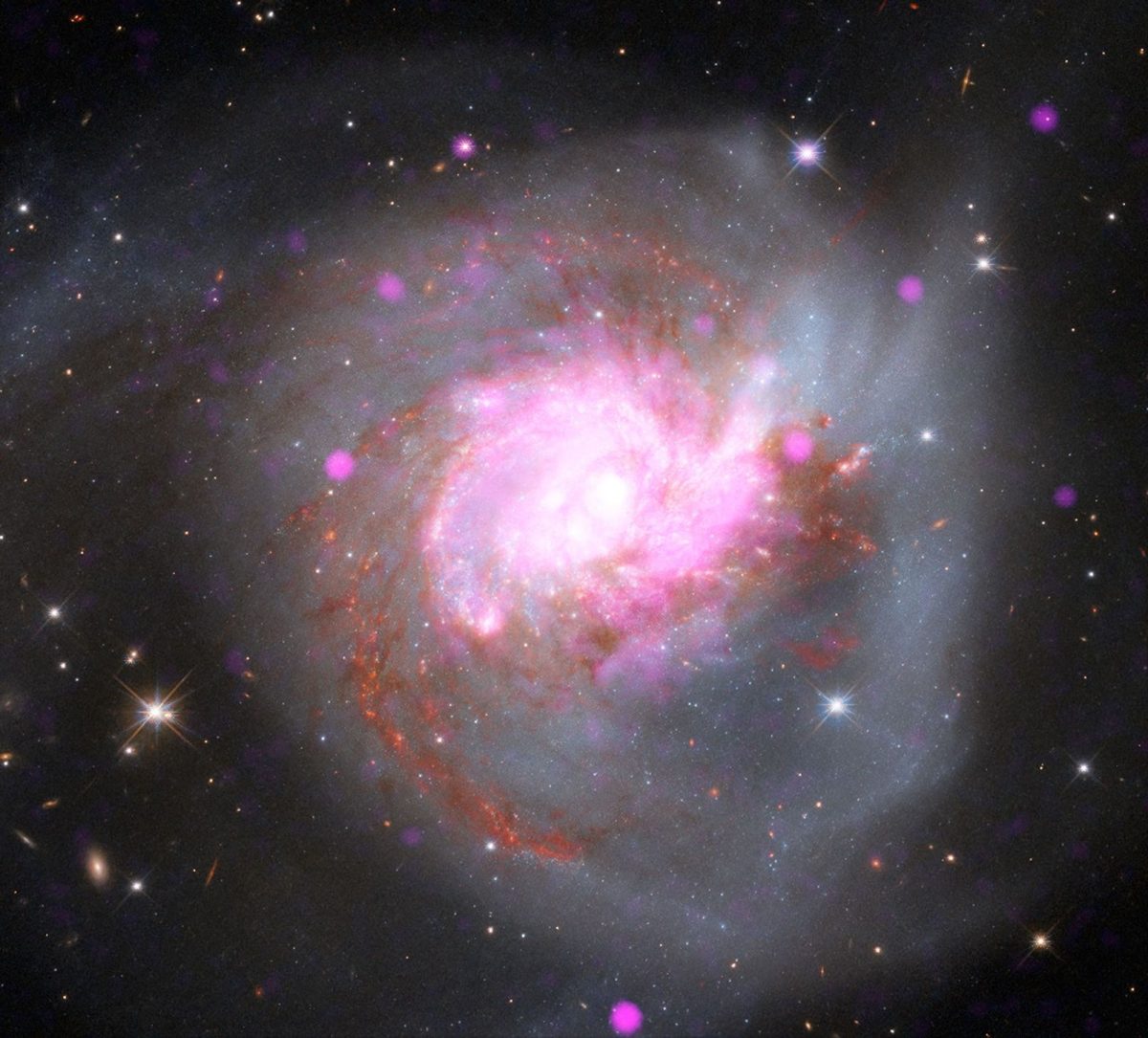
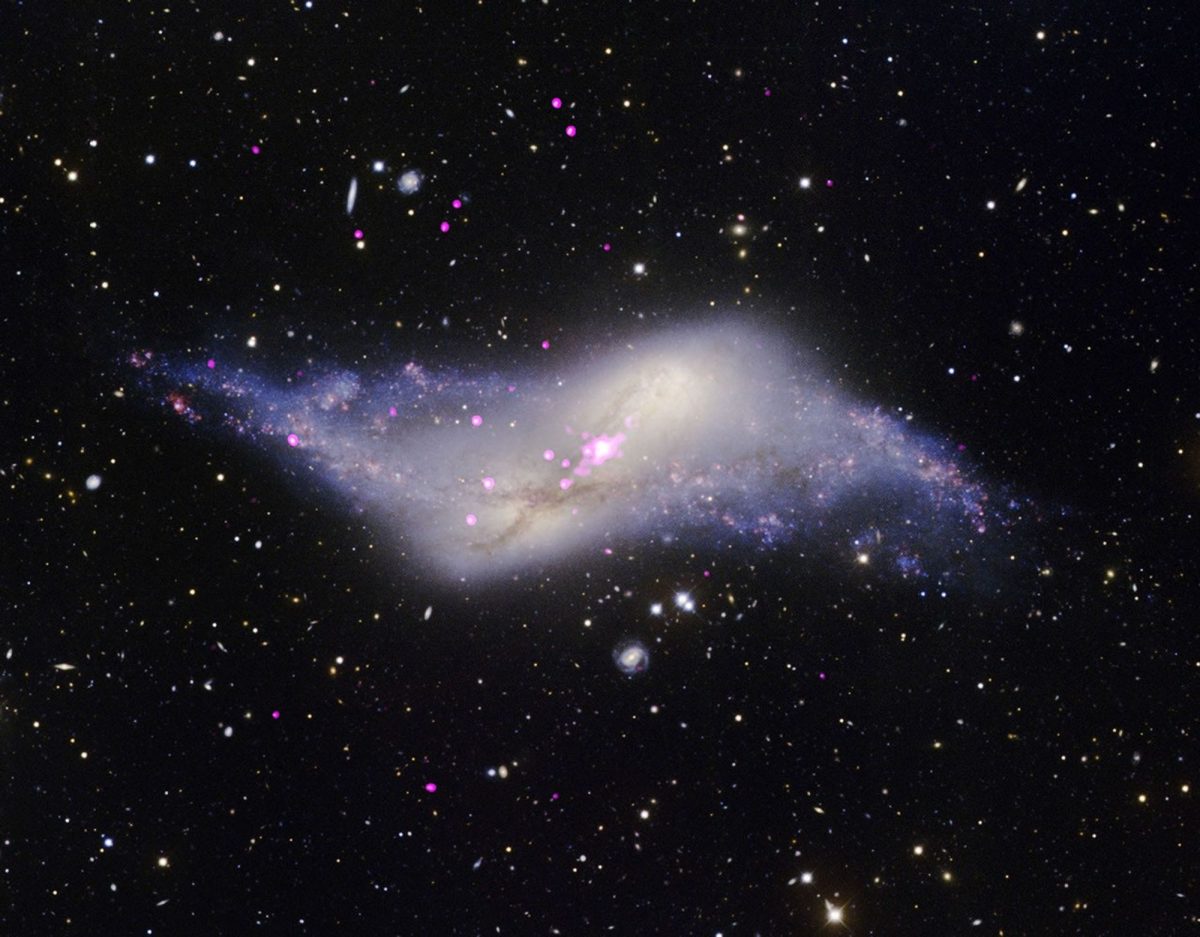
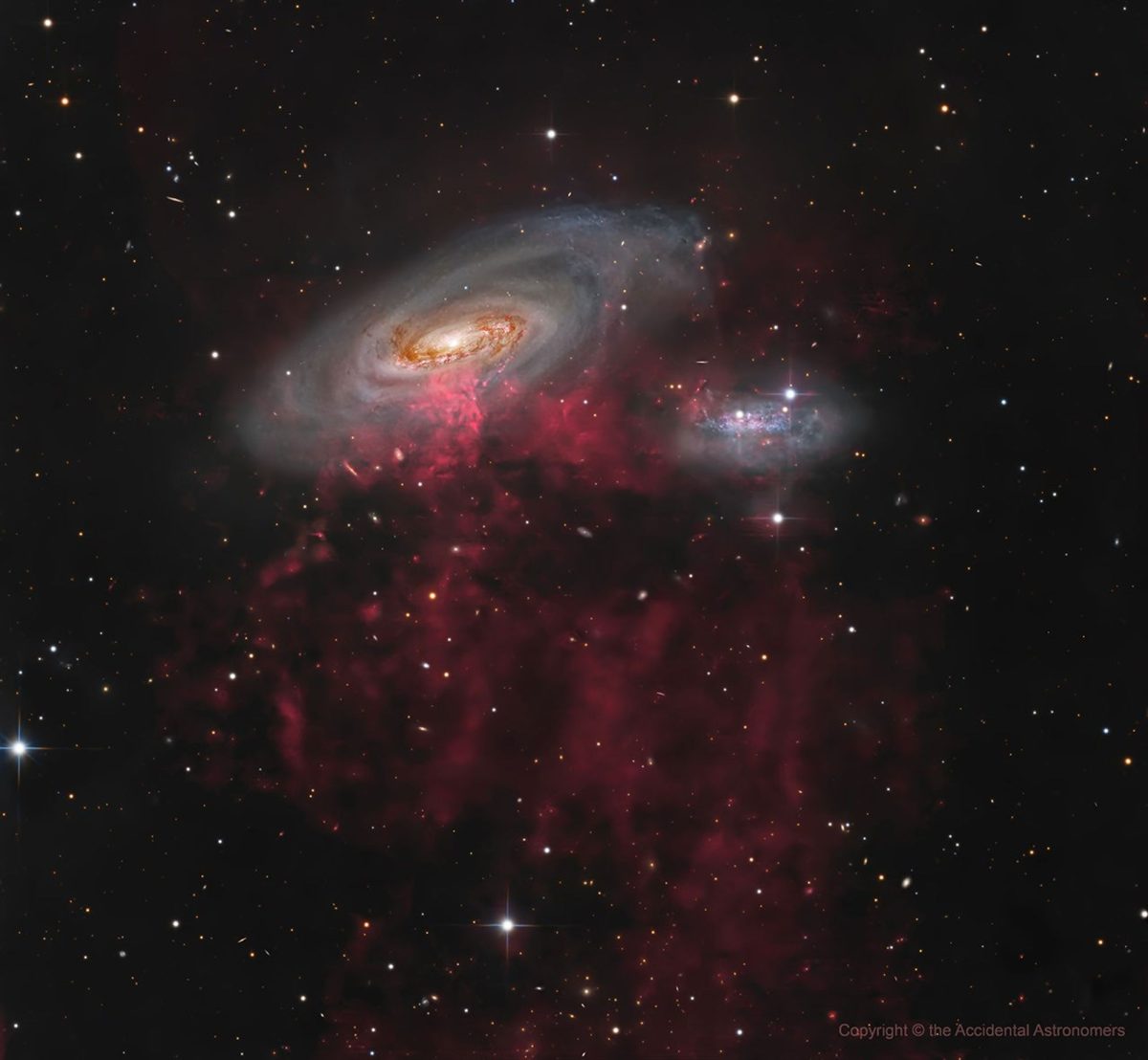
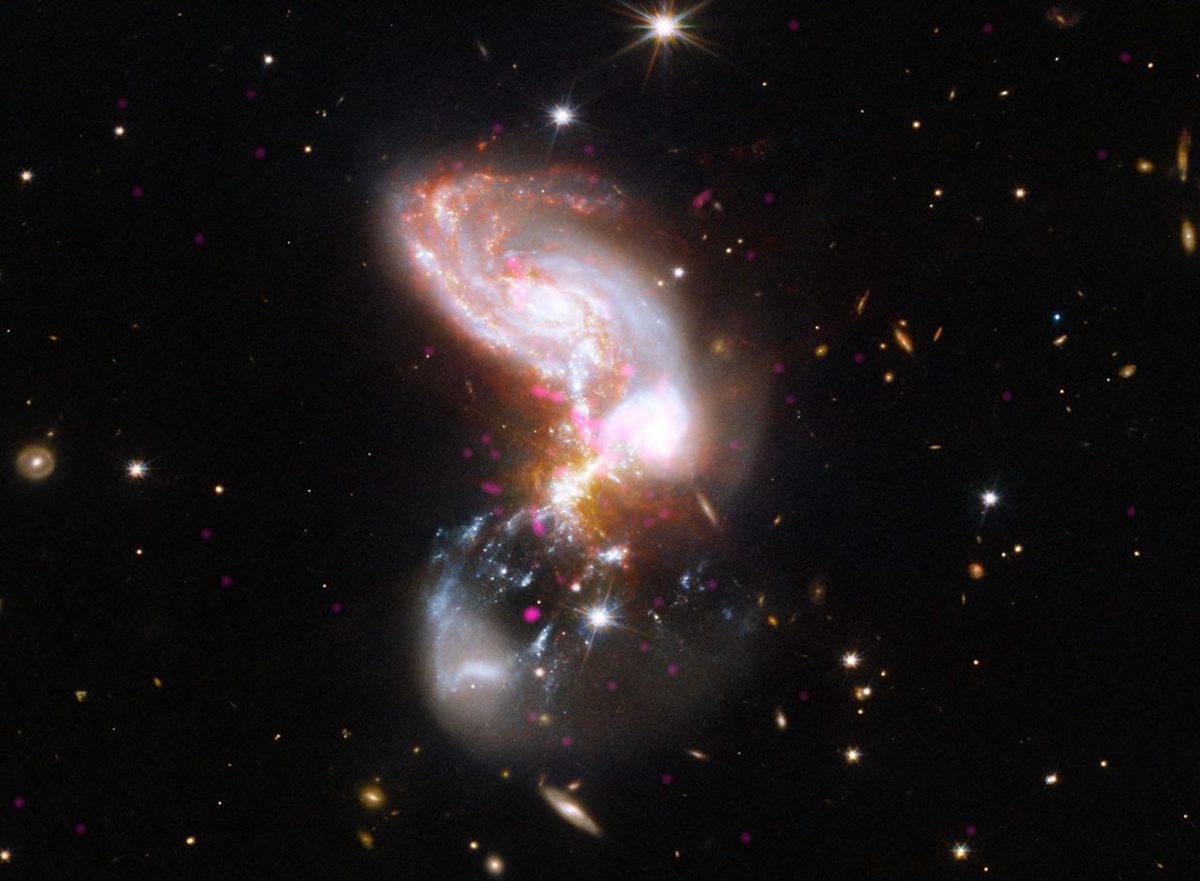
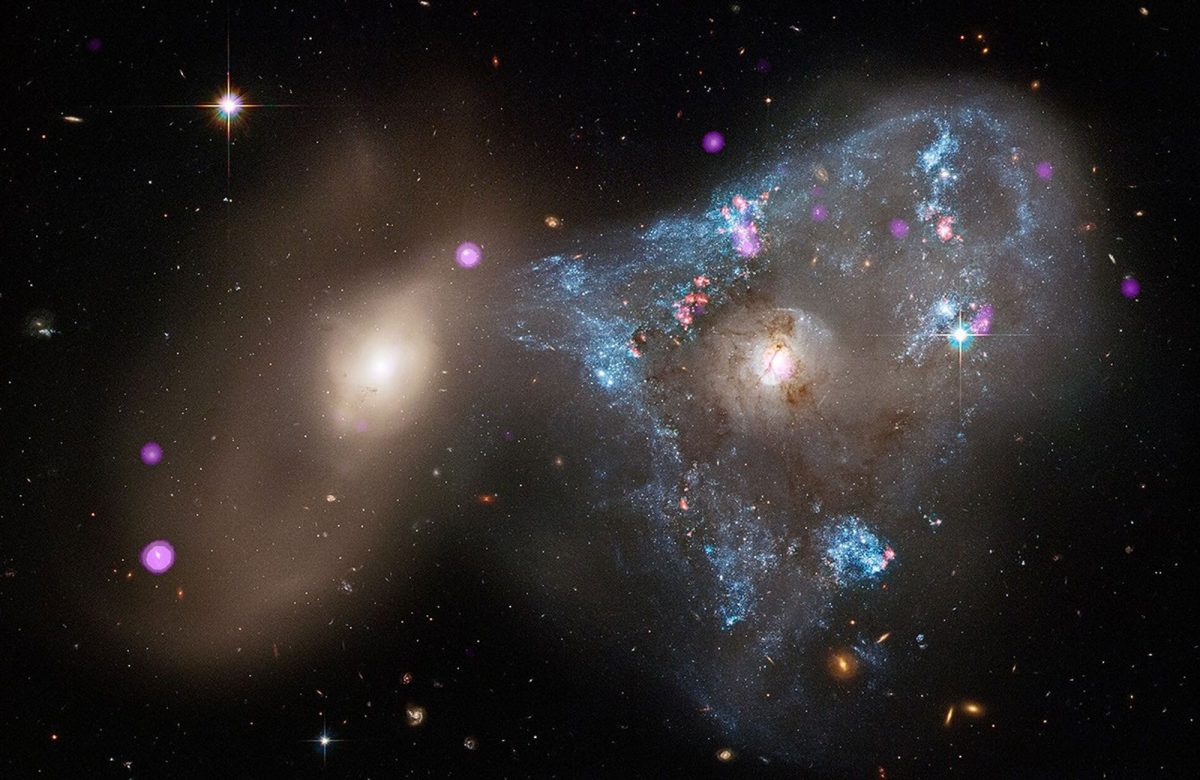
The barred spiral galaxy NGC 4725, surrounded by a prominent ring of star formation. Galaxies with unusual single spiral arms can provide insight into how the gravity of a passing galaxy can trigger bursts of star formation. Source: NASA/CXC/SAOThe spiral galaxy NGC 4631, with a giant halo of hot gas erupting from its stellar disk. Viewing galaxies edge-on allows astronomers to study how flat their stellar disks are and provides the clearest view of matter located above or below the disk. Source: NASA/CXC/SAOThe spiral galaxy NGC 4258, known for having two additional “anomalous” spiral arms composed of hot gas. M106 helps demonstrate how supermassive black holes can create structural features that mimic stellar spiral arms, influencing the evolution of a galaxy. Source: NASA/CXC/SAO/L. FrattareThe face-on spiral galaxy NGC 3938, allowing an unobstructed view of its disk. A face-on orientation is important for galactic research because it provides the clearest possible view of a galaxy’s stars and gas. Source: NASA/CXC/SAOA pair of colliding, gas-rich spiral galaxies merging into a single massive system, NGC 3256. Source: NASA/CXC/SAOThe barred spiral galaxy NGC 1672, characterized by a prominent central bar, or bridge of stars, that channels gas toward its nucleus. Studying barred spiral galaxies in action may help clarify how gas in our Milky Way, which is also a barred spiral galaxy, feeds its central black hole and forms new stars. Source: NASA/CXC/SAOThe compact dwarf irregular galaxy NGC 1569, which is undergoing intense star formation. Source: NASA/CXC/SAOThe barred spiral galaxy NGC 1385, filled with regions of active star formation. Comparing multiwavelength data on barred spiral galaxies undergoing active star formation helps scientists map how local bursts of star formation increase galactic mass over time. Source: NASA/CXC/SAOThe “polar-ring” galaxy NGC 660, in which an inclined outer ring of stars and dust rotates around the galaxy’s poles — an unusual structure likely caused by a collision with another galaxy about a billion years ago. Source: NASA/CXC/SAOThe galaxy M104, known for its broad central bulge and dark outer dust ring, is oriented almost edge-on to Earth. Studying M104 may help bridge the gap between spiral and elliptical galaxies, allowing astronomers to better understand how a galaxy’s enormous outer cloud of stars grows and ages together with its inner disk. Source: NASA/CXC/SAOThe large spiral galaxy M90, which is losing its gas as it rapidly moves through the hot gas of the Virgo galaxy cluster. Source: NASA/CXC/SAOThe galaxy M82, where intense star formation is occurring as a result of gravitational interaction with a neighboring galaxy hundreds of millions of years ago. M82 earned the nickname “Cigar Galaxy” mainly because of its orientation relative to Earth, which makes its central disk appear as an elongated cigar-shaped oval when viewed through small optical telescopes. This galaxy illustrates how powerful galactic “exhaust systems” can regulate galaxy growth by pushing gas outward. Source: NASA/CXC/SAOThe proximity of M33 allows astronomers to study individual high-energy objects and map how stellar feedback affects the galaxy’s ecosystem. Source: NASA/CXC/SAO/L. FrattareX-ray data from Chandra (purple) indicate powerful black-hole activity and the presence of hot gas, while optical data from Hubble (blue and white) and infrared data from JWST (red and gray) reveal enormous stellar nurseries hidden behind interstellar dust. Systems such as II Zw 096 show us how powerful galaxy collisions shaped the early Universe. Source: NASA/CXC/SAOOne of the closest active galaxies to Earth, Centaurus A, gives astronomers an opportunity to study the effects of supermassive black-hole jets in extraordinary detail. Source: NASA/CXC/SAOThe Arp 143 ring-galaxy system formed when a smaller satellite galaxy punched directly through its center like a target, creating a powerful cosmic shock wave. Source: NASA/CXC/SAO
Part of the galactic gallery is devoted to violent collisions. Arp 143 resembles a cosmic target: a head-on collision formed a ring galaxy with waves of star formation. The NGC 3256 and II Zw 096 systems show chaotic mergers hidden behind dense clouds of dust. Such events were common in the early Universe and mirror the future merger of the Milky Way with the Andromeda Galaxy.
Other unique objects include the dwarf galaxy NGC 1569, with its burst of star formation, which serves as a laboratory for studying conditions in the early cosmos. There is also the rare NGC 660 with a “polar ring,” where stars orbit over the poles, and Messier 90, which is losing its gas while moving rapidly through the Virgo Cluster. Together, these images show that galaxies are not static formations but dynamic systems that continuously transform themselves and the space around them.
Brings 15 years of experience in science journalism. Holds a technical degree from the National Technical University of Ukraine “Igor Sikorsky Kyiv Polytechnic Institute” in “Automation and Control in Technical Systems.” His strong technical background and skill in simplifying complex material helped him work as an author and editor in the tech sections of major Ukrainian media outlets.At Universe Space Tech, Ivan covers astronomy, science, technology, and discoveries in space research. His materials serve as a bridge between complex science and readers seeking to understand the universe in simple terms. Fascinated by space since childhood — especially black holes, dark matter, and quasars — he sees space not only as science but as a source of inspiration, philosophy, and humanity’s quest to understand their place in the cosmos.