

A new AI model has been developed to monitor satellites and identify irregularities in their operations, thereby diminishing the likelihood of orbital collisions. This finding is documented in a recent publication in the journal Expert Systems. The research was undertaken within the framework of the AI4 Space Safety and Sustainability initiative, a consortium supported by the UK Space Agency’s international bilateral fund involving the Five Eyes (FVEY) nations — Australia, Canada, New Zealand, the United Kingdom, and the United States.
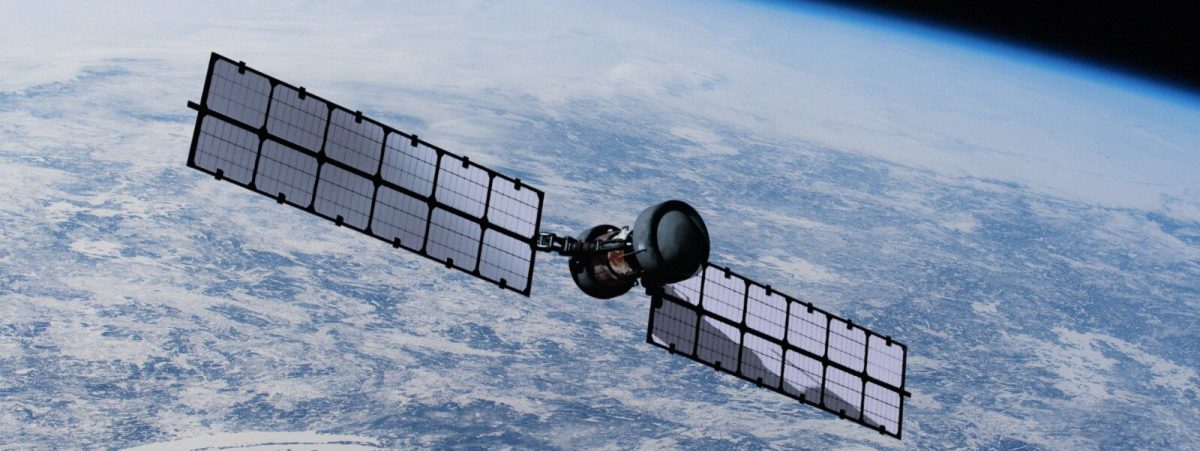
Predicting satellite behavior
The AI model, developed by researchers from the Alan Turing Institute’s Defence AI Research Centre (DARe), is the first to predict anomalies and satellite motion by learning from the way light is reflected off objects in space. This was reported by the website phys.org.
It could help address the growing challenge of safeguarding thousands of satellites by detecting objects in orbit to aid space traffic management and inform collision avoidance maneuvers.
The world is increasingly reliant on satellites, but space is becoming increasingly crowded, with more than 4,000 new satellites launched in 2025, compared with just 159 in 2000.
Monitoring them is challenging and time-consuming, but the fully automated AI tool can detect satellites behaving unusually, predict their motion through space and forecast future behavior.
Detecting anomalies utilizing light curves
The tool has been trained on large quantities of satellite brightness readings, or “light curves,” gathered through telescopes to understand normal patterns of satellite behavior. After this training, the model is “fine-tuned” with highly curated simulation data from both the Aerospace Centre of Excellence at the University of Strathclyde and GMV.
Once operational, the model is fed real-time or recent light curves from ground-based observatories, then flags anomalies so human experts can investigate further.
Testing has shown that the tool can identify unusual or unexpected light curves 88% of the time and can distinguish between different satellite behaviors, such as spinning versus tumbling — analyses that are essential for in-orbit servicing and extending the life of satellites.
The tool demonstrates the potential for systems like this to enable real-time anomaly identification and allow human operators to investigate automatically flagged issues quickly and take action to avoid collisions.
Gaining insight into the behavior of spacecraft enhances safety measures in space operations
Massimiliano Vasile, professor of space systems engineering and author and lead of the AI4S3 project, said, “With AI4S3 we demonstrated that AI can make a difference in multiple areas of space safety. Space object behavioral analysis is one of those areas.
“Understanding and explaining the behavior of space objects is critical to predict the evolution of the whole space environment and guarantee the safety of essential services for our everyday life. In the Aerospace Centre, we have been working on understanding the motion of space objects for a long time, but with AI4S3 I wanted to see if modern AI technology could help to detect regular and anomalous behaviors even from a single pixel in the sky.
“The results obtained by the Alan Turing Institute are indeed remarkable and a key step toward a complete and systematic analysis of the behavior of any resident space object.”
Next steps for the project include researching the potential for multimodal systems to also include radar data, hyperspectral data and satellite orbit data, which could provide even greater insights to experts monitoring and safeguarding satellites.