

In the fall of 2025, the Sun emitted a series of powerful solar flares that impacted Earth and initiated a severe geomagnetic storm, with the peak phase lasting approximately six hours. Besides the spectacular auroras observed in the night sky, this event substantially compromised the technological infrastructure vital to human daily life.
According to a study published in the journal Geophysical Research Letters, a group of scientists assessed the extent of disruptions affecting the operation of global navigation satellite systems. The findings were concerning: inaccuracies in coordinate determination reached levels capable of incapacitating precision agriculture systems and autonomous transportation across the United States.
How a solar storm disrupts satellite signals
During such events, the Sun emits intense streams of radiation and charged particles that saturate and distort the upper layer of the atmosphere — the ionosphere. As they pass through this overloaded layer, GPS radio signals experience delays and deviations from their intended path.

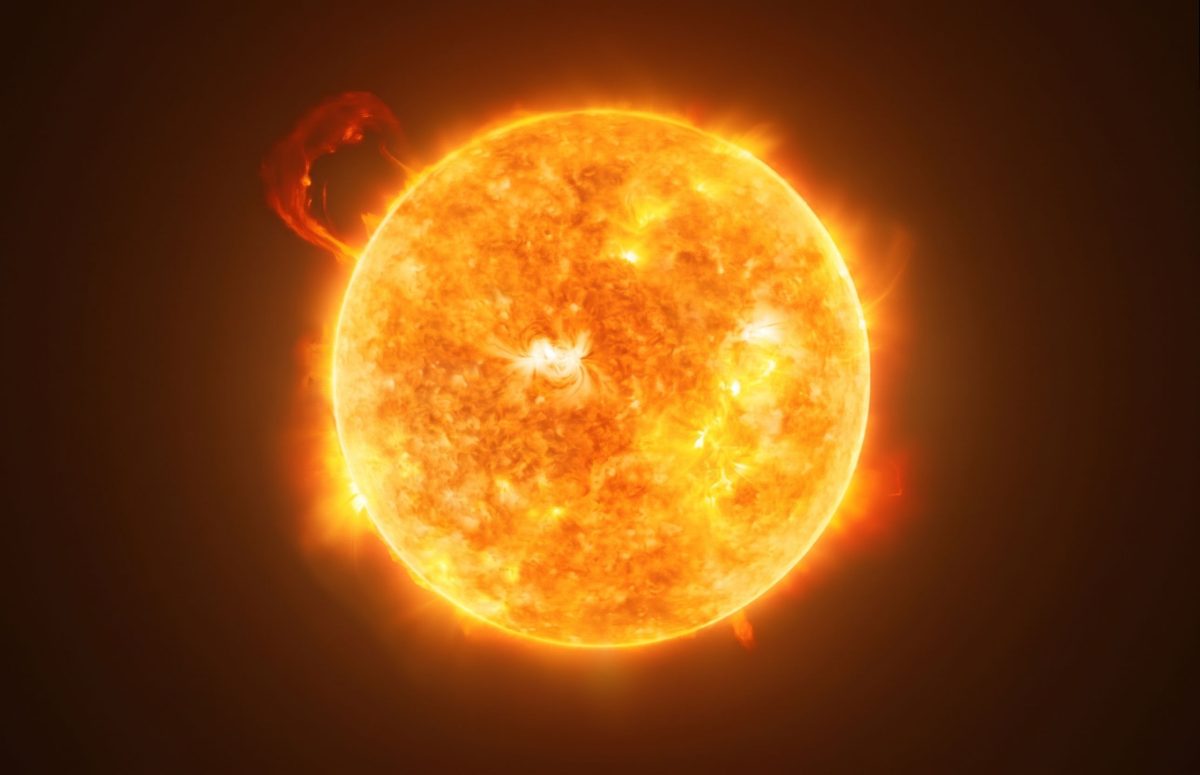
Illustrative photo: openpr.com
This phenomenon predominantly occurs in the vicinity of the equator and in polar regions. Nonetheless, during the storm on November 11, disturbances were also detected at mid-latitudes. Through a comparative analysis of aurora surveillance cameras and data obtained from GPS receiver networks across the United States and Canada, researchers monitored the movement of high-energy electrons along the Earth’s magnetic field lines, which resulted in collisions with atmospheric gases. Furthermore, distortions in satellite signals extended from the West Coast to the East Coast and reached Florida, causing positioning inaccuracies exceeding 10 meters for several hours.
Space weather vs. Earth-based technologies
A coordinate offset exceeding 10 meters is considered critical for agricultural machinery equipped with automatic navigation systems. For comparison, a comparable geomagnetic storm in May 2024 took place during the peak of the planting season and resulted in losses exceeding $500 million for farmers in the U.S. Midwest. Had the November storm occurred during the period of fieldwork, the losses to the agricultural sector would have been equally substantial. Additionally, such distortions present a direct risk to the safe operation of autonomous vehicles.
Predicting solar activity remains an exceedingly complex task. Although scientists comprehend the general dynamics of the Sun’s 11-year cycle, it remains infeasible to precisely forecast the timing and magnitude of individual solar flares in advance. Presently, researchers are developing new physical models and observational instruments aimed at enabling more rapid and accurate predictions of solar storms, thereby reducing their adverse effects on Earth’s radio frequency systems.
We previously reported on how a solar flare transformed Mercury into a “comet.”
Provided by Gizmodo
