

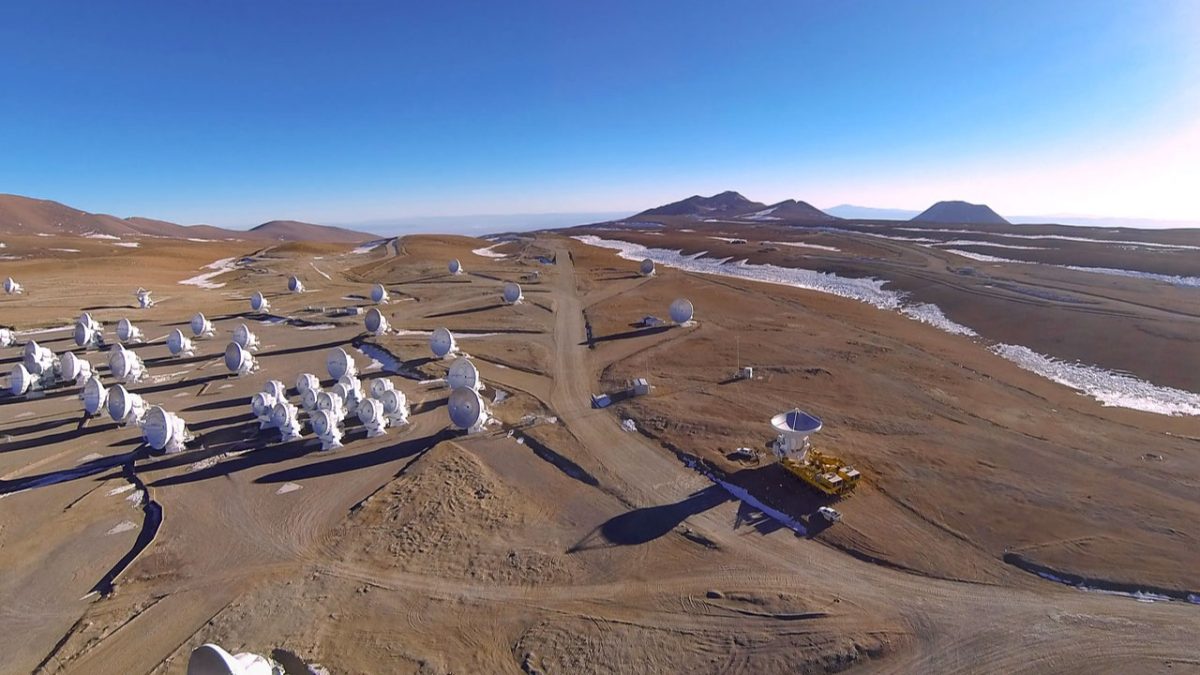
In recent years, one of the biggest sources of news from the depths of space has been the South American radio telescope ALMA. It is an unusual arrangement of 66 relatively small antennas that together can reveal things even much larger astronomical instruments cannot show. But how and why was it built?
A Radio Telescope in the Atacama Desert
Imagine a remote plateau in the Chilean Andes, high above dense tropical forests. Strange structures rise among bare rocks, occasionally turning in unison toward a particular direction. Through these mysterious devices, information flows directly from space into the computers of the initiated.
No, this is not the synopsis of a new science fiction novel by Max Kidruk. It is one way to describe the Atacama Large Millimeter/submillimeter Array, or ALMA. This very real radio astronomy instrument in Chile regularly helps scientists make discoveries. There is nothing mystical about it, but there is plenty worth telling.
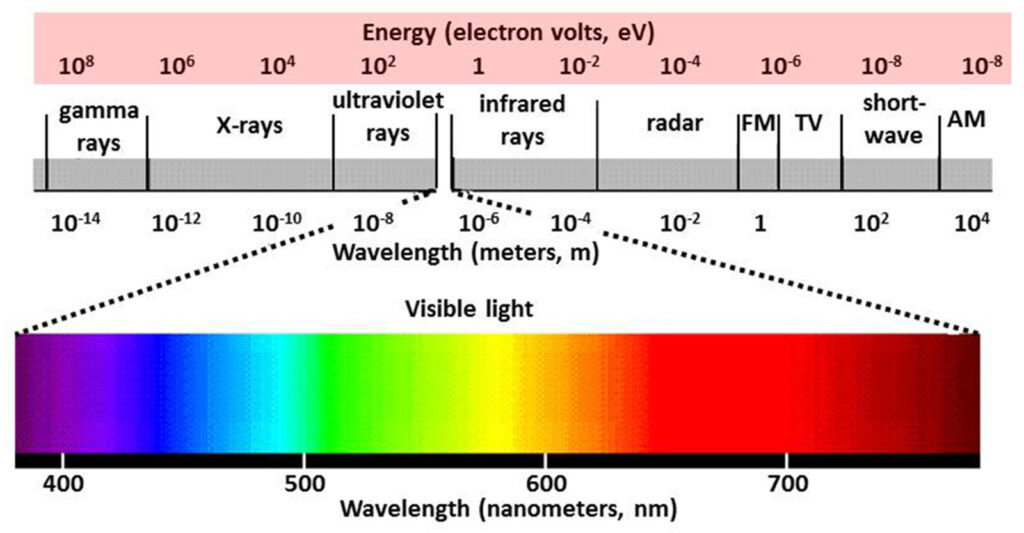
ALMA can formally be described as a radio telescope. In reality, however, it consists of 66 separate antennas working as a single instrument. And they have their own history. That story should begin with a reminder that the electromagnetic spectrum extends beyond visible light. On one side lie shorter wavelengths: ultraviolet, X-rays, and radio waves; on the other lie longer wavelengths: infrared and radio waves.
People only began considering using these waves to study space in the 1940s. It turned out that collecting radio waves over a large area with a parabolic surface and directing them toward a receiver could produce images of celestial objects that are often invisible to optical telescopes.
Moreover, because such a surface can be made much larger than a lens or mirror, and the resulting signal can be amplified, it becomes possible to gather data even on extremely distant or diffuse structures from which only a few photons reach us. Scientists also discovered that many objects emit most strongly outside the visible spectrum.
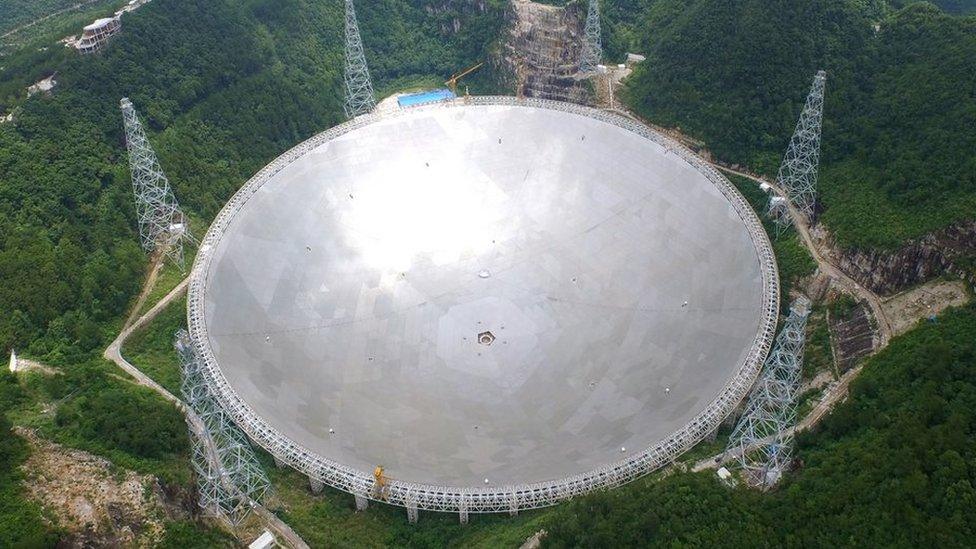
Radio telescopes quickly grew in size and sensitivity. At a certain point, however, gravity began to impose limitations as their dimensions reached hundreds of meters. Even stationary dishes had to be built in natural depressions, because supporting structures could no longer prevent them from deforming or collapsing under gravity.
Why Build an Interferometer in the Desert?
Around the 1980s, radio astronomers realized that the future of their science lay in developing interferometry. The idea is to receive a radio signal at several locations rather than just one, then combine the signals. If a small antenna is used at each location, their combined area can be much smaller than that required for a single large radio telescope.
Furthermore, tiny differences in how each station receives the signal can provide additional information about its source. This principle is called interferometry. Even the distance between two receivers, known as the baseline, helps increase sensitivity, despite there being no radio-sensitive elements between them.
Scientists were particularly interested in millimeter and submillimeter wavelengths. These are wavelengths shorter than visible light, lying somewhere near the boundary between the infrared and radio bands.

Radio waves at these frequencies are emitted by some of the coldest objects in space, such as interstellar clouds and protoplanetary disks. Organic substances also have pronounced emission peaks in this range. The gas that filled the early Universe emitted strongly at these wavelengths as well. These waves can also pass relatively easily through concentrations of cosmic dust.
The millimeter/submillimeter range offered many advantages. But it had one major drawback: it is strongly absorbed by water vapor in Earth’s atmosphere. The interferometer therefore had to be built somewhere with virtually none. And such a place existed.
That place was the high-altitude Atacama Desert in South America. Not only is the air thin there, but rainfall is also extremely rare.
Building the Telescope
These conditions make the Atacama one of the best places on Earth for astronomical instruments. Some of the planet’s largest optical telescopes are also located there. But building a millimeter-wave interferometer required a truly dry site.
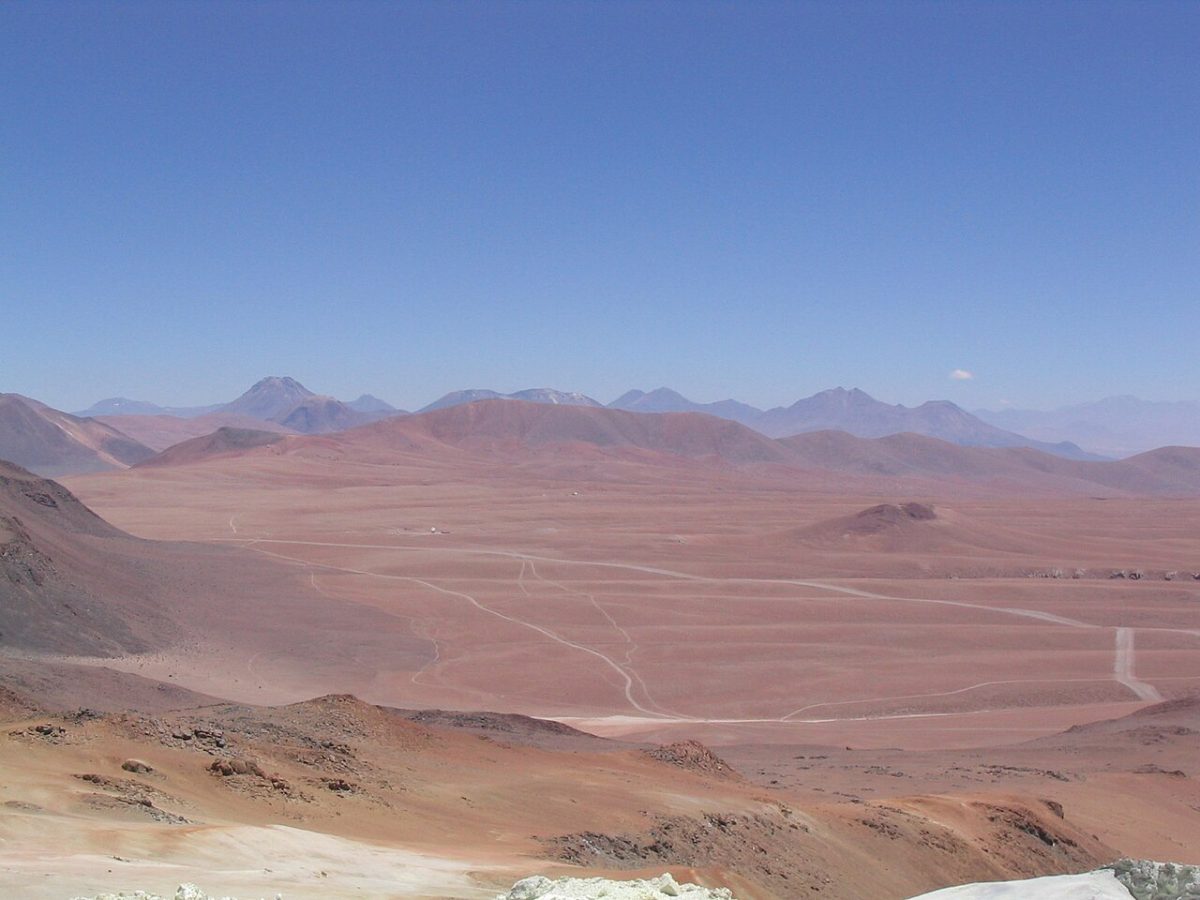
The chosen location was the Chajnantor Plateau, right on the border with Bolivia. It lies at an altitude of 5,000 meters and receives an average of just 100 millimeters of precipitation per year. Overall, it resembles Mars more than Earth. This was where construction would take place.
Exactly what to build, however, was initially unclear. European and American astronomers had several different interferometer proposals that needed to be combined into one. This was achieved only in 1999, and the resulting project was named ALMA. Negotiations did not end there, though, because Japanese astronomers had a project of their own.
All parties finally reached an agreement in 2004, and construction began. First, however, a trial version was built on the Chajnantor Plateau in 2005: a single 12-meter antenna called the Atacama Pathfinder Experiment, or APEX. No one expected major scientific results from it; its main purpose was to demonstrate the effectiveness of the antenna design, which it did.
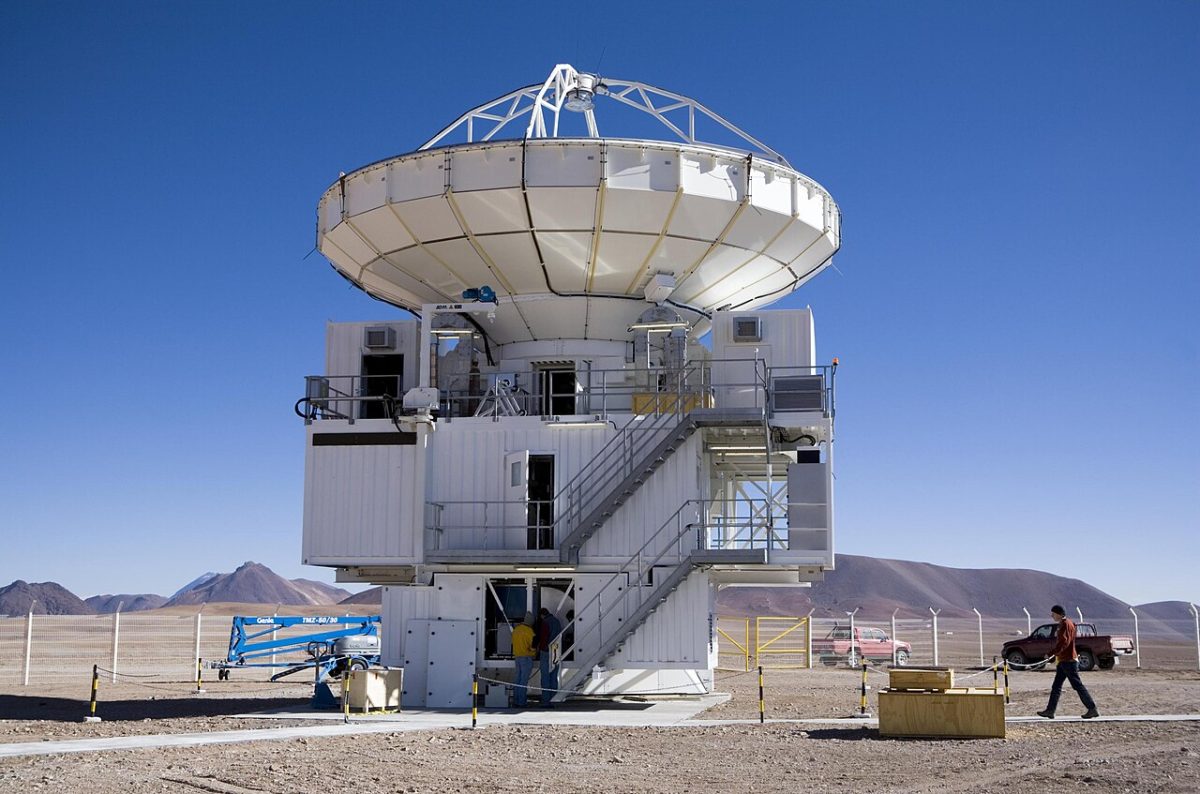
The ALMA project, however, called for 50 such 12-meter antennas and another 16 seven-meter antennas. These were built next. This was far from straightforward, as the construction site was remote from any civilization.
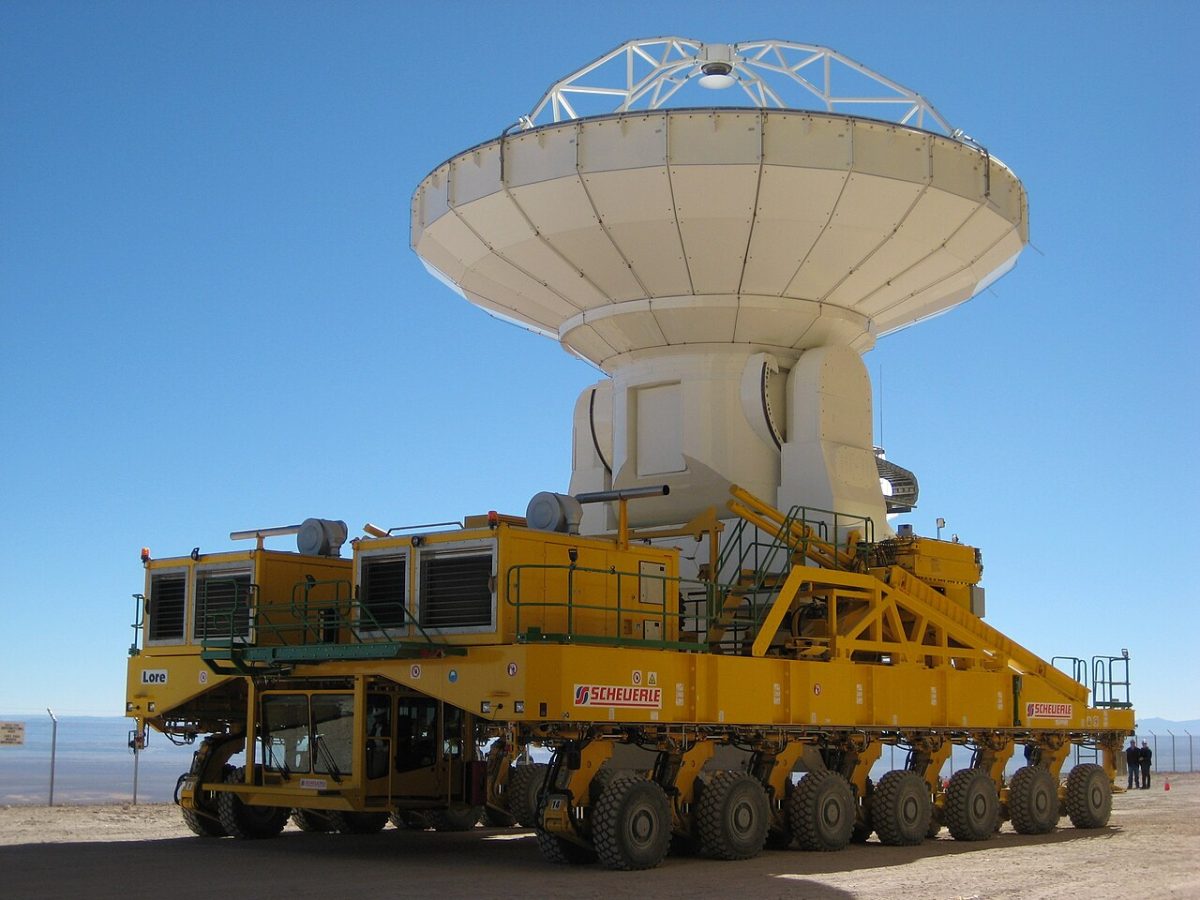
Individual antennas were assembled at a base camp at an altitude of 2,900 meters. Each weighed 115 metric tons, and special multi-wheeled transporters were built to move them. These vehicles carried the antennas up the desert slopes to their installation sites. The process took several years, but the telescope was finally completed and began operating in 2013.
What Has ALMA Discovered?
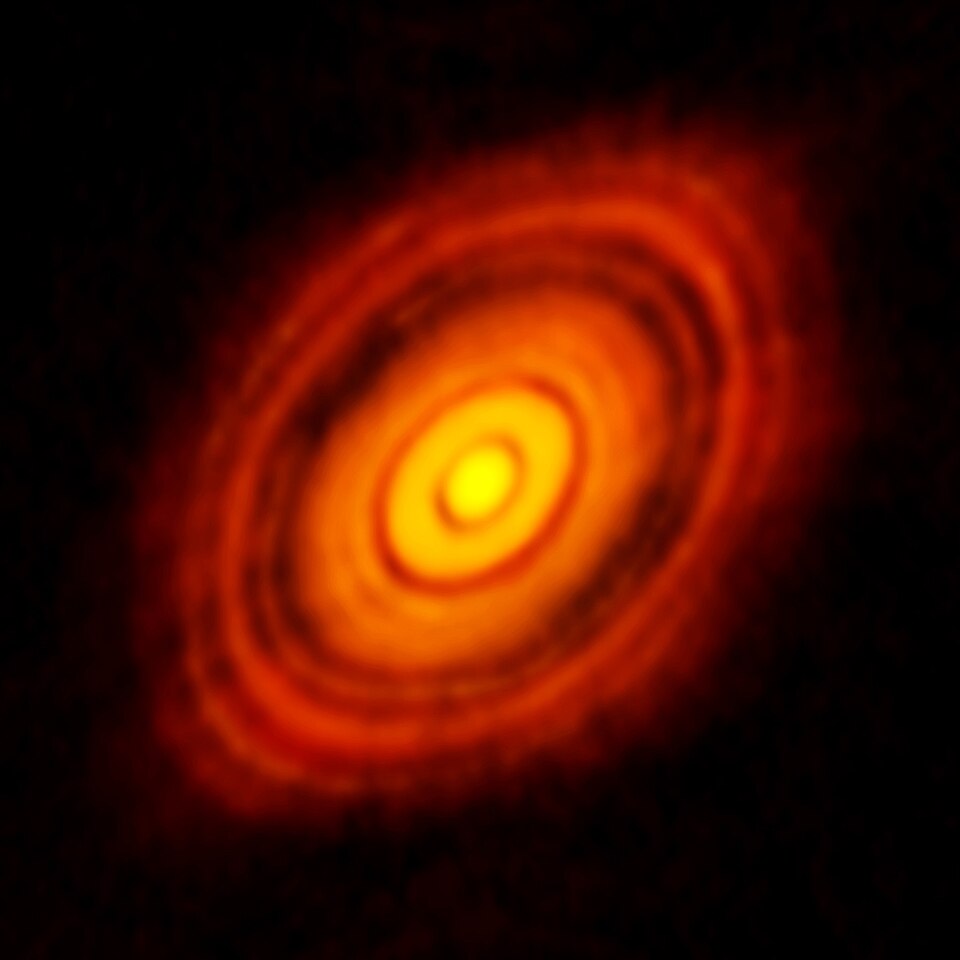
The most important field in which ALMA has gathered—and continues to gather—scientific data is planet formation. Until relatively recently, scientists could only hypothesize that planets formed in disks of gas and dust. In 2014, however, the Chilean radio interferometer was able to confirm this directly.
Scientists were able not only to image the protoplanetary disk around the young star HL Tauri, but also to distinguish gaps within it. These are carved out by forming planets actively accumulating material.
Scientists were surprised by how early planet formation begins and how complex the process is. ALMA subsequently observed dozens more protoplanetary disks, allowing researchers to compile statistics and begin proposing patterns in the processes occurring within them.
Protoplanetary disks are also connected to another field in which ALMA has been enormously helpful: detecting organic substances in space. The past couple of decades have brought a major breakthrough. Scientists have not only discovered that some form of organic material exists almost everywhere in space, but also established that it can be highly complex, including phosphates, polycyclic aromatic hydrocarbons, amino acids, and nitrogenous bases.
Most importantly, many of these discoveries were made thanks to ALMA, as millimeter-wave spectra reveal these substances clearly. The same method has also detected water in protoplanetary disks.
The discovery of organic compounds is not limited to protoplanetary disks. ALMA has also found them in the cold interstellar clouds from which stellar systems form. The interferometer can establish not only their presence, but also where they are most abundant within a nebula—in other words, it can map their distribution.
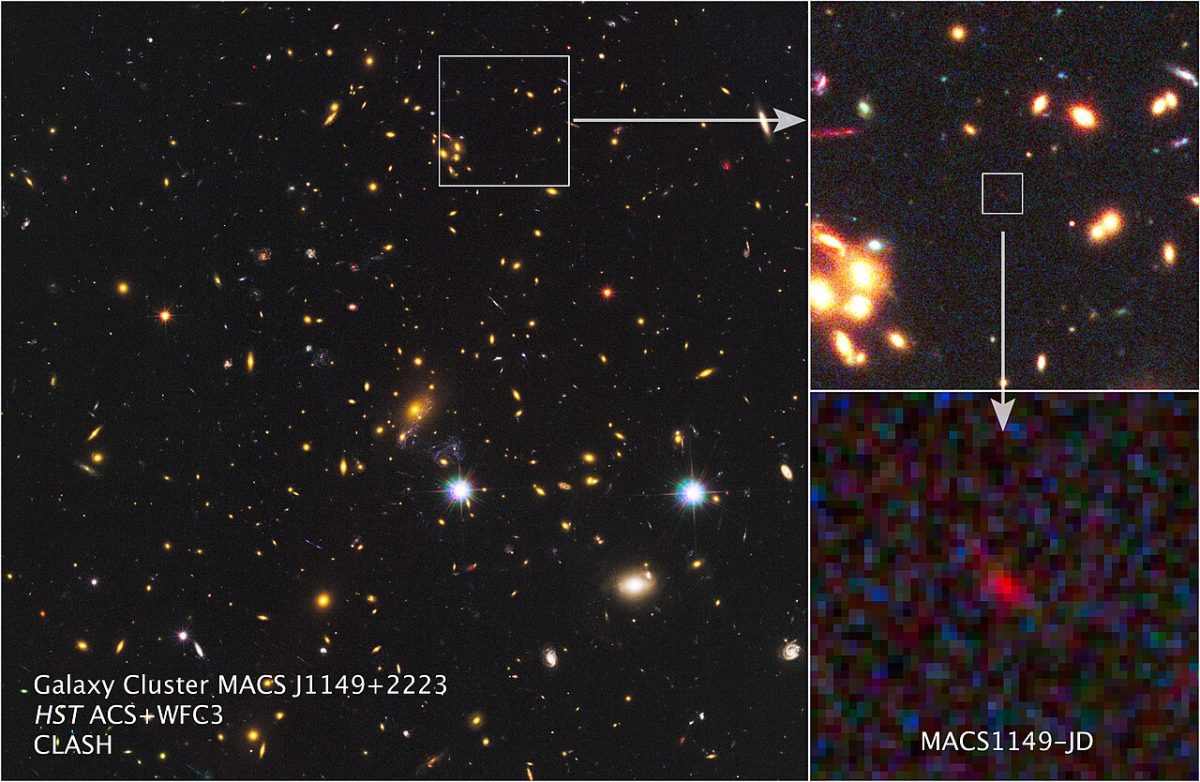
In distant galaxies, meanwhile, ALMA has detected oxygen. One example is MACS1149-JD1, a galaxy we see as it was just 500 million years after the Big Bang. The presence of this element means that the first generation of stars there must already have reached the end of their lives.
More broadly, the South American radio interferometer has revealed a great deal about galaxy formation. In particular, it has allowed scientists to study the movement of matter within galaxies and how it affects the formation of new generations of stars.
Another important achievement was ALMA’s participation in the Event Horizon Telescope collaboration. Its data made the largest contribution both to obtaining the first-ever image of the supermassive black hole in the galaxy M87 and to producing a similar image of the black hole at the center of our own Galaxy.
Overall, ALMA has made an extraordinary contribution to our knowledge of the Universe. It is one of the most important astronomical instruments of our time, and the story of its discoveries appears to be only just beginning.
