

Scientists have analyzed patterns of comet impacts on Earth over millions of years. They have challenged the popular theory that these celestial bodies delivered prebiotic molecules to our planet, creating the conditions for life to emerge.
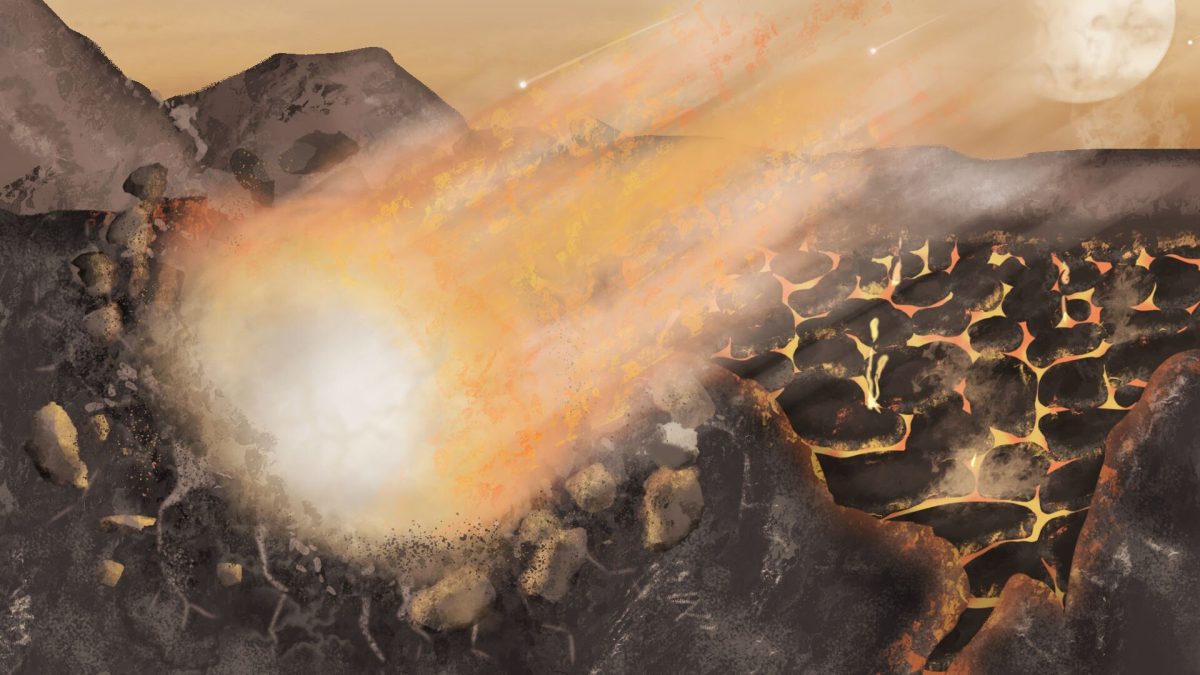
Does Life Travel on Comets?
Researchers at the University of Cambridge have questioned the popular theory that comets could have delivered amino acids, nitrogenous bases, and other complex organic compounds to Earth. According to phys.org, they reached this conclusion by analyzing how impacts occur on Earth and other similar planets.
Scientists have long suggested that comets may contain organic substances. Discoveries in recent decades have only confirmed these suspicions, revealing compounds even more complex than expected. This is why the idea that some building blocks of proteins and nucleic acids could have reached the early Earth alongside water from icy bodies has become so popular.
This assumption also gave rise to another idea: in other stellar systems, where planets are more closely packed, comets might even carry organic molecules—and possibly microorganisms—from one celestial body to another. This was the main idea the scientists sought to test in their new study.
Impacts Too Violent for Survival
At first glance, delivering organic material to a planet seems straightforward. A comet encounters the atmosphere, breaks apart partially or completely, and its molecules fall into the ocean, where ordinary biochemical processes take over. However, mathematical modeling of impacts showed that encounters between comets and Earth are actually too violent for this to happen.
When a comet’s kinetic energy turns into heat, the result resembles a powerful explosion. According to the new study, it is too powerful and too hot for organic molecules to survive. The research also showed that comet impacts were frequent early in Earth’s history, then became increasingly rare.
The researchers were particularly interested in hydrogen cyanide, HCN. This relatively simple substance is important to the chemistry of life, is abundant in space, and could potentially reach planets aboard comets. Yet the model showed that even it could not survive an impact.
The researchers therefore conclude that comets did not deliver organic substances to Earth. Instead, they propose two other possibilities: these compounds arrived on asteroids or formed directly on the surface. They might also have arrived aboard smaller fragments.
However, all of this pales in comparison with another intriguing conclusion drawn by the study’s authors. If organic material was delivered by something coming from the asteroid belt, Mars had a much greater chance of receiving it than Earth did. So why have no reliable signs of life been found there yet?
