

On Ukrainian Writing and Language Day, we reflect on how our language shapes our view of the world. But does that view also encompass the starry sky above us? Let’s try to answer this question.
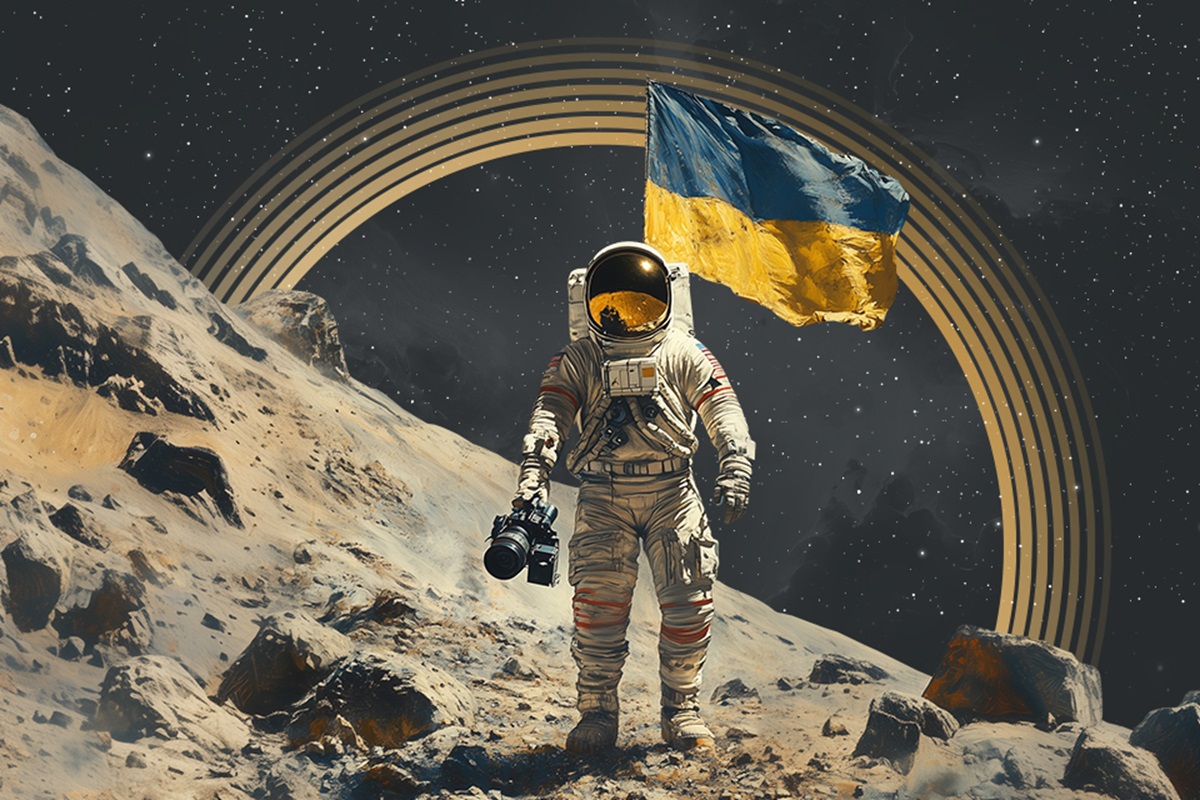
The Universe in the Ukrainian Language
October 27 marks Ukrainian Writing and Language Day. It reminds us that our means of communication shapes our worldview. A word spoken in public or written on paper passes from person to person, is used by someone else, and continues its journey.
At first glance, space exploration and the Ukrainian language might seem unrelated. But if language shapes our understanding of everything in the world, this must also extend to the starry sky. So how deeply has this subject become integrated into our culture through language?
Perhaps we should begin with the words describing what we can see in the sky. The Ukrainian words zori (“stars”), nebo (“sky”), and sontse (“Sun”) are all of Slavic origin. This is why these words and their associated concepts appear in Ukrainian folk songs and fairy tales—the part of Ukrainian culture passed down through generations and therefore believed to preserve elements reaching us from the distant past.
At the same time, many Ukrainian words in this field are borrowed, mainly from Greek: kosmos (“cosmos”), planeta (“planet”), kometa (“comet”), and asteroid. These words do not appear in folk songs and traditional tales, although educated people were certainly familiar with them. They belonged to a literary language that was, to a considerable extent, also the language of the Church. This matters too, because the most significant story involving a star belongs to this tradition.
We are, of course, talking about the star that led various figures to the birthplace of Jesus Christ in Bethlehem. In Ukrainian Christian tradition, Christmas and stars are closely intertwined, forming a cultural layer that can seem only loosely connected to the Christian faith itself.
But let us return to words and terminology. A special place belongs to vsesvit, the Ukrainian word for “Universe.” It is clearly not a foreign borrowing, and its structure makes it equally clear that it is not a calque from Russian. Yet it is a relatively young word. It does not appear in texts from the seventeenth and eighteenth centuries; only its predecessor, ves svit (“the whole world”), is found there. Taras Shevchenko used only the adjective vsesvitnii (“universal” or “worldwide”), while the noun entered widespread use only around the turn of the twentieth century.
This reflects something important. Ukrainians already had the word svit (“world”), meaning everything around them, but later needed a term for something more encompassing—and a place for that concept in their language. In other words, around this time came an awareness of Ukraine as part of the boundless cosmos.
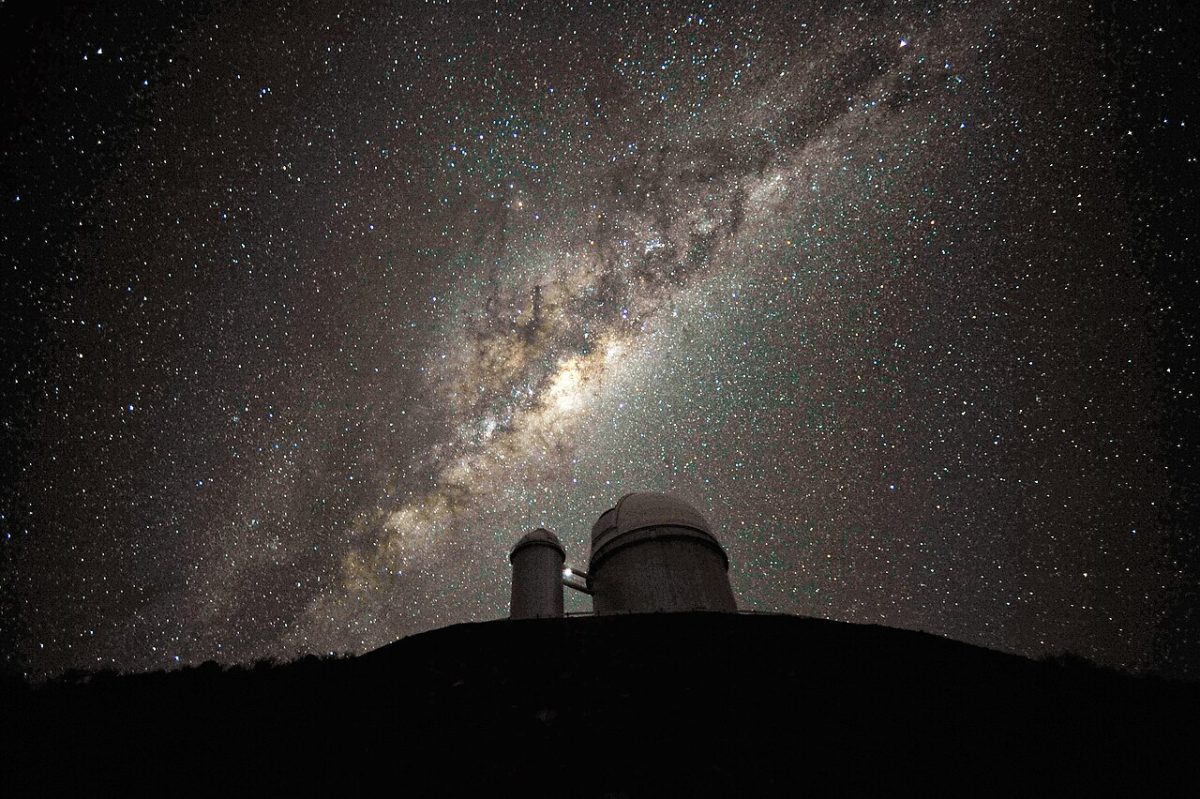
Another interesting story concerns Chumatskyi Shliakh, the Ukrainian name for the Milky Way, literally “the Chumaks’ Way.” The Chumaks’ trade developed from the thirteenth through the nineteenth centuries, peaking in the eighteenth, so this is another term that emerged in historical times. Educated people already knew the Greek word “galaxy,” which originally referred specifically to the bright band across the sky. Yet ordinary people felt the need to create a name connected to their own lives.
Astronomy for Ukrainians
Astronomy itself has been known as a science in Ukrainian lands for a very long time. The educational systems of institutions such as the Kyiv-Mohyla Academy and Lviv University continued the European medieval tradition of the seven liberal arts. As part of the quadrivium, the study of the starry sky was a compulsory subject.
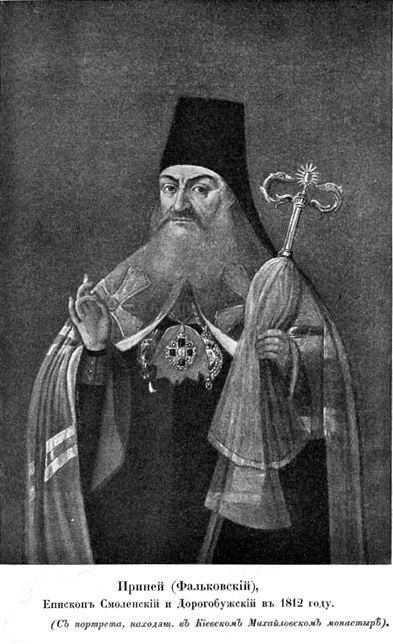
This made the reception of astronomy in Ukraine somewhat complex. A small educated segment of the population, including priests, was generally familiar with it. Astronomy teachers included Yepifanii Slavynetskyi, Irynei Falkovskyi, and Feofan Prokopovych. For most people, however, this field of knowledge remained outside their experience for a long time.
The first astronomy articles began appearing in the journals Osnova and Zoria only in the second half of the nineteenth century, and these were isolated publications. University astronomy textbooks also existed. However, publications truly aimed at a general readership appeared only in the early twentieth century.
In 1901, a popular overview titled “On New and Variable Stars” was published by Ivan Puliui himself, one of the earliest researchers of X-rays. That same year saw a Ukrainian translation of The Sky by Camille Flammarion, then Europe’s best-known popularizer of astronomy. Popular works subsequently began appearing one after another. Space therefore became firmly established as a subject in Ukrainian long before independence.
Ukrainian Science Fiction About Space
The question of the first work of speculative fiction written in Ukrainian is an interesting one. Ukrainian-language science fiction also emerged around the turn of the twentieth century, but its early themes did not yet concern space.
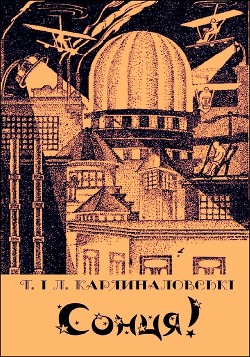
The first truly space-themed work of Ukrainian science fiction should probably be considered “Sun!”, a short story by Yelyzaveta Kardynalovska, written with the participation of her sister Tetiana and published in the journal Znannia in 1926. It takes place in the distant future, when the Sun has begun to fade. Scientists try to decide whether to create an artificial sun or simply relocate to another planet.
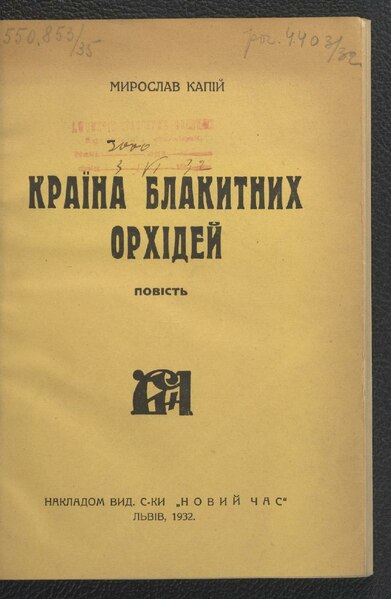
In 1932, Myroslav Kapii’s The Land of Blue Orchids was published in Lviv. This remarkable work portrays a future Ukraine that is both independent and a spacefaring nation, cooperating with European countries and the United States. It describes television, which was only beginning to emerge at the time, and an automobile factory in Kremenchuk.
But its central theme is spaceflight. With support from all humanity, the United States launches the first spacecraft to Mars, only for it to disappear without a trace upon arrival. Several years later, however, another spacecraft arrives from the Red Planet, bringing to Ukraine descendants of the people of Atlantis, who had once evacuated to Mars.
Then, in 1935, came the defining Ukrainian space novel of the 1930s: Volodymyr Vladko’s Argonauts of the Universe. Today, its account of a spacecraft traveling to Venus—a jungle world inhabited by dinosaurs and giant insects—may seem far removed from reality.
At the time, however, people knew nothing about what lay beneath our neighboring planet’s dense clouds, so the story was entirely consistent with contemporary scientific knowledge. Its depiction of spaceflight, including weightlessness, braking in several stages, and the spacecraft itself, still reads as credible “hard” science fiction.
Ukrainian Is Out of This World!
Whatever the case, texts about space and space travel had become an integral part of the Ukrainian language before the Second World War. Even the science fiction and popular science books written in the 1960s–1980s were already building on an established tradition. Their authors did not have to invent this part of the language themselves.

Language is, to a considerable extent, literature. By the time Ukraine declared independence, its people had no need to prove that their language was suitable for discussing stars, planets, and spacecraft.
Yet for many years, Ukrainians felt compelled to prove that physics and astronomy did not sound ridiculous in their language. Not because this was something that could really be proved to anyone, but because they did not have enough confidence in themselves. For quite a few years now, however, those insecurities about Ukrainian somehow being inadequate have been receding.
How can Ukrainian be used in a way that makes us truly proud? It could, for example, be heard at a spaceport launching a spacecraft toward other worlds. Could anything be more satisfying than hearing: “…seven…six…five…four…three…two…one…ignition!”
