
Oles Berdnyk, born on November 27, 1926, became one of Ukraine’s most prominent science fiction writers. In his novels, spaceships served only as the beginning of a journey to distant stars; beyond that, everything depended on the individual, who was free and capable of change. He remained committed to that principle in his own life. For this commitment to freedom, the Soviet authorities imprisoned him twice.
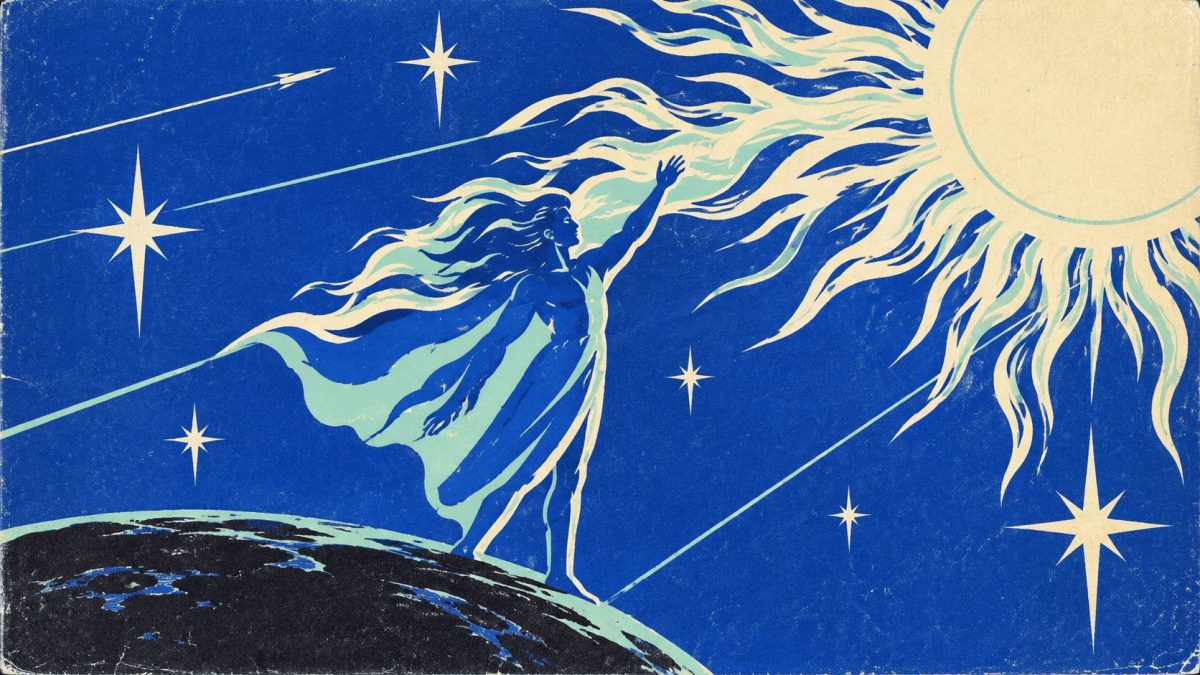
Prohibited stars
In the late 1960s, Oles Berdnyk was at the height of his popularity. His novels about journeys to other worlds were published by Kyiv-based publishing houses and widely read and circulated among readers. This came to an abrupt end. Beginning in 1972, no new books were published, and by 1976, even previously published works had been removed from libraries and bookstores.
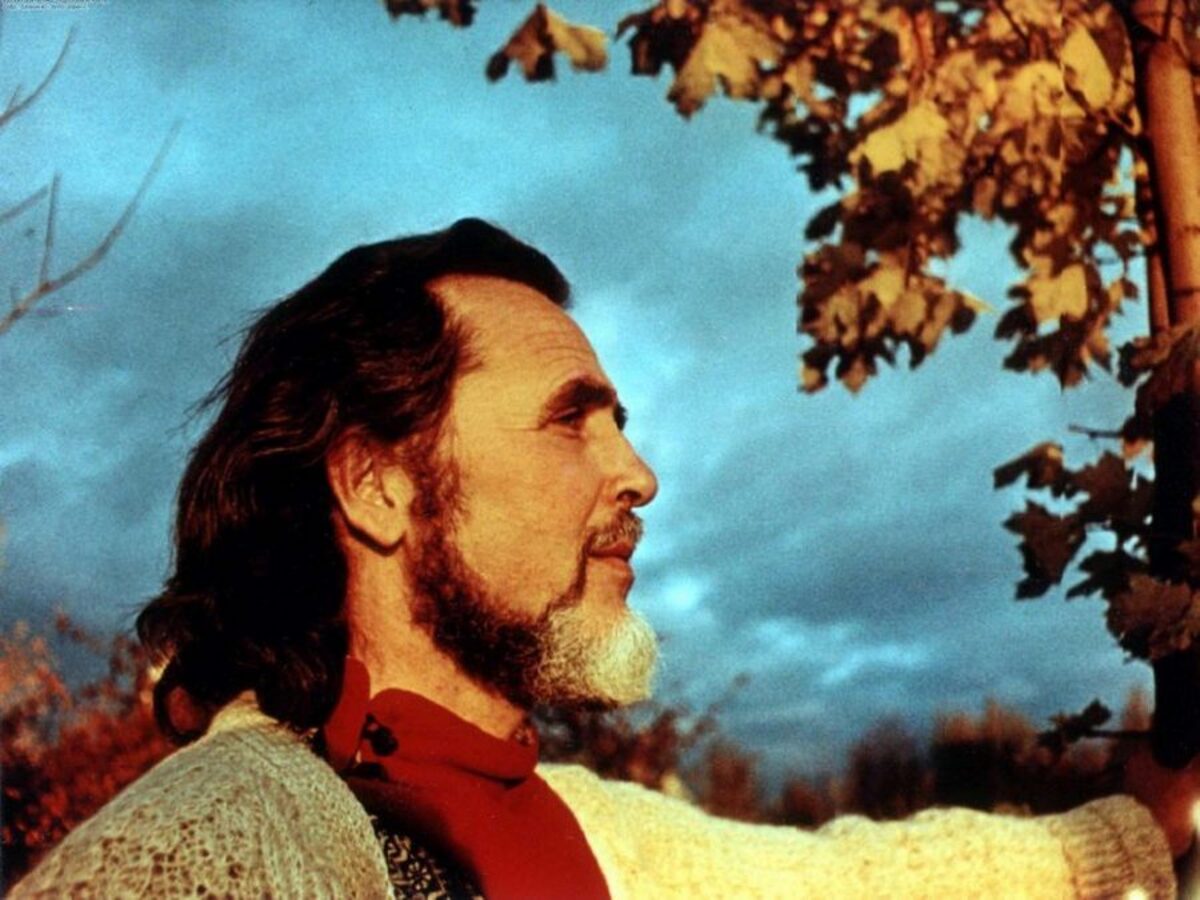
On March 6, 1979, the writer’s turn came. At the time, Oles Berdnyk headed the Ukrainian Helsinki Group, which was gathering testimony about human rights violations in the Soviet Union. He was arrested and sentenced to six years in a strict-regime labor camp, followed by five years of exile. He was incarcerated at a camp in the village of Kuchino, in the Perm region, and released under an amnesty in 1984. This was not his first term of imprisonment.
What was it about the person who wrote about flights to distant stars that so deeply alarmed the Soviet authorities?
The universe of a free individual
The answer lies in the books themselves. Official Soviet science fiction largely portrayed space as a realm to be conquered, emphasizing more powerful rockets, faster spacecraft, and new bases on alien planets. Oles Berdnyk’s perspective, however, is precisely the opposite. For him, the focus is not on the machine, but on the person transformed by the journey to the stars.
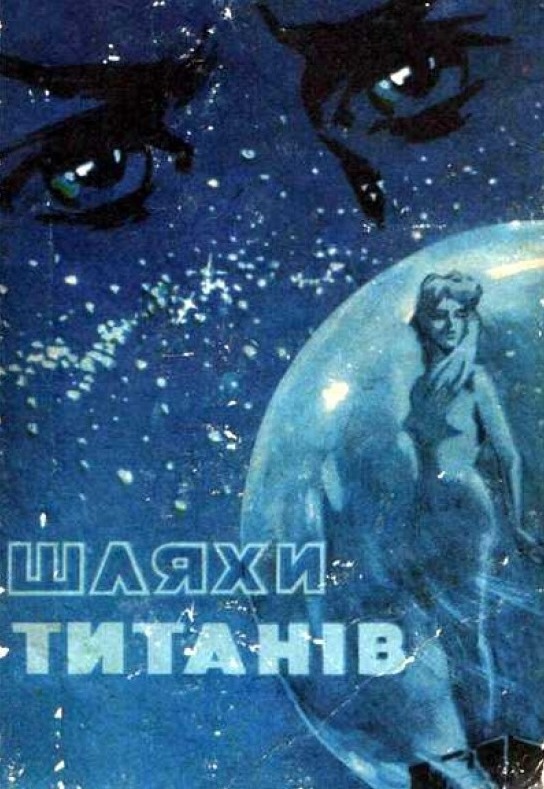
The author published approximately three dozen books during his lifetime, and this idea recurs throughout his best-known works. In the novel “The Ways of the Titans” (1958), an Earth spacecraft travels to another galaxy. The travelers encounter people whose intellect has developed to such an extent that they can transform matter into energy and back again. In another world, they come across a planet ruled by the Iron Dictator.
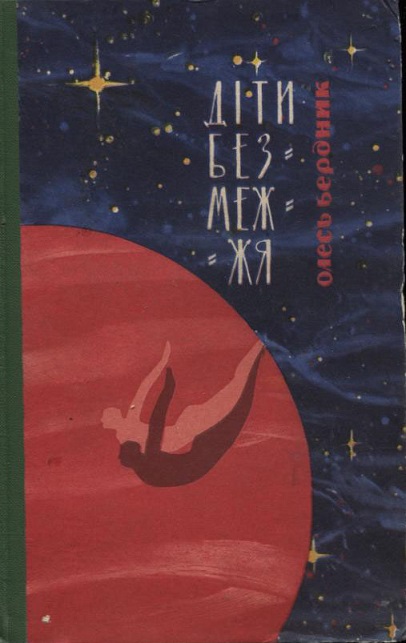
Six years later, Oles Berdnyk published “Children of the Infinite.” The story opens on the banks of the Dnipro, where vacationers debate whether anyone else inhabits the universe. In the second book of the series, the two protagonists are already learning to traverse vast distances through the power of thought and even to penetrate the Sun itself, where they discover another civilization.
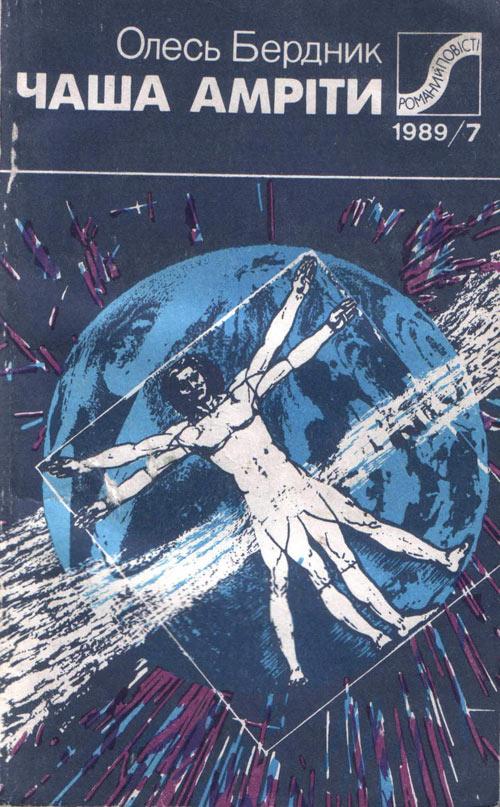
In the novel “The Cup of Amrita” (1968), the protagonist survives a prisoner-of-war camp and later journeys to a distant mountain valley in search of the elixir of immortality. The narrative contrasts the boundless potential of the human spirit with a closed world in which all are subject to cosmic despots.
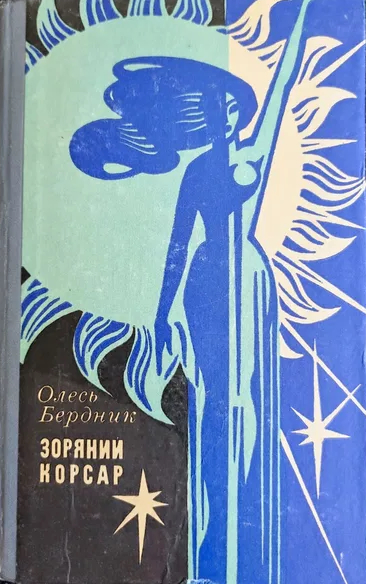
The most daring of these works was “Star Corsair” (1971). According to the author himself, he portrayed the protagonist as an eternal rebel against an unjust system. “Our spirit is walled up in countless prisons,” says one of the novel’s characters, and the journey toward liberation begins with inner freedom. Before setting off, the Ukrainian cosmonauts climb Mount Hoverla to bid farewell to Mother Ukraine. Shortly thereafter, the book was banned.
In a system that dictated what people should think and where they should go, such heroes were unwelcome. They chose their own paths and submitted to no one. Their author conducted himself in much the same way — a genuine cosmic hippie of Ukrainian science fiction — and this was precisely what led to his becoming a censored writer. His works ceased to be published when he began advocating for human rights, and his books were removed from libraries in the year he became one of the founders of the Ukrainian Helsinki Group.
Incarcerated on two occasions
Oles Berdnyk served his first prison term well before publishing his first book.
He was born in the village of Vavylove in the Mykolaiv region, although official records listed his date of birth as December 25, 1927. Following the liberation of the Kyiv region, he volunteered for front-line service. After World War II, he graduated from the Ivan Franko Theater in Kyiv and worked as an actor. In the fall of 1949, he was arrested. The following spring, he was sentenced to ten years in prison and five years of exile for “treason against the Motherland.” He served his sentence in camps along the Pechora River and in Kazakhstan, and was released in the mid-1950s.
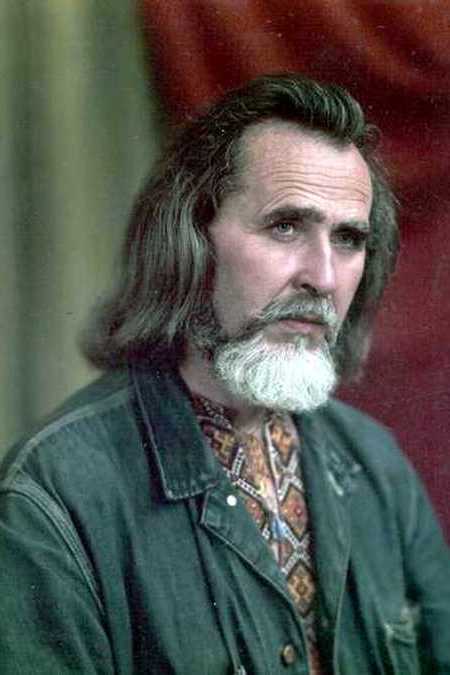
His first collection, “Beyond Time and Space,” was published in 1957. The following year, he became a member of the Writers’ Union.
Oles Berdnyk is still occasionally regarded as one of the Soviet science fiction writers of the space-conquest era. His books do, indeed, contain many of the ideological trappings of that period. In “Children of the Infinite,” for example, Gagarin is mentioned, and the characters discuss a communist future. However, the protagonists are motivated not by the state or the party, but by their own choices. Critics accused Berdnyk of “space nationalism,” and in March 1973, at a plenary session of the Writers’ Union, he was charged with “Ukrainophilia in space.” That same year, he was expelled from the Union, after which the authorities kept him in the position of a “prisoner at liberty.” Formally, he was free, but he was unable to publish his work in his homeland. His new writings were published abroad by the “Smoloskyp” publishing house, and by 1977, he was already leading the Ukrainian Helsinki Group.
He wrote the open letter “The Crown of Thorns of Ukraine” in late 1978 and completed it on January 7, two months before his second arrest. In the letter, he addressed both the Russia of tyrants and the Russia of poets. He recalled the 1654 Treaty of Pereyaslav, the famine of 1933, and the arrests of his fellow members of the Helsinki Group. He knew of the famine firsthand: his family had survived the Holodomor in the village of Kyiliv, in the Kyiv region. This experience gave rise to the line that became the letter’s title: “Look at my forehead, Russia — you will see a crown of thorns!”
He also observed that it was Ukraine’s son, Serhii Korolov — the chief designer of the first space rockets — who opened the gates of space for Russia; however, this did not soften Russia’s cruel heart. The message was first published abroad in 1980 in the anthology Holy Ukraine, issued by the Smoloskyp publishing house. By that time, the author was already in a labor camp.
Return to the reader
Books began to reappear even before the dissolution of the Soviet Union. In the late 1980s, Oles Berdnyk was readmitted to the Writers’ Union. In 1988, his novel “Vohnesmikh” — written during his imprisonment — and a new edition of “The Veil of Isis” were published. The following year, the “Dnipro” publishing house reissued “The Cup of Amrita,” and “Star Corsair” was finally included in the collection “The Fiery Horseman.”
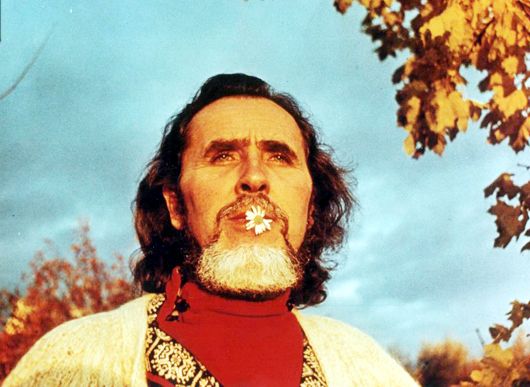
That same year, 1989, the writer founded the humanist association “Ukrainian Spiritual Republic” and assumed its leadership. In 1994 and 1995, he delivered a series of lectures titled “The Asteroid of Freedom” at the Kyiv Planetarium, discussing how a science-fiction writer envisions the universe. In 1996, “Star Corsair” and its sequel were published; together, the two novels formed the duology “Dazhboh’s Tuning Fork.” The Encyclopedia of Modern Ukraine regards this as a seminal work in which Oles Berdnyk most fully articulated his views.
The writer passed away in Kyiv on March 18, 2003.
Today, students are introduced to his work as early as elementary school. The novella “Whoever Dares Will Be Called Fiery,” which depicts a journey to unknown planets, is studied in 7th grade.
