

Our Sun is approximately 4.6 billion years old — roughly one-third the age of the universe — and is therefore relatively young. It belongs to the youngest of the three generations of stars identified by scientists. Earlier generations enriched the matter from which our planet and humanity were eventually formed. In particular, the calcium in our bones and the iron in our blood originated within those stars. Although we have not yet directly observed the oldest stars, astronomers are searching for them at great distances from Earth.
Scientists refer to these conventional generations as stellar populations. They are distinguished by their heavy-element content — that is, the abundance of all elements other than hydrogen and helium — a measure known as metallicity. Our own, the most recent population, is designated Population I, while the oldest is designated Population III. A similar reverse-ordering principle is used in calendar dates preceding our era.
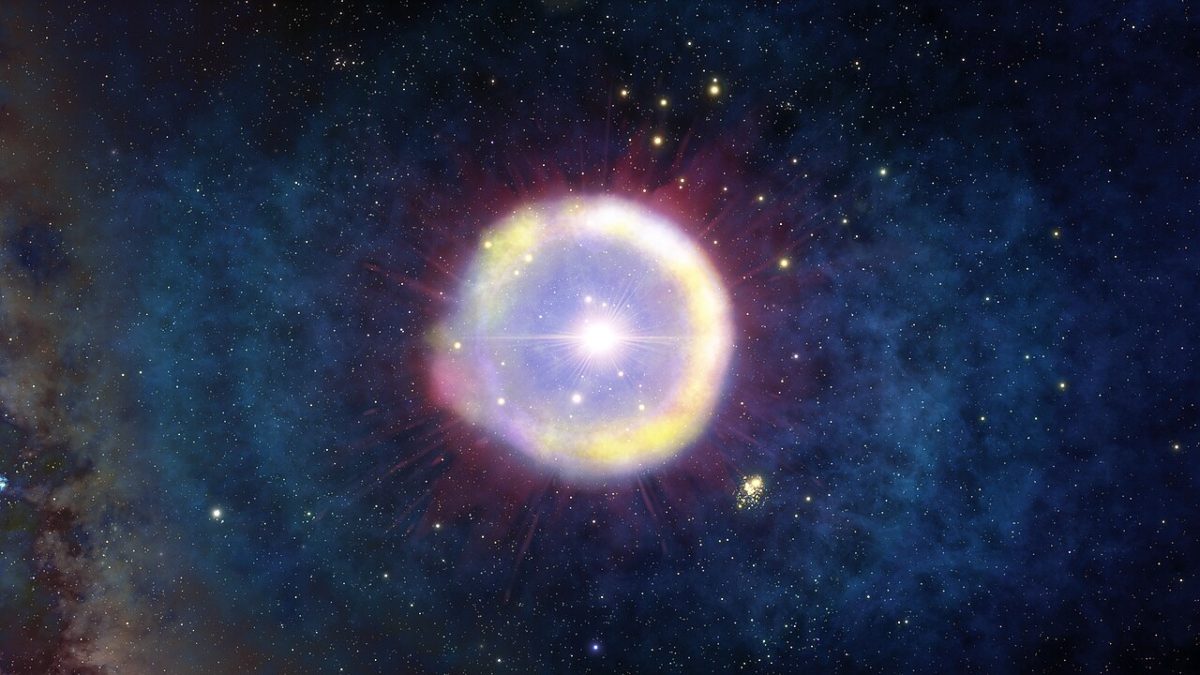
Population I and our Sun
Population I is found predominantly in the spiral arms of the Milky Way, as in other spiral galaxies, where sufficient gas remains to support the formation of new stars. The youngest members of the three generations contain the highest proportions of heavy elements. In the Sun, these elements account for approximately 1.4% of its mass, with the remainder consisting of hydrogen and helium.
The composition of a distant star can be determined by analyzing its light. When the light is separated into its constituent colors, as it is by a glass prism, dark lines appear in the spectrum. Because each chemical element has a unique set of lines, this pattern can be used to identify the composition of the star’s outer layers and determine the proportion of each substance. This method is known as spectroscopy.
As early as 1944, astronomer Walter Baade, while studying the Andromeda Galaxy, observed that its stars fell into two main groups based on their color and location. The bluer stars were concentrated primarily in the spiral arms, whereas the yellow and red stars were located closer to the center. This led to the scientific concepts of Population I and Population II; researchers later discovered that these groups also differ in their chemical composition. A third, oldest population was proposed as a hypothesis in 1978.

This distinction is arbitrary and was introduced for convenience, as the enrichment of the gas occurred gradually and unevenly, while each population encompasses many generations. Consequently, the boundary between populations I and II is indistinct. Over time, astronomers began identifying intermediate groups of stars with heavy-element abundances between those of the two populations.
This example is observable even without the aid of instruments. Arcturus, the fourth-brightest star in the night sky, contains only one-third as many of these elements as the Sun. Furthermore, it is moving relative to neighboring stars at approximately 100 km/s, suggesting that it likely formed elsewhere in the Galaxy and has only temporarily come into our vicinity.

Ancient stars of Population II
Classical Population II stars are considerably older. None of the stars in this population are younger than 10 billion years; consequently, each is at least twice as old as the Sun and Earth. Typically, they contain between 10 and 1,000 times fewer heavy elements than the Sun. Although their heavy-element content is low, it is not zero, because the gas from which they formed already contained impurities left behind by earlier Population III stars.
The most massive members of this generation have long since ceased to exist, while some of the others have survived to the present day. The key factor is the rate at which they consume fuel — primarily hydrogen, which is converted into helium deep within the star through thermonuclear fusion, the merging of atomic nuclei. This longest stage of a star’s life is known as the main sequence. A star tens of times more massive than the Sun exhausts this supply within a few million years. For the lightest stars, known as red dwarfs, this supply will last for trillions of years, whereas the Universe is currently only about 13.8 billion years old. A separate article provides a detailed explanation of how stars pass through all stages, from formation to the end of their existence.
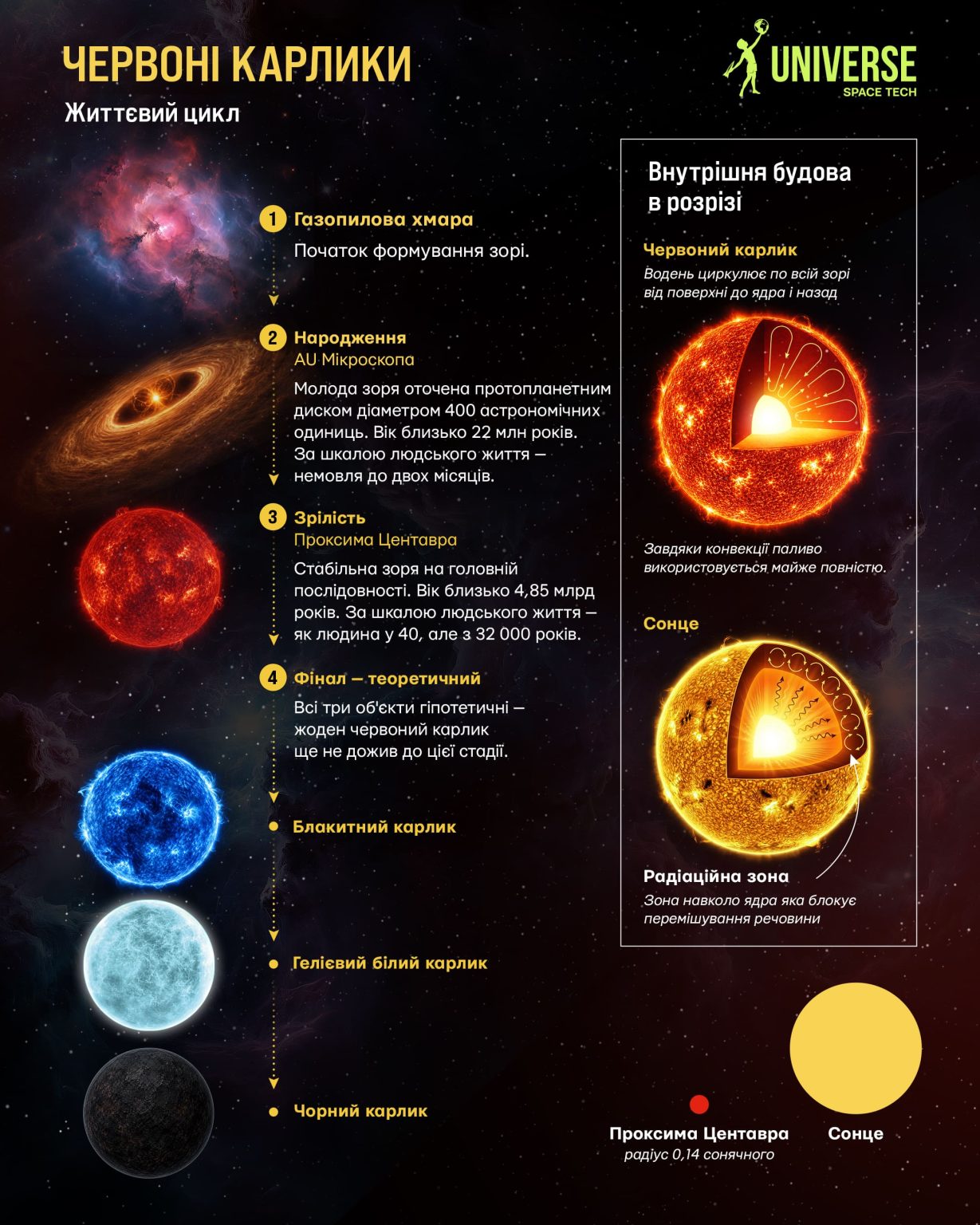
Source: Universe Space Tech
Most Population II stars are located in the halo, a sparse region surrounding the Galaxy’s flat disk. Globular clusters are also concentrated in this region. These dense clusters contain hundreds of thousands of stars, nearly all of which belong to this stellar generation.
One of the least-known members of Population II is designated 2MASS J18082002-5104378 B. The first part of its designation refers to the Two-Micron All-Sky Survey, in whose catalog it was recorded. Its proportion of heavy elements is approximately 10,000 times lower than that of the Sun. In total, these elements have a mass equivalent to that of Mercury, whereas in the Sun they have a mass equivalent to 14 times that of Jupiter. The object likely formed from gas enriched only by the first generation of stars.
The first stars and the formation of heavy elements
Where, then, did the heavy elements originate? During the earliest moments of the Universe, when it was extremely hot and dense, only hydrogen, helium, and a small quantity of lithium formed. Most of the helium present today dates to this period, rather than originating in the interiors of stars. All heavier elements emerged later, following the formation of the oldest stellar generation, known as Population III. This generation is estimated to have formed between 100 and 200 million years after the Big Bang, when the gas remained free of other impurities.
Theoretical models indicate that this gas cooled more slowly and condensed into substantially larger clumps. Consequently, the first stars were likely tens or even hundreds of times more massive than the Sun.
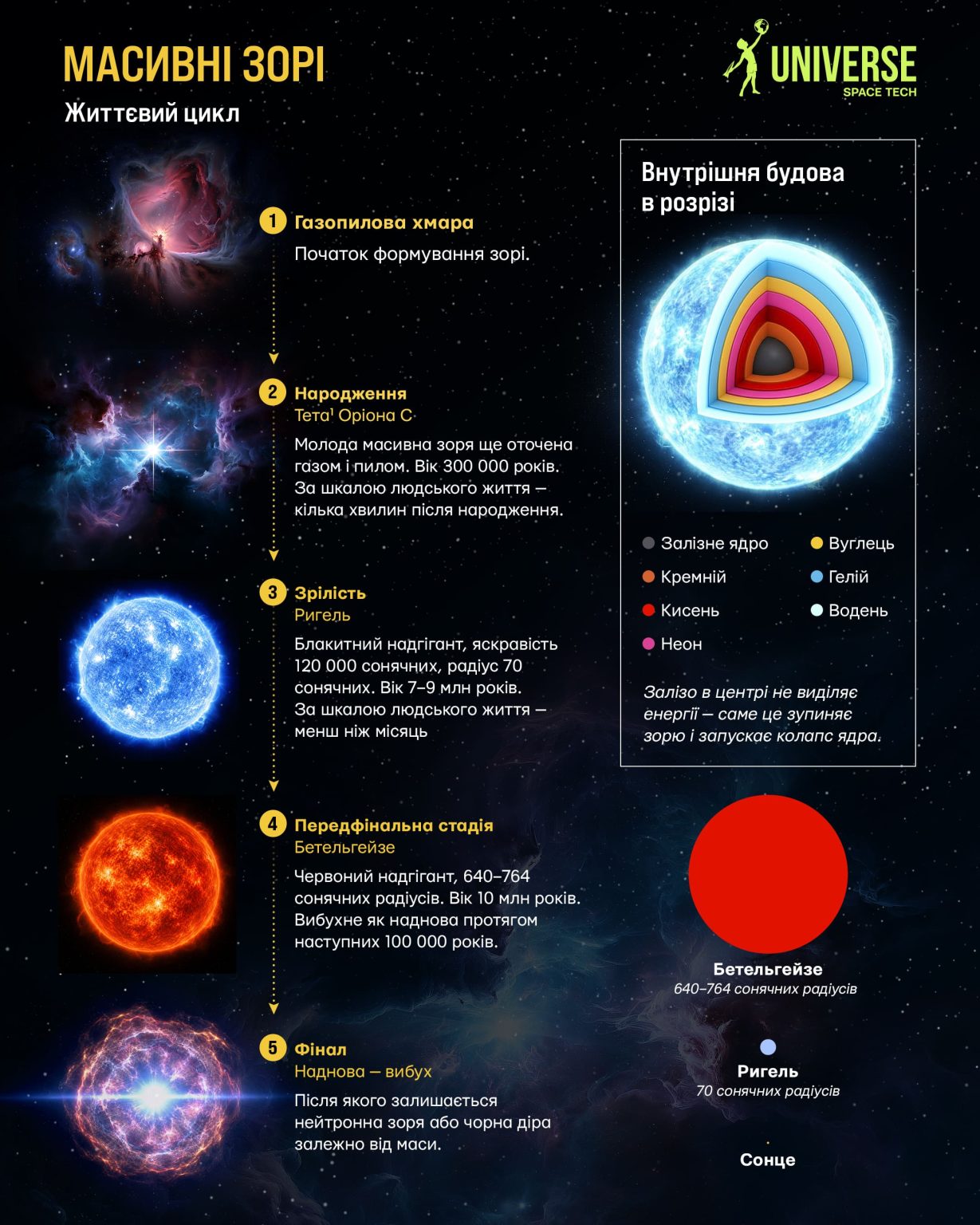
Source: Universe Space Tech
Within their cores, thermonuclear fusion first produced carbon, oxygen, silicon, and iron. They exhausted their fuel within a few million years, likely ending in an extremely powerful explosion known as a supernova. Even heavier elements formed during this event and later during the merger of neutron stars — the ultra-dense remnants that may remain after a supernova.

The shock wave dispersed the newly formed matter into the surrounding gas, from which the next generation subsequently formed. This cycle repeated, leading to a gradual increase in the abundance of heavy elements throughout space.
Some of the atoms in our bodies may have originated in the first generation, while the remainder accumulated over the course of many subsequent cycles.
The stars with the lowest heavy-element abundances discovered to date could readily be mistaken for the very first stars. One such star, J0815+4729, is located in the halo, approximately 7,500 light-years from Earth, and likely formed about 13.5 billion years ago. It contains one million times less calcium and iron than the Sun. Nevertheless, it belongs to Population II, as it already contains traces of heavy elements, indicating that an earlier generation of stars preceded it. The most massive of the first stars would have ceased to exist in the early universe. The less massive ones, if they formed at all, could still exist today; however, none have yet been discovered in the Milky Way.
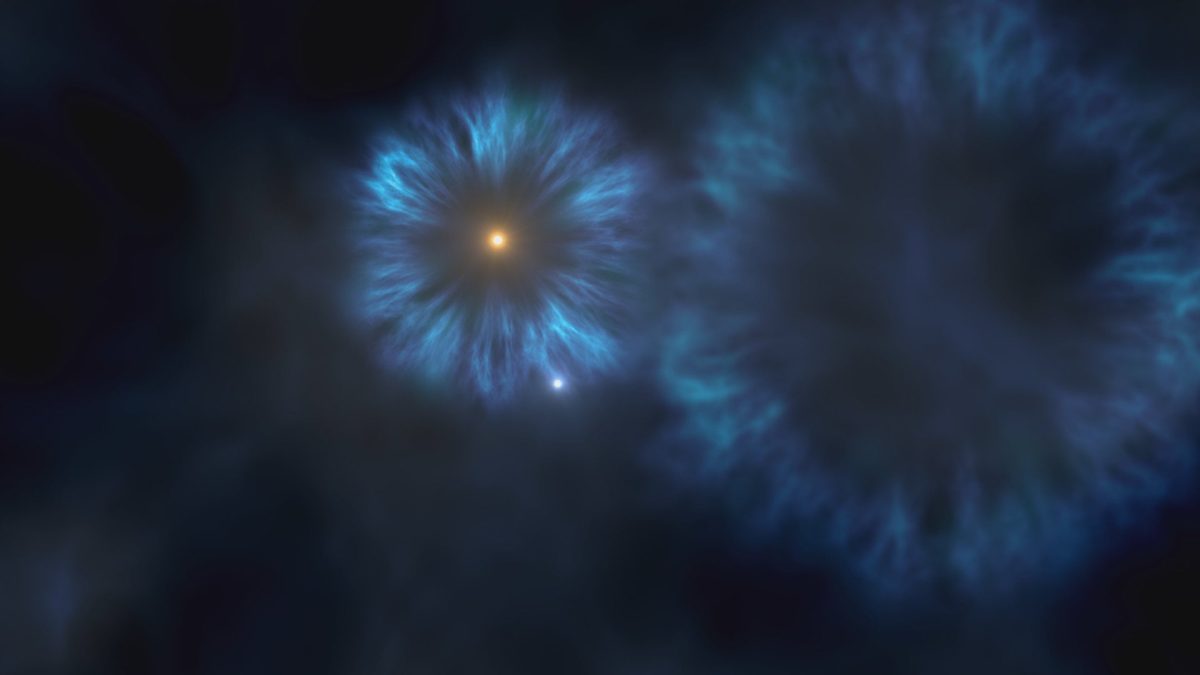
Credit: Gabriel Pérez Díaz, SMM (IAC)
Where can Population III be found?
That is why scientists seek to observe the universe as far back in time as possible — to the era of Population III. Light from the most distant regions has been traveling toward us for more than 13 billion years, revealing the universe as it existed shortly after the Big Bang. The James Webb Space Telescope, with its sensitivity to infrared wavelengths, is particularly well suited to these observations.
The galaxy LAP1-B is currently regarded as the leading candidate for Population III. Its light passes through a massive cluster of other stellar systems, whose gravitational mass bends the light rays like a lens, making the galaxy approximately 100 times brighter. Some data support this hypothesis; however, the conclusions remain controversial. Such stars are difficult to distinguish from later-stage stars or from luminous gas clouds.
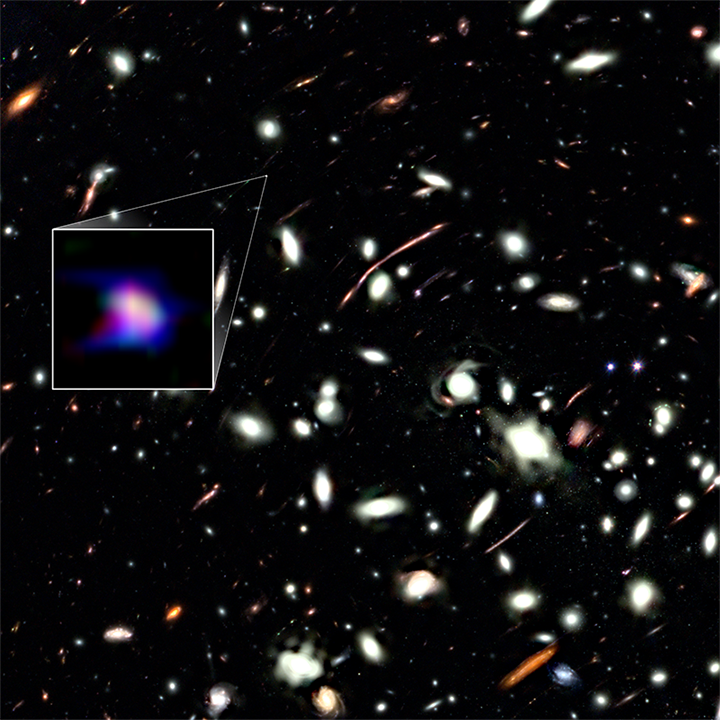
According to the models, the oxygen and carbon synthesized by the first stars remain within their interiors until they explode, whereas the spectrum reveals the composition of their surfaces and the surrounding gas. Accordingly, the defining characteristic of Population III stars should be the absence of spectral lines from these and other heavy elements. Instead, detectable traces of extremely hot helium, heated by the stars’ radiation, should be present. Astronomers will therefore seek this precise combination in LAP1-B and other candidates during upcoming observations with the James Webb Space Telescope.