

As of 2026, scientists have already discovered more than 6,300 exoplanets of various types: from worlds with strange signals to Earth twins bathed in the crimson glow of dim red dwarfs. Now astronomers may have made another important discovery by identifying the hottest star that potentially hosts a planet in the habitable zone.
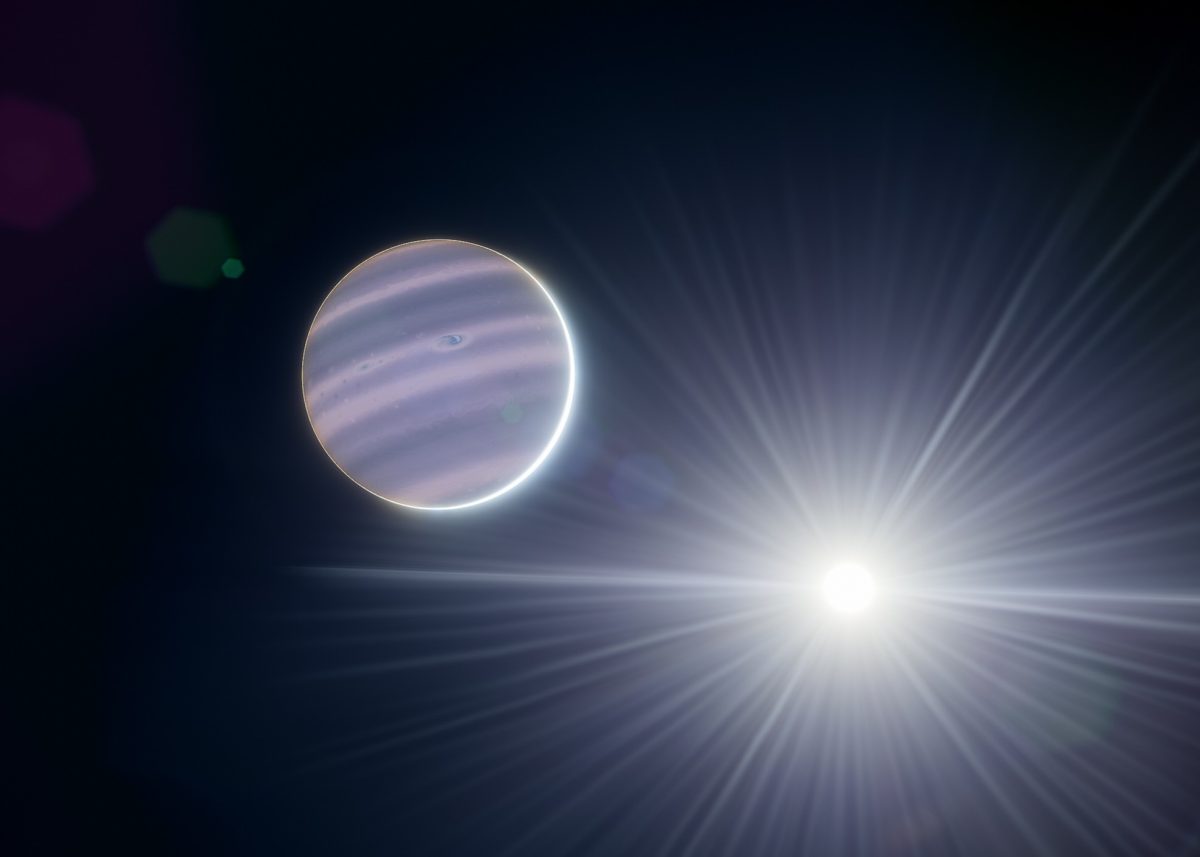
If the discovery is confirmed, HD 156295 b will become the first known exoplanet in the “comfortable zone” of a massive A-type star. Stars of this type shine with blue-white light, can be twice as massive and larger than the Sun, and are several thousand degrees hotter.
The star HD 156295 itself is visible even to the naked eye. It is almost nine times brighter than the Sun, its temperature reaches 7,500 °C, and it is located only 140 light-years away from us. In addition, it is a δ Scuti variable star: it pulsates with strict periodicity, functioning like a true “cosmic pendulum.”
In a study published in The Astrophysical Journal, astronomers analyzed data on nearly 16,500 δ Scuti stars collected by NASA’s TESS space telescope. From a narrowed-down list of nine systems, one contains the exoplanet candidate HD 156295 b, while the other eight contain brown dwarf candidates.
A Giant in a Distant Orbit
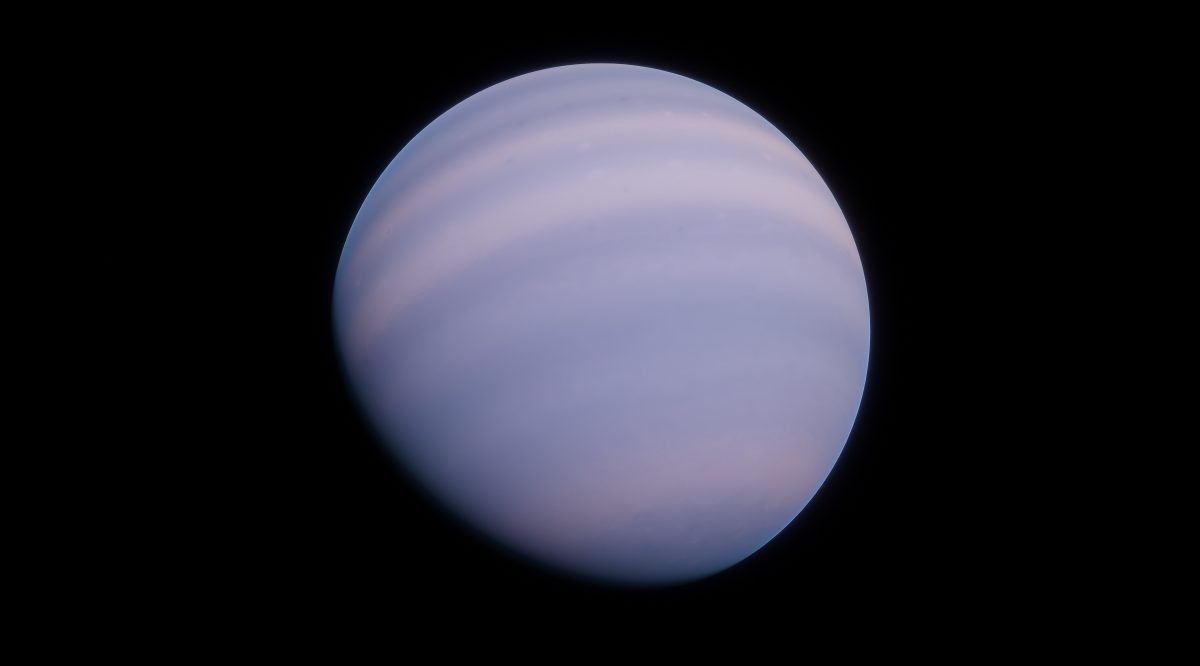
According to researchers’ estimates, the possible exoplanet is about six times more massive than Jupiter. It is located at a distance of almost 4 astronomical units from its star and completes one orbit around it in approximately 2,200 days, or nearly 6 Earth years. Because of the characteristics of the system, HD 156295 b receives about 60% of the radiation that Earth receives from the Sun.
Astronomers detected the object using the “pulsation timing” method. It tracks microscopic changes in the arrival time of light from the star. Since HD 156295 pulsates in a precise rhythm, any gravitational “tugging” from a large body disrupts this schedule and reveals the presence of a planet.
The other eight candidates in the studied systems are likely brown dwarfs — objects that are more massive than planets, ranging from 25 to 59 Jupiter masses, but too small for thermonuclear reactions to ignite in their cores. Their orbital periods range from 1,100 to 2,800 days.
A Cosmic Coin Toss
Scientists estimate the probability that the HD 156295 b candidate truly exists at about 50% — essentially a cosmic coin toss. Discoveries of planets around A-type stars remain rare, so even false-positive results are extremely valuable for determining the limits of how common giant planets are around massive stars.
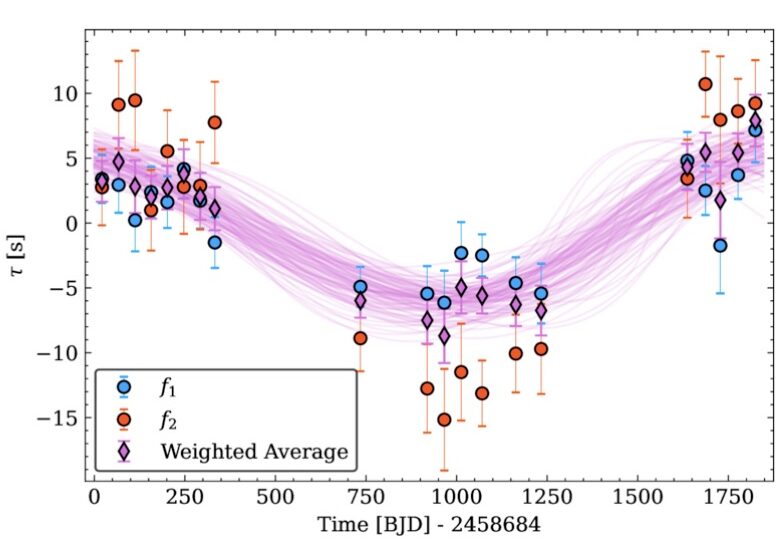
The detected variations are near the sensitivity limit of the TESS telescope. However, the flow of data continues, while ESA’s future PLATO mission will provide even greater observational precision for more than 200,000 stars.
A gas giant of this size is unlikely to be home to biological life as we understand it, but unusual chemical processes in the habitable zone of a hot star may still bring surprises. Especially since this system is only 700 million years old — by cosmic standards, it is only beginning its journey.
Previously, we reported on how astronomers found 45 exoplanets for relocation from Earth.
Based on materials from Science Alert
