

Today, time can be measured with extraordinary precision because we no longer rely on gears, springs, or even quartz crystals. The world’s most accurate clocks use the vibrations of atoms themselves.
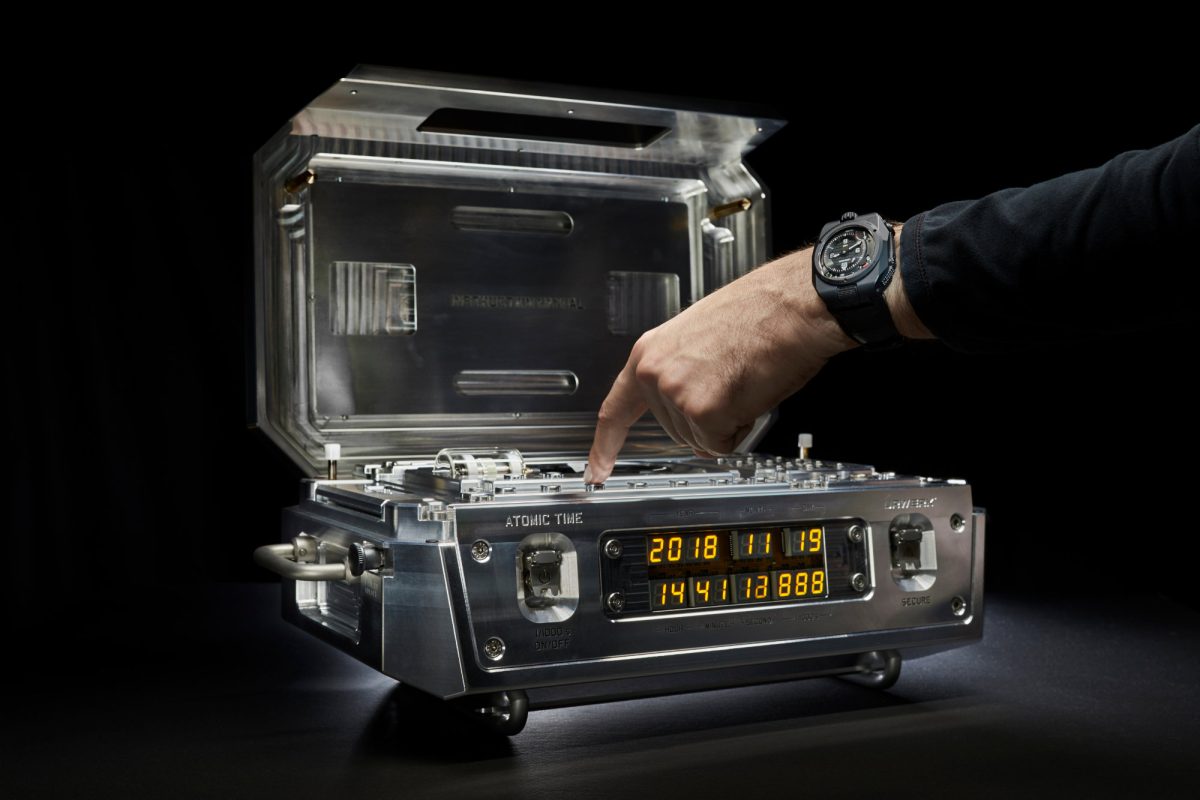
The history of watch accuracy
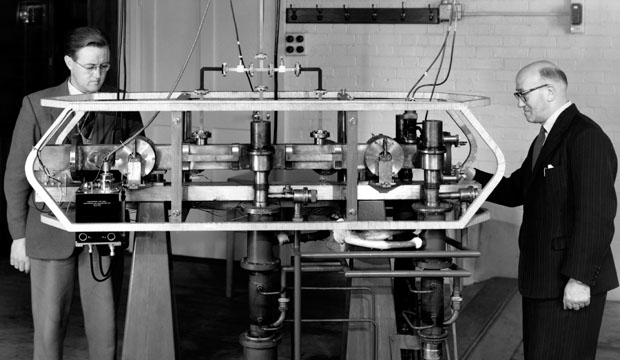
Seventy years ago, on October 3, 1956, the American company National Radio Company unveiled the world’s first atomic clock, the Atomichron, in New York. The device was substantial, standing over two meters tall and weighing 350 kilograms. Its primary customers were, unsurprisingly, military and scientific institutions. This device ushered in a new era of timekeeping — one that people could scarcely have imagined just a few centuries earlier.
In general, time is an astronomical concept. We recognize the existence of days, months, and years by observing the movements of the Sun, the Moon, and the stars; at one time, this was sufficient. However, we eventually needed to measure time more precisely than by using broad divisions such as “morning — noon — evening.”
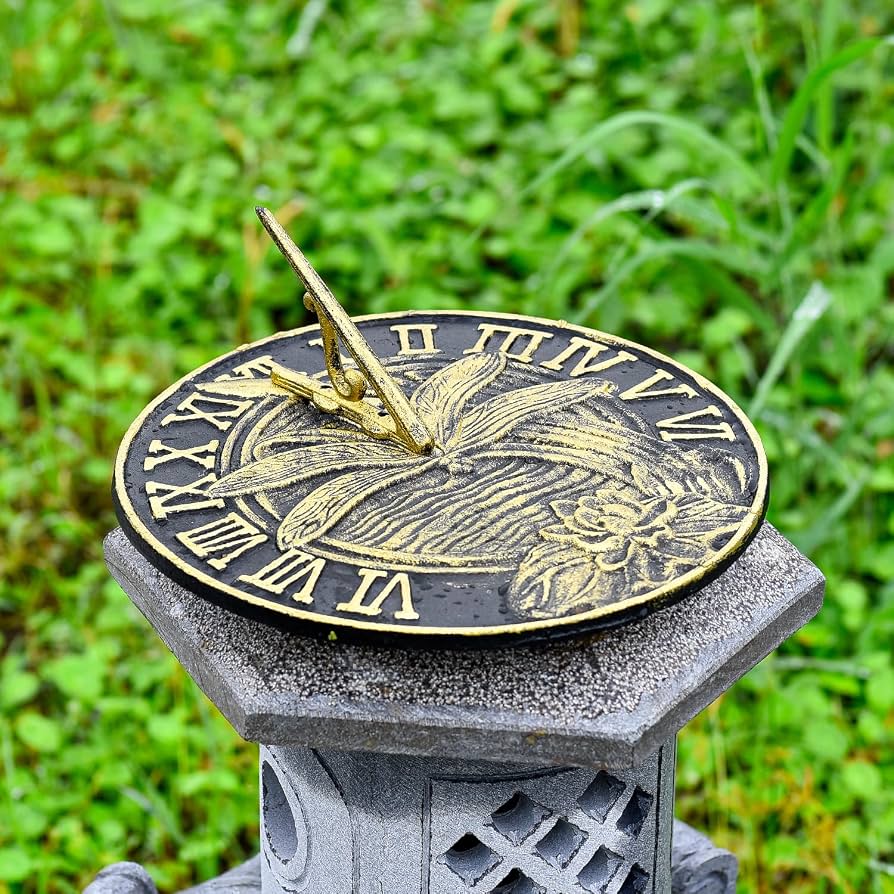
To address this need, people invented the sundial, giving rise to the very concept of “time.” However, the shadow cast by a pole is an extremely imprecise indicator, even when the pole is as large as a house. Consequently, people sought an alternative method.
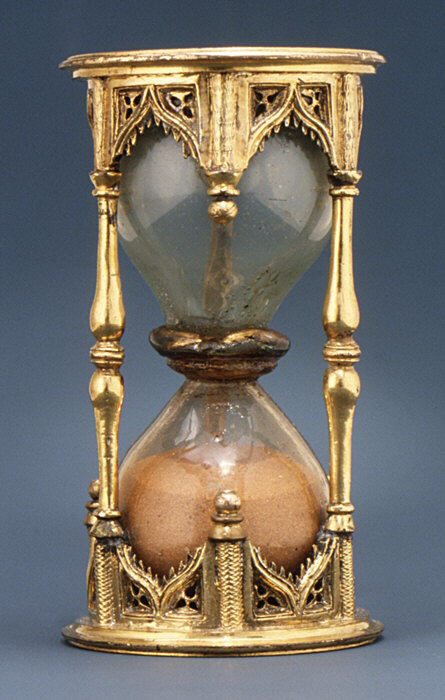
Water clocks and hourglasses were more practical, operating on the principle that gravity causes a liquid or loose material to pass through an opening of a fixed size within a standard period of time.
These devices enabled time intervals to be measured with an accuracy of one second. However, the intervals were generally much shorter than a day, and the devices had to be turned over after the material flowed from one container to another.
For this reason, mechanical clocks represented the next stage in the development of timekeeping. They operated through the rotation of gears and pendulums, powered by springs and weights. These devices first appeared in the 13th century; they were enormous and designed to be installed in towers. By the early 16th century, however, they had become small enough to be carried in a pocket.
This was convenient because mechanical watches required winding only once every few days and were accurate to within a few seconds per day. At the same time, astronomy remained the most accurate method of determining time, as the rising of the Sun and stars could be calculated to within fractions of a second. However, this method could be employed only by astronomers and therefore remained impractical for everyday use.
Crystal oscillators
Several centuries ago, scientists recognized that the essential feature of a mechanical clock is an oscillator capable of producing regular oscillations over an extended period. A pendulum provides the simplest means of achieving this; however, its period is too long, and it is susceptible to damping.
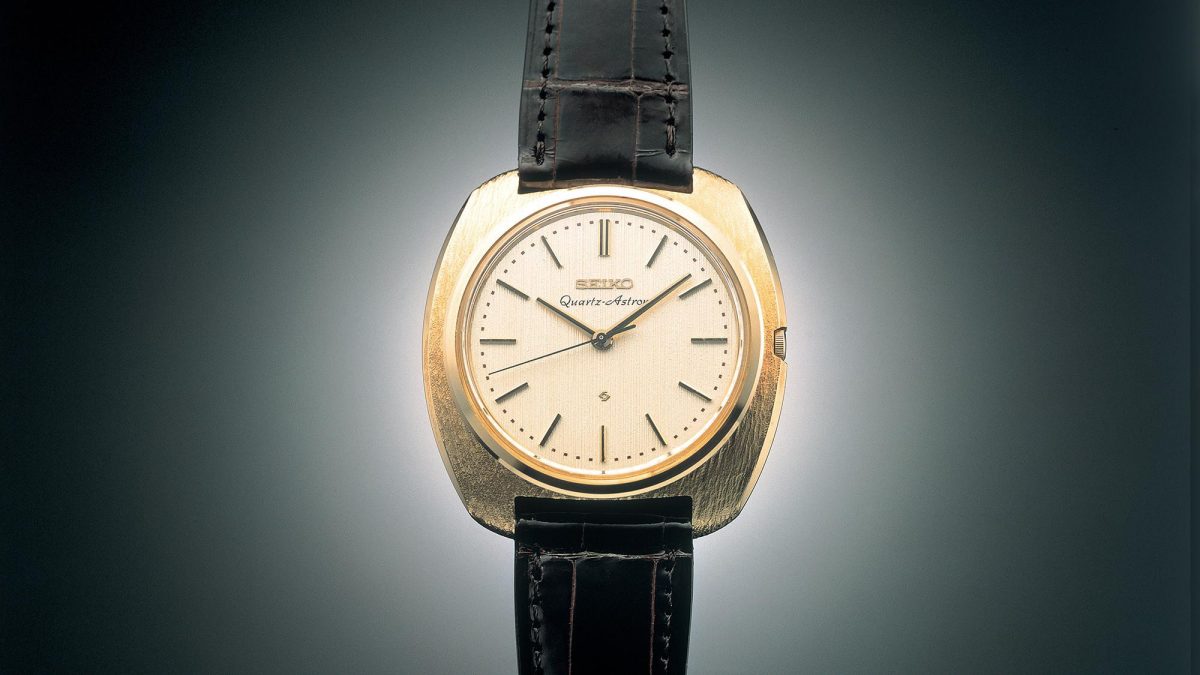
A more effective method involves harnessing the vibrations produced by crystals, such as quartz, when an electric current passes through them. The first quartz watch was designed as early as 1927; however, Seiko was the first company to bring a wristwatch model to market in 1969.
Cell phones and laptops typically synchronize their clocks using precise time signals. However, they can continue keeping time without an internet connection. To achieve this, they contain a small quartz crystal that provides a steady oscillation, typically at a frequency of 32,768 Hz.
Atomic clock
As early as 1879, the English physicist William Thomson, also known as Lord Kelvin, observed that atoms exhibit intrinsic vibrations at highly stable, predictable frequencies and proposed using this phenomenon to develop exceptionally precise clocks. However, his proposal was not implemented until the 20th century.
Modern atomic clocks most commonly use cesium and rubidium atoms. Their distinctive property is that, when exposed to microwave radiation within a range suitable for contemporary technology, these atoms transition between energy levels at an exceptionally stable and precisely defined frequency.
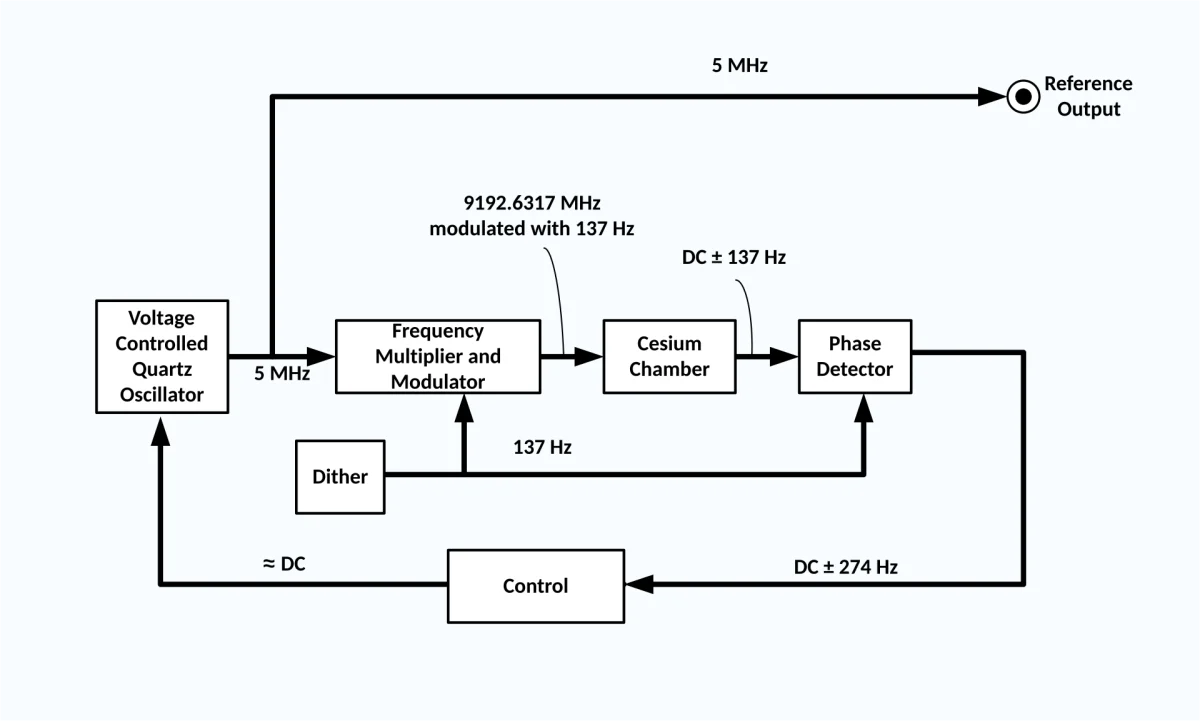
American physicist Isidor Rabi began work on a cesium-based atomic clock as early as the 1930s, but his research was interrupted by World War II. As a result, the first working prototype was developed in 1949 by the American Standards Committee. However, it relied on the oscillations of ammonia molecules and offered relatively low accuracy.
For this reason, developers turned to cesium-133 and produced the first prototype as early as 1955. Following its commercial release, other companies contributed to refining the design. By 1964, Hewlett-Packard had introduced a model approximately the size of a small suitcase.
Subsequently, separate models approximately the size of a router were developed. These models are installed on satellites, with which household electronics synchronize via wireless signals. In 2011, miniature quantum atomic oscillators became available for use in wristwatches.
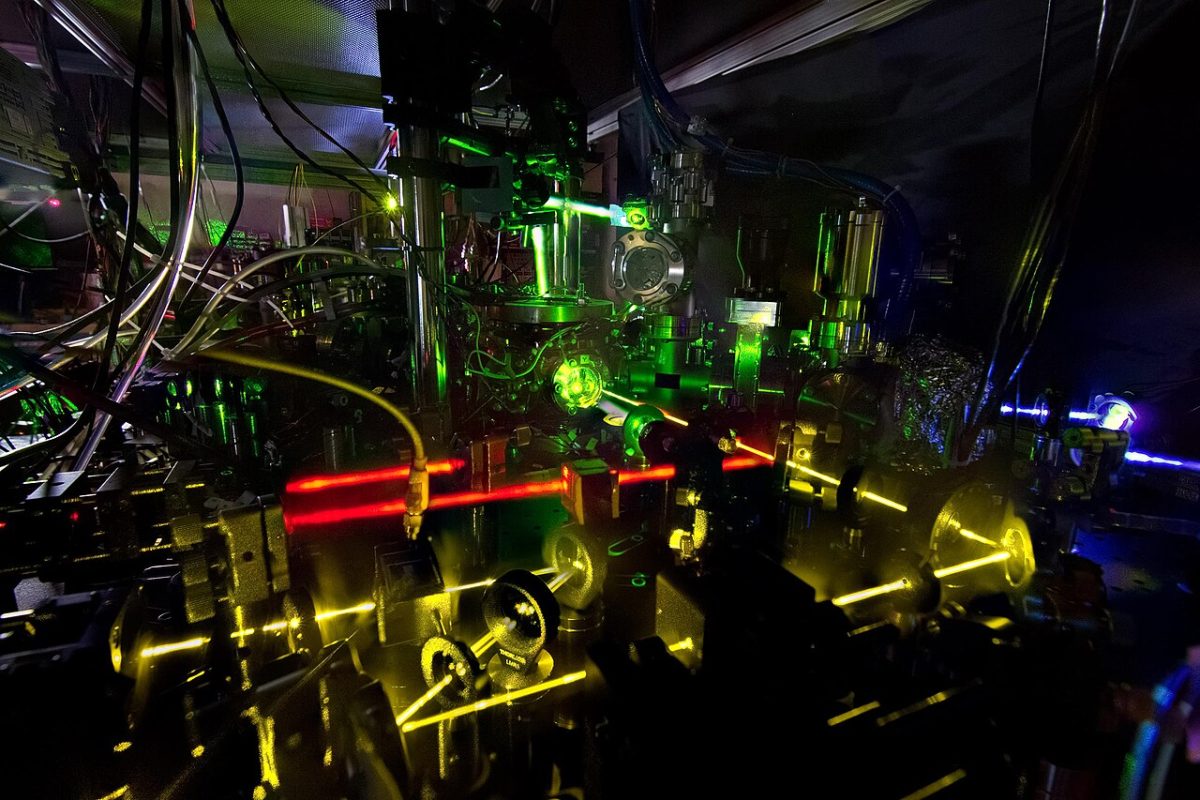
Admittedly, this was achieved using a simplified design. It did not include magnetrons, but instead relied solely on an infrared laser and an optical system to measure oscillations. Consequently, the clock has an error of “as much as” one second over 600 years of operation.
By comparison, laboratory samples exhibit an error of one second every 100 million years. In 2013, an atomic clock based on the oscillations of ytterbium atoms was developed. Because these oscillations occur at a higher frequency than those of cesium, the developers report that the device has an error of one second every one billion years.
Why are atomic clocks necessary?
In 1967, the International Bureau of Weights and Measures defined the second as the time required for a cesium atom to complete 9,192,631,770 transitions between two states. Consequently, the modern definition of time is tied to the atomic clock. In 1967, the International Bureau of Weights and Measures defined the second as the time required for a cesium atom to complete 9,192,631,770 transitions between two states. Consequently, the modern definition of time is tied to the atomic clock.
In addition, many practical applications depend on this capability, particularly navigation. Satellites in global positioning systems determine a receiver’s distance from Earth based on delays in radio signals, which are measured in tiny fractions of a second. Consequently, the ability to determine position to within a meter is a direct result of the ability to measure time to within a microsecond.
Another significant application of atomic clocks is in communications and telecommunications. These systems require precise synchronization of signal transmission. Consequently, all delays at servers and base stations — even those lasting mere milliseconds — must be taken into account.
Precise time measurement is also essential to various transportation systems and the energy sector. Furthermore, atomic clocks are vital for conducting numerous scientific experiments.