

The Royal Observatory in Greenwich, London, has announced the results of the 18th annual Astronomy Photographer of the Year competition. This year, the jury reviewed nearly 4,000 works by photographers from all over the world. The best images, showcasing the remarkable diversity of our Universe — from nearby objects in the Solar System to distant nebulae — will be displayed at the National Maritime Museum in Greenwich.
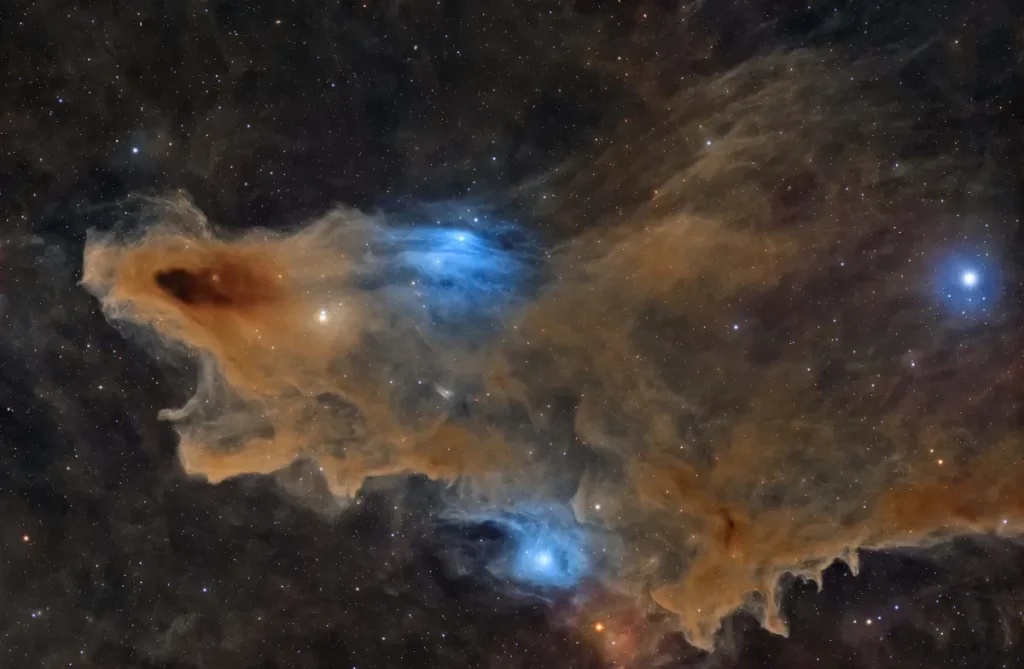
The competition’s top prize went to photographer Ali Alobaidly from Kuwait for his work titled The Quiet Predator. The image shows the Shark Nebula — a giant cloud of interstellar gas and dust whose shape resembles a marine predator.
The judges praised the flawless contrast and detail: even distant galaxies can be seen through the translucent waves of dust. Sharp stars across the entire frame and the depth of the dark dust clouds make this work one of the finest examples of modern astrophotography.
The Mysterious Solar Corona and the Glow of Iceland
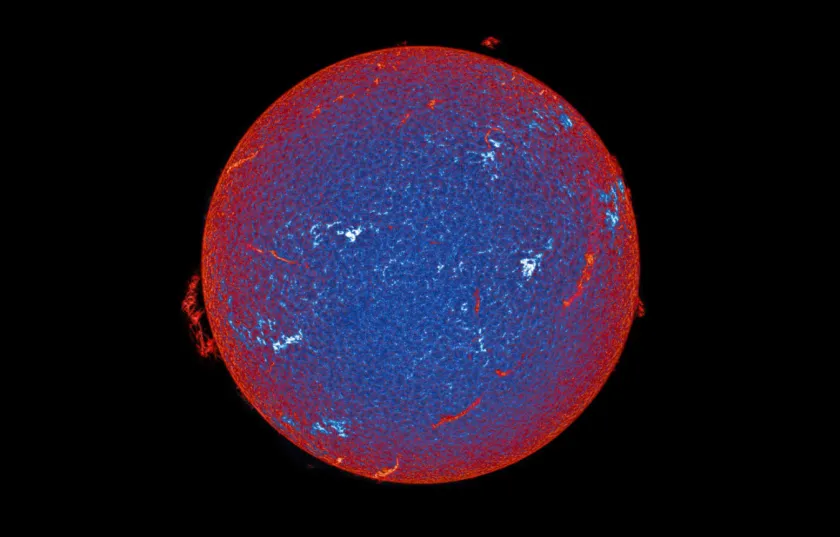
Among the prize-winning works in various categories is a photograph by Peter Ward devoted to our star. The photographer captured layers of the Sun’s chromosphere. Thanks to special filters, calcium structures (Calcium-H) shimmer in lilac tones, intertwining with the crimson glow of ionized hydrogen (H-alpha). The blue coloration in the image reveals the star’s powerful magnetic architecture.
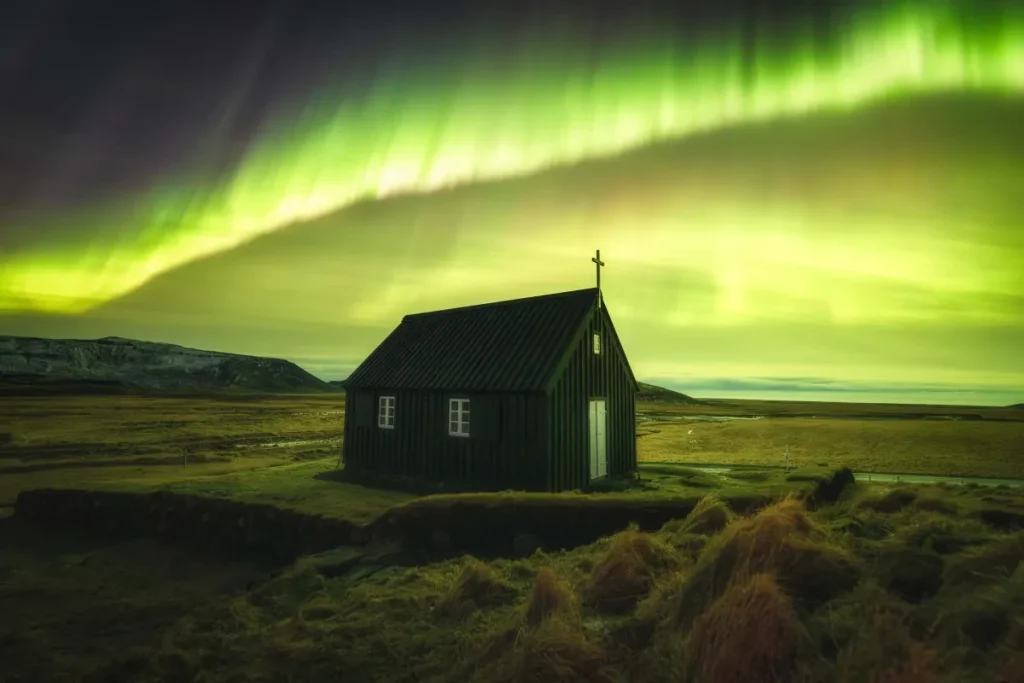
Another mesmerizing image was created by Radoslav Sviretsov. He captured a powerful geomagnetic storm above a traditional Icelandic church in the town of Fúlípollur, near Reykjavík, where there is no light pollution.
Echoes of Ancient Explosions and Stellar Pearls
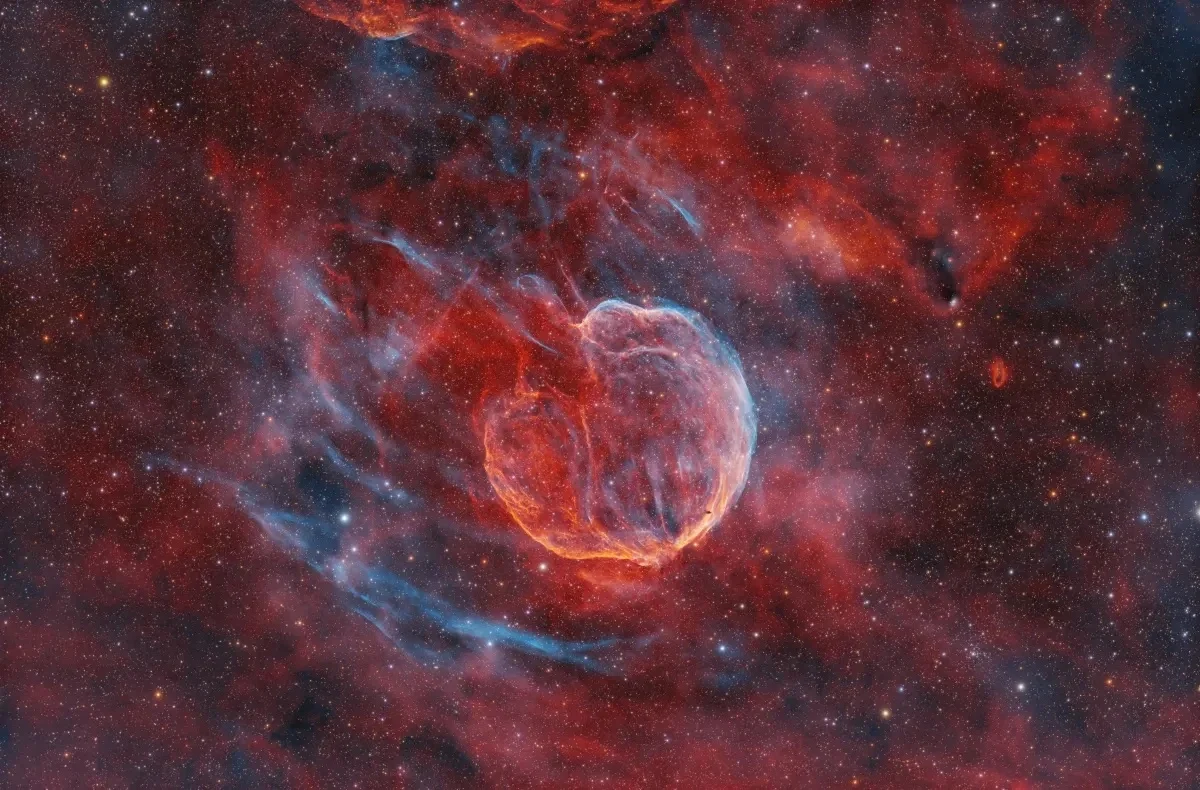
- Fading supernova Abell 85. Cédric Humbert used 30 hours of exposure to isolate the signal of doubly ionized oxygen and capture the extremely faint gaseous shell left by a stellar explosion in the constellation Cassiopeia.
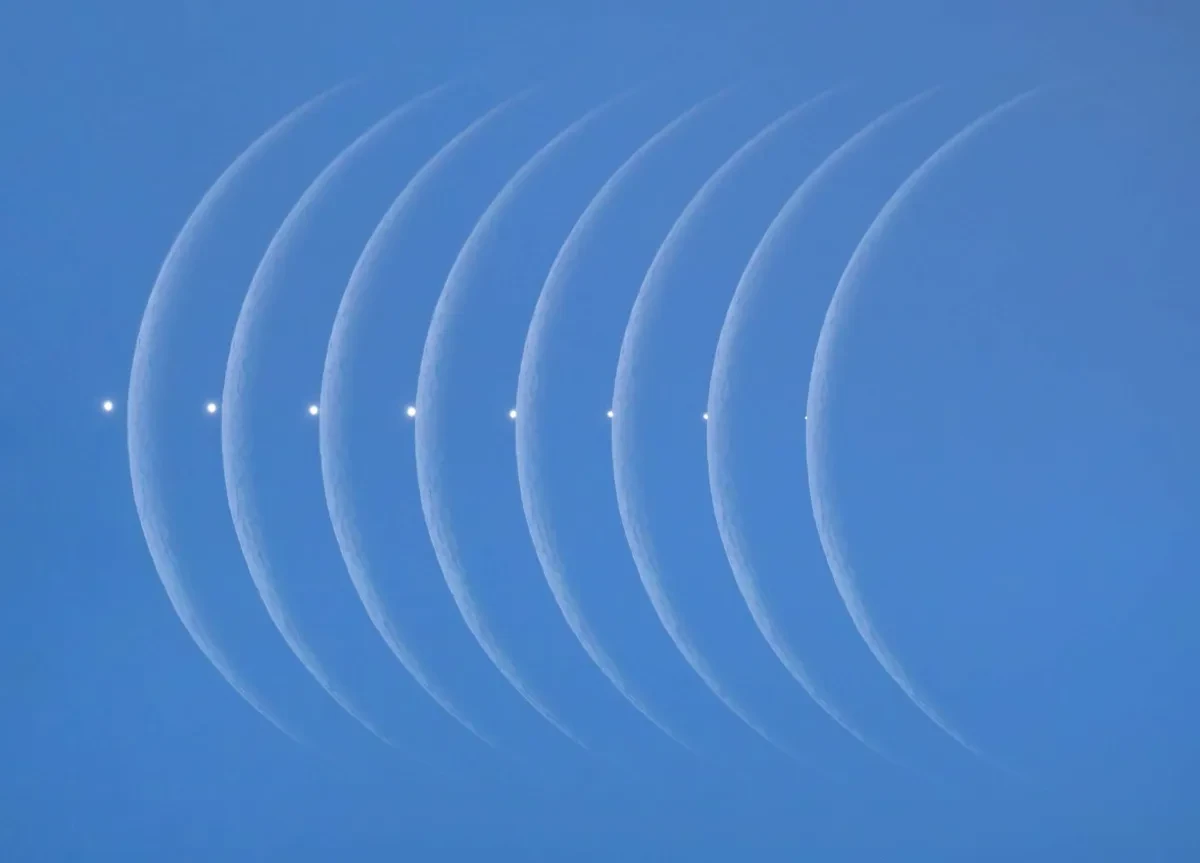
- Venus and the Moon. Petr Horalek photographed the moment when Venus disappeared behind the lunar crescent, resembling a bright pearl on the edge of the disk.
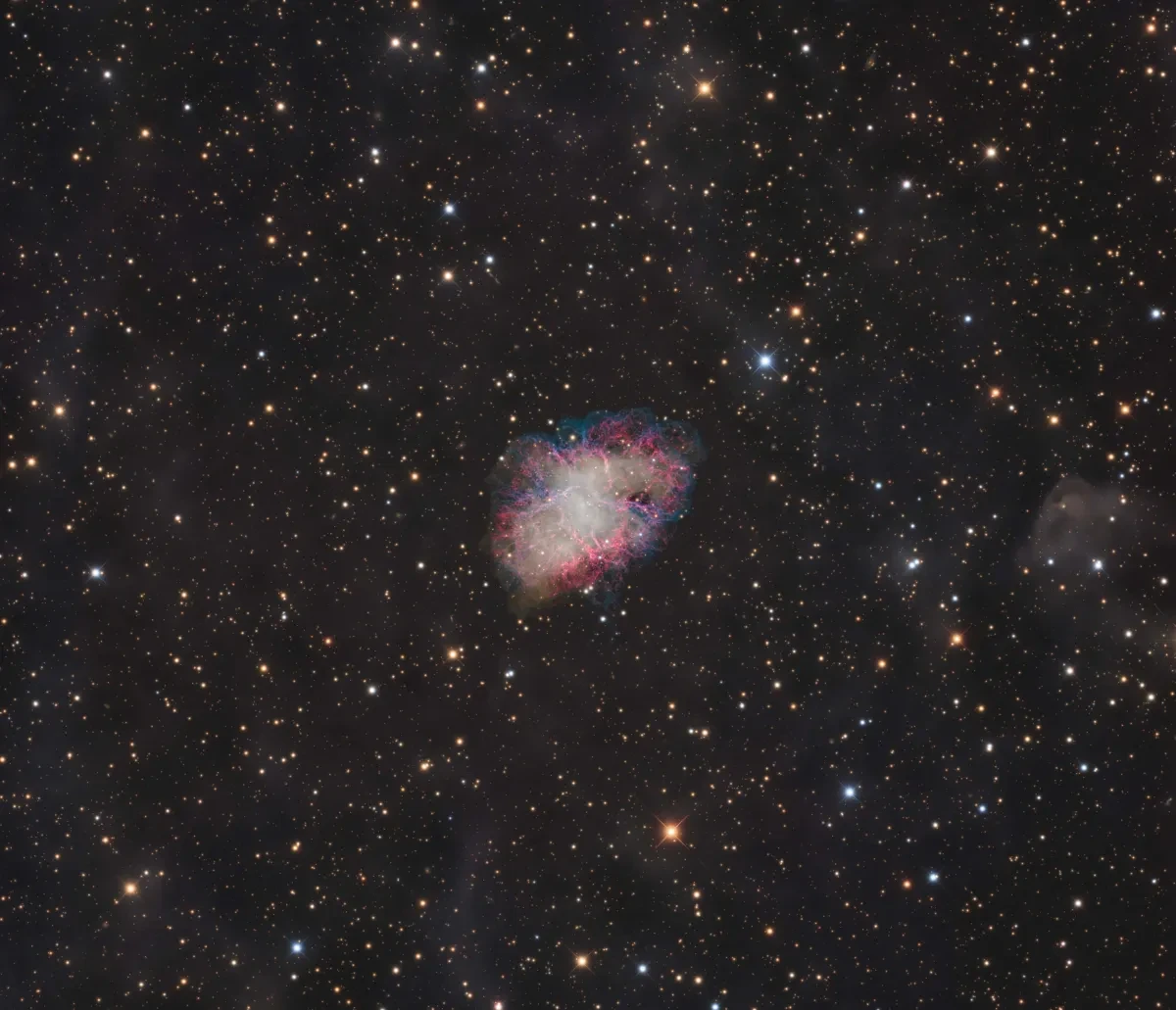
- Crab Nebula (M1). Winner of the “Best Newcomer” category Haocheng Zhu captured the remnant of the supernova whose explosion was observed by Chinese astronomers as early as 1054. What was once visible with the naked eye even during the day is now expanding in the form of delicate filaments.
An Ancestral Calendar and Comet Lemmon
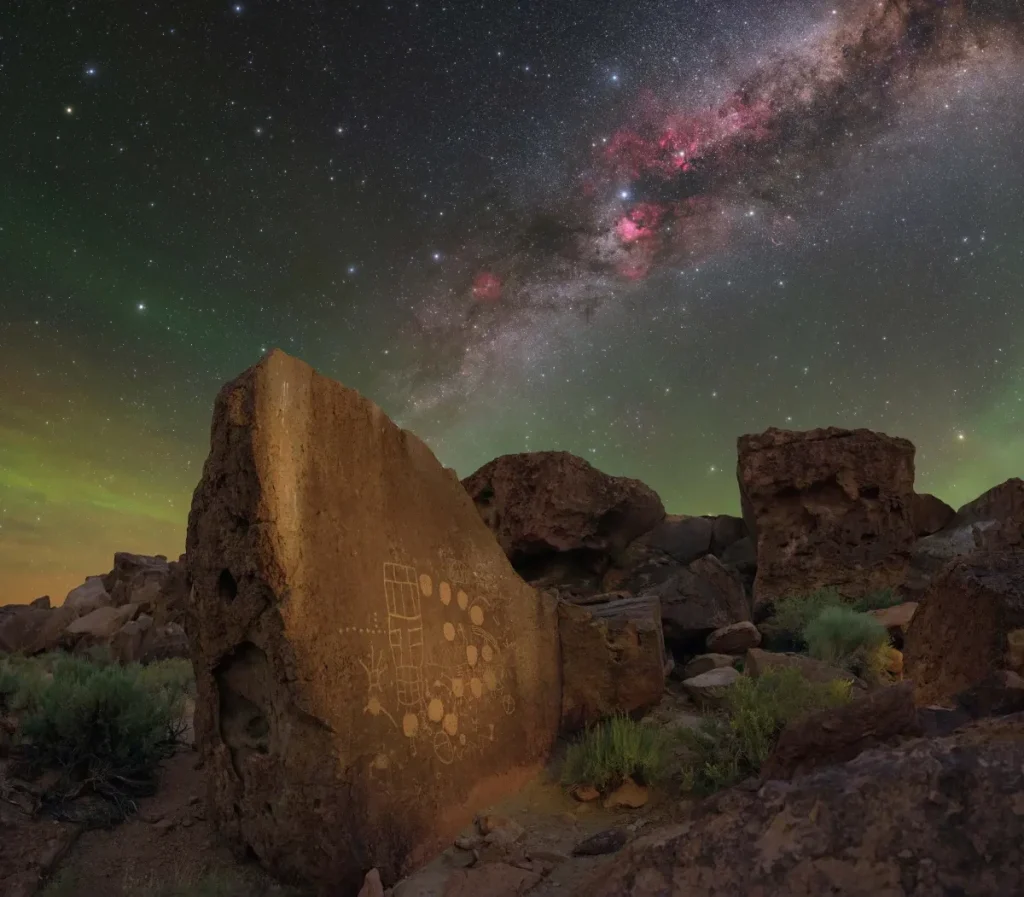
In the California desert, Max Inwood photographed the ancient “13 Moons” petroglyph against the backdrop of the constellation Cygnus and the Milky Way. The ancient calendar, illuminated by a small light source, contrasts with pink nebulae and the green glow of the atmosphere.
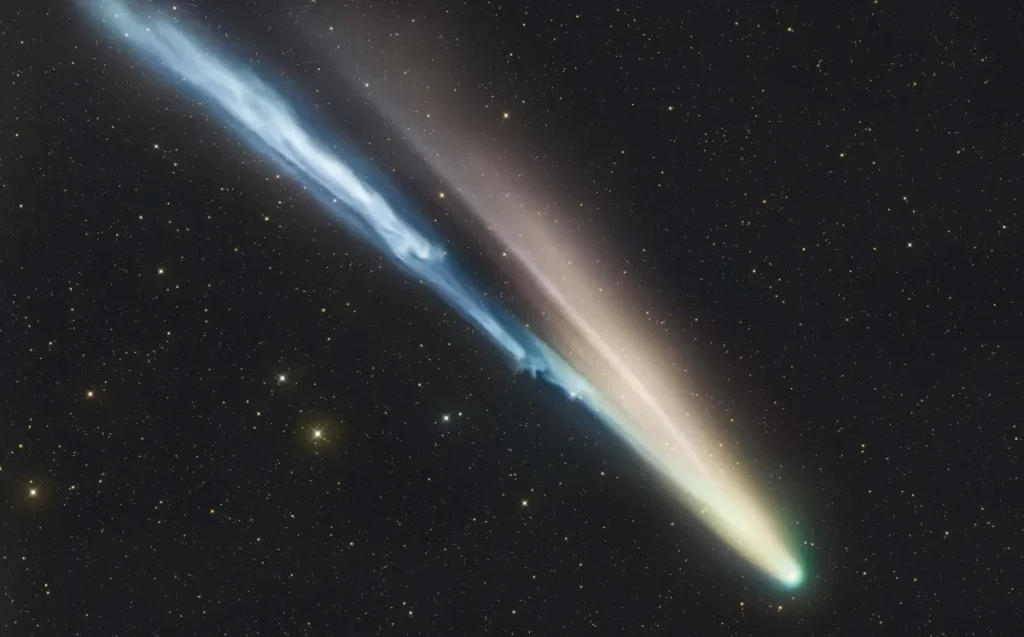
The selection concludes with an image of the newly discovered comet C/2025 A6 (Lemmon), taken by Julien De Winter and Landon Boehm from the Starfront Observatory in Texas. The image was captured on October 28, 2025, when the comet was about 101 million km from Earth, showing extraordinary activity ahead of perihelion.
Based on materials from rmg.co.uk
