

The room temperature to which we are accustomed may seem natural to us; however, it is uncommon throughout the universe. In regions far from stars, temperatures fall to nearly −270 °C, whereas elsewhere, matter may be heated to millions of degrees. We will examine the temperatures that may exist in space, the factors upon which they depend, and the characteristics that make Earth unique.
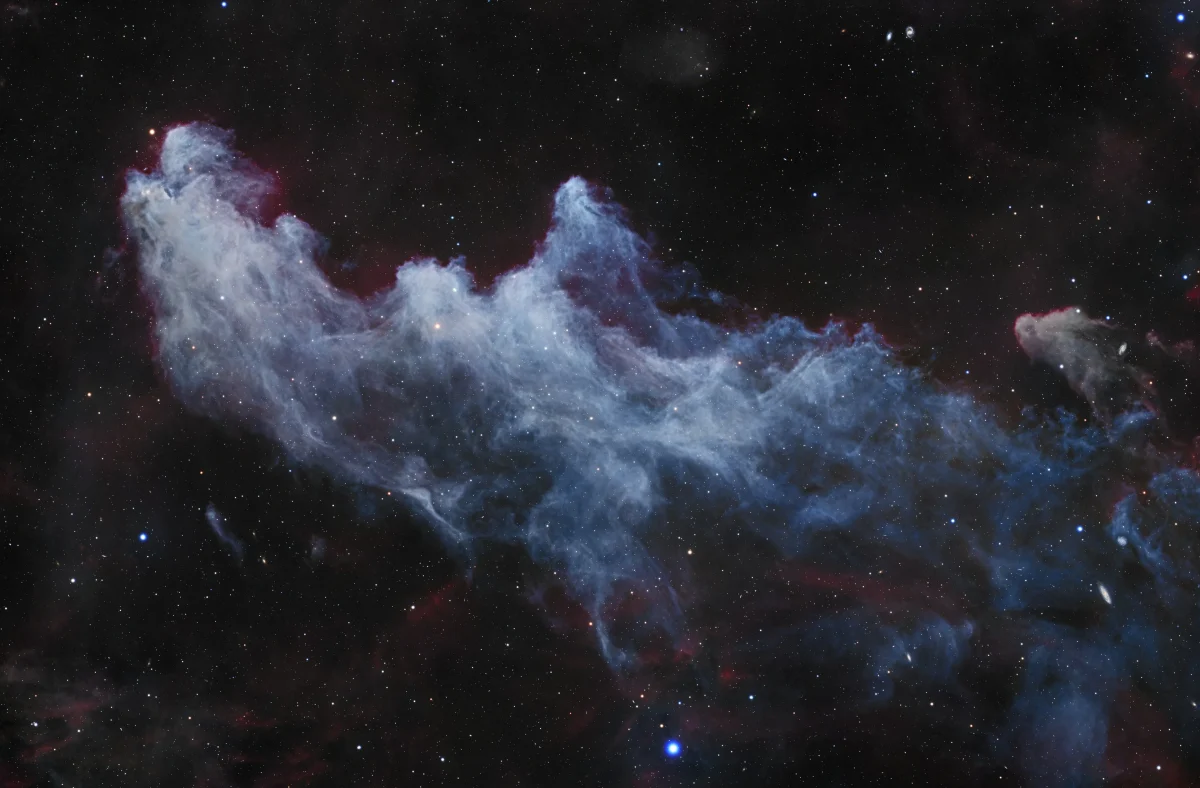
Why is a temperature of positive twenty degrees so uncommon in space?
A temperature of plus twenty degrees Celsius outdoors appears normal to us, whereas a temperature of minus twenty degrees Celsius is experienced as a severe winter condition. On the full range of temperatures found throughout the universe, these two values are nearly adjacent. Matter that is not warmed by a star eventually cools to approximately −270 °C.
The upper end of this scale reaches millions of degrees, and temperatures of this magnitude can occur, for example, in the Sun’s outer layers. At the midpoint lies a narrow range in which water neither freezes nor vaporizes; only within this range is life possible in the form with which we are familiar. To understand why the temperatures to which humans are accustomed are, in fact, exceptional, we must first determine what the term “temperature” actually means.
What is temperature?
Every substance consists of atoms and molecules that are in continual motion. In a gas, these particles move independently and collide with one another; in a solid, they are fixed within a crystal lattice and therefore merely vibrate in place. Temperature reflects the rate of this motion. For example, the molecules in hot tea move more rapidly than those in cold water. When we touch the cup, these molecules transfer some of their energy to our skin, producing the sensation of heat.
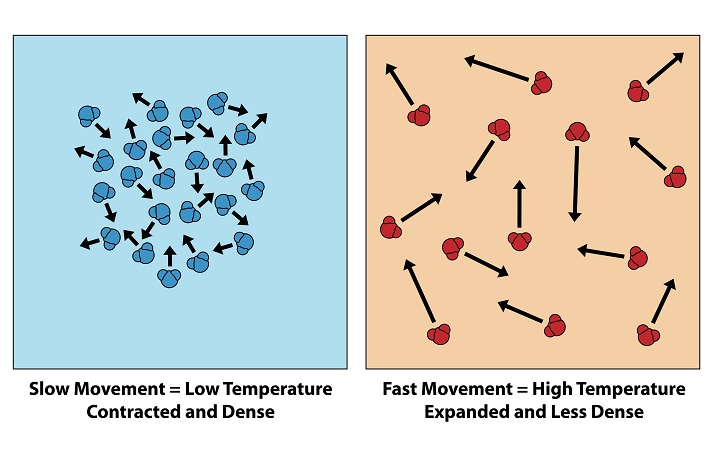
In space, heat transfer through direct contact is largely ineffective. The space between stars and planets contains extremely little matter; consequently, particles rarely collide with objects and transfer significant amounts of energy to them. Although the rarefied gas in these regions may be extremely hot, its density is insufficient to heat objects to any significant degree. Therefore, an object’s temperature depends not on its surroundings, but rather on the amount of heat it receives from the Sun or another star and the amount of heat it loses independently.
In the absence of air or physical contact, heat can be transferred in only one way — through radiation. For example, the Sun warms the Earth across 150 million kilometers of empty space. All other objects likewise continuously lose energy by emitting rays that are invisible to the naked eye. A thermometer in orbit would not measure the temperature of space; rather, it would measure the difference between the amount of heat it received as light and the amount it radiated back into space by the same process.
The cold universe
The temperature of a luminous body can be determined by examining the light it emits. Iron, for instance, initially glows red, then yellow, and ultimately white, enabling its temperature to be readily estimated from its color. Cooler bodies emit radiation that is invisible to the naked eye; nevertheless, their temperature can still be determined by analyzing the wavelengths of that radiation.
Immediately following the Big Bang, the Universe was filled with an extremely dense and hot substance. As a result of this intense heat, it emitted light. Under these conditions, electrons did not remain bound to atomic nuclei but moved freely. The light emitted by the substance continually collided with these electrons and changed direction; consequently, it could not travel far. Approximately 380,000 years later, the temperature decreased to around 2,700 °C, allowing stable hydrogen atoms to form. A path for radiation consequently became open, and, for the first time, it propagated without obstruction. Today, this radiation is known as the cosmic microwave background, and it continues to permeate the entire Universe.
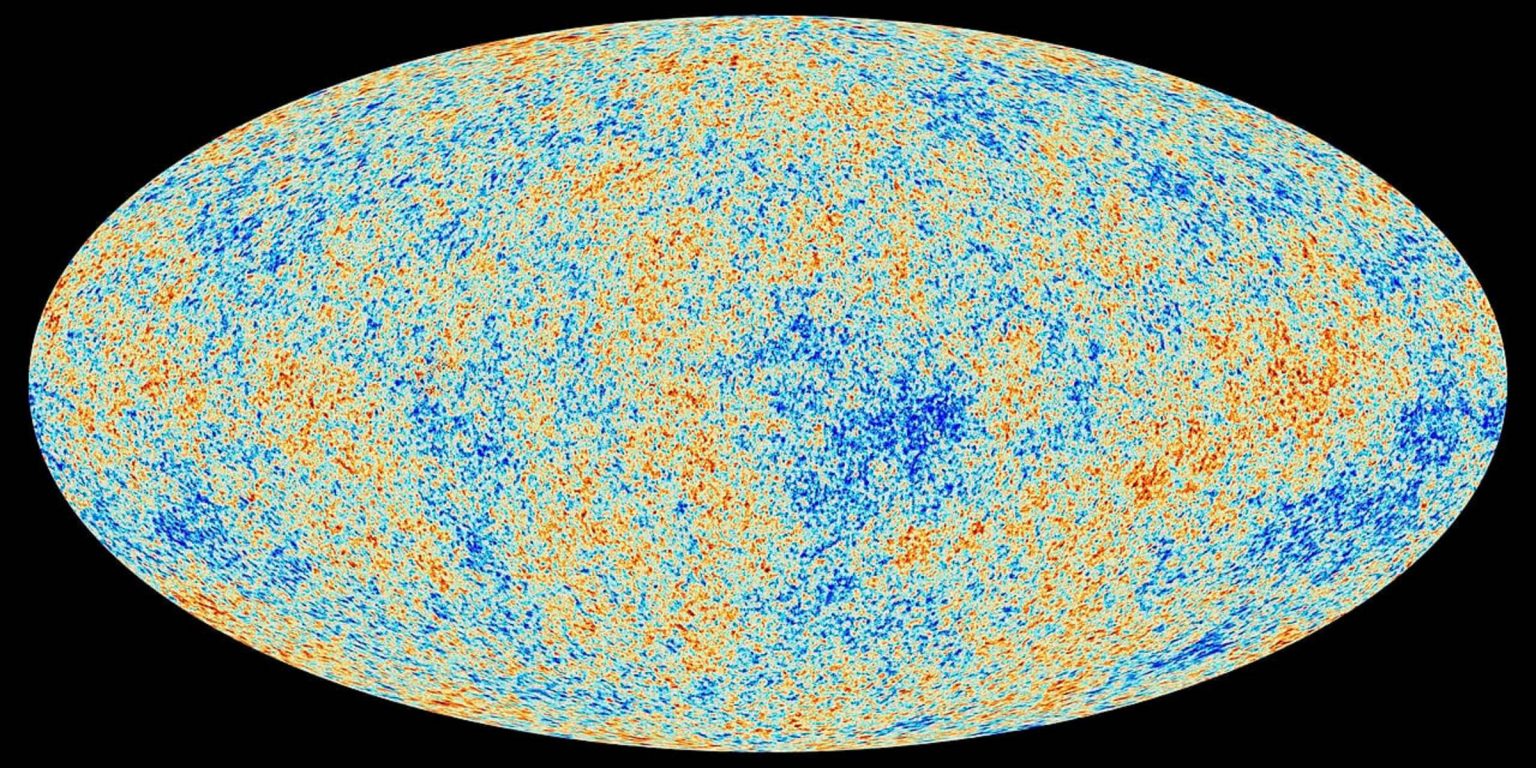
Over the course of billions of years, the universe has expanded, and this radiation has been correspondingly stretched. Today, its wavelength is approximately one millimeter. Radiation of the same type, with a wavelength roughly 120 times longer, is used to heat food in a kitchen microwave oven. For this reason, it is also known as microwave background radiation. Its temperature is approximately −270 °C, only 2.7 degrees above the lowest limit permitted by the laws of physics.
This background establishes the standard. Nearly the entire volume of the universe consists of empty space — devoid of stars, planets, and gas — and it is there that the temperature remains close to this level. Matter itself is distributed differently, being concentrated in galaxies and in the diffuse clouds between them, some of which reach temperatures of millions of degrees. Any object located far from stars radiates heat until its temperature approaches that of its surroundings. In nature, temperatures can fall even lower only under rare circumstances, because the cosmic microwave background continuously warms everything within it. As the universe continues to expand, the cosmic microwave background gradually cools.
The Earth between heat and cold
Against this backdrop, Earth appears to be a relatively warm oasis. It is heated by the Sun, while its atmosphere retains a portion of the energy that the surface radiates back into space. In the absence of this greenhouse effect, the planet’s average temperature would be approximately −18 °C, rather than the current +15 °C.
In the absence of air, the temperature differential between illuminated and shadowed surfaces becomes extreme, as there is no medium capable of transferring heat from the sunlit side and retaining it on the dark side. Without thermal-control systems, the sunlit side of the International Space Station would reach +121 °C, whereas the opposite side would cool to −157 °C. At the Moon’s equator, daytime temperatures may reach +120 °C, while temperatures during the two-week-long night can fall to −130 °C. Mercury’s surface temperature ranges from +430 °C to −180 °C.

Proximity to the Sun is not the sole determining factor. Venus is nearly twice as far from the Sun as Mercury, and its clouds reflect approximately three-quarters of the incoming light. Nevertheless, the planet’s surface reaches temperatures of up to +464 °C because its dense carbon dioxide atmosphere traps heat rather than allowing it to escape.
The boundary between heat and cold is particularly abrupt under conditions of tidal locking. Over millions of years, the gravitational pull of a nearby star gradually slows a planet’s rotation until each orbital period corresponds exactly to one rotation about its axis. Consequently, one side of the planet remains permanently oriented toward the star and illuminated, while the opposite side exists in perpetual darkness. This is the configuration of the rocky planet LHS 3844 b, which orbits a small, dim star. On the dayside, the temperature is approximately +725 °C, whereas the nightside is so cold that no detectable heat was recorded during observations, as the absence of a dense atmosphere prevents heat from being transported away.
The two extremes of the temperature scale
Even the night side of such a planet cannot cool indefinitely. There is a lower limit to temperature that can only be approached. This limit is known as absolute zero and corresponds to −273.15 °C. As one draws closer to it, it becomes increasingly difficult for a substance to lose even a fraction of a degree. The third law of thermodynamics states that absolute zero cannot be reached through a finite number of cooling steps.
The lowest temperature observed among known natural objects occurs in a gas cloud ejected by a star during the late stages of its life. Astronomers refer to it as the Boomerang Nebula, which is located approximately 5,000 light-years from Earth. The ejected material expands rapidly and consequently cools to approximately −272 °C, a temperature below that of the cosmic microwave background. A comparable process occurs in an aerosol can, which cools noticeably when its contents are released. The current record stands at 38 trillionths of a degree above absolute zero, equivalent to −273.149999999962 °C. This temperature was achieved using rubidium atoms in the tower complex for microgravity experiments at the University of Bremen.
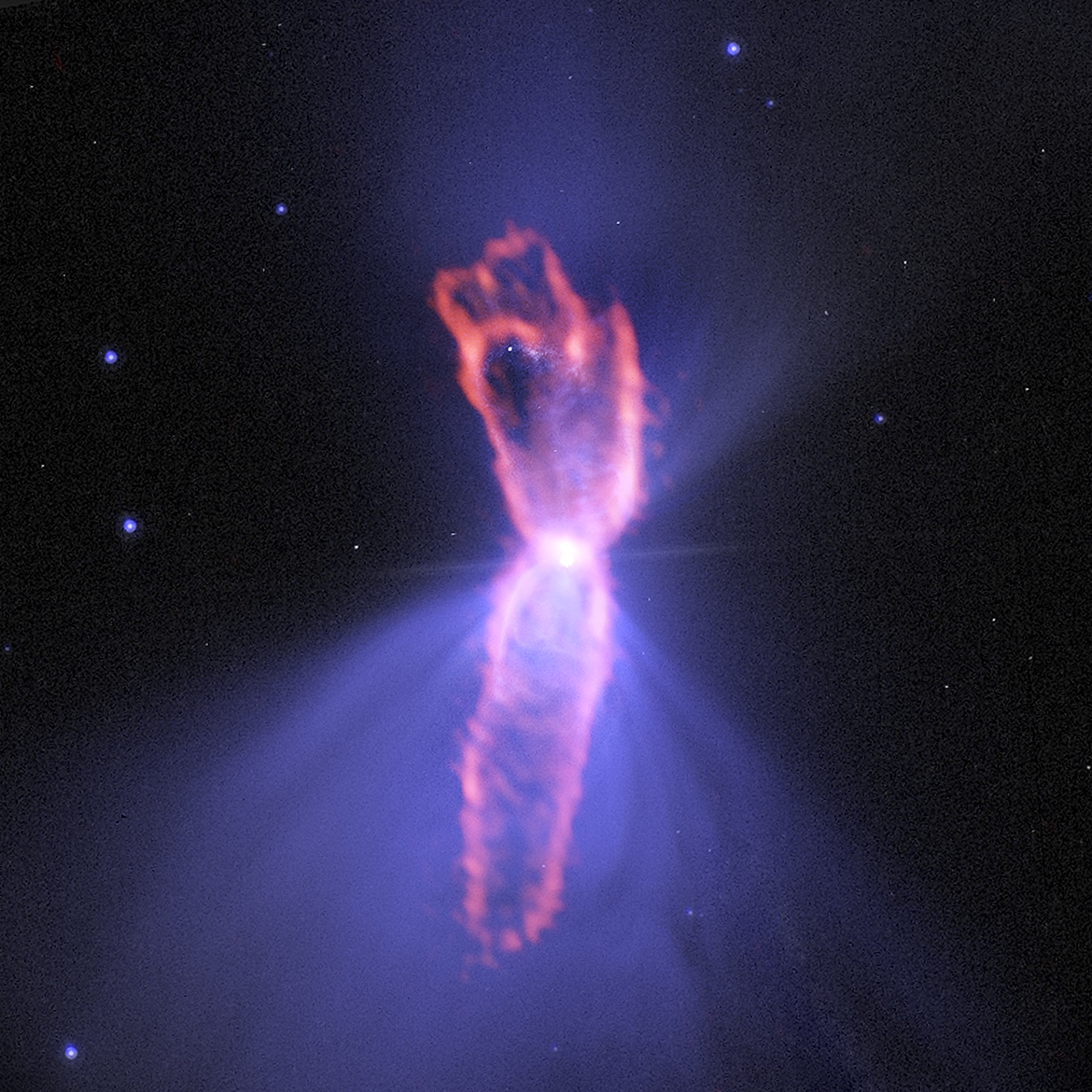
Credit: NRAO / AUI / NSF
At the upper end of the temperature scale, the circumstances are markedly different. The Sun is powered by thermonuclear reactions occurring deep within its core, where hydrogen nuclei fuse to form helium and release energy. In older stars, helium serves as the fuel, while in the most massive stars, the chain reaction proceeds until iron is formed, at which point fusion ceases. The Sun’s surface temperature is approximately 5,500 °C; however, its corona — the outer layer of its atmosphere — is heated to more than one million degrees, and the cause of this heating remains under investigation. Nevertheless, the corona contains so few particles that the heat shield of NASA’s Parker Solar Probe, which passed through it, reached a temperature of only approximately +1,400 °C. By comparison, a person can keep a hand in a hot oven longer than in boiling water, even though the air in the oven is hotter, because it contains far fewer molecules that collide with the skin.
The hottest known stars belong to the rare Wolf–Rayet class. These massive stars have shed their outer layers. The surfaces of the hottest among them reach temperatures of approximately 210,000 degrees, making them 38 times hotter than the Sun. Even higher temperatures are found in neutron stars — ultra-dense remnants of massive stars formed following an explosion, with diameters of approximately 20 km. Immediately after formation, such a star may reach a temperature of hundreds of billions of degrees; at the point of collision between two such objects, the temperature is calculated to rise to trillions of degrees. This is at least 60,000 times higher than the temperature at the center of the Sun, which is approximately 16 million degrees.
Cold as a condition for observations
In certain circumstances, low temperatures are essential for space technology. Light from the most distant galaxies, having traveled for billions of years, is stretched nearly as much as the cosmic microwave background radiation and reaches us as infrared radiation, which is invisible to the human eye. All warm objects, ranging from human beings to electronic devices, emit this type of radiation. If a telescope designed for such observations were maintained at room temperature, its own infrared emissions would overwhelm the faint signals from the galaxies.

The instruments aboard the James Webb Space Telescope are situated in the shadow of a sunshield the size of a tennis court, where they cool naturally to approximately −233 °C. For the most sensitive instrument, the Mid-Infrared Instrument (MIRI), this temperature is insufficient. It is therefore cooled further by a separate system to below −266 °C, within seven degrees of absolute zero.
A temperature of twenty degrees above room temperature remains comfortable for us; however, on a scale ranging from trillionths of a degree above absolute zero to trillions of degrees in the hottest objects, this range is almost imperceptible. Conditions conducive to the emergence of life have developed on our planet, and the fortunate combination of our distance from the Sun and the presence of an atmosphere that maintains a comfortable temperature has played a significant role in this development.