

In mid-October, NASA specialists faced another challenge at the edge of interstellar space. The legendary Voyager 1 spacecraft suddenly stopped transmitting its radio signal during two scheduled communications sessions. NASA’s global Deep Space Network could not detect a response from the probe, approximately 24 billion kilometers from Earth. Thanks to automated systems and prompt action by the engineering team, communications were fully restored on October 20.
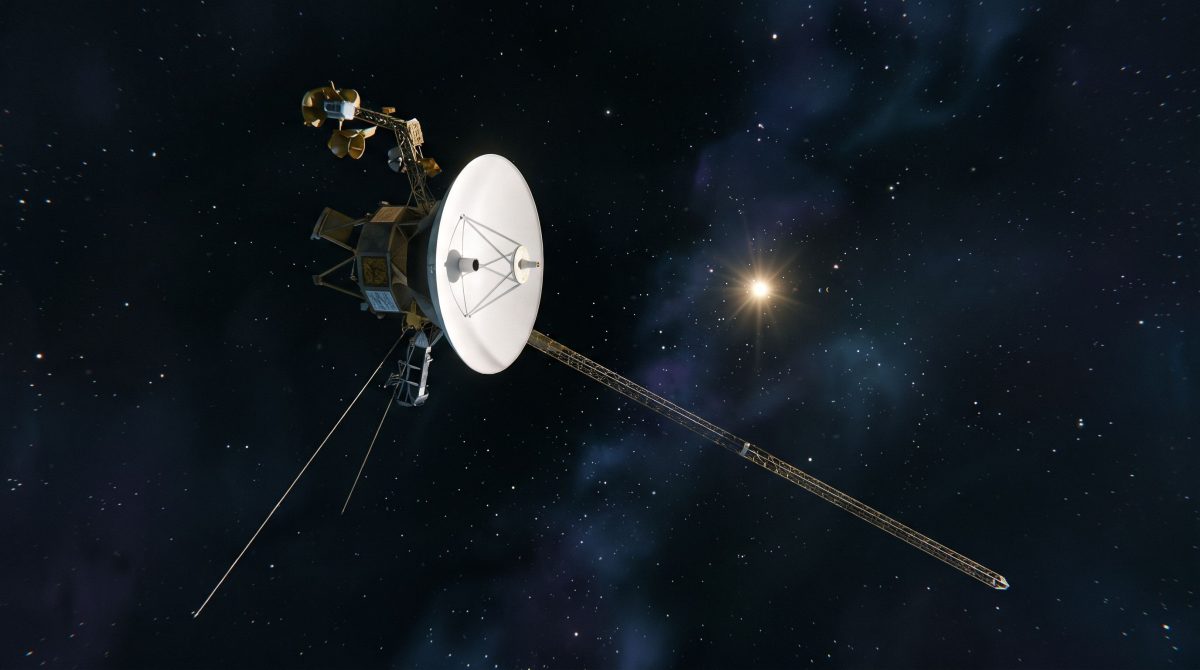
The temporary silence was caused by the activation of the spacecraft’s onboard protection system. The probe is programmed to enter safe mode and suspend normal operations if its computers detect irregularities in the active maneuvering thrusters. However, the spacecraft restored its signal before direct commands to resolve the problem were sent from Earth.
According to Voyager mission manager Kareem Badaruddin of NASA’s Jet Propulsion Laboratory, this behavior had never been observed before. At this stage of the mission, the team must constantly prepare for surprises, as operating technology designed almost half a century ago becomes increasingly difficult.
Fighting for Every Watt of Power
The main challenge in keeping Voyager 1 and its twin, Voyager 2, operational is the gradual depletion of their power sources: radioisotope thermoelectric generators (RTGs), which produce electricity through the decay of plutonium. Natural processes cause the systems to lose about four watts of electrical power each year.
To keep the spacecraft functioning, engineers must progressively switch off secondary instruments and systems. In September, Voyager 1 successfully underwent a complex power-saving procedure called Big Bang: specialists simultaneously turned off three devices and switched the spacecraft to alternatives that consume less energy. This preserved its thermal balance and postponed the forced shutdown of scientific instruments, which would otherwise have become unavoidable as early as 2027.
A Day for a One-Way Journey
The incident occurred shortly before an important symbolic milestone. On November 18, 2026, Voyager 1 is expected to reach a distance of 25.9 billion kilometers from Earth, equivalent to one light-day—the distance that light and radio signals travel in 24 hours.
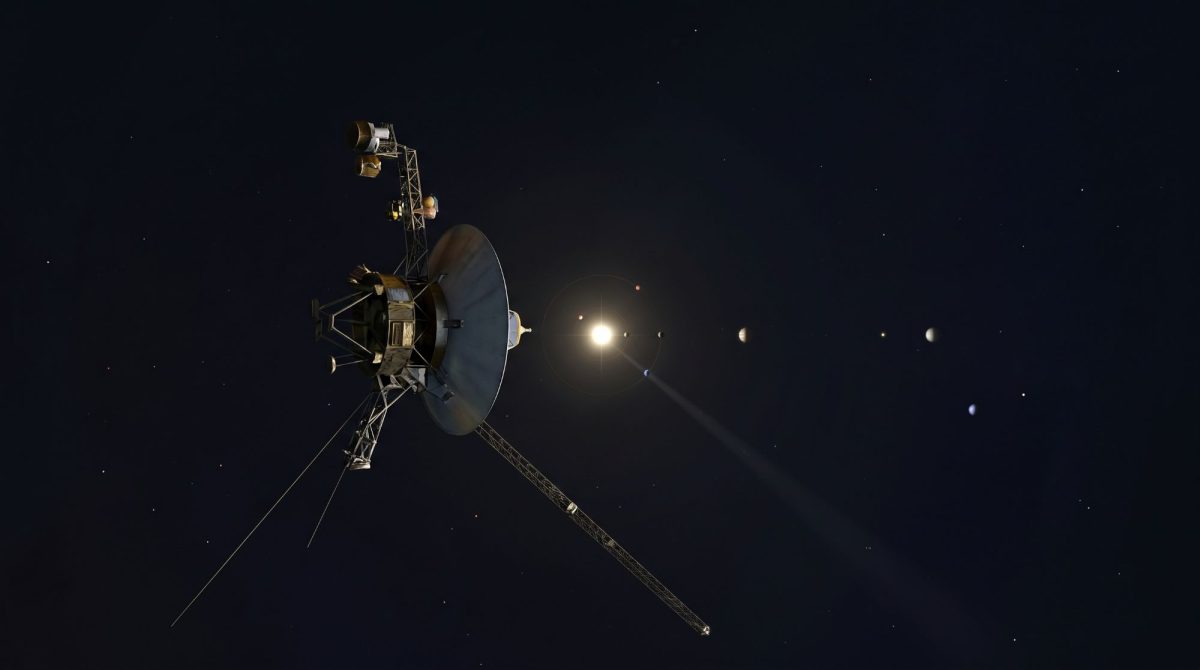
As a result, every exchange with the probe will require approximately 48 hours for a complete request-and-response cycle. Although crossing this threshold will not change the probe’s physical surroundings in interstellar space beyond the heliosphere, it will serve as a vivid reminder of how far humanity’s most distant traveler has ventured.
Previously, we explained why Voyager 1’s farewell image is more relevant today than it was 36 years ago.
Based on material from interestingengineering.com
