

September signifies the commencement of both calendar autumn and astronomical autumn, with a discrepancy of merely three weeks. While the former is traditionally regarded as starting on September 1st, the latter begins on the day of the autumnal equinox — September 23, from an astronomical perspective.
Although this month is unlikely to present any spectacular astronomical phenomena, Venus is expected to attract observers’ interest. Two significant events will occur approximately one week apart: Venus will pass behind the Moon, and it will achieve its peak brightness. Both events necessitate preparation, as they will be observable during the daytime sky.
Jupiter is reappearing in the predawn sky, now accompanied by two other luminous planets — Saturn and Mars — that are already visible. With the aid of binoculars or a telescope, observers can also locate Uranus and Neptune, thereby increasing the number of visible planets before dawn to five. An additional incentive to observe Neptune is its upcoming opposition at the end of the month.
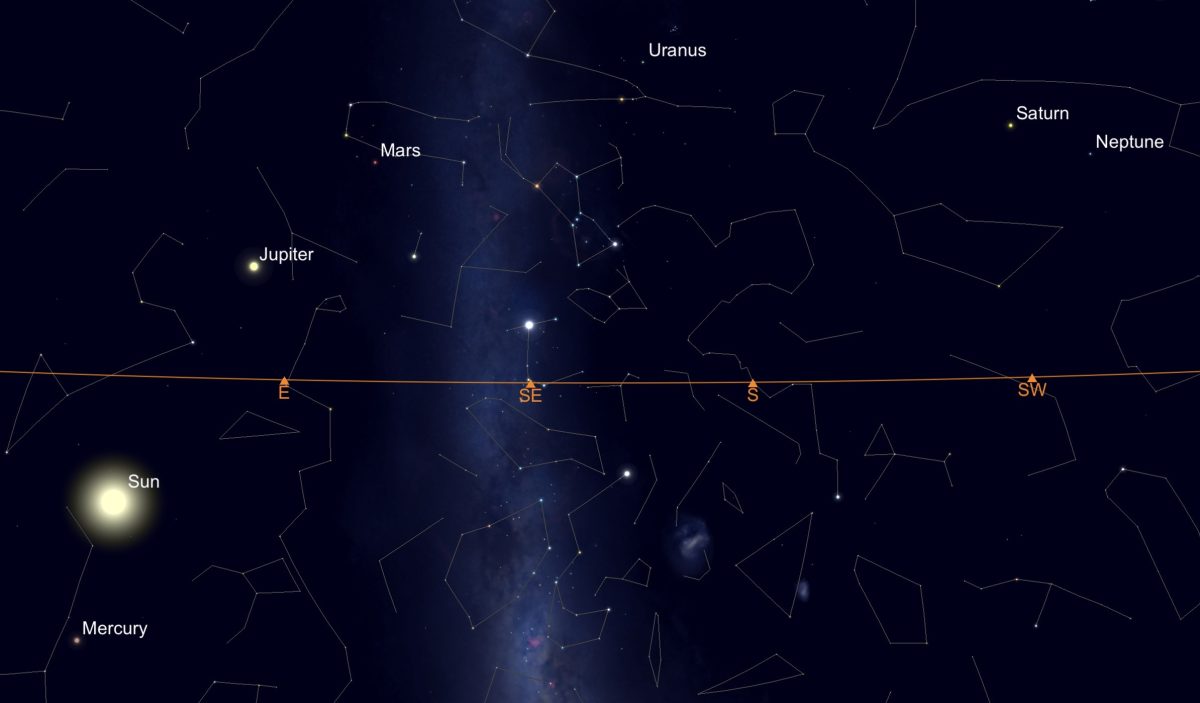
Furthermore, if you intend to undertake stargazing at dawn, it is advisable to observe the constellations in the eastern sky. The winter season is progressively approaching during these relatively warm nights, characterized by prominent winter constellations such as Orion, Canis Major, and Gemini.
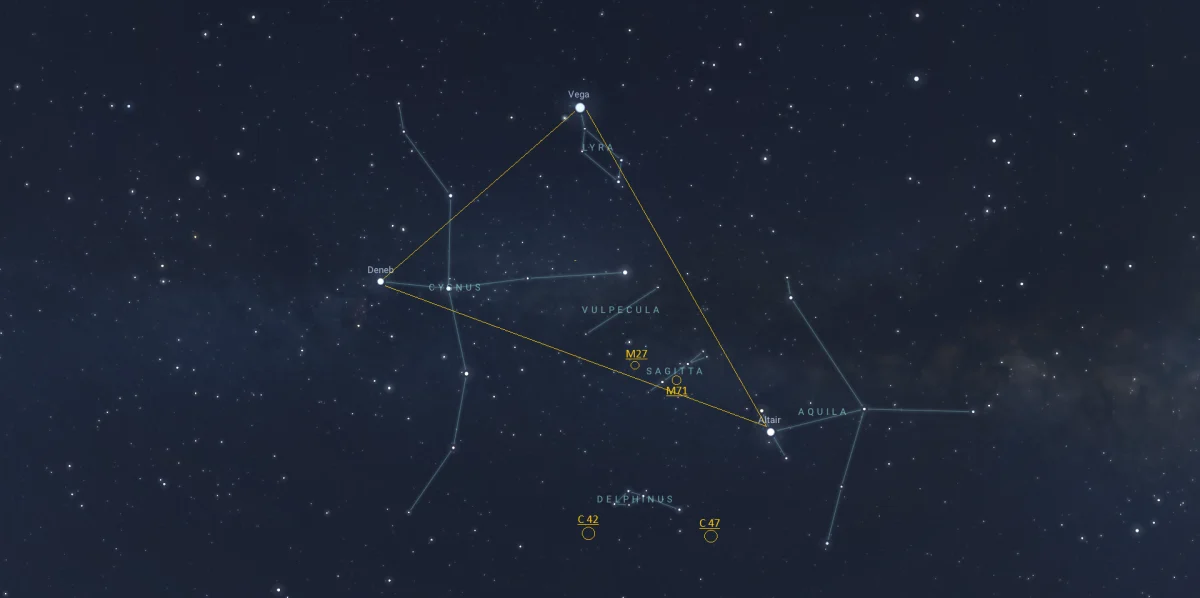
For individuals observing the night sky, we recommend paying close attention to a significant asterism — the Summer-Fall Triangle — whose vertices are Vega, Deneb, and Altair. These stars are currently among the first to emerge in the still-bright sky, providing convenient landmarks.
Should you have the opportunity to find yourself beneath a dark sky in the first half of September, seize the occasion to observe the central region of the Milky Way in the evening. At our latitudes, this feature never ascends significantly above the horizon; however, witnessing it is worth undertaking a special trip away from urban areas. In the region where Scorpio, Ophiuchus, and Sagittarius converge, a multitude of various star clusters and nebulae can be observed, some of which are visible to the naked eye.
Among the constellations, consider Cygnus and Cepheus: they will be positioned high in the sky during the middle of the night, both exhibiting a wealth of detail — ideal for astrophotography as well as visual observation. September also presents an excellent opportunity to observe various objects in Aquarius, including the globular clusters M2 and M72, the open cluster M73, and the planetary nebulae “Saturn” and “Helix.” It is important to note, however, that the latter two nebulae are very faint and should only be targeted under conditions of a truly dark sky.
General circumstances
September 6 — a conjunction of the Moon at 20% illumination and Mars with an apparent increase of 1.2m; at 9:46 p.m., these two celestial bodies will be separated by only 2°. However, they will be below the horizon at that time. Consequently, in Ukraine, the optimal observation of their closest approach occurs on September 7 prior to dawn, when they will be visible above the northeastern horizon.
September 8 — a conjunction of the Moon (7%) and Jupiter (-1.8m) will occur. Had it been visible around 9:00 – 9:30 p.m., an occultation could have been observed. However, for observers in Ukraine, these celestial bodies will be below the horizon at that time. Prior to dawn on September 9, the pair will remain in close proximity.
September 11 — new moon, precise timing at 06:00 a.m. Kyiv time (03:27 a.m. UTC).
September 14 — occultation of Venus (-4.5m) by the Moon (12% illuminated). The event will be observable low on the southeastern horizon; it is recommended to use a telescope or astronomical binoculars for optimal viewing.
September 22 — Venus attains its peak brightness of -4.6m, although it remains very low in the evening sky. Consequently, it is advisable to attempt to observe the planet during daylight hours.
September 23 — the autumnal equinox, marking the commencement of astronomical fall. The precise moment is 3:05 a.m. — at this juncture, the Sun’s center crosses the celestial equator and transitions from the Northern Hemisphere to the Southern Hemisphere.
September 26 — Neptune will be in opposition, with a +7.7m. The days surrounding this date are generally regarded as optimal for observing the planet, as it will be visible for the majority of the night, particularly against the darkest sky. However, it is to be noted that the full Moon may interfere with visibility during this period.
September 26 — full moon, exact time 7:49 p.m. (4:49 p.m. UTC).
September 30 — late in the evening, the Moon (79%) will be in proximity to the Pleiades, a prominent star cluster in Taurus, having just concluded its occultation.
A detailed overview of the most interesting circumstances
September 11: While there is no moon in the sky
As is customary, we recommend scheduling observations of various intriguing celestial objects near the new moon, which occurs approximately around September 11. Please consider examining the constellations Cygnus and Cepheus. This period also presents an excellent opportunity to enhance your celestial navigation skills by observing the positions of less prominent constellations in the vicinity, including Vulpecula, Delphinus, Sagitta, Equuleus, and Lacerta.
For individuals intending to photograph the night sky, the constellation Cygnus encompasses the prominent hydrogen nebulae known as the Veil, North America, and the Pelican, in addition to the Crescent Nebula, which is illuminated by a substantial Wolf-Rayet star. Within Cassiopeia, particular attention should be given to the Pac-Man Nebula.
For enthusiasts of planetary nebulae, objects such as the Dumbbell (M27) in the constellation Vulpecula, the Little Dumbbell (M76) in Perseus, and the compact Blinking Planetary (NGC 6826) in Cygnus are observable. The Pleiades star cluster is also reappearing in the night sky; it is a pleasure to observe with the naked eye, binoculars, or a telescope at low magnification.
You may wish to consider examining several multiple star systems, including Albireo in Cygnus, Epsilon Lyrae (which can reveal up to four stars), delta Cephei, among others.
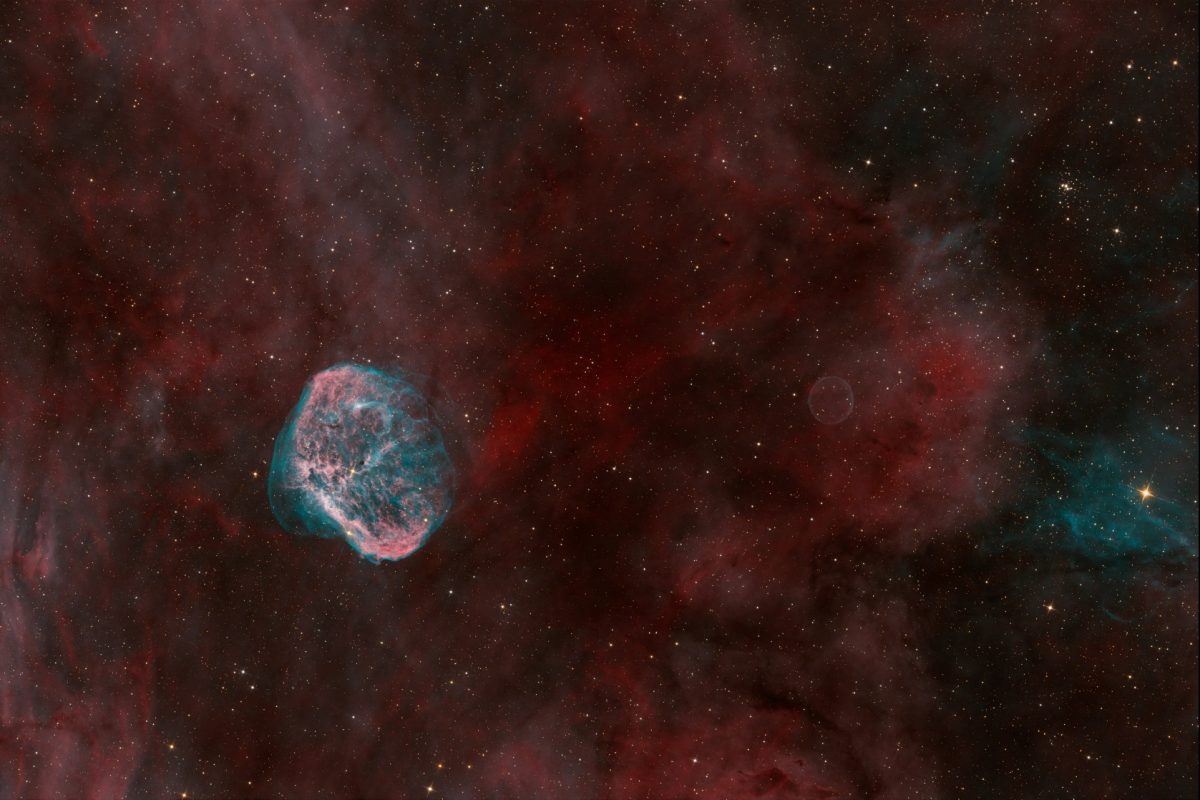
Photo: Volodymyr Kravchenko, Poltava Oblast, Ukraine.
Source: AstroBin
September 14: The day Venus will vanish from the sky
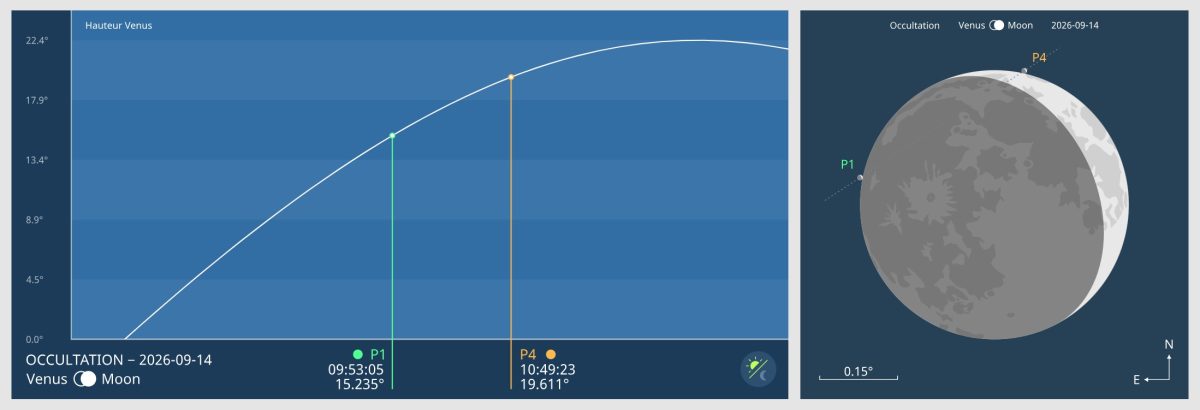
All the planets and the Moon revolve within closely aligned planes; consequently, from time to time, our Moon may pass directly between the Earth and one of the other planets in the Solar System. Astronomers refer to this phenomenon as an occultation. This will precisely occur with Venus on September 14.
We wish to underscore the importance of safety precautions immediately. Given that the occultation will occur during daylight hours when the Sun is at its zenith, it is advisable to select an observation location that enables you to shield yourself from direct sunlight using a building or a dense canopy of trees. Accidentally aiming a telescope at the Sun poses significant health risks.
It is not possible to specify the precise timing of the occultation, as it varies by location, similar to a solar eclipse. For instance, in Kyiv, the occultation will commence at 12:53:05, when the dark segment of the Moon’s disk first contacts Venus. Observed through a telescope, it will appear as though the planet is simply vanishing, since discerning the dark segment of the Moon’s disk against the daytime sky is practically unfeasible. At 1:47:08 p.m., Venus will begin to reemerge through the illuminated crescent of the Moon.
For your specific location, you may verify the coverage details on the appropriate service provided by the Institut de Mécanique Céleste et de Calcul des Éphémérides. To do so, select a location on the interactive map.
September 22: Venus, the daytime star
Venus, the brightest planet, is exceptionally captivating in the evening and predawn skies. However, during specific periods, it can also be observed in the daytime sky. In September, Venus sets below the horizon nearly simultaneously with the Sun. Nonetheless, around the 22nd, the planet attains its peak brightness, allowing observers to attempt to locate it during daylight hours.
Venus, akin to the Moon and Mercury, undergoes noticeable phase changes. Additionally, its apparent disk size varies depending on its proximity to Earth. Throughout the fall, the “hellish” planet will initially catch up with and subsequently overtake Earth in its orbital motion, passing between Earth and the Sun. This indicates that in September and most of October, Venus is approaching us: its apparent size increases, while the proportion of its disk illuminated by the Sun decreases. Regarding the planet’s brightness, these effects partly counterbalance each other; however, not completely. On September 22, Venus attains its maximum brightness, located 37° from the Sun.
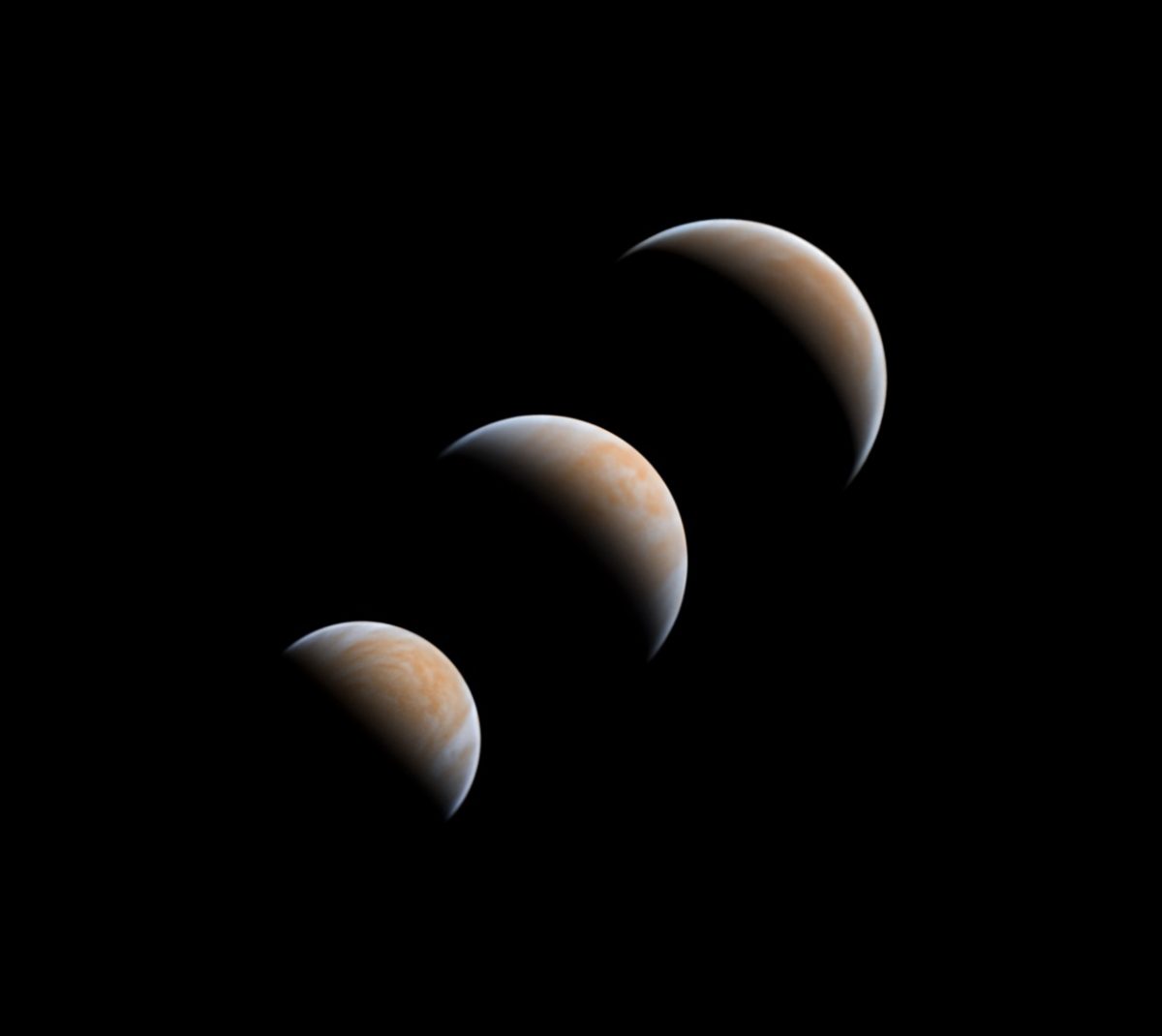
To orient yourself and attempt to locate Venus in the daytime sky, it is recommended to utilize any virtual planetarium software that is convenient for you. The optimal observation period is between 3:00 and 5:00 p.m. Ensure that you position yourself such that the sun is obscured by a building or a dense cluster of trees; however, bear in mind that Venus will be situated approximately 20° above the horizon, depending on your geographic location. If the planet is not visible to the naked eye, consider using binoculars or a small telescope, if available, to identify it first. Once its position is accurately determined, it can be observed unaided by the eye.
September 26: Neptune, the Moon, and Saturn
It is generally advisable to observe the outer planets when they are near their opposition. This configuration occurs when the planet and the Sun are positioned on opposite sides of the Earth. During this period, the planet is approximately at its closest proximity to Earth; furthermore, it rises at sunset and sets at sunrise.
The situation concerning Neptune differs somewhat. Firstly, it is the only planet that remains entirely invisible to the naked eye, necessitating the use of a telescope or binoculars for observation. Secondly, Neptune is situated thirty times farther from the Sun than Earth. This implies that, over the course of a year, its distance from the Sun varies by merely 6%. Consequently, its apparent magnitude fluctuates between +7.7m and +8.0m, a variation that is not easily perceptible.
In addition to Neptune’s opposition, there will also be a full moon on September 26. This planetary alignment indicates that the Moon will be on the opposite side of the Sun relative to Earth, resulting in their close proximity in the night sky. Specifically, on the night of September 26-27, the Moon and Neptune will be separated by approximately 5°, which may render Neptune difficult to observe due to the Moon’s brightness. Nevertheless, it is recommended to attempt observation as an experiment. If the tiny blue disk of Neptune cannot be identified, it is advisable to retry after a few days when the Moon has moved sufficiently away, as the planet’s appearance remains unchanged.
If you intend to observe Neptune, it is advisable to include Saturn in your itinerary as well, given its proximity. However, unlike the distant ice giant, the Ringed Planet is visible to the naked eye without the need for optical instruments.
