

Mountains are present not only on Earth but also on other planets within our Solar System, their moons, and even on large asteroids. Presented herein are the twelve highest peaks accessible for ascent, should unrestricted travel across these celestial bodies be possible.
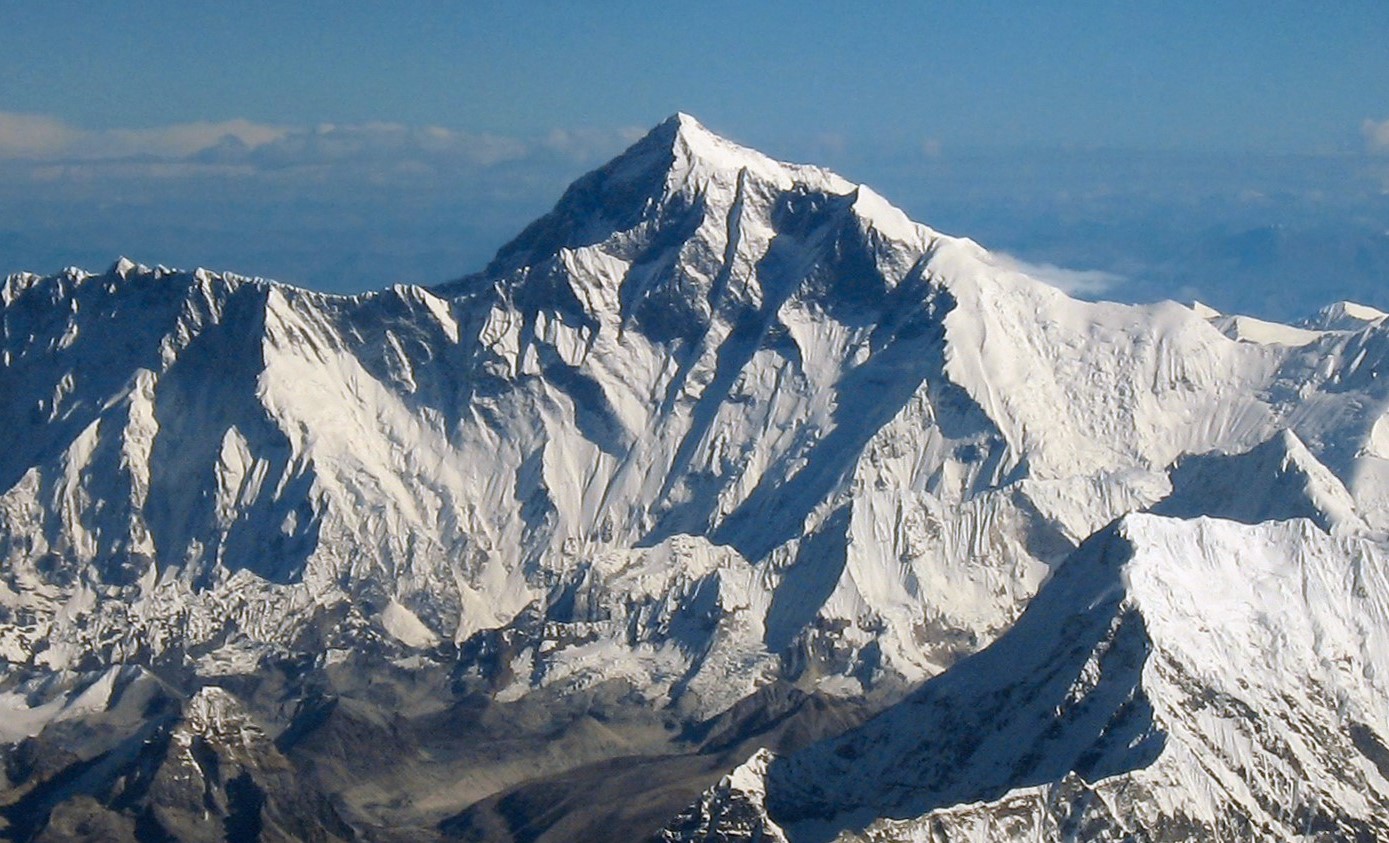
The highest mountains
Have you ever aspired to ascend to great heights and observe the world from an elevated vantage point? Mountain climbing provides that opportunity. Additionally, mountains are present on other celestial bodies within the Solar System.
Ultimately, the majority of the highest peaks within the Solar System are not situated on our planet. It is pertinent to acknowledge, however, that the concept of “height” in geographical terms can be interpreted in various manners. A distinction is recognized between the absolute height of a mountain — defined as the difference between its base and its summit — and the relative height, which is measured from a designated zero level established for that particular celestial body.
Let us discuss the twelve most prominent mountains within the Solar System.
1. Olympus Mons
Undoubtedly, Olympus Mons on Mars is the tallest mountain in the Solar System. Its summit rises about 22 km above the average level of the planet’s surface (absolute height), and from the base to the summit the height reaches about 26 km (relative height). This is almost three times the height of Everest, which rises 8,849 meters above sea level.
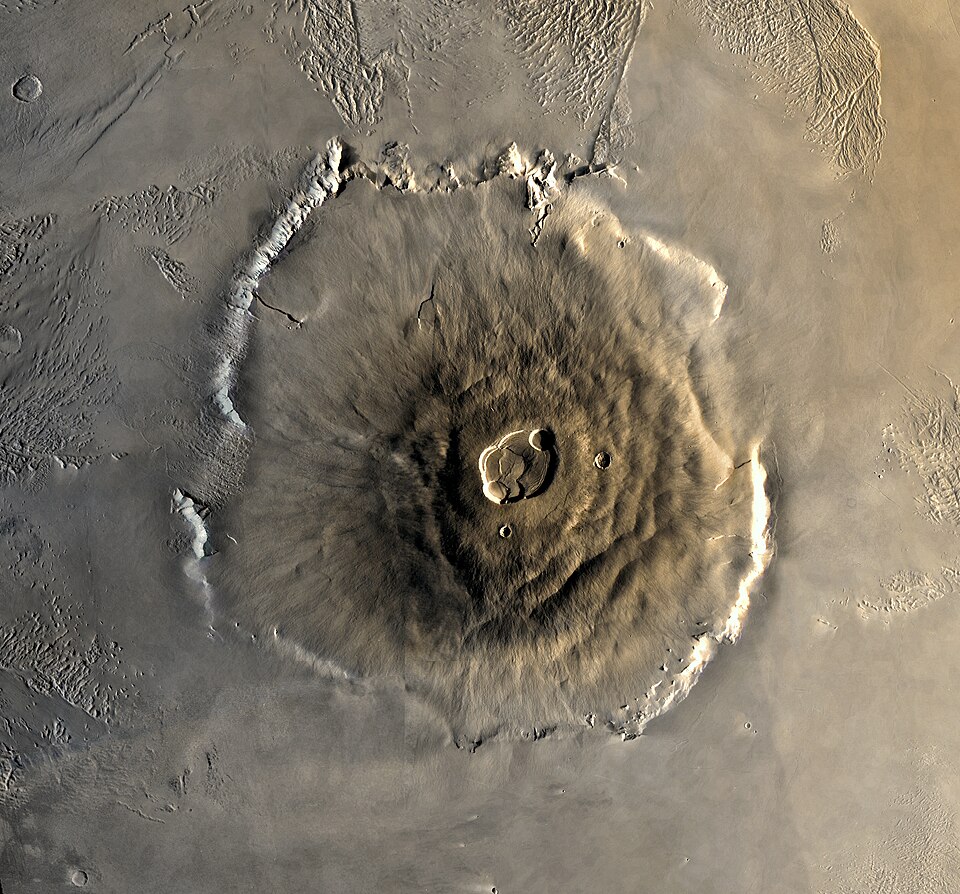
The volcano is located on the Tharsis Plateau and is considered extinct. It is not only its height that is impressive. The central caldera of Olympus is about 85 km in diameter and reaches almost 3 km. The diameter of the base of the volcano itself is about 600 km. The slopes of Olympus are so gentle — on average only a few degrees — that, being on them, you can not even notice the rise. In contrast, cliffs rise up to 8 km high along the edges of the volcano.
2. Rheasilvia
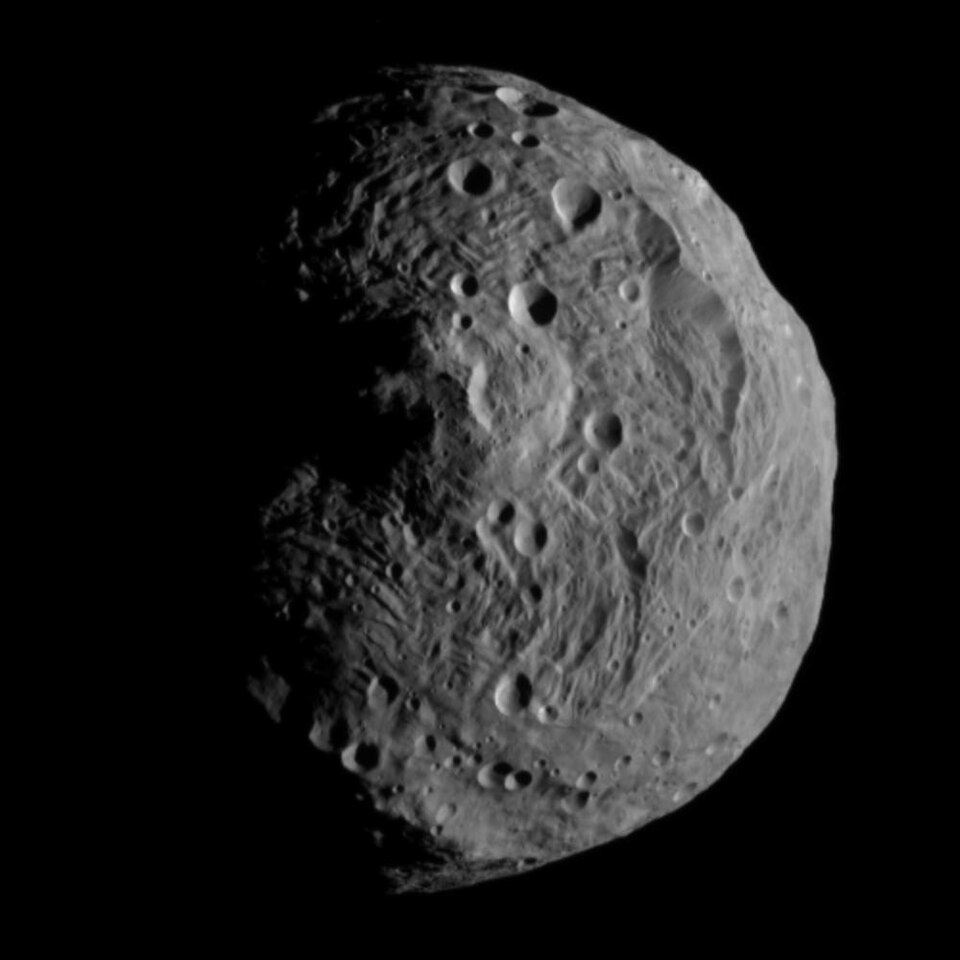
Due to its large size and complex internal structure, Vesta was long considered a candidate for dwarf planet. However, it is now classified as an asteroid. In the center of Rheasilvia, as in many large impact craters, a central peak rises. Its relative height reaches about 22 km, and it rises about 9 km above the average surface level of Vesta (absolute height). This mountain is about 180 km in diameter, making it one of the tallest impact structures in the Solar System.
3. Equatorial ridge on Iapetus
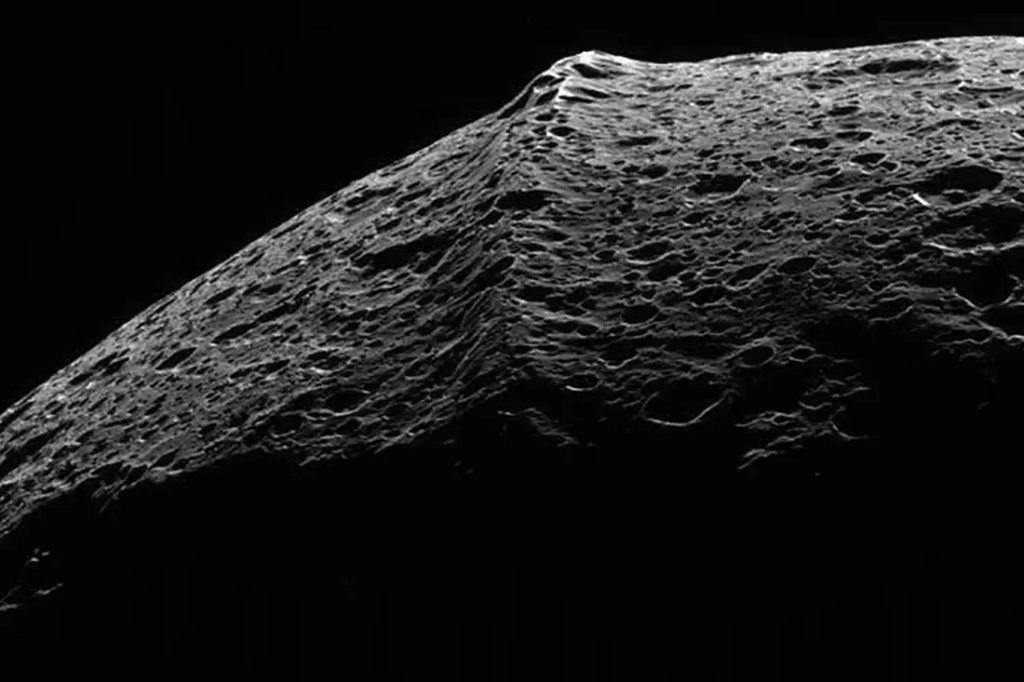
The third-highest peak in the Solar System is situated on Saturn’s moon Iapetus. However, it cannot be classified as a single mountain. This is a giant mountain range that stretches almost continuously along the satellite’s equator for more than 1,300 km. The height of some of its sections reaches about 20 km.
The origin of the equatorial ridge of Iapetus still remains one of the greatest geological mysteries of the Solar System. Today, there are several main hypotheses for its formation, but none of them has yet been definitively confirmed. According to one of them, Iapetus formed very early and remained quite hot for a long time, and the ridge arose as a result of internal geological processes – the uplift and solidification of matter along the equator.
Next hypothesis suggests that the ridge was formed after material from a ring that once surrounded Iapetus fell to the surface. r Another model suggests a similar scenario, but in it the ring arose after the satellite collided with a large celestial body. There is also a hypothesis that the ridge is a consequence of tectonic processes: unstable areas of the lithosphere underwent significant deformations, and this led to a sharp uplift of the crust along the equator.
4. Boösaule Montes
Another prominent mountain is situated on Jupiter’s volcanic moon Io. Its relative elevation measures 18.2 km, while its absolute elevation is 17.5 km. This mountain is part of the Boösaule Montes range, which comprises several large, fractured segments of the crust.
Indeed, Boösaule Montes is the most prominent among them, having leaned along the fault at an angle relative to the surrounding surface and forming a colossal peak along with a cliff. The cliff reaches a height of 15 km.
5. Ascraeus Mons
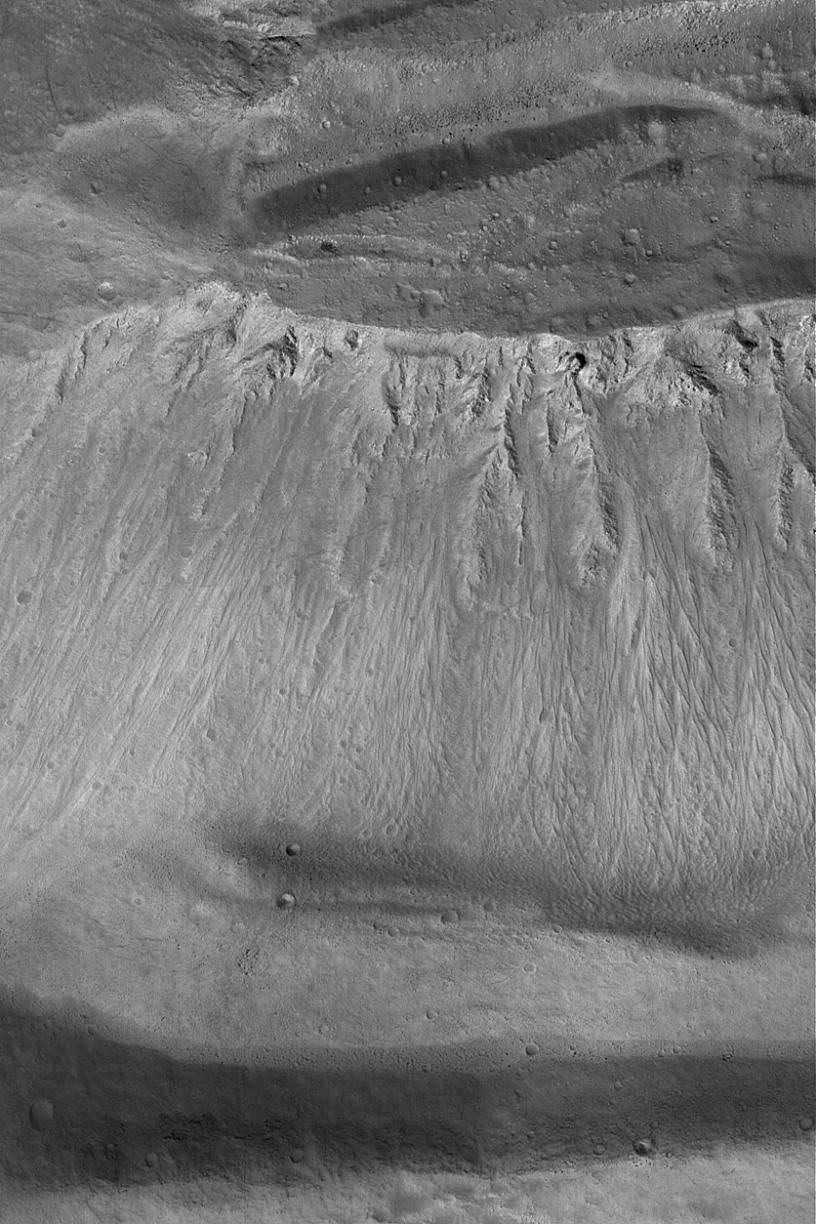
To observe the subsequent peak, a return to Mars is necessary. Ascraeus Mons is another dormant volcano situated in the Tharsis region. It closely resembles a smaller version of Olympus Mons and is positioned southeast of it.
Along with Pavonis and Arsia, it rises on the large volcanic plateau of Tharsis. The summit of Mount Ascra rises about 18 km above the mean surface level of Mars, and its slopes rise above the surrounding terrain to almost the same height, making it one of the highest volcanoes in the Solar System.
6. Pavonis Mons
Another Martian volcano, situated on the Tharsis Plateau in close proximity to Ascraeus Mons, is designated as Pavonis Mons. The summit’s elevation above the surface of Mars is precisely 14 kilometers. This mountain is noteworthy for its nearly equatorial position on Mars. That is why Peacock Mountain is often cited as one of the most promising locations for building a Martian space elevator. The combination of high altitude and proximity to the equator would make it possible to shorten the cable length and reduce the energy costs of delivering cargo to orbit.
7. Ionian Mons
Ionian Mons on Jupiter’s moon Io has an absolute elevation of 12.7 kilometers. Unlike Io’s many volcanoes, this massif is tectonic in origin. It consists of two curved, nearly parallel ridges that run side by side.
8. Elysium
Elysium is another extinct volcano on Mars. However, it is situated in a different hemisphere of the planet compared to the Tharsis Plateau. Its relative height is 12.6 km, and its absolute height is 16 km.
9. Arsia Mons
The third giant volcano of the Tharsis Plateau, located next to Mount Askria and Mount Pavic, is called Mount Arsia. Its summit rises about 19 km above the mean surface level of Mars, while the relative height of the volcano is about 11.7 km.
10. Euboea
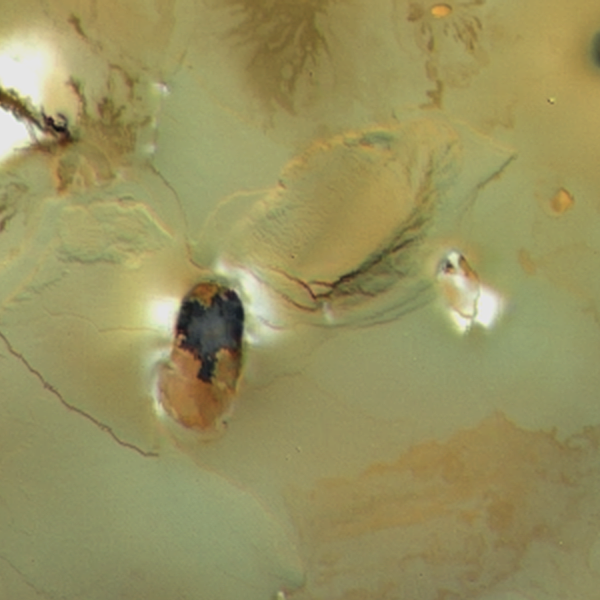
Another mountain on Io is Euboea. It has an absolute height of 10.5 km and a diameter of 275 km. At its base is a giant landslide, which many researchers consider the largest rock slide in the solar system.
11. Mauna Kea
The sole mountain on Earth to be included in the list is not Everest. It is only considered the tallest when measured from sea level. However, if measuring from the base, the tallest mountain is Mauna Kea in Hawaii. Its height is 10.2 kilometers, although nearly 6 kilometers of that height are submerged underwater.
12. Verona Rupes
Completing the list is Verona Rupes on Uranus’s moon Miranda. This diminutive celestial body appears as an irregular ice sphere. It has a strange terrain with deep canyons, ledges, and giant faults that seem disproportionately large for a satellite with a diameter of only about 470 km..
Nevertheless, Verona Rupes exceeds all other formations in scale. It stands approximately 10–15 km in height. Thanks to Miranda’s extremely weak gravity, a jump from its summit would be one of the longest free falls of any known object in the Solar System—by various estimates, it would last about 12 minutes.
