

On August 12, 2026, inhabitants and visitors to eastern Spain and the Balearic Islands — comprising Mallorca, Menorca, Ibiza, and Formentera — will observe an exceptional astronomical event. A total solar eclipse is projected to take place on the horizon — an occurrence that scientists and amateur astronomers designate as a sunset eclipse.
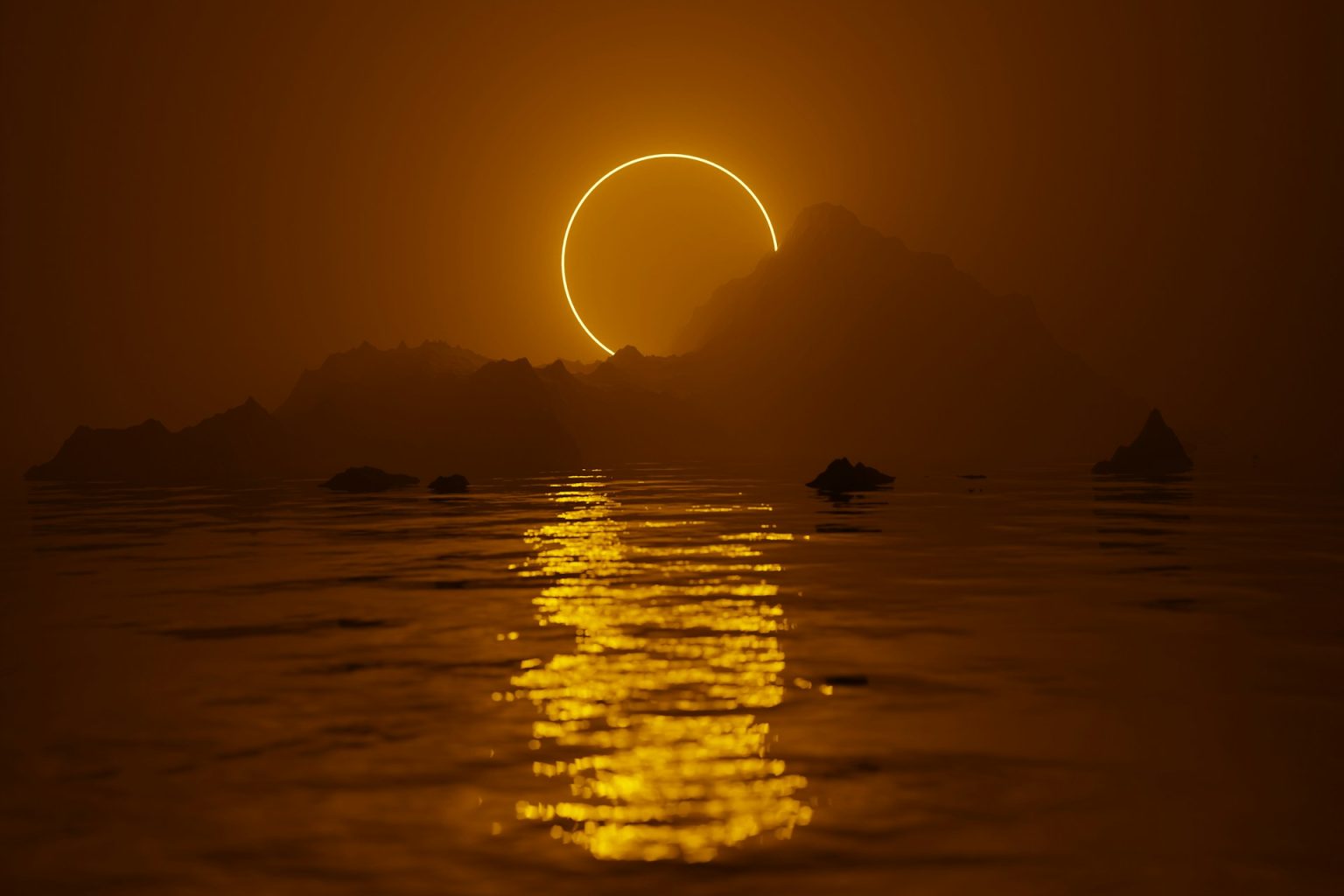
For instance, along the northwestern coast of Mallorca at 20:31 Central European Summer Time (CEST) (21:31 Kyiv time), the Sun will be entirely concealed by the Moon for a duration of 1 minute and 36 seconds. At this juncture, the Sun will be located merely 2.7° above the horizon. If the sky is cloudless, the whitish solar corona may take on a warm yellowish-orange hue, as the light passes through a thick layer of the Earth’s atmosphere, where the short-wave blue component of the spectrum is more strongly scattered. Furthermore, approximately 18 minutes subsequent to the conclusion of the totality phase, the luminous solar disk will submerge into the Mediterranean Sea.
How the Moon’s shadow departs from Earth
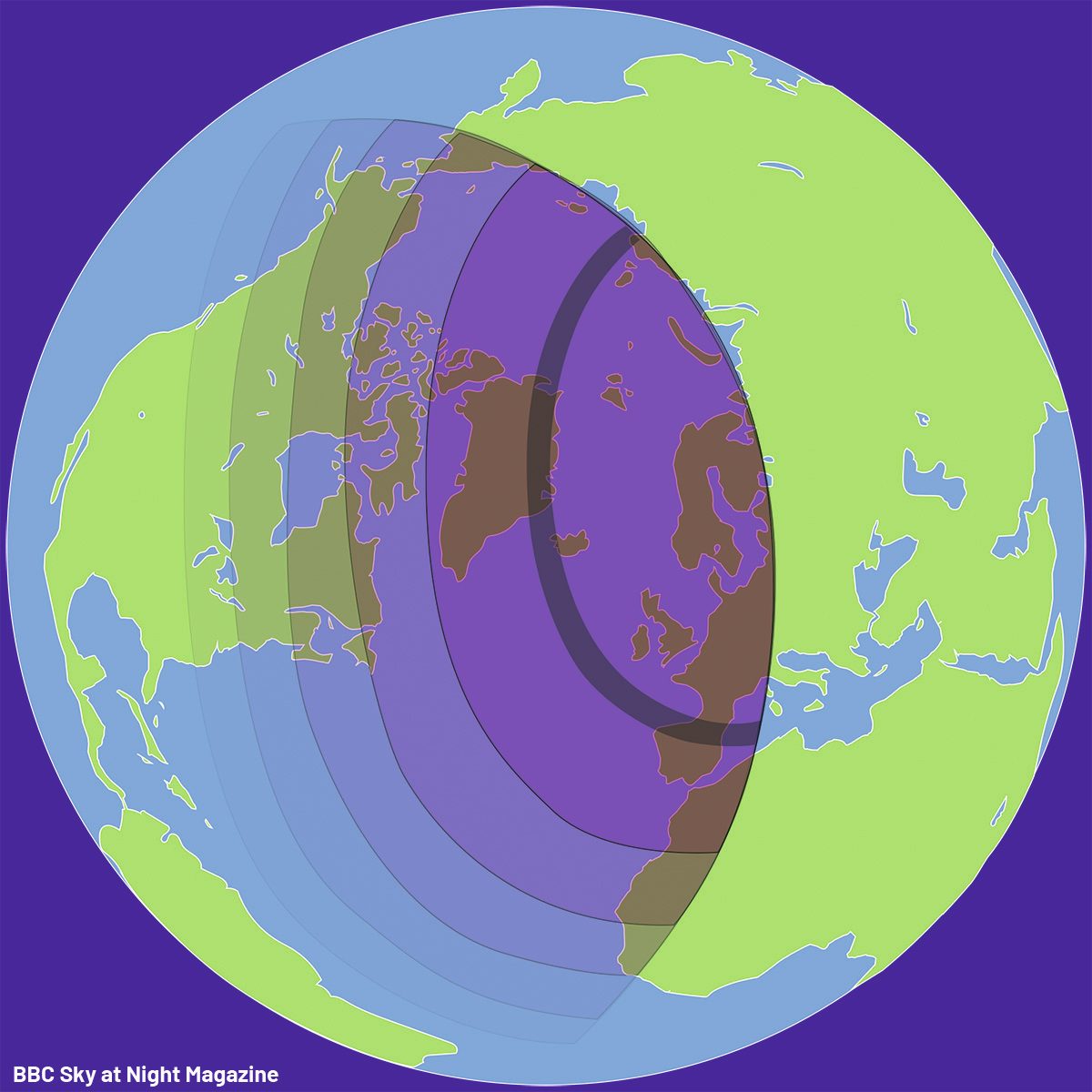
Observers in the Balearic Islands will be the last on Earth to see the total phase of this eclipse. Renowned astronomer Tyler Nordgren, author of books on solar eclipses, advises: as soon as the “diamond ring” or “ring of fire” effect flares up again in the sky after the total phase, you should immediately turn your back on the Sun. It is at this moment that you can see how the moon’s shadow literally “breaks off” from the Earth’s surface, heading into space. If there are distant clouds on the horizon and atmospheric conditions are favorable, the movement of the shadow can become clearly visible against their background, creating a striking three-dimensional effect.
The “double sunset” phenomenon
A normal sunset is a gradual process: the sky slowly darkens from the east, while the western horizon remains bright for a long time. However, a total solar eclipse dictates its own laws and creates anomalous twilight. Daylight fades instantly, the colors of the landscape are distorted, and the sky takes on a specific metallic hue. Illumination drops in a matter of seconds, the landscape takes on unnatural colors, and the sky often turns steel blue or metallic gray, creating an unusual feeling of artificial twilight.
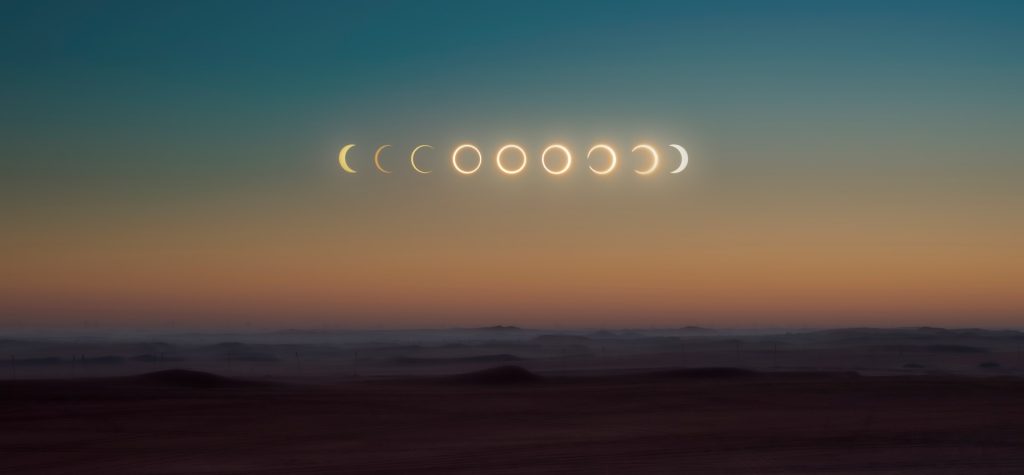
On August 12, 2026, these two types of twilight will coexist: the natural sunset will project a shadow from below, while the moon’s shadow will be cast from above. Esteemed eclipse enthusiasts characterize this phenomenon as an experience that fundamentally challenges the conventions of natural law.
The profound darkness of the Mediterranean Sea
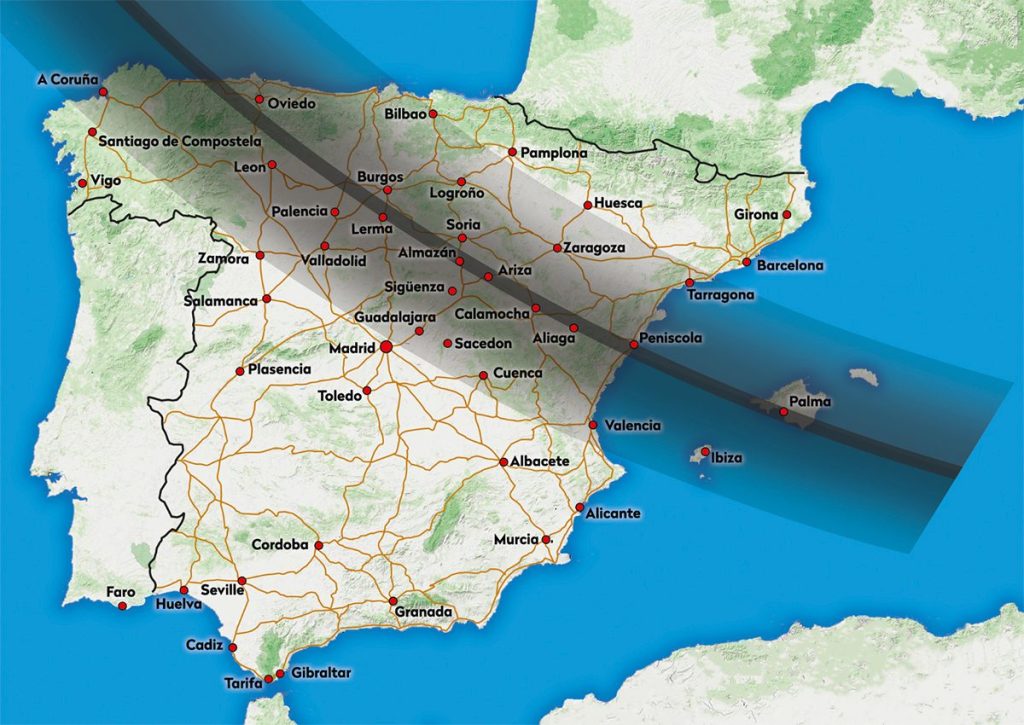
Credit: BBC Sky at Night magazine.
During a typical evening, the sun’s rays persist in illuminating the upper layers of the atmosphere well beyond the point at which the solar disk has disappeared below the horizon. This phenomenon indicates that sunlight will be artificially obstructed by the Moon precisely as the Sun sets. Consequently, there will be an unusually dark twilight and a sudden cessation of the customary evening afterglow over the sea. To thoroughly observe this phenomenon, astronomers advise remaining at observation sites for a minimum of one hour following the conclusion of the total phase.
Why is this eclipse considered historically significant?
The spatial geometry of eclipses is well-documented: the path of totality in August 2026 will measure 294 km in width and 8,400 km in length. It will commence in the Arctic region, traverse Greenland and Iceland, and conclude in the Mediterranean Sea.
What makes this event particularly unique is its high accessibility for observation. Given that more than 70% of the Earth’s surface is covered by water, the commencement and conclusion of eclipses predominantly occur over uninhabited oceanic regions or remote polar areas. The fortunate circumstance that this celestial event will transpire directly above the well-developed infrastructure of Mediterranean resorts is indeed extraordinary. In the digital era, such a “sunset” has previously been documented on video only once — in Patagonia (Argentina) in 2010. The subsequent opportunity for humanity to witness a similar event will not arise until November 2030 along the coast of Australia.
We previously discussed the impact of a solar eclipse on living beings.
Provided by skyatnightmagazine.com