

The “Best Astrophotography of Ukraine 2026” contest, organized by Universe Space Tech, has gathered photographs united by a single criterion: the image must have been captured from Ukrainian territory. This criterion encompasses a range of settings, from a balcony in the heart of a major city to a dark field near Lutsk, a canopy against the horizon, and even archival film footage from the late 1990s. The year the photograph was taken, the cost of the equipment, and the photographer’s level of experience are irrelevant, as there is a dedicated category for every type of shot. Entries may be submitted until September 30, and a separate public voting process — the “Readers’ Choice” category — allows only votes to be counted. Presented here are a few selected entries that exemplify the diverse perspectives possible when viewing the sky.
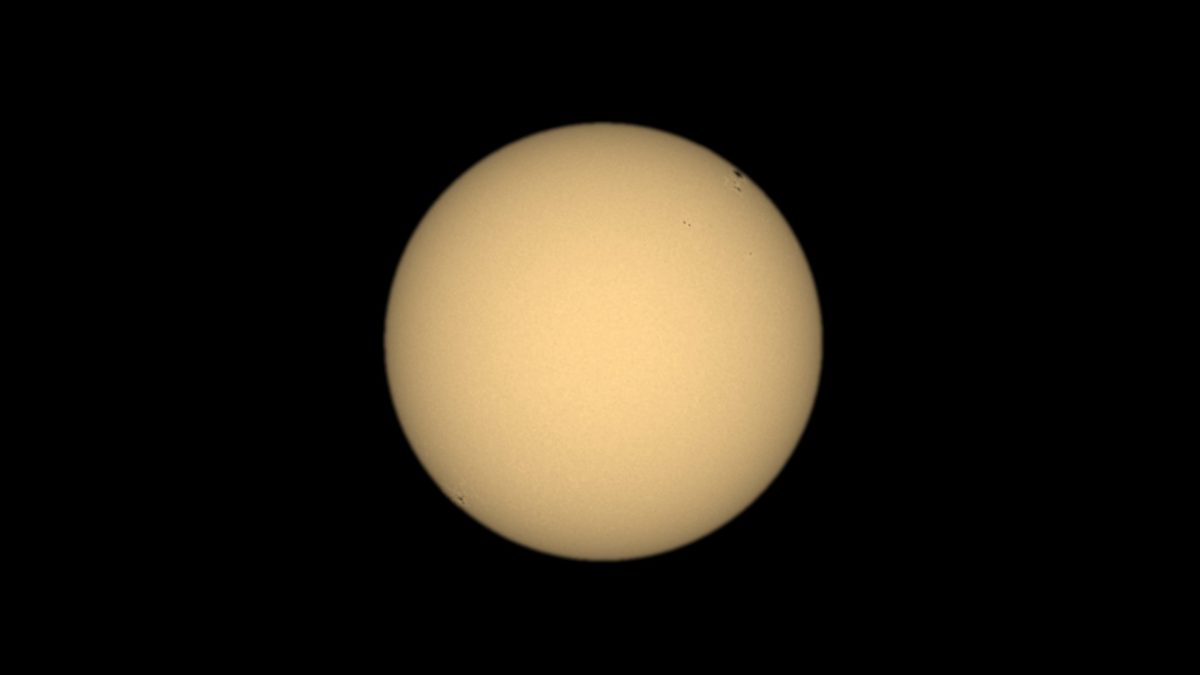
The Sun with sunspots
Dark clumps are observable on the creamy-yellow disk: one group is situated nearer to the upper edge, while the other is faintly discernible at the bottom. This photograph of the Sun was captured on August 20, 2026. The final image results from a composite of the 120 optimal shots selected from 300, each acquired with a 1/200-second exposure utilizing a standard DWARF Mini solar filter. The most notable aspect pertains to the location. The same balcony in the center of Dnipro, from which the photographer typically searches for nebulae at night, serves as a platform for solar observation during the day.
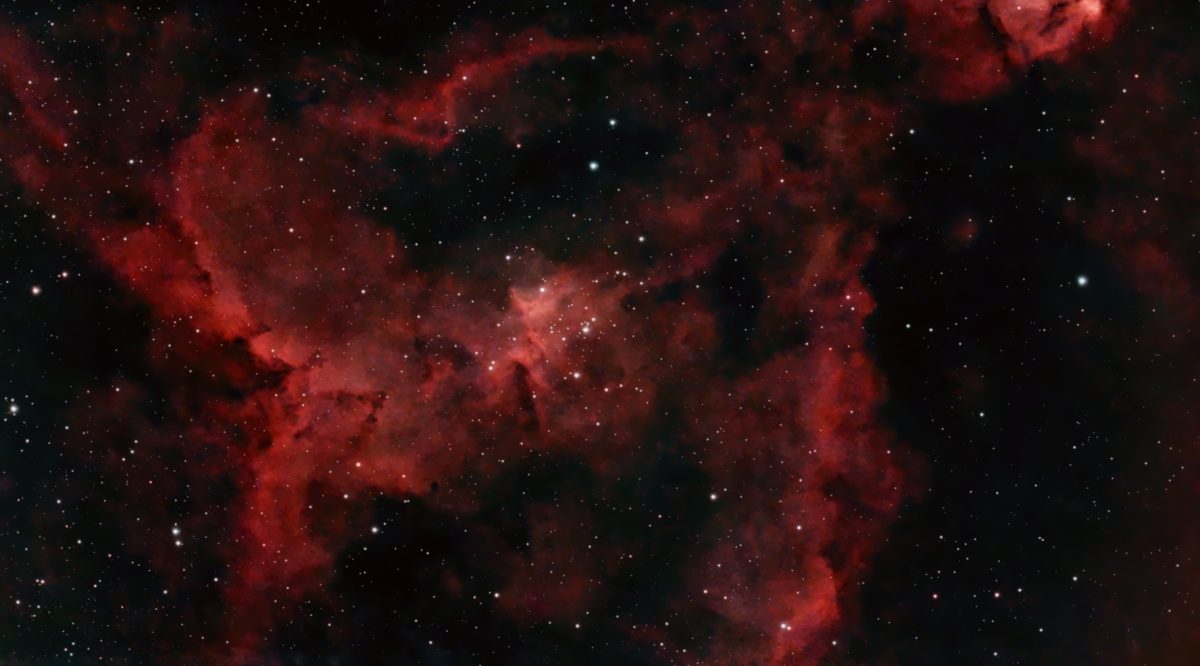
Heart Nebula (IC 1805)
A deep crimson gas disperses across the frame in irregular petals, while a cluster of young stars emits a luminous glow at the center, illuminating the surroundings from within. The photograph was acquired over three nights in early September 2026 — accumulating a total exposure time of 3 hours and 58 minutes, with 180-second frames captured through a duoband filter. The observation conditions are evident: the photographer conducts imaging exclusively after midnight, when urban lights diminish, and captures only the eastern half of the sky from beneath the balcony awning. The telescope employed has an aperture of 30 mm. The emergence of such intricate detail from such a modest aperture — coupled with the presence of light pollution in a metropolitan area — renders this image particularly noteworthy.
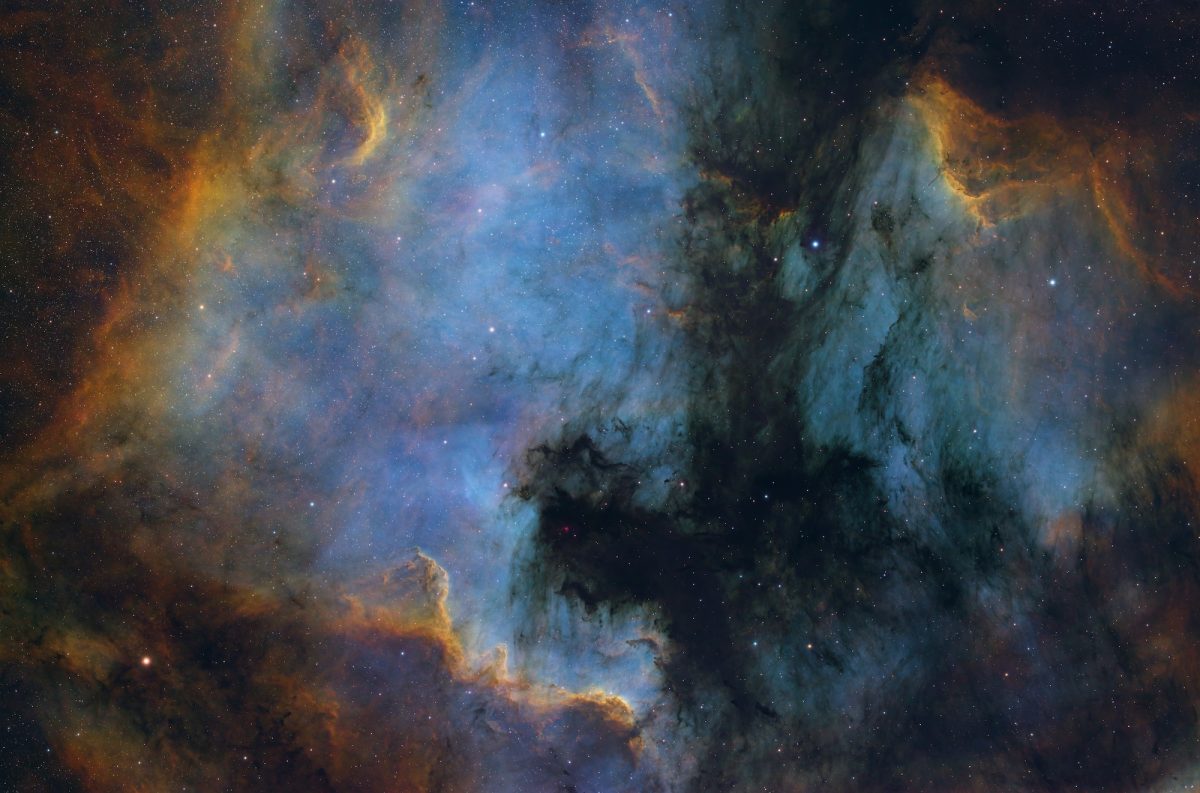
North America Nebula (NGC 7000)
The emission nebula in the constellation Cygnus is depicted here using the SHO color palette; as a result, the familiar red hydrogen emission has been transformed into cool blue and golden hues. Dark dust filaments traverse the luminous fields, delineating the contours that earned the object its “continental” designation. The Hubble palette consistently creates this characteristic effect — the sky assumes an almost extraterrestrial appearance, despite representing a well-recognized region within our Galaxy.
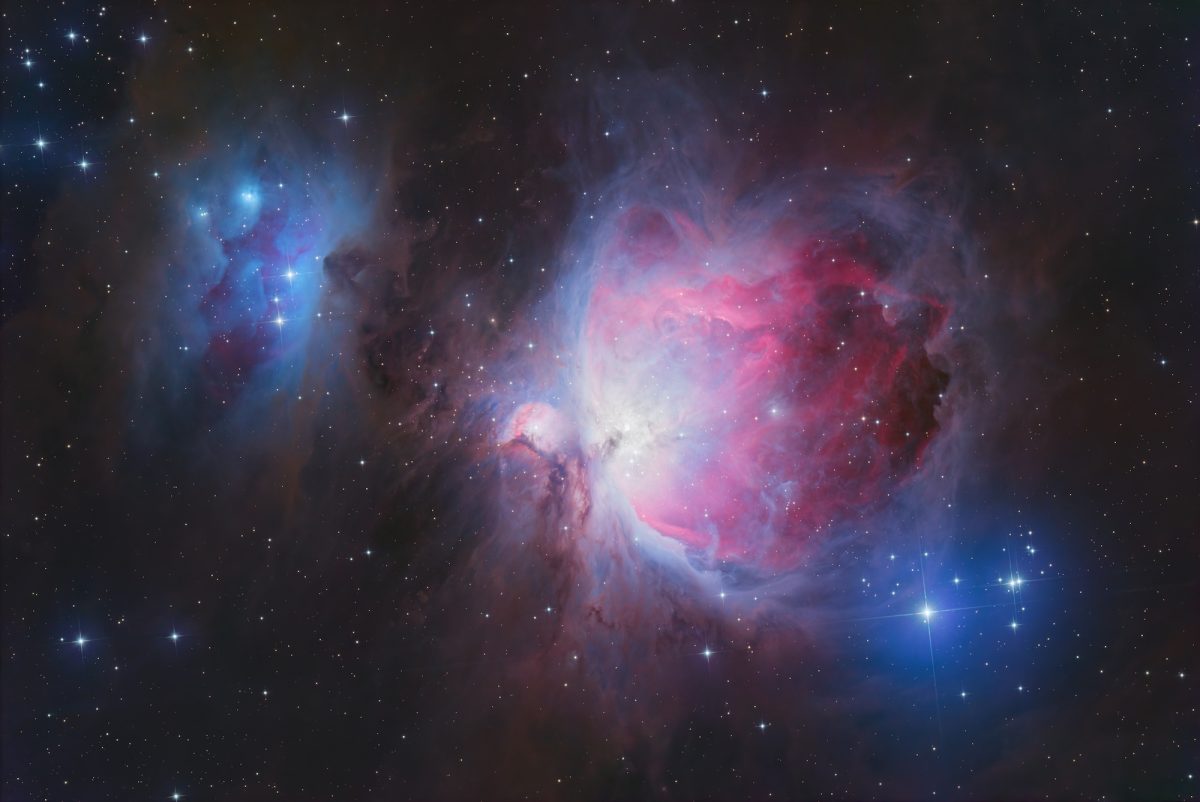
Orion Nebula (M42)
The most identifiable nebula in the winter sky radiates a pinkish-lilac core, from which filamentous gas streams extend outward, resembling avian wings. At its core, the youthful stars of the Trapezium are observable, ionizing the adjacent material. On the left side, a blue region of a reflection nebula is discernible — a cool contrast to the warm nucleus. Thousands of individuals globally capture images of M42, making each successful photograph a modest assessment of artistic judgment and post-processing accuracy.
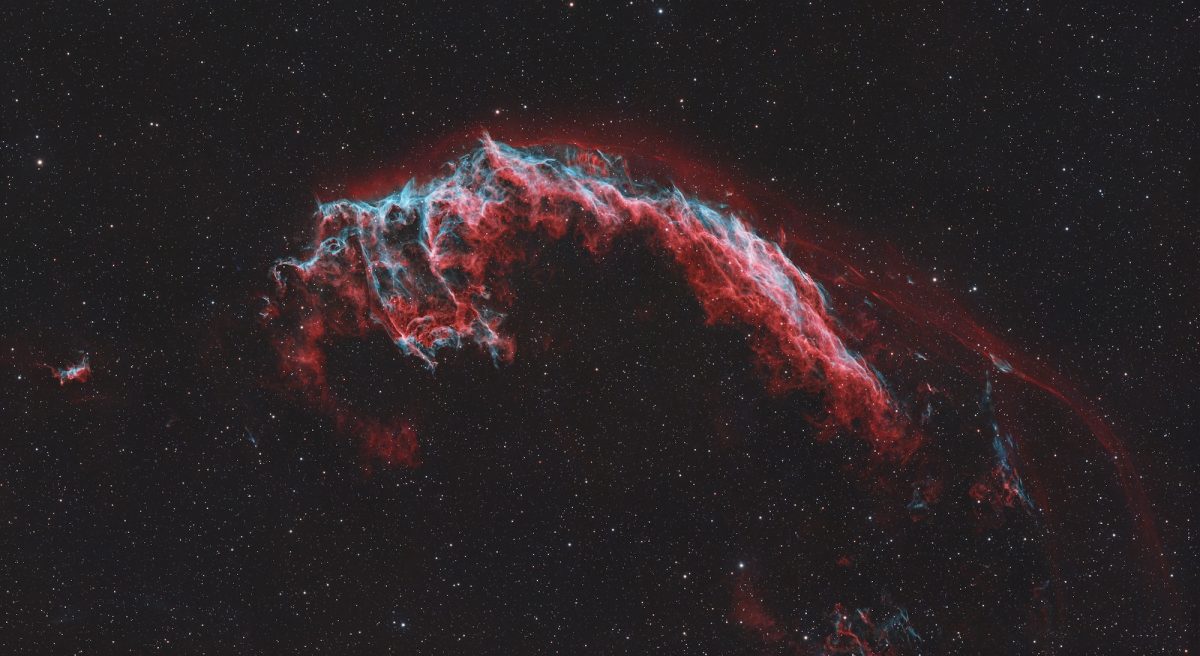
Veil Nebula
The supernova remnant extends across the entire frame, with its most remarkable characteristic being the interplay of colors. Red strands of hydrogen intricately intertwine with turquoise filaments of oxygen, composing a structure reminiscent of torn fabric that continues to drift through space. Fine, separate strands extend to the right, as if the edge of the canvas had been tugged. This is the residual aftermath of a star that underwent an explosive event thousands of years ago, and we continue to observe the shockwave emanating from that catastrophe.
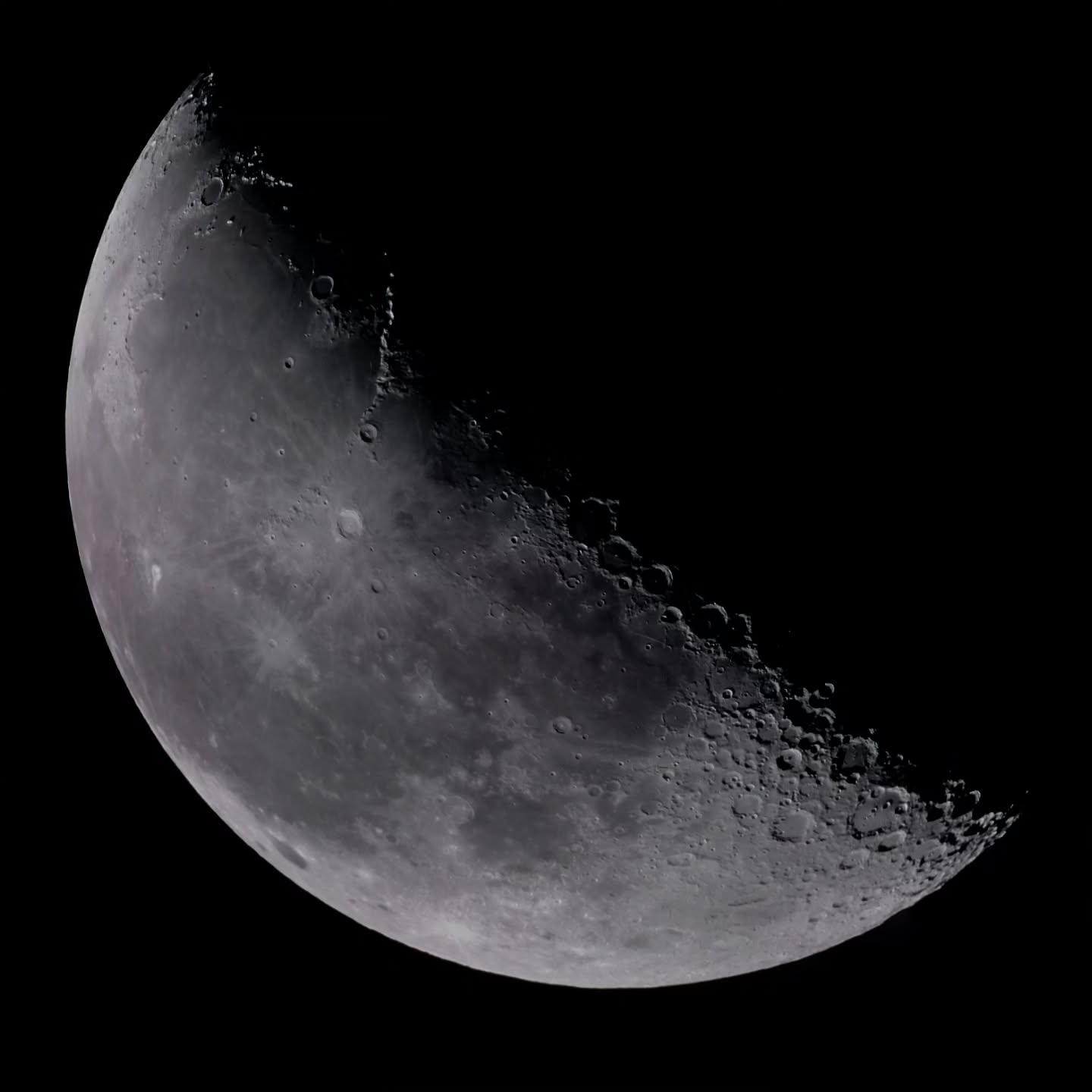
Moon
This archival image from August 2024 depicts the Moon at a phase when the terminator — the boundary between light and shadow — extends nearly centrally across the disk. Along this line, craters project elongated shadows, and surface irregularities are especially conspicuous: the smooth, dark lunar seas on the left and the impact-crater-dotted edge on the right. A subtle cool hue imparts an almost graphic austerity to the image. The Moon, a deceptively simple celestial body, exemplifies how effectively the optical systems have functioned.
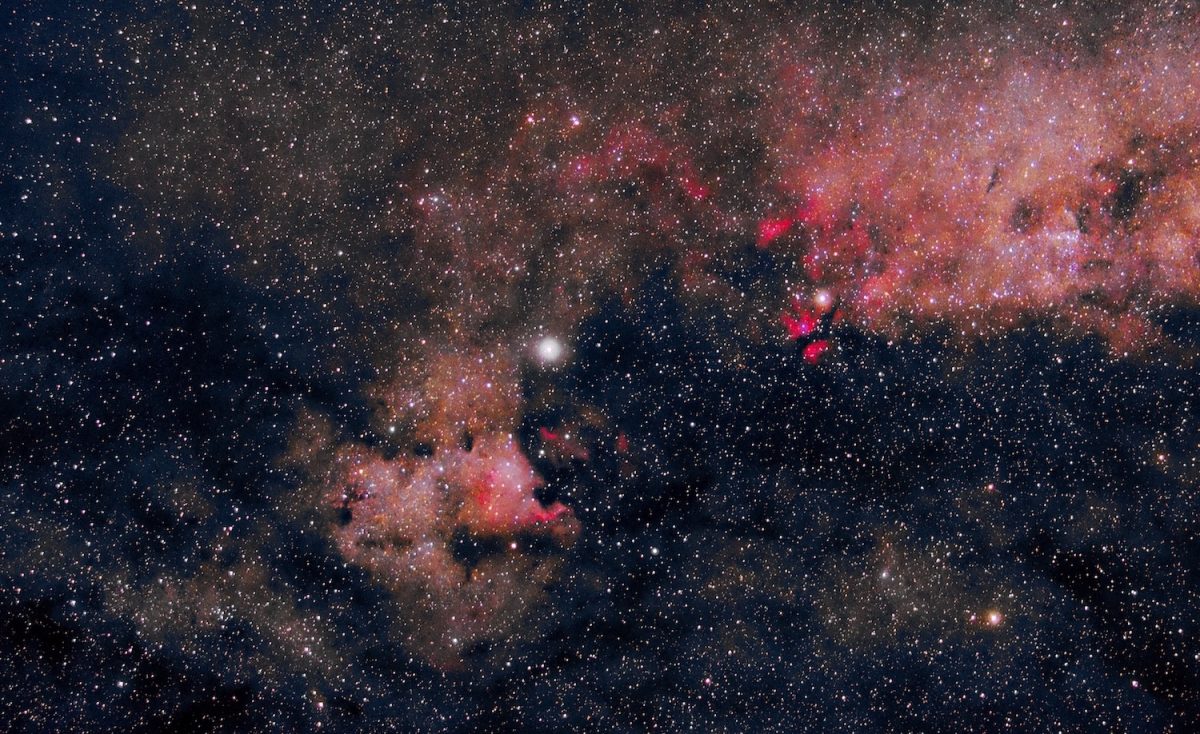
Cygnus (constellation)
This wide-angle view captures several well-known objects in the northern part of the Milky Way galaxy. The North America Nebula is distinctly visible within the frame, while the Pelican Nebula is obscured nearby. Additionally, a complex mixture of dust and gas extends between the stars Deneb and Sadr. The global gloom is closely associated with the production of ionized water. Unevenly scattered across the entire photograph, the gaseous haze in places creates particularly bright spots in the plots, and the dark saw-like structures create a striking contrast. Such panoramic views are highly valuable because they depict not merely a singular object but an entire region of the sky as a cohesive entity.
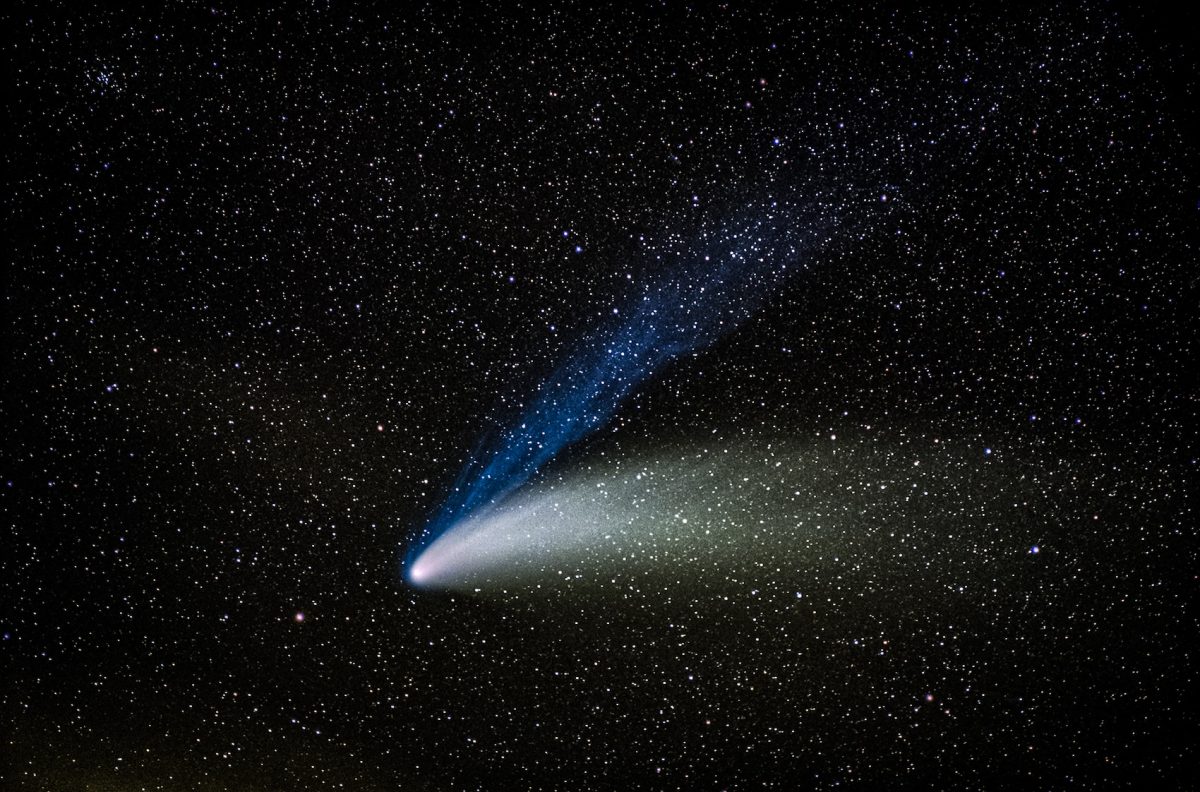
Comet Hale–Bopp
This image is among the most evocative in the collection, owing to its age of nearly thirty years. The 1997 comet exhibits two tails: a blue ion tail extending directly away from the Sun, and a broader, softer dust tail that is whitish in appearance. The photographer recently digitized the old photograph using contemporary equipment, uncovering details that were not discernible in the paper prints of that period, such as the structural composition of the tails and the subtle gradations of luminosity near the nucleus. An aged emulsion, now interpreted with advanced instruments, represents a rare instance of an astrophotograph traversing the continuum of time.
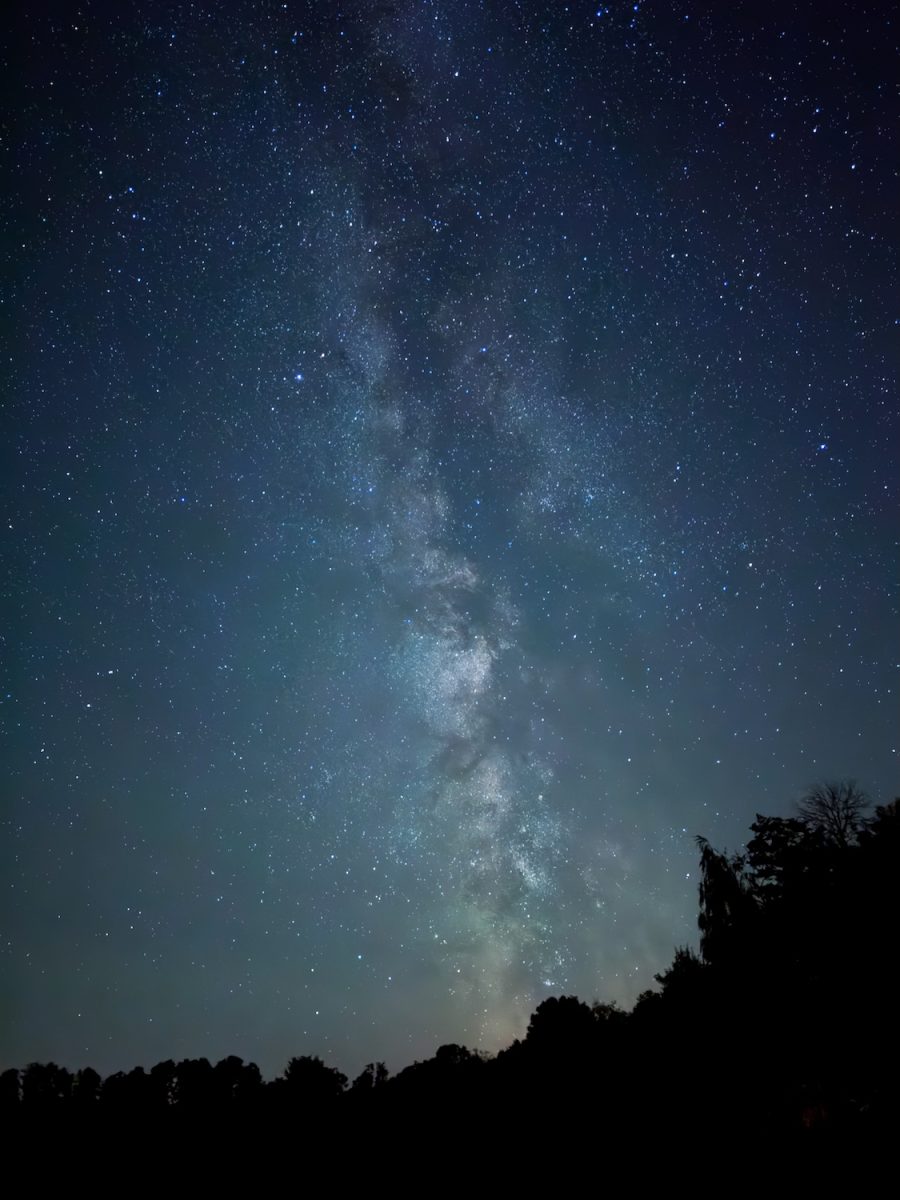
The Milky Way over the lake
The nucleus of our Galaxy ascends in a vertical column from the dark line of trees, while the silhouette of a shrub modestly appears within the frame at the lower right. The blue-azure sky is intricately populated with stars, rendering it difficult to discern any vacant spaces between them, and dark dust lanes of the galactic disk are observable through this stellar scattering. In this photograph, the Earth does not compete with the sky; rather, it functions as a subdued frame for the primary celestial display above.
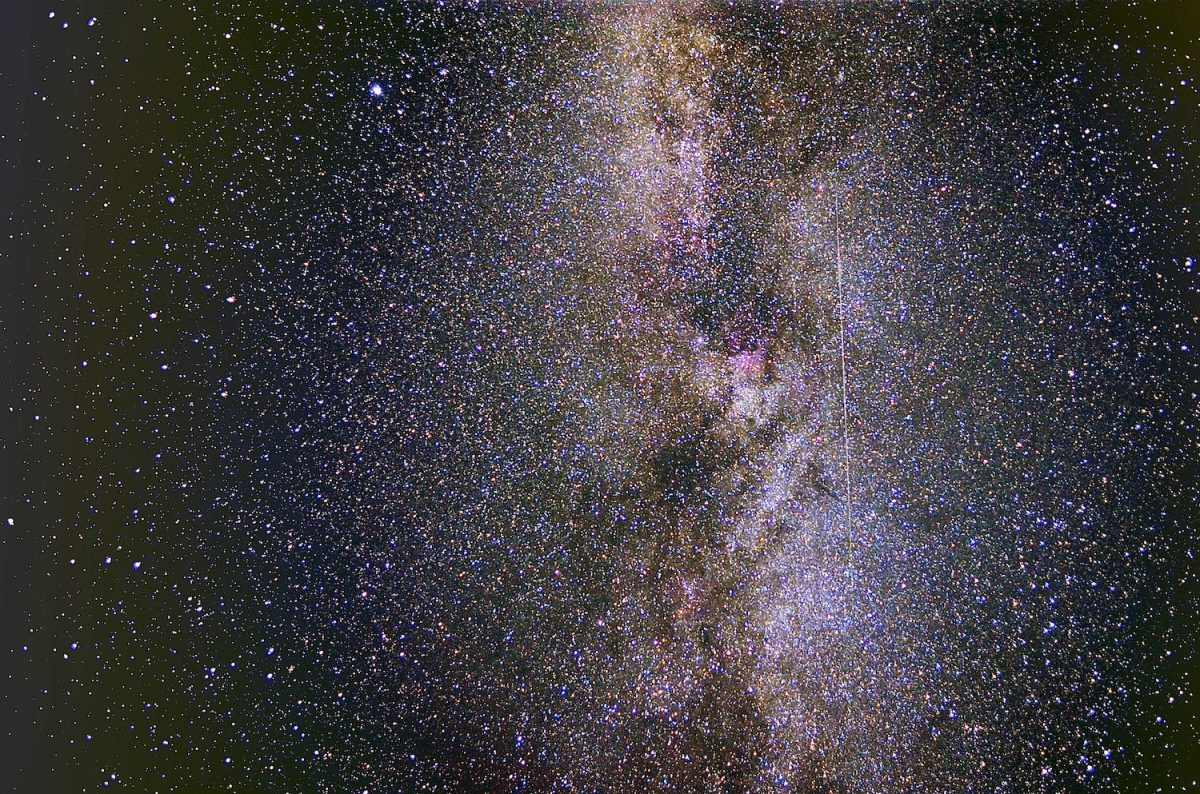
The Perseids above the Milky Way
A series of photographs captured on the night of August 13 during the peak of the Perseid meteor shower. The sky is densely populated with stars, through which the Milky Way extends, and a slender, luminous meteor trail crosses the frame on the right. The photographer directs the viewer’s attention to celestial objects: at the top left is the star Vega; at the center right, the North America Nebula emits a pink glow; below, the Elephant’s Trunk nebula is visible; and above, the Sadr region unfolds. This single image encapsulates both a momentary event and a permanent celestial chart.
These ten photos are just a small selection of what the participants submitted. You can view the full collection of entries on the contest page, where public voting is also open: you can vote for any photo you like, and these votes will determine the winner in the “Readers’ Choice” category.