

The most fundamental inquiries regarding space frequently prove to be the most challenging. Why is space perceived as dark? Why did the early Earth not freeze despite the Sun’s lesser intensity? Why is a star’s atmosphere hotter than its surface? Some of these answers were established in the past, while others remain subject to ongoing investigation.
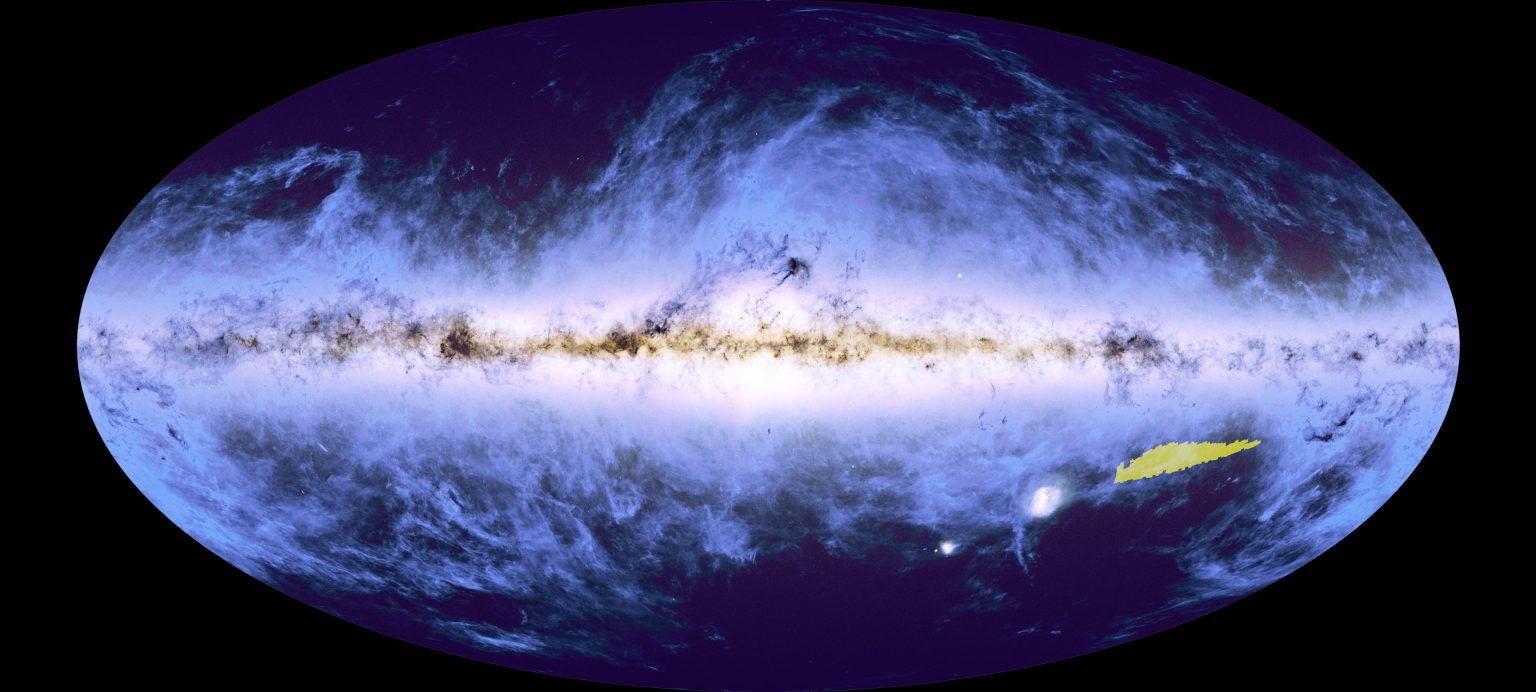
Why is space dark?
The question appears puerile until one endeavors to respond to it. Envision an infinite forest. Regardless of the direction one observes — whether nearby or distant — you would perceive a tree trunk, owing to the innumerable quantity of trees. A similar situation would prevail in an infinite universe, evenly populated with stars. In any given direction, sooner or later, one would observe a star, and the night sky would radiate as brightly as the sun’s disk.
This paradox was articulated by Heinrich Olbers in 1823, although prior consideration had been given to it by Johann Kepler and Edmond Halley. The initial proposed explanation involved interstellar dust, which was thought to scatter light from distant stars; however, this hypothesis was invalidated as the minute particles themselves emit light when heated. The definitive resolution was not established until the 20th century and comprises two elements.
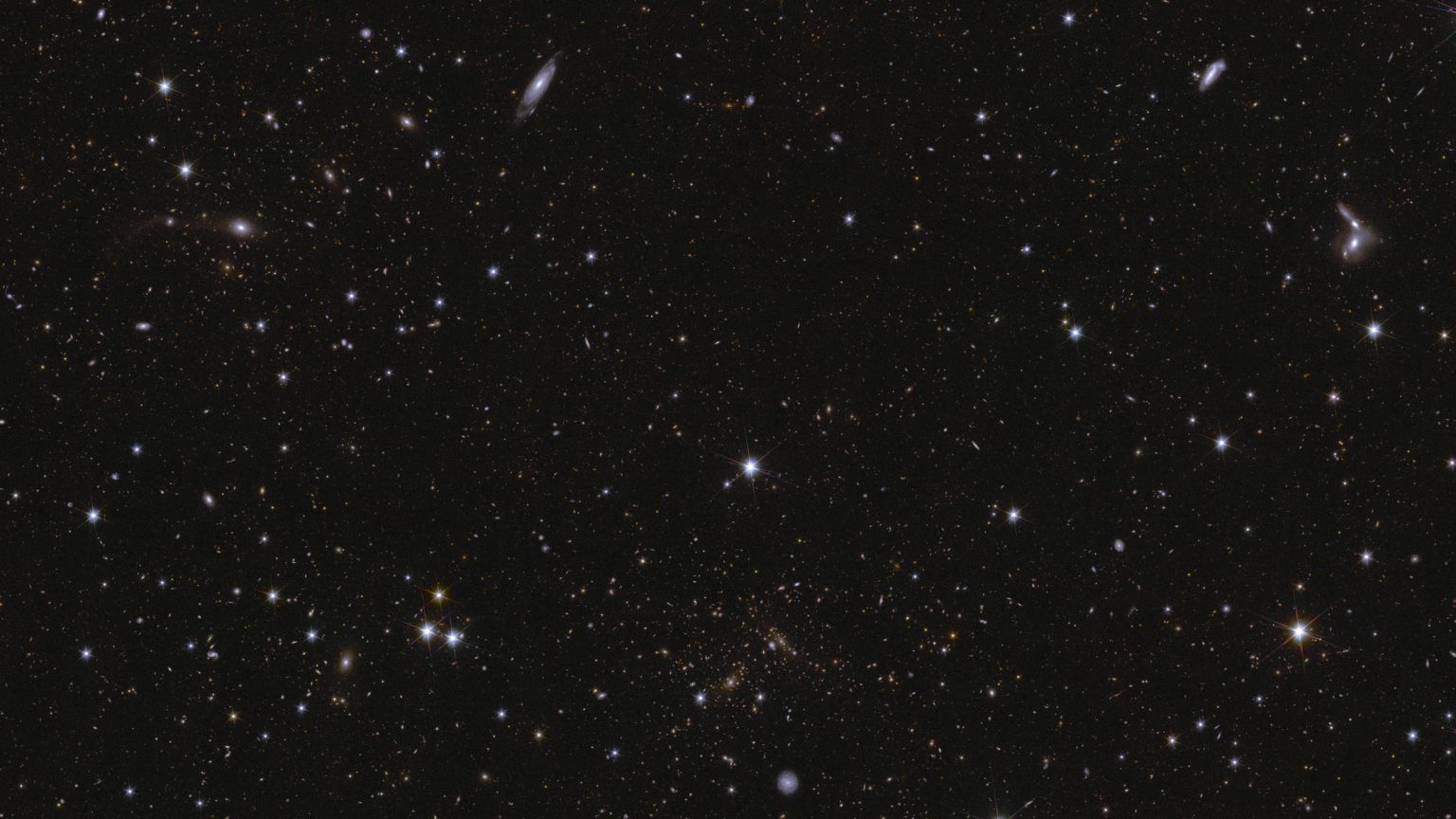
The universe possesses a finite age of approximately 13.8 billion years. Photons from the most distant regions have not yet had sufficient time to reach our vantage point, rendering the distant structures of that “forest’ invisible to us. The second factor pertains to the expansion of space itself. This expansion causes the stretching of light waves, resulting in the radiation from distant objects gradually shifting from the visible spectrum into the infrared, and from the most distant objects even into the microwave spectrum.
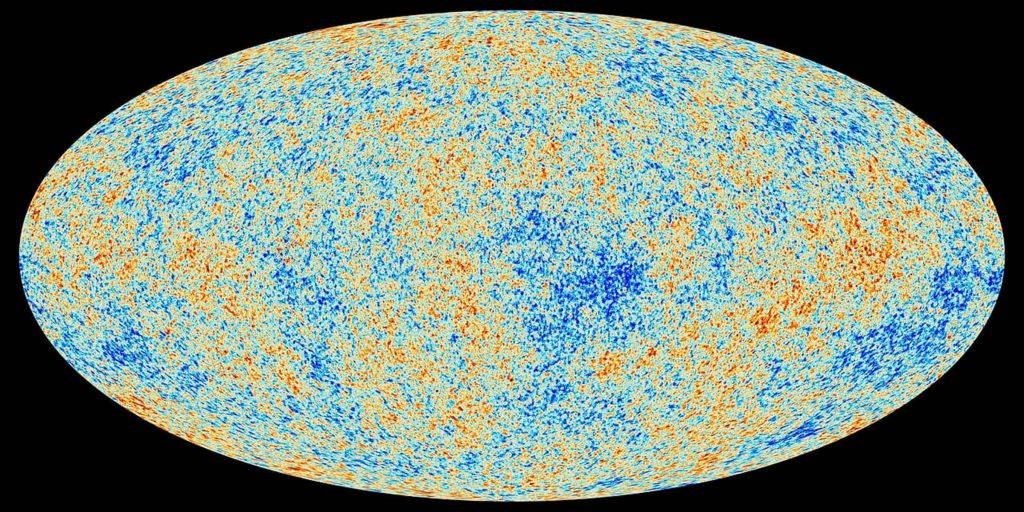
The sky indeed exhibits a uniform luminance across its entire sphere; however, this occurs within an invisible spectrum to the human eye — the microwave range. This residual radiation represents the earliest light in the universe, emitted approximately 380,000 years subsequent to the Big Bang, at which point space became transparent to it.
Why does the temperature of space remain nearly uniform in all directions?
The cosmic microwave background is observed to reach us with nearly uniform intensity from all regions of the sky. Regardless of the orientation of the receiver, the radio telescope detects a temperature of approximately 2.7 degrees above absolute zero. Variations across different sky regions are limited to roughly one hundred-thousandth of this value. For the field of cosmology, this remarkable uniformity has emerged as one of the most profound enigmas.
There is generally a straightforward explanation for why temperatures are identical. Objects exchange heat until the temperature gradient is eliminated, and a room with an open window will eventually equilibrate to the external temperature. However, heat transfer necessitates contact. The two opposite regions of the sky lacked such contact, as light from one would not have had sufficient time to reach the other throughout the entire history of the universe.
According to the standard Big Bang model, the universe as observed today comprised tens of thousands of regions that were not causally connected at that time. Each of these regions would have possessed its own temperature.
The primary explanation is referred to as cosmic inflation. According to this hypothesis, during the initial fractions of a second, the universe expanded at an extremely rapid rate. A small region, in which matter and radiation had sufficient time to attain thermal equilibrium, expanded to the size of the entire universe as observed today.
The regions of the sky currently situated in opposite parts of the observable universe were once neighboring areas with identical temperatures. Presently, there is no direct evidence supporting the occurrence of inflation; however, this very evidence is what researchers are actively seeking, particularly within the exceedingly faint polarization of the cosmic microwave background.
The universe is older than itself
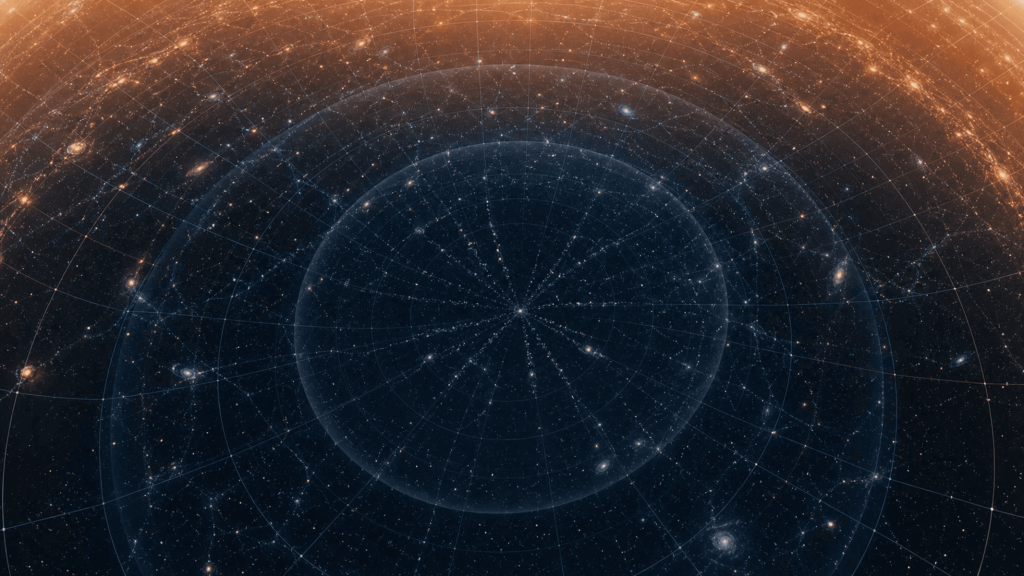
It has been approximately 13.8 billion years since the Big Bang, and the observable universe’s boundary is approximately 46.5 billion light-years distant. These two figures appear to be contradictory when considered side by side. If nothing can travel faster than the speed of light, how can this disparity, which exceeds threefold, be explained?
There is no error in this assertion. The light indeed traveled toward us over a period of 13.8 billion years; however, during that interval, the fabric of space itself was expanding. Consequently, the distance between us and the source of this light has been continuously increasing. We observe it as it appeared in the distant past, although it is currently located 46.5 billion light-years from us.
Consider an ant traversing a rubber band that is being stretched at both ends. The ant maintains a constant speed, yet the distance beneath it continually increases, resulting in the ant covering a distance considerably greater than the original length of the band. Similarly, light traverses cosmic distances in an analogous manner.
According to the special theory of relativity, no object may travel through space at a velocity exceeding the speed of light. The expansion of the universe is not governed by this restriction; in this context, galaxies are not moving through space at superluminal velocities. Instead, it is the space between them that is expanding.
Therefore, the most distant galaxies are receding from us at velocities exceeding the speed of light without contravening any physical laws, and electromagnetic radiation from some of these galaxies will never reach Earth due to the perpetual expansion of the universe.
It is evident that the observable portion of the universe is defined by a distinct boundary. This boundary is not a physical wall or the edge of space, but merely the limit beyond which light has not yet reached our detection; the nature of what exists beyond remains unknown. An observer situated in a different galaxy possesses their own separate boundary of the observable universe.
The paradox of the faint young Sun
Younger stars exhibit lower luminosity compared to their more mature counterparts, and the Sun is no exception. Four billion years prior, it emitted roughly 70% of its current energy output. Calculations derived from that luminosity yield a definitive conclusion: the Earth would have been entirely covered in solid ice from pole to pole.
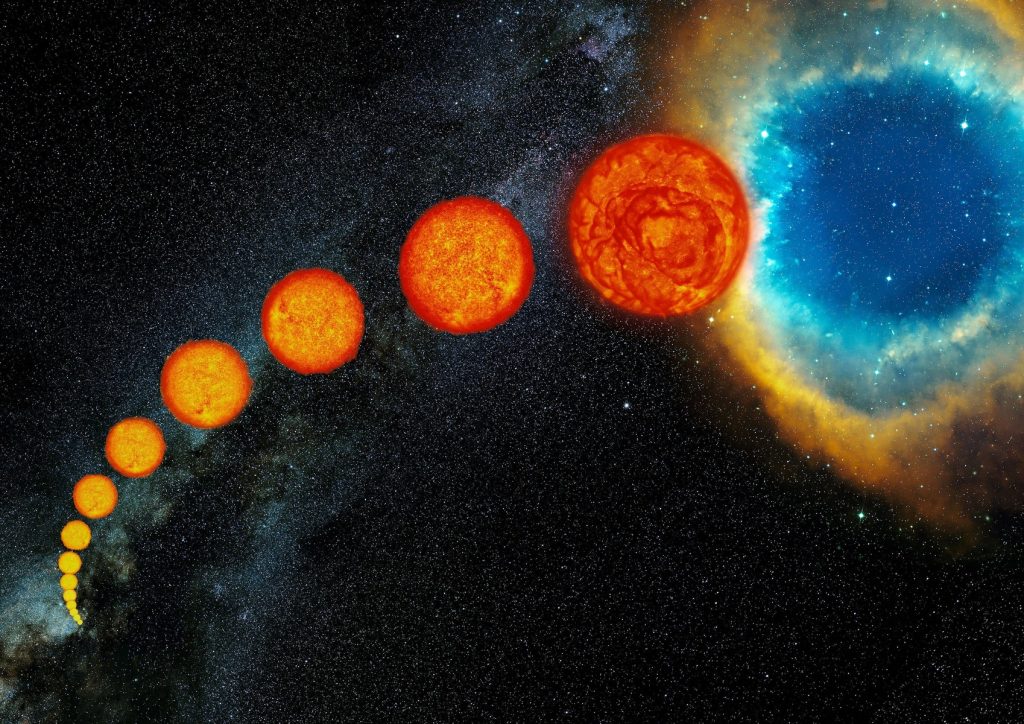
However, geological evidence suggests otherwise. Zircon crystals extracted from the oldest rocks indicate that liquid water existed on the planet approximately 4.4 billion years ago. The earliest known living organisms appeared only a few hundred million years thereafter. It can be inferred that the planet’s surface remained warm, despite climate models indicating that insufficient solar energy should have been available to maintain such conditions. This inconsistency was initially articulated by Carl Sagan and George Mullen in 1972.
The predominant explanation attributes the phenomenon to atmospheric conditions. Researchers hypothesize that during Earth’s early history, the concentrations of carbon dioxide, methane, and various other greenhouse gases were considerably elevated compared to contemporary levels, thereby enabling the atmosphere to retain heat more efficiently. However, this hypothesis is challenged by the fact that the composition of ancient sedimentary rocks conflicts with such high estimates of carbon dioxide content.
Various additional factors have been proposed, including the darker surface of the younger planet, which absorbed a greater amount of light; a distinct atmospheric composition; and gases introduced into the atmosphere due to vigorous volcanic activity and the impact of substantial asteroids. The issue remains unresolved, and the paradox of the faint young Sun persists without a definitive explanation.
The Sun’s atmosphere is hotter than its surface
The Sun’s source of heat resides at its core, where thermonuclear fusion occurs. Reasoning indicates that the temperature should diminish with increasing distance from the core, which, to a certain extent, is indeed observed. The visible surface — the photosphere — is heated to approximately 5,500°C. Nevertheless, the tenuous outer atmosphere above it — the corona — attains temperatures ranging from one to three million degrees Celsius, and during solar flares, can escalate to tens of millions of degrees.
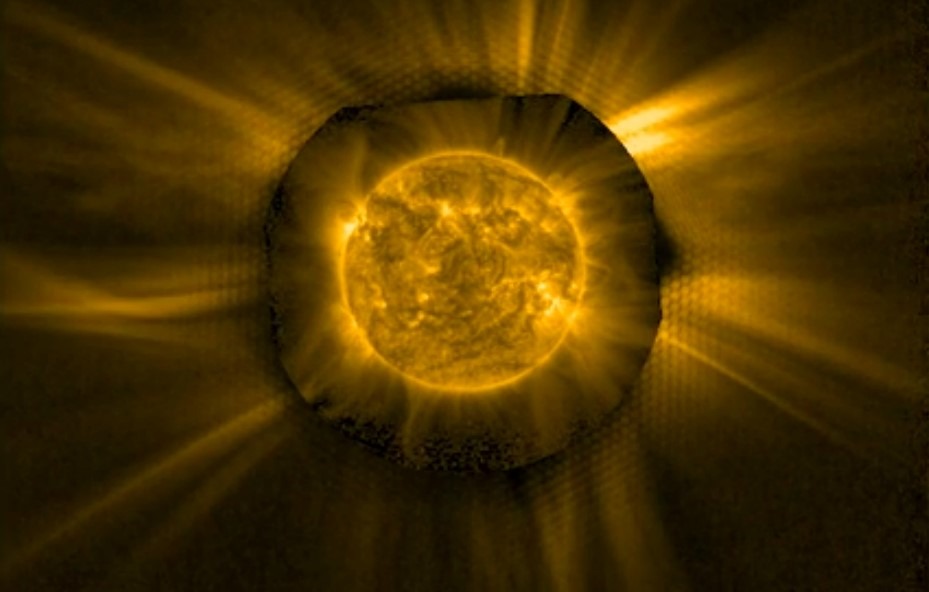
The disparity is a hundredfold, and initially, this appears to be a paradox. However, there exists no contradiction with the principles of physics, as the corona does not acquire energy via heat transfer from the lower layers but through an alternative mechanism. Astronomers identified this anomaly as early as the late 1930s, when they observed spectral lines of highly ionized iron — which had relinquished a substantial number of its electrons — in the corona’s spectrum. Such a state of matter is attainable only at temperatures reaching millions of kelvins.
Today, it is widely accepted that the Sun’s magnetic field serves as the primary source of energy responsible for heating the corona. However, the precise mechanism by which the magnetic field’s energy is liberated within the corona and subsequently transformed into heat remains to be fully elucidated.
One hypothesis posits that the heating of the corona is attributed to Alfvén waves — magnetohydrodynamic oscillations of plasma within a magnetic field — which transport energy from the lower layers of the Sun’s atmosphere and progressively dissipate it within the corona.
An alternative hypothesis associates the heating with nanoflares — minute flares that take place when magnetic field lines reconnect. Each nanoflare is approximately a billion times less intense than a typical solar flare; however, their numerous occurrences collectively have the potential to sustain the elevated temperature of the solar corona.
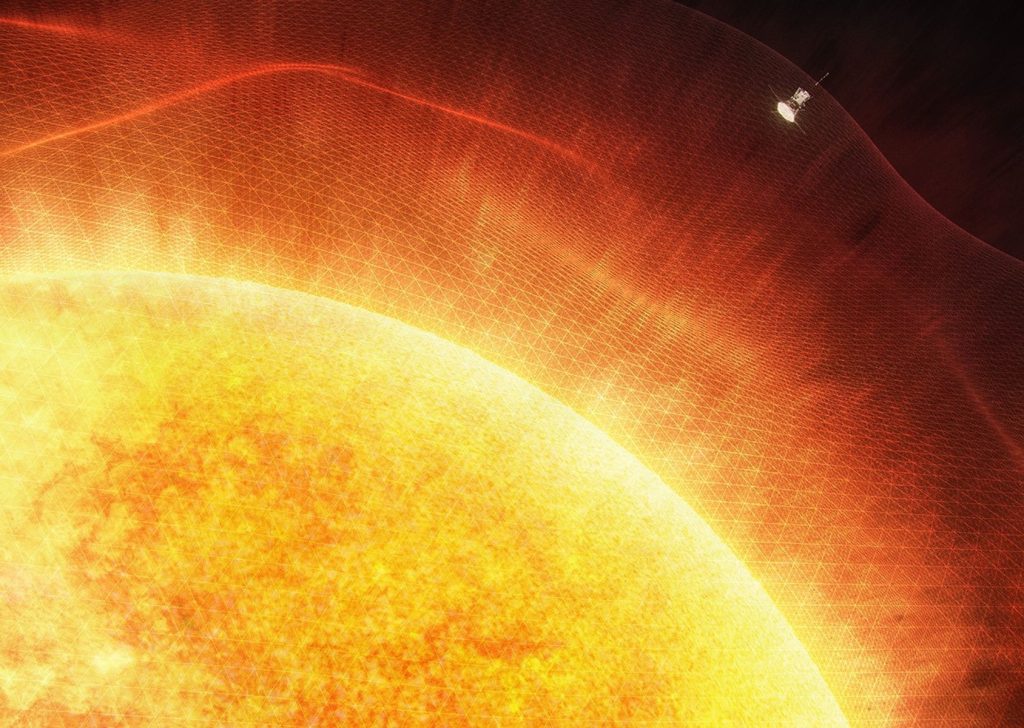
For more than eighty years, researchers have been seeking an explanation, yet none of the proposed theories has been definitively verified. Since 2021, the Parker Solar Probe has continuously traversed the solar corona, collecting data on its magnetic field, plasma, and wave phenomena. These observations serve to eliminate incorrect hypotheses; however, a conclusive explanation of the underlying mechanism remains elusive.
Large early galaxies formed at an excessively rapid pace
The initial images captured by the James Webb Space Telescope in 2022 were anticipated to depict the early universe as projected by theoretical models—that is, characterized by numerous small, nascent galaxies in the initial stages of formation through mergers. Instead, the images unveiled a variety of exceptionally luminous, reddish objects, some of which were determined to be substantially more massive and more advanced in development than astronomers had originally anticipated.
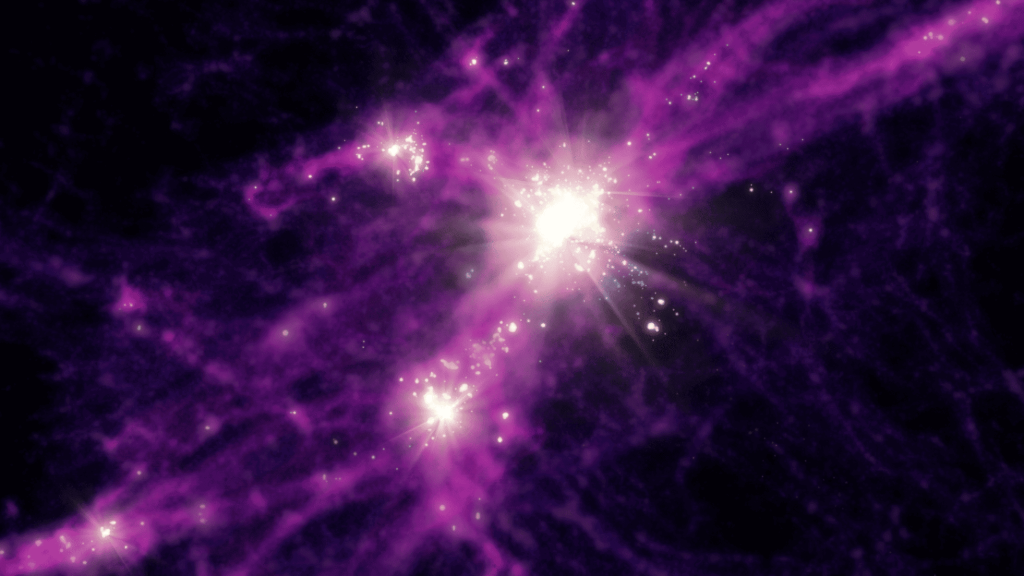
In February 2023, a team led by Ivo Labbe published an article in Nature describing six candidate massive galaxies that existed approximately 500 to 700 million years after the Big Bang. Based on initial estimates, their stellar mass surpassed ten billion times that of the Sun, with some comparable in mass to the current Milky Way galaxy.
This development was unexpected, as the standard cosmological model posits that galaxies typically evolve gradually through the merging of smaller systems. It was challenging to account for how such massive entities could have formed within a relatively brief period.
Subsequent measurements have somewhat alleviated this issue. In 2024, it became evident that the luminosity of numerous early galaxies is not solely attributable to stars but also to active galactic nuclei — superheated matter accreting onto supermassive black holes at their centers. Consequently, earlier assessments of stellar mass were found to be overestimated.
The predicted crisis according to the standard model did not materialize. Nonetheless, the universe’s early epochs still exhibit approximately twice the number of massive galaxies compared to the estimations. A plausible explanation is that, within the initial few hundred million years following the Big Bang, stellar formation occurred at a significantly accelerated rate than previously believed; however, this hypothesis lacks definitive confirmation at present.
In the field of astronomy, swift answers are rarely forthcoming. The enigma of the dark sky persisted unresolved for nearly two centuries. Such instances are typical in space science, where unresolved issues are frequently deferred to subsequent generations. A student presently in school may well be the individual who, in the future, elucidates the mechanisms behind the heating of the solar corona or the extraordinarily rapid development of the earliest galaxies.
