

Rocket technology is gradually moving beyond launch sites. Tesla has unveiled a new generation of its electric Roadster sports car, which not only accelerates faster than most racing cars but can also leave the ground for a few seconds. The most interesting aspect is not the stunt itself: the flight relies on technologies related to the control systems used in SpaceX’s Falcon 9 rockets.
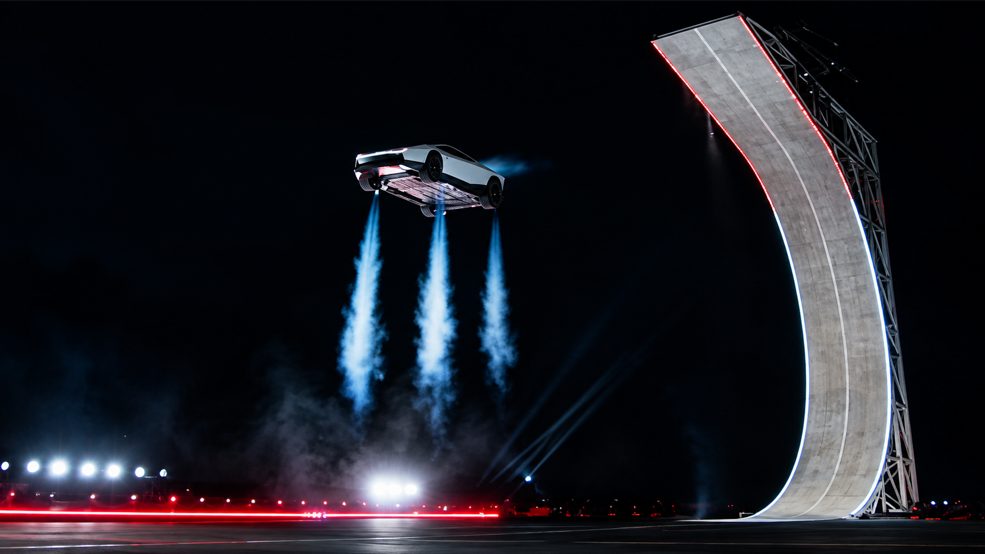
The presentation took place on October 15 at SpaceX’s rocket testing facility in McGregor, Texas. During the demonstration, an uncrewed Roadster prototype climbed a curved ramp, turned upside down, detached from the structure, rotated in midair, and landed. In another test, it flew over several parked Tesla vehicles.
According to the developers, the key component was a system of ten thruster nozzles using compressed air. The gas is stored in composite overwrapped pressure vessels (COPVs) with a combined capacity of approximately 600 liters. Similar vessels are used in the aerospace industry, where high strength must be combined with relatively low weight.
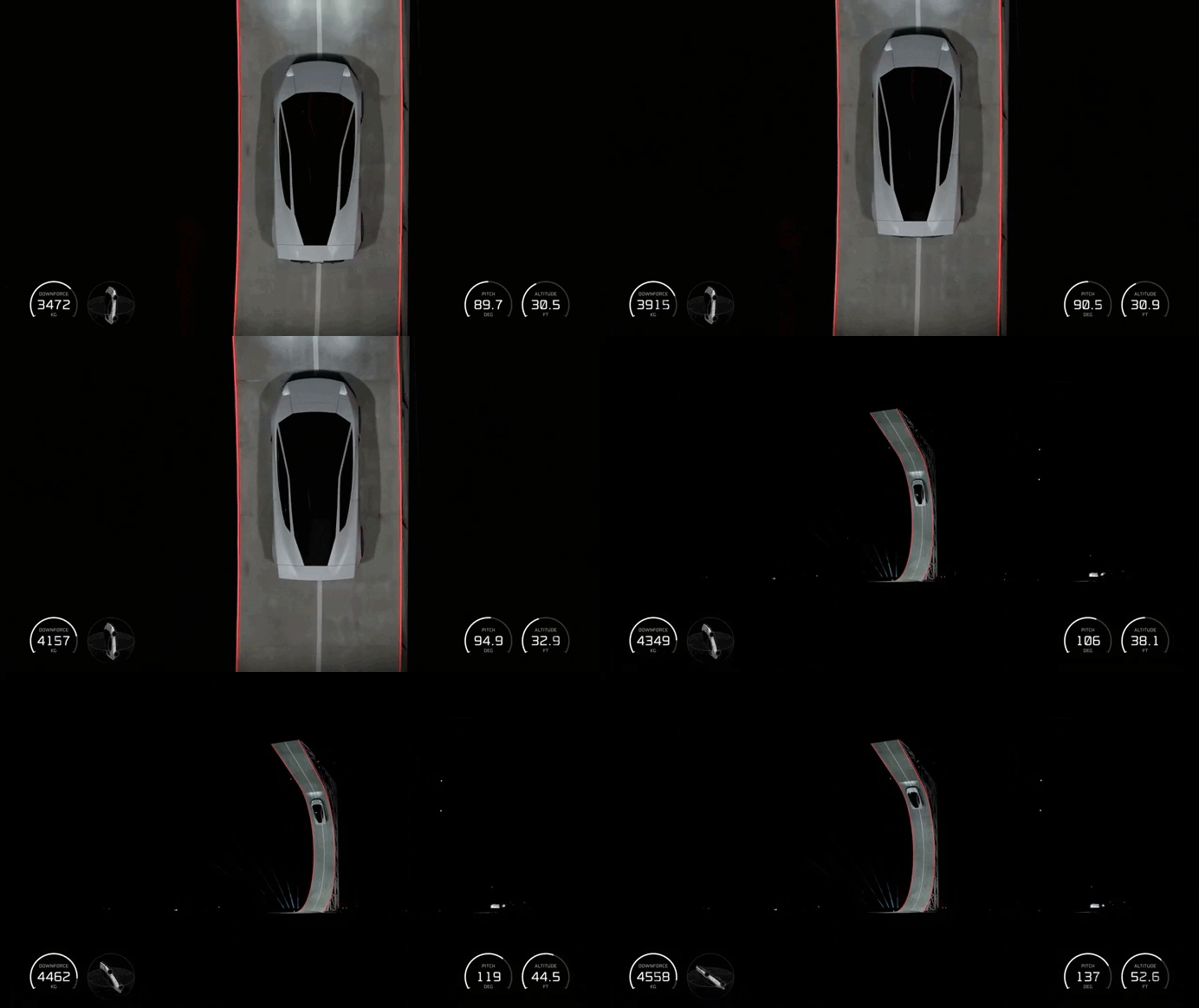
The control principle resembles Falcon 9’s attitude control system. After stage separation, the rocket uses small gas thrusters to change its orientation in space. Falcon 9 uses nitrogen as the working fluid, while the Roadster uses compressed air. Briefly opening different nozzles around the body generates forces and torques that can lift the car, slow its descent, or rotate it around its axes.
Unlike the main Merlin rocket engines, these gas thrusters do not burn fuel. Thrust is produced by releasing previously compressed gas. However, the company has not yet disclosed the precise algorithms used to automatically stabilize the Roadster.
Driving upside down relies on a different system: powerful fans extract air from beneath the car, generating downforce. This is not Falcon 9 technology—a similar principle has already been used in electric racing cars. The Roadster also features active aerodynamics that adjust downforce depending on the driving mode.
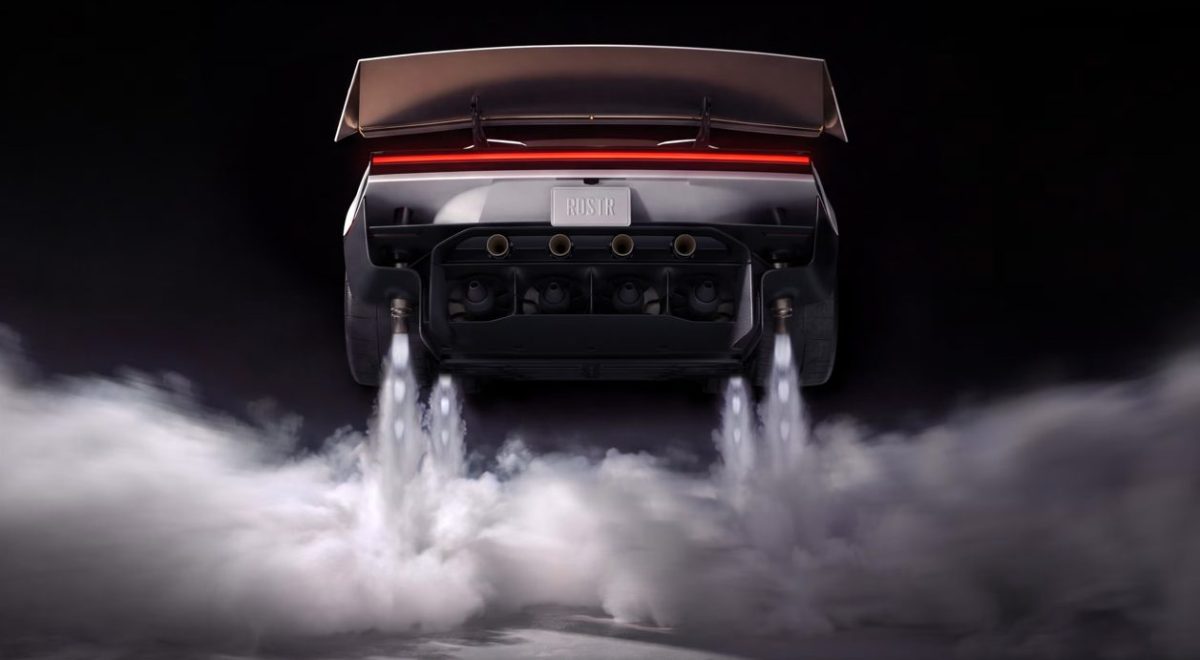
Tesla claims acceleration to 96.6 km/h in 0.81 seconds during a demonstration run, a top speed of over 370 km/h, and a range exceeding 480 kilometers. The proposed versions are Performance, Thrust, and a single-seat Rocket equipped with a complete short-duration flight system. Production is scheduled to begin in 2028, although the specifications have not yet been independently verified.
Interestingly, Tesla was not the first company to demonstrate a car driving upside down. Back in April 2025, Britain’s McMurtry Automotive conducted an unusual test of its McMurtry Spéirling electric hypercar. Thanks to its special Downforce-on-Demand system, which uses powerful fans to extract air from beneath the car, the vehicle can generate downforce equivalent to the weight of approximately two tonnes, even while stationary.
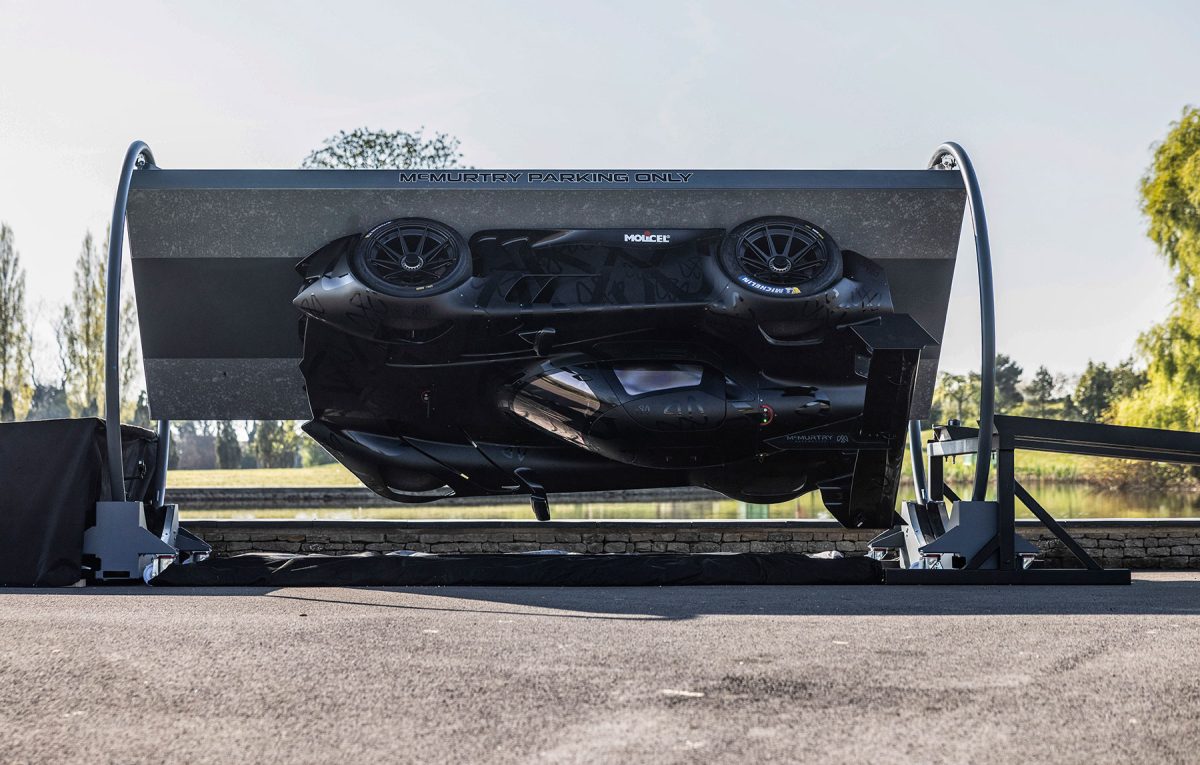
During the experiment, the car was placed on a special platform and rotated through 180 degrees. It then drove a short distance upside down under its own power without falling. Unlike the Tesla Roadster, however, the Spéirling is not designed to fly: its technology provides grip against a surface rather than free movement through the air.
Why Does This Matter?
Although the Roadster was developed primarily as a sports car, its development demonstrates the potential for using rocket technologies in new settings. Systems that precisely regulate gas thrust, compact high-pressure vessels, and automatic attitude control are also important for spacecraft. Such solutions are used to orient satellites, stabilize scientific platforms, and control spacecraft motion. Shared engineering developments could potentially reduce costs and improve individual components of space technology. This has indirect implications for astronomy, since precise pointing and stability are critical to observations made by space telescopes.
How Does It Work?
The operating principle resembles an inflated balloon being released: air rushes out, and the balloon moves in the opposite direction. In the Tesla Roadster, strong compressed-air vessels replace the balloon, while a system of controlled nozzles replaces the single opening. When air is expelled downward, it generates an upward reaction force. Opening nozzles on one side of the car can create torque and change its orientation in the air.
Stabilization requires a control system that uses sensor readings to determine the car’s orientation and regulate nozzle thrust. The fans beneath the car operate differently: they reduce the pressure underneath it, allowing atmospheric pressure to press it against the surface. The combination of these different systems enabled the Roadster to demonstrate such unusual maneuvers.
SpaceX’s experience with cold-gas attitude control, composite pressure vessels, and the integration of such systems likely accelerated the prototype’s development considerably. Without this expertise, implementing such a complex combination of automotive and rocket technologies would have been much harder. Nevertheless, it is too early to call the Roadster a fully fledged flying car: the demonstrated maneuvers were brief, and production implementation still lies ahead.
