

Brown dwarf atmospheres have turned out to be more complex than theory predicts. Using a NASA space telescope, astronomers obtained infrared spectra of several dozen such objects near the Solar System. None of the leading models fully matched the data. In some cases, the models predicted physically unrealistic sizes for the brown dwarfs.
Errors of Tens of Percent
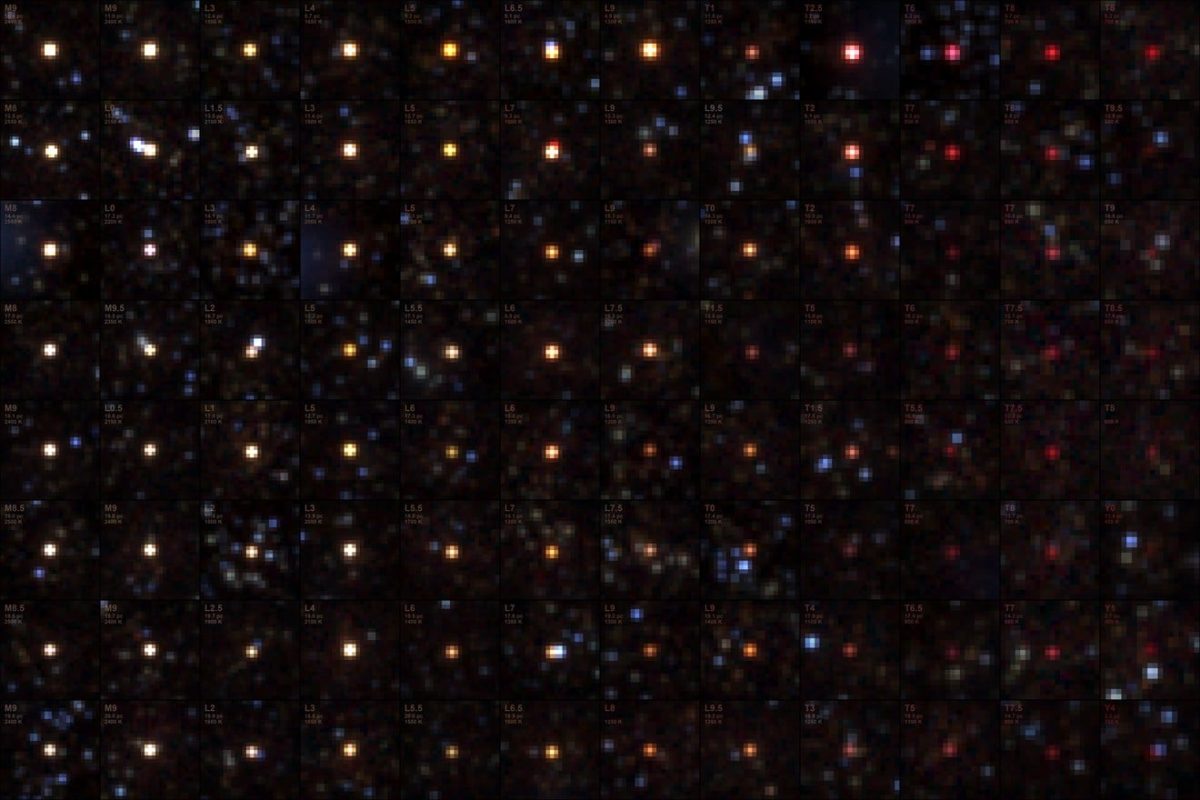
Brown dwarfs are more massive than giant planets, but lack sufficient mass to sustain hydrogen fusion in their interiors. A team led by Zafar Rustamkulov of the California Institute of Technology collected spectra of 37 dwarfs located between 7 and 100 light-years away. Their temperatures range from +2,200 to −20°C.
The spectra were compared with five atmospheric models, none of which reproduced a number of brightness peaks in the near-infrared range. According to Universe Today, the dwarf sizes inferred by the models were sometimes off by 20–50%. An object’s brightness depends on its surface area. The models therefore adjusted the radius to match the observed brightness, allowing inaccuracies in their description of atmospheric chemistry to go unnoticed.
One Hundred and Two Spectral Channels
The SPHEREx telescope surveys the sky in 102 channels spanning wavelengths from 0.75 to 5 micrometers. This range covers approximately 80% of the thermal radiation emitted by brown dwarfs, and much of this light is absorbed by water vapor in Earth’s atmosphere.
Previously, brown dwarfs were studied mainly through broadband filters, which blend narrow absorption features caused by molecules into a single measurement. The new spectra, however, reveal signatures of water, carbon dioxide, carbon monoxide, and methane, according to NASA’s Jet Propulsion Laboratory.
Carbon and Mixing
The calculations reproduced carbon’s behavior most accurately. When an atmosphere cools below 1,000 kelvins, carbon monoxide becomes sharply less abundant, and methane begins to dominate. The Sonora Elf Owl model reproduces this transition well when weak vertical mixing is assumed.
Carbon monoxide is stable in the hot lower layers. If mixing is slow, gas rising into the cooler upper atmosphere has time to convert into methane, causing its carbon monoxide content to drop sharply. Vertical currents are strong on Jupiter, but they may be much weaker in brown dwarfs.
The models struggle most with the stage when atmospheric clouds thin out. According to Zafar Rustamkulov, the spectra of brown dwarfs differ noticeably even at the same temperature. The paper was published in the peer-reviewed journal The Astrophysical Journal.
Thousands of Brown Dwarfs
Over its two-year sky survey, SPHEREx is expected to collect spectra of thousands of brown dwarfs, some of which are already being analyzed. Until now, only a few dozen such objects have been studied in detail using space telescopes.
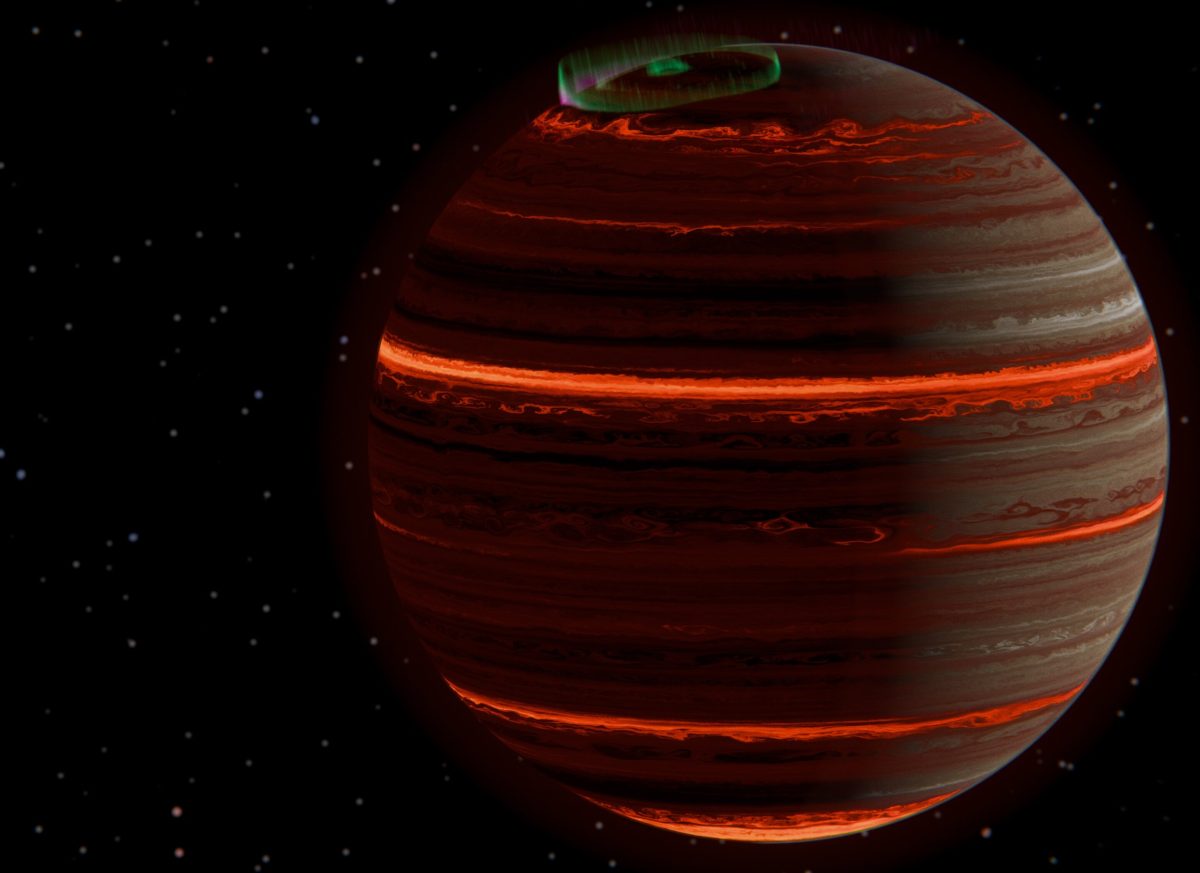
Brown dwarfs are more massive than Jupiter, but hydrogen fusion never begins in their interiors. Source: the CrashCourse YouTube channel
These dwarfs have no host star and are heated only from within, making them useful for testing theories of gas giant atmospheres. Similar models are also used to interpret the spectra of young gas giants imaged directly with James Webb. The sizes of these planets are estimated by matching models to their spectra, so the errors of tens of percent identified for brown dwarfs may also apply to them. Theorists will need to refine their atmospheric calculations, while thousands of spectra from SPHEREx will provide the data to test them.
