

When it comes to black holes, we usually imagine giant cosmic objects that swallow everything around them. However, for decades physicists have suggested the existence of much smaller and short-lived counterparts. Using the world’s most powerful particle accelerator — the Large Hadron Collider (LHC) — scientists are trying to detect quantum black holes smaller than an atom.
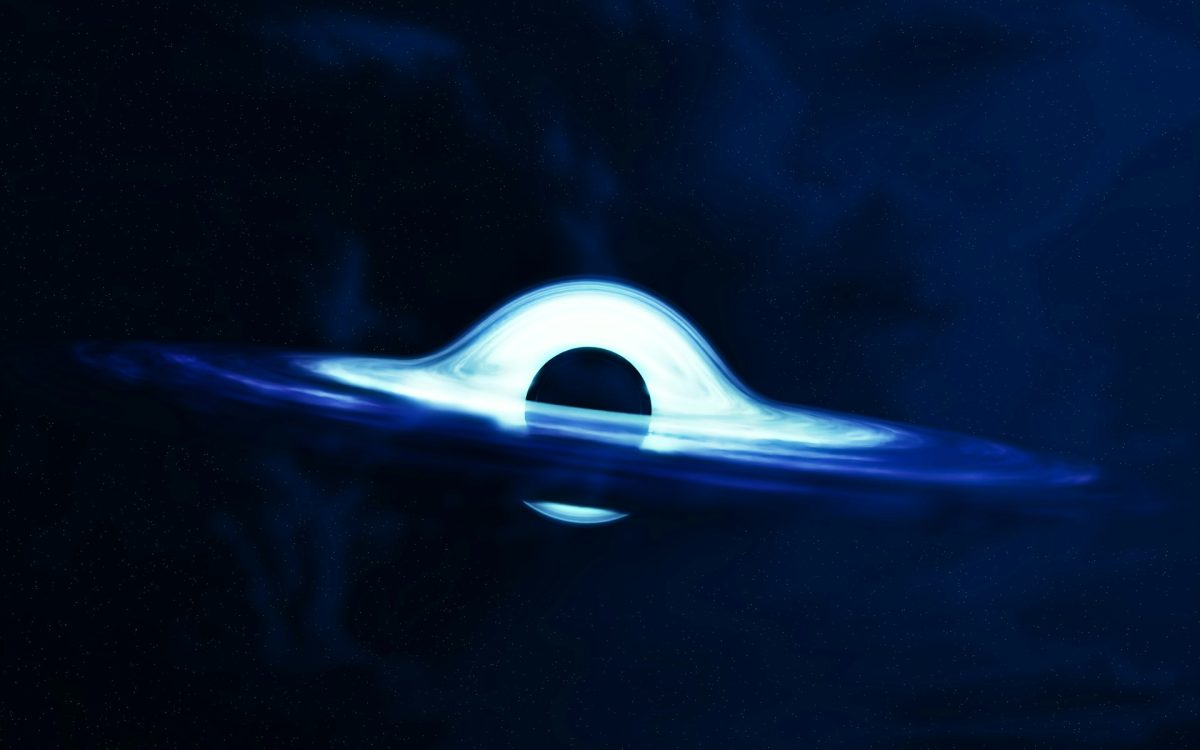
The discovery of such objects could help solve fundamental mysteries concerning the structure of four-dimensional spacetime and unite two concepts that remain incompatible: general relativity, which describes gravity on the macroscopic scale, and quantum physics, which explains the microscopic world. This would bring physics closer to creating the long-awaited theory of quantum gravity.
“Hidden” Dimensions and the Nature of Gravity
Unlike classical astrophysical black holes, which form during the gravitational collapse of massive stars, a quantum black hole requires an enormous amount of energy to be compressed into an extremely small volume. According to one hypothesis, such compression could be possible if additional “hidden” dimensions predicted by string theory exist.
These additional dimensions could also explain why gravity is the weakest of the four fundamental interactions: it may simply “leak” into hidden dimensions, where its strength is actually much greater. Collision energies at the collider reach levels corresponding to distances that relate to an atom in the same way that an atom relates to the human body. This is an ideal scale for searching for quantum black holes.
Concerns that the collider could create a stable black hole and destroy Earth are unfounded. If such an object does form during a proton collision, it would evaporate almost instantly.
How Can You Detect an Object That Disappears Instantly?
It is impossible to directly detect a subatomic black hole even with the most sensitive detectors. However, it can be identified by its “signature” — the stream of particles and energy released during its decay.
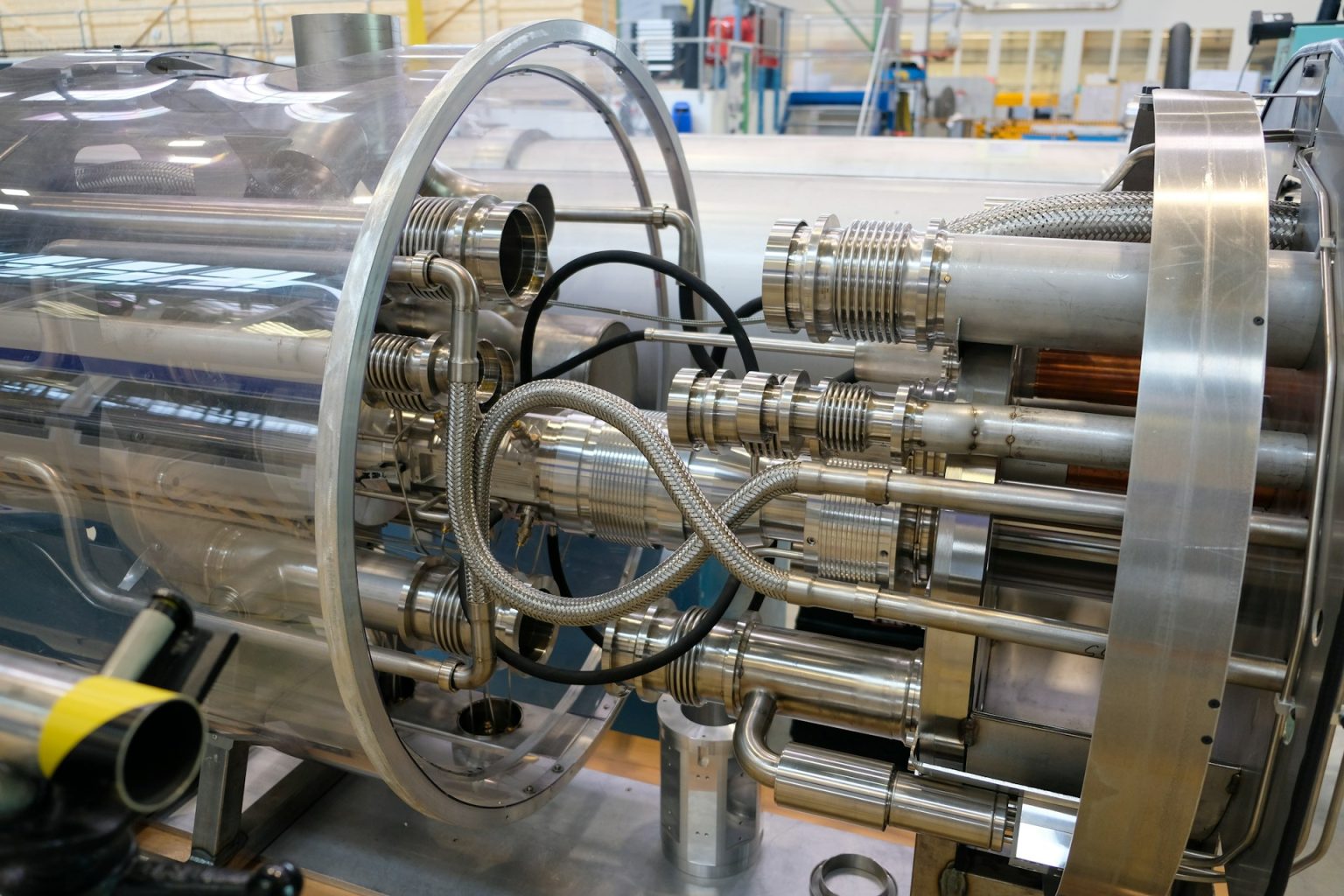
The decay of a quantum black hole should have a characteristic spherical pattern, with particles flying outward in all directions. Researchers from the Compact Muon Solenoid (CMS) experiment applied a new method for analyzing collision data at energies of up to 12 TeV. They summed the energy of particle-decay products, searching for corresponding excesses.
A Null Result Is Still Knowledge
No traces of quantum black holes or extra dimensions have yet been found within this energy range. However, scientists do not consider this a failure. In high-energy physics, the absence of a signal makes it possible to establish an exclusion limit — a clear parameter indicating: “if an object with these properties existed, we would have detected it, and therefore it is not present in this region.”
The method of successive exclusion has already demonstrated its effectiveness — it was through this approach that the Higgs boson was discovered in 2012. As more data are accumulated and higher energy ranges are explored, the chances of detecting quantum black holes will increase, narrowing the space available for hypotheses and bringing physicists closer to unifying the fundamental forces of nature.
Earlier, we reported on how the heaviest antimatter particle was detected at the Large Hadron Collider.
According to ucsb.edu
