

In an image of a system of Martian valleys about a thousand kilometers long, more than thirty dust devils were detected. They were captured by the Mars Express orbiter. A special operating principle of the onboard instrument helped identify them in the image.
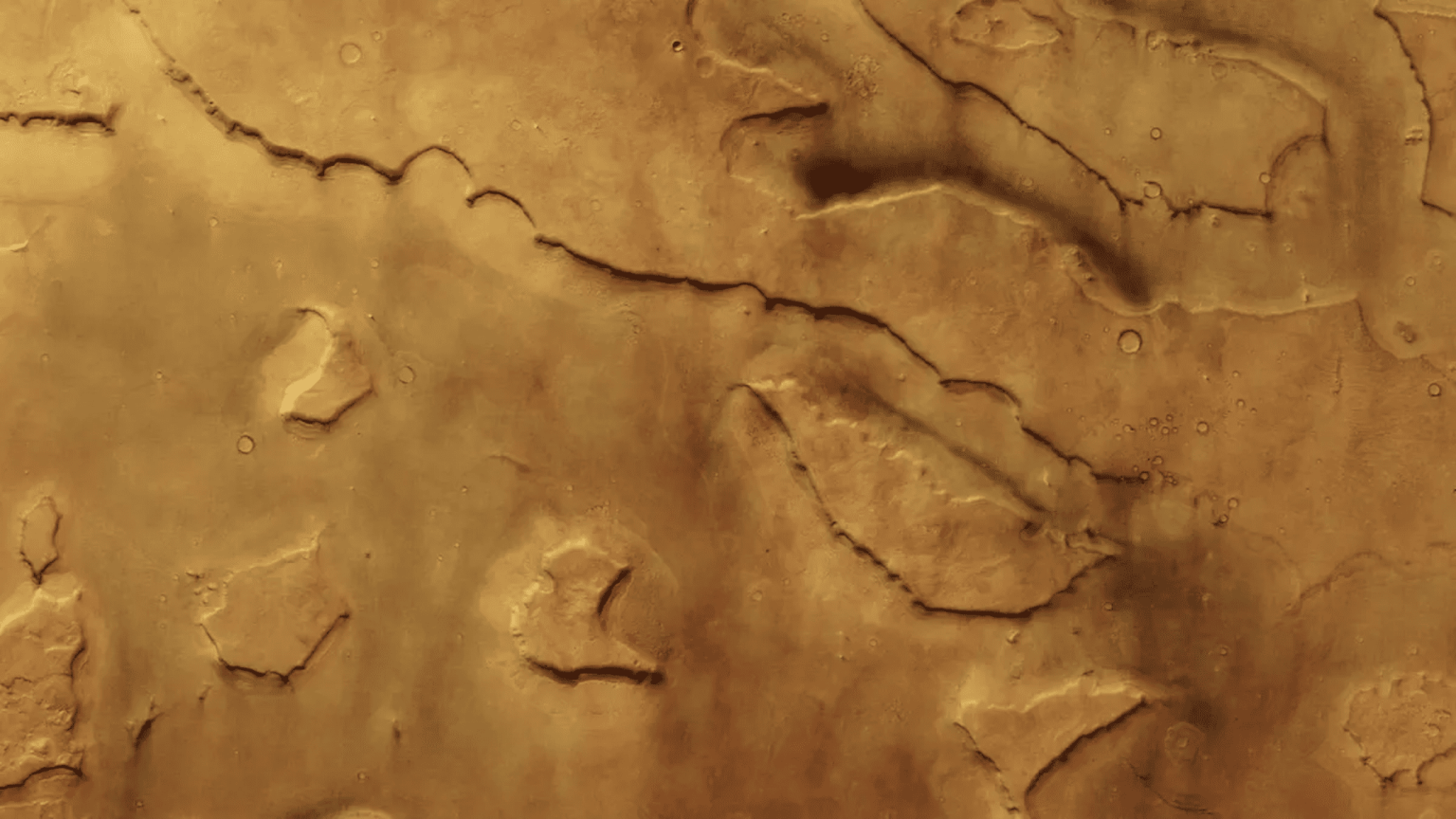
Mamers Valles and whirlwinds
The image shows part of a labyrinthine system of canyons and valleys in the northern hemisphere of Mars known as the Mamers Valley. The channels stretch for approximately 1,000 kilometers, reaching up to 25 kilometers in width and up to 1.2 kilometers in depth.
The name comes from the Oscan language of pre-Roman Italy, where the word “Mamers” means Mars and “Valles” means valley. The region’s rocks formed approximately 3.8 billion years ago, during the so-called Late Noachian period, when Mars was transitioning from a warmer, wetter, and geologically more active state to its current cold and arid state.
Dust devils in the photo
Dust devils on Mars form when part of the surface is heated by the Sun and the air above it begins to swirl upward, carrying dust with it. Martian dust devils are similar to those on Earth, but much larger. They reach heights of eight kilometers and can reach speeds of up to 45 meters per second.
The HRSC (High Resolution Stereo Camera) instrument aboard Mars Express creates a single image by combining sequential images from nine separate channels. When nothing is moving on the surface, all perspectives align, but a moving object stands out clearly against its surroundings. It is this principle that made it possible to detect more than thirty active vortices simultaneously. Each one appears as a small yellow dot with a shadow.
What the hills hide
In addition to whirlpools, the valley bears traces of other geological activity. Along the slopes and at the bottom of the canyons, there are noticeable landforms that are interpreted as the remains of glaciers covered with a layer of debris material. It is believed that under such a protective cover, water ice may be preserved, protected from gradual sublimation in the rarefied of Martian atmosphere.
Dark streaks are visible in some areas of the valley floor. Dark deposits are visible in some areas of the floor. They are likely composed of volcanic sand or other dark material that may have formed locally or been transported by wind from nearby regions. The combination of possible water ice deposits and active dust transport processes makes the Mamerz Valley an interesting target for further study. Observations of it help to better understand the current climate of Mars and the history of its surface.
Two decades of Mars Express operations
The HRSC stereo camera was developed and is maintained by the German Aerospace Center. Systematic data processing was carried out at the DLR Institute of Space Research in the Berlin district of Adlershof. A working group on planetary sciences and remote sensing at the Free University of Berlin used this data to create the final images.
The Mars Express spacecraft has been mapping the Martian landscape since its launch in 2003. Over more than twenty years of operation, it has significantly changed scientists’ understanding of our neighboring planet.
According to space.com