

The smallest icy bodies on the outskirts of the Solar System have almost the same surface composition as larger bodies of the same class. Astronomers expected the opposite, because a long history of collisions should have erased the original signatures of the material. For the first time, the data were collected simultaneously by two space telescopes, in visible and infrared wavelengths. Fewer small bodies were found there than planetary formation models predict.
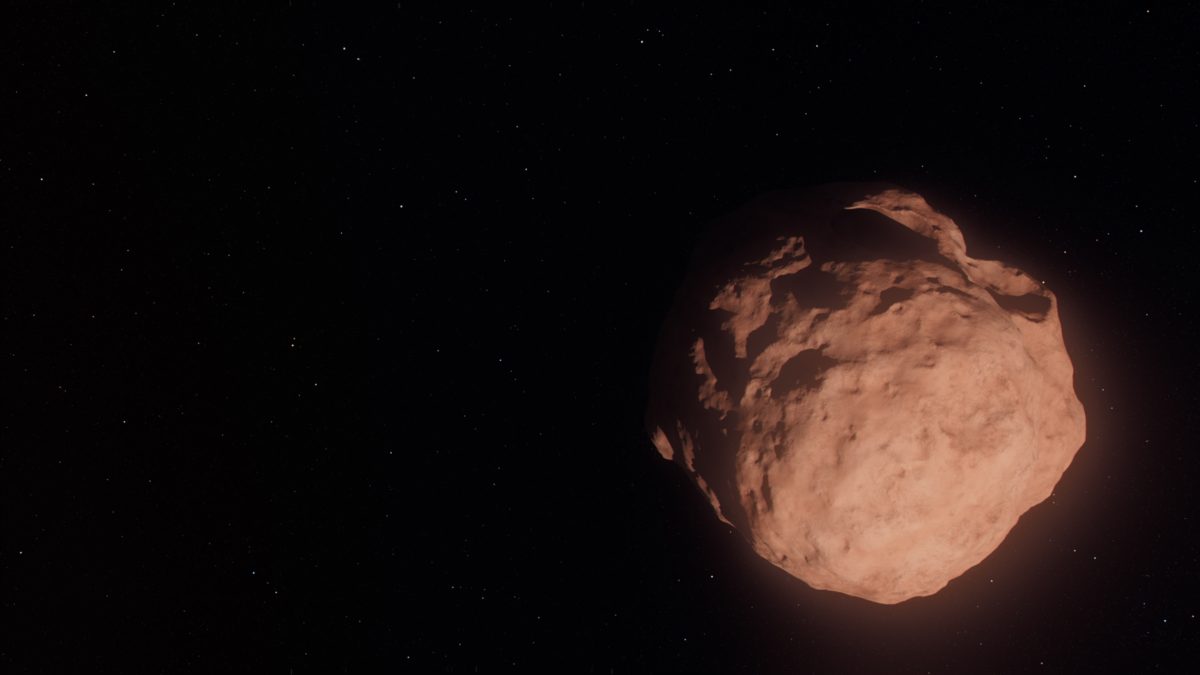
A Frozen Stage of Planet Building
Trans-Neptunian objects orbit the Sun beyond Neptune and consist mainly of ice and rock. Most of them are more than one hundred million times fainter than objects visible to the naked eye.
This population has preserved an intermediate stage of planet formation. The disk of dust and small debris around the young Sun clumped together into city-sized planetesimals, after which these objects were supposed to merge into full-fledged worlds. Beyond Neptune’s orbit, the second step never happened. Two complementary studies of 27 newly discovered faint bodies were published in the peer-reviewed journal The Astronomical Journal.
Two Groups with Different Pasts
The observations covered two populations. Dynamically cold bodies have preserved their original, nearly circular orbits in the plane of the Solar System, where they formed.
Dynamically hot objects formed between the present-day positions of Uranus and Neptune. The migration of the giant planets early in the Solar System’s history pushed them outward, so today they move along highly elongated trajectories and travel far outside this plane.
Color as a Fingerprint of Matter
Surface color acts as a fingerprint of its chemical composition. The assumption was that small bodies in both groups had experienced numerous impacts and therefore should look different from larger ones.
In reality, the result was different, as NASA reports. The small objects match the colors of the larger ones, meaning collisions did not noticeably alter their material. There are two possible explanations. There may have been fewer impacts than previously thought, or the surfaces somehow preserve their original composition.
The color study was led by Anastasia Morgan, a graduate student at Northern Arizona University. Her co-author David Trilling emphasizes that the dynamically hot bodies still carry a signature of the region where they formed, even though their orbits have long since been mixed.
The Same Size Distribution
Using infrared measurements, the team calculated how many objects occur at each size. The distributions for the cold and hot populations turned out to be surprisingly similar, even though these bodies formed in different regions of the young Solar System.
Marielle Eduardo of the University of Victoria, who led this part of the study, points to the apparent insensitivity of the formation mechanism to conditions in the disk. Whether the disk was dense or sparse, warm or cold, it produced planetesimals of similar scale.
Very small bodies were found less often than some models predict. The smallest is about 5 km in diameter, roughly five times smaller than the detection limit of the most sensitive ground-based telescopes.
Working as a Pair
The same region of sky was observed simultaneously, in visible light with Hubble and in infrared with James Webb. Neither telescope alone could have produced the same result, because surface color can only be determined by comparing both wavelength ranges, while the sizes of these bodies are measured specifically from infrared emission. The observations were led by graduate students at the University of Victoria in Canada under the guidance of the National Research Council of Canada and Northern Arizona University in Flagstaff.
Video about the search for trans-Neptunian objects using Hubble and James Webb. Credit: NASA’s Goddard Space Flight Center
One of the new objects is so faint that detecting it can be compared to observing a small swarm of fireflies on the Moon from Earth. Ground-based telescopes are not yet able to detect objects this faint.