

European space companies are preparing for a major gathering in the Netherlands. Alongside large contractors, the event will also feature very young startups with unexpected ideas for using satellite data and new materials. For them, it is an opportunity to reach customers and investors who would otherwise be difficult to access.
Two Days in the Netherlands
Industry Space Days will take place on September 16 and 17 at ESA’s ESTEC technical center. Over two days, representatives of European industry will exchange developments, find partners, and discuss opportunities for cooperation with the agency. The format is centered on several thousand prearranged bilateral meetings.
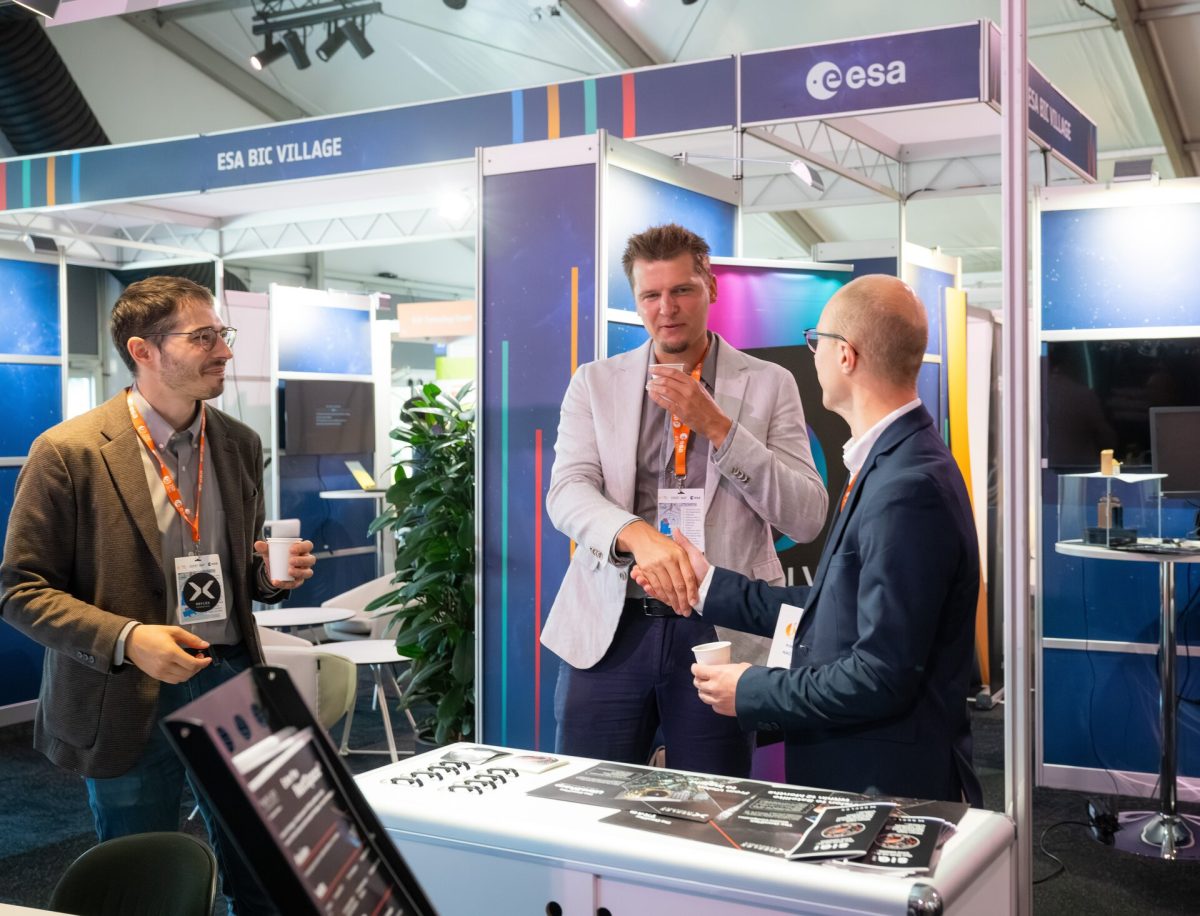
ESA’s network of 40 business incubators in 23 European countries supports more than 250 new space-related companies each year. Separate stands have been reserved for 32 of them in an area called ESA BIC Village, where each participant shares a stand with another company for one day. Several companies have described the developments they will present there.
Titanium Parts in a Matter of Days
Germany’s Alloy Additive manufactures custom components from titanium, nickel, and stainless steel within a few days. The process is based on wire arc additive manufacturing, a form of three-dimensional metal printing.
This method is used to produce launch-vehicle subassemblies, large structural components, and lightweight pressure tanks. Mehmet Çetinkaya, the company’s founder and chief executive, expects to meet with integrators that need to reduce sharply the production time for large metal parts.
Data and New Materials
The other selected companies offer either the processing of satellite measurements for terrestrial applications or materials with unusual properties. Switzerland’s CompPair Technologies will present composites in which microcracks close after simple heating. Italy’s Nautilus will bring an onboard autonomous navigation and collision-avoidance unit for satellites, while France’s Marine Weather Intelligence will focus on warnings about dangerous weather conditions for ships.
The Latvian developers at ARKai have moved furthest away from conventional space applications. They combine satellite measurements of ground deformation with data from terrestrial sensors and operational records from dams and hydroelectric power plants. The system is intended to distinguish seasonal fluctuations from genuinely dangerous displacements, and the technology can also be applied to railways and mining sites. The first pilot projects are currently being prepared for launch.
Who Can Attend
Participation is open to companies, institutions, and investors from countries that are full or associate members of the agency or have partner status. At the previous event in 2024, 2,300 participants representing 1,100 companies from 42 countries registered, meaning that the geographic reach extended well beyond the circle of member states.
Cooperation with Ukraine is developing in a separate format. In June 2025, the member states approved a proposal to strengthen it at the request of the State Space Agency of Ukraine. The cooperation concerns technical assistance in Earth observation for the agricultural sector, environmental monitoring, and space weather. The framework agreement with the Government of Ukraine has been in force since 2008 and has been extended until February 2029.
How Much It Costs to Attend
The attendance fee is €60, excluding tax. The amount covers admission to the venue, access to the meeting-scheduling platform, transportation, and meals during both days.
Renting an exhibition stand costs €900 and includes admission for one company representative. All exhibition spaces have already been reserved, while general registration remains open.
