

Astronomers have confirmed the status of the youngest known exoplanet. The object, named Elias 2-24 b, is less than 1 million years old — practically a newborn by cosmic standards. The planet is still in the process of forming within its native gas-and-dust disk. The discovery was made by a team of scientists led by Andrea Bernardi of Diego Portales University in Chile, who analyzed archival observations funded by NASA.
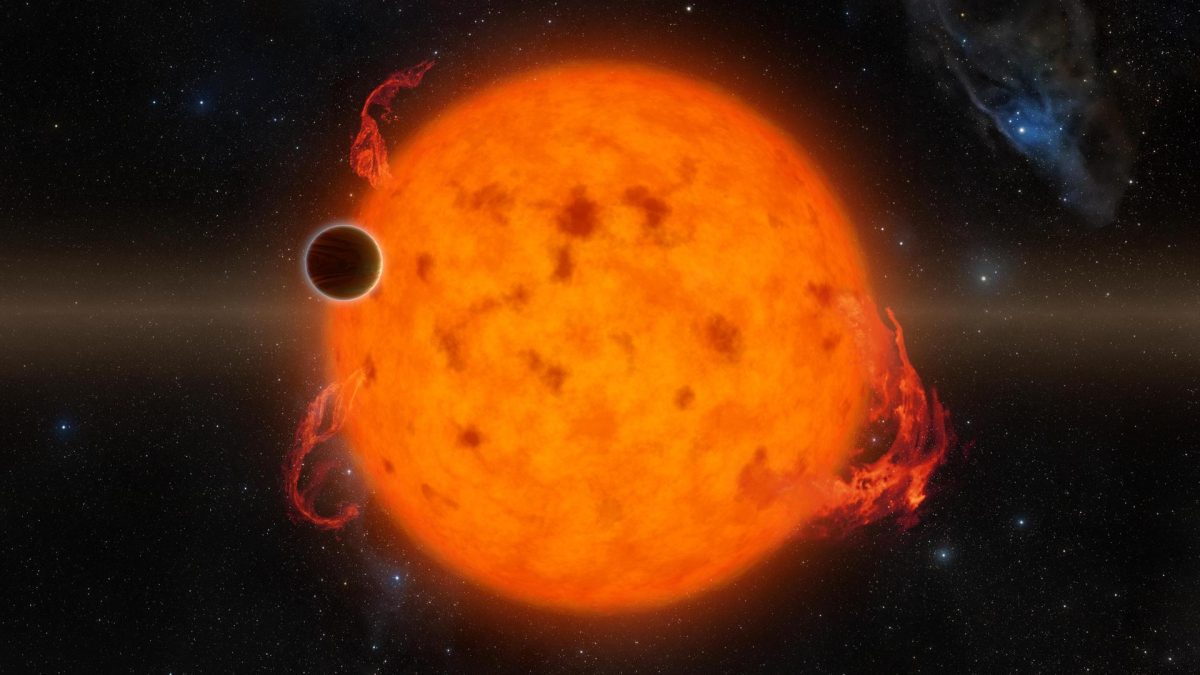
The results of the study, published in The Astrophysical Journal Letters, pose a real challenge to modern science. Until now, the youngest known planets were considered to be four planets around the stars PDS 70 and WISPIT 2, whose ages exceed 5 million years. Study co-author Lucas Cieza emphasized that Elias 2-24 b clearly demonstrates gaps in existing theoretical models of planet formation.
How to See a Planet Through a Dusty Haze
Stars and their planetary systems are born in dense clouds of gas and dust. Most of the more than 6,000 exoplanets known today were discovered using the transit method — detecting a decrease in a star’s brightness when a planet passes in front of its disk. However, this method works well mainly for older systems billions of years old, with planets in close orbits. Newborn planets, by contrast, are deeply embedded in dusty disks and located far from their stars.
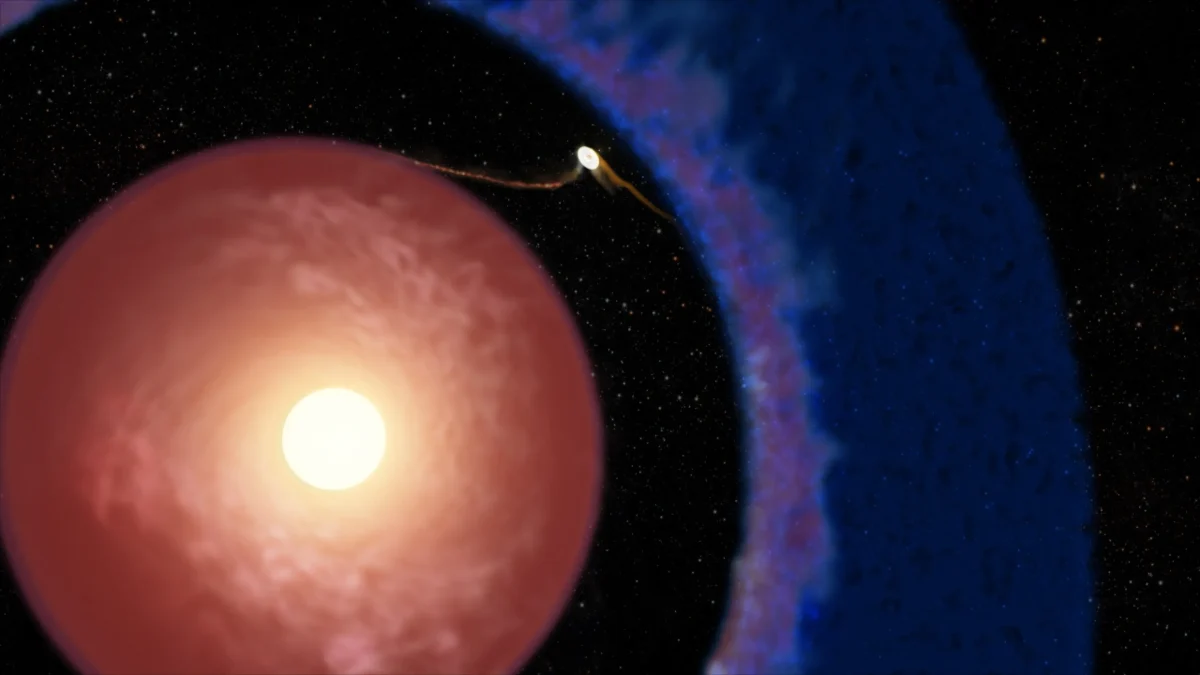
To find Elias 2-24 b, astronomers used a coronagraph at the W. M. Keck Observatory in Hawaii. This instrument artificially blocks the bright light of the parent star, making it possible to see faint objects within its circumstellar disk. The scientists searched for planets directly in gaps in the disk — structural features created by the gravitational influence of the planets themselves.
A Decade-Long Mystery
The story of the discovery of Elias 2-24 b began about ten years ago, when the ALMA radio interferometer detected a gap in the disk of a young star located 450 light-years from Earth. Later, the European Southern Observatory’s Very Large Telescope (VLT) detected a faint point of light in the same region.
A debate then emerged within the scientific community. According to classical theories, a gas giant located at roughly Jupiter’s distance from the Sun should require no more than 5 million years to form. Yet the discovered object was located 55 times farther from its star than Earth is from the Sun — more than 8.2 billion km — and theoretically should not have had enough time to form within 1 million years.
The debate was finally resolved through analysis of archival Keck Observatory data from 2018 and 2020. By combining observations from different years, Bernardi’s team traced the object’s orbital motion and demonstrated that it is a genuine planet with a mass comparable to Jupiter, rather than a background star or an optical artifact.
The Beginning of a New Era
Studying systems like this gives astronomers a unique “time machine,” allowing them to see what our Solar System may have looked like at the very beginning of its existence.
Scientists emphasize that this discovery is only a first step. The launch of next-generation space observatories, including the Nancy Grace Roman Space Telescope, equipped with an extremely sensitive coronagraph, will make it much easier to detect such “baby planets,” including those located much closer to their stars.
Previously, we explained how exoplanets are detected.
According to NASA
