

Nearly three decades ago, on October 15, 1997, a spacecraft was launched from Earth and later became the first to enter orbit around Saturn. During its 13 years of operation near the planet, it contributed to the discovery of an ocean beneath Enceladus’s ice and methane seas on Titan. The planet’s famous rings, it emerged, may be considerably younger than previously believed. The spacecraft was deliberately directed into Saturn’s atmosphere in 2017; however, scientists continue to make discoveries based on its data and to consider which worlds may be suitable for life.
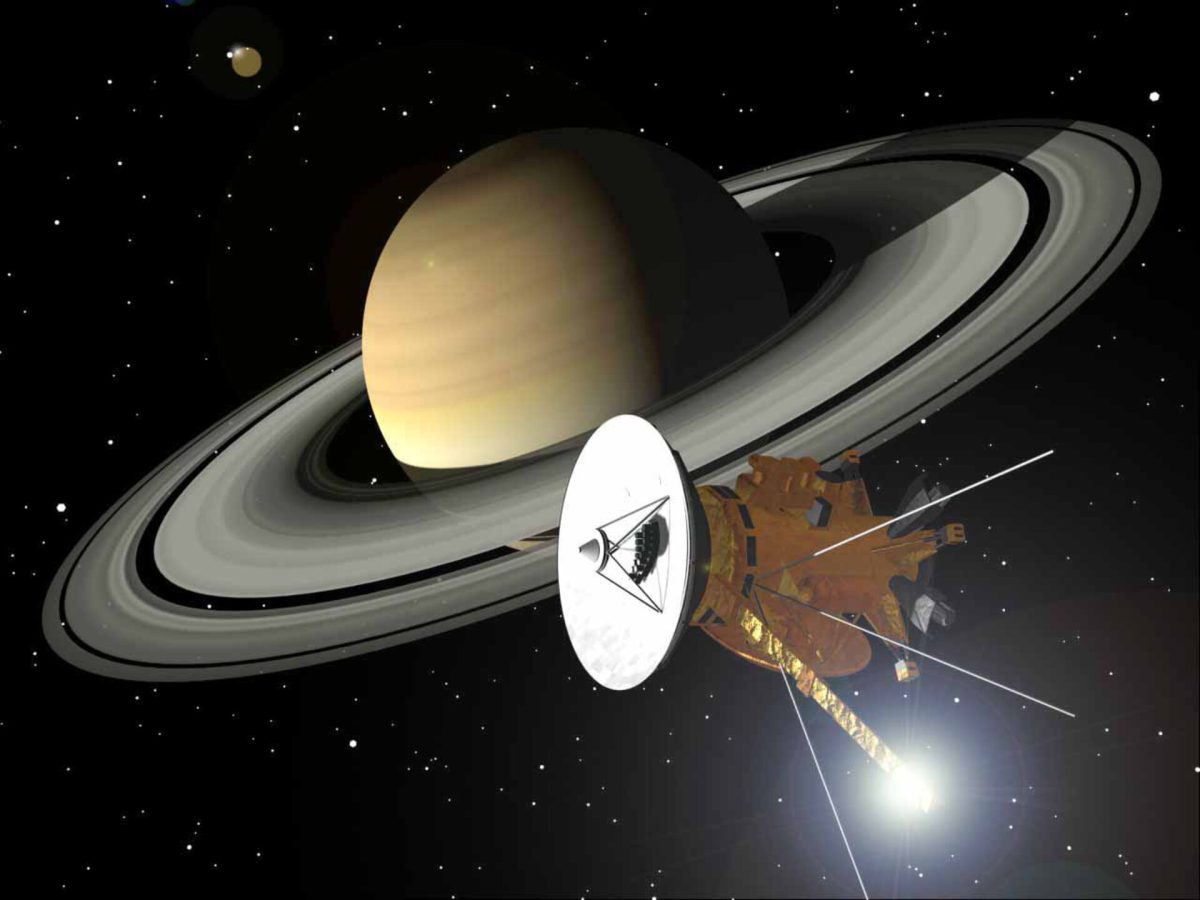
Cassini’s last signal
On September 15, 2017, a team from the U.S. space agency NASA deliberately deorbited the Cassini spacecraft, which had reliably transmitted scientific data to Earth until that time. During its 13 years in orbit around Saturn, the spacecraft collected data on the planet, its rings, and its moons. Ultimately, engineers guided the spacecraft directly into the gas giant’s atmosphere.
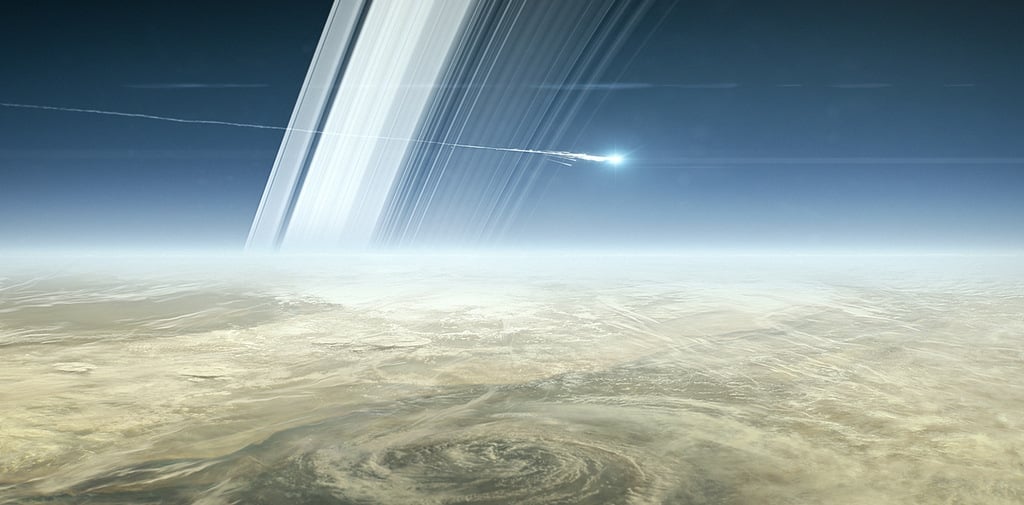
During its final approach, Cassini entered the upper layers of the atmosphere. Measurement data continued to be transmitted as long as the spacecraft’s small attitude-control thrusters maintained the antenna’s orientation toward Earth; without them, communication would have been lost. Shortly thereafter, the spacecraft burned up and disintegrated high above the clouds, much like a meteor.
The animation depicts the final stage of the Cassini mission, during which the spacecraft passed between Saturn and its rings at a closer distance than ever before, then entered the planet’s atmosphere and burned up. Source: YouTube, National Geographic
There was very little fuel remaining on board, so controlling the spacecraft would soon have become impossible. However, it could have been left in orbit without control. The reason this option was rejected becomes clear from the discovery near Saturn’s moons.
The ocean beneath Enceladus’s ice
The answer is Enceladus, a small icy moon of Saturn. Enceladus has a diameter of 504 km, slightly greater than the straight-line distance between Kyiv and Lviv. Near the south pole, images captured by Cassini reveal cracks from which jets of water vapor and fine ice particles shoot into space. Above the surface, these jets form a plume three times taller than Enceladus’s diameter.
Some of this material does not return but instead disperses along the orbit, contributing to Saturn’s widest ring, the E ring. However, the most significant discovery was made beneath Enceladus’s surface. Data from the spacecraft indicate that liquid water exists beneath its icy crust. Rather than forming separate lakes, it appears to constitute a continuous ocean beneath the entire surface, with hydrothermal vents likely active on the ocean floor.
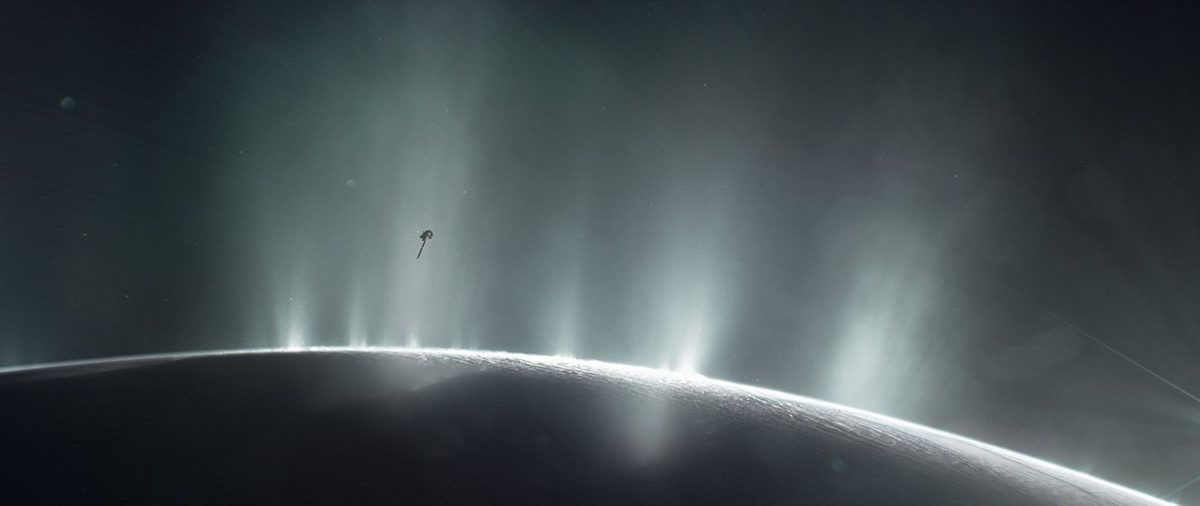
In 2008, Cassini passed directly through the plume at an altitude of just 21 km above the surface, traveling at approximately 18 km per second relative to Enceladus. The plume consists of material recently ejected from the ocean, so passing through it enabled scientists to study the ocean water without landing on the moon itself. Ice particles struck the Cosmic Dust Analyzer at such high speed that they immediately vaporized, and a significant portion of the molecules became electrically charged in the process. Charged molecules can be sorted by mass. By determining their mass, scientists can identify the substances and, in turn, learn what the ice was composed of.
It was not until 2025 that new conclusions were drawn from these data. Previously unobserved organic compounds were identified in ice particles from the plume, and the findings were published in Nature Astronomy. Organic matter had been detected on Enceladus before, but it was found in material from Ring E, which had been exposed to radiation for years and may have undergone alteration. “These new organic compounds were only a few minutes old. They were contained in ice that came directly from the ocean beneath Enceladus’s surface,” explained Nozair Khawaja of the Free University of Berlin, who led the study.
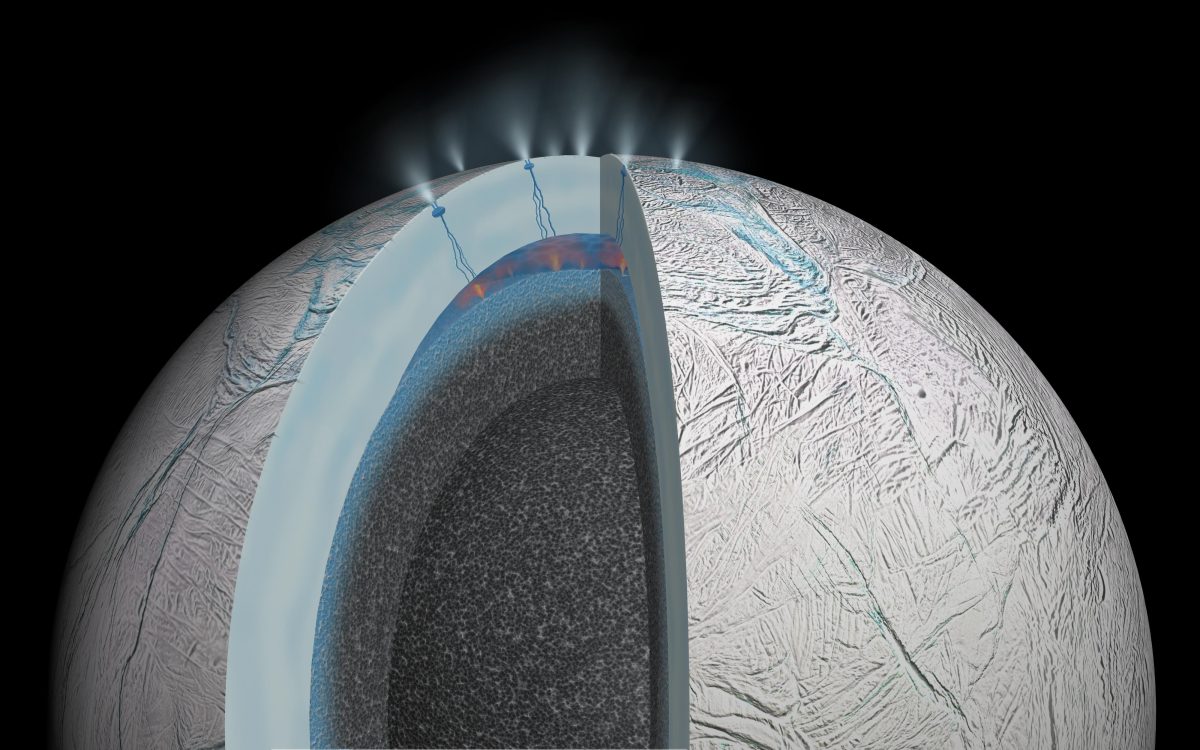
According to NASA’s assessment, Enceladus possesses nearly all the ingredients necessary to support life. However, no life or evidence of life has yet been detected there.
Rings that may disappear
Galileo Galilei first observed Saturn’s rings in 1610; however, the Cassini mission was the first to study them at close range over an extended period. The rings consist almost entirely of water ice. Their constituent particles range in size from smaller than a grain of sand to boulders several kilometers across. The rings are generally about 10 meters thick, roughly equivalent to the height of a three-story building.
This system proved to be anything but static. Some of Saturn’s moons draw particles from the rings, while others replenish them with new material, as Enceladus does for Ring E. In 2006, patterns resembling airplane propellers, extending up to several thousand kilometers, were observed in the rings. At the center of each pattern is a chunk of ice approximately one kilometer in size. It is significantly larger than typical ring particles, yet too small to be considered a fully developed moon. Through its gravitational attraction, this chunk displaces neighboring particles and propels them hundreds of meters upward and downward. Particles closer to Saturn overtake it, while those farther away lag behind, causing the disturbance to spread back and forth like waves generated by a boat. This accounts for the propeller-like shape, although the pattern itself does not rotate.
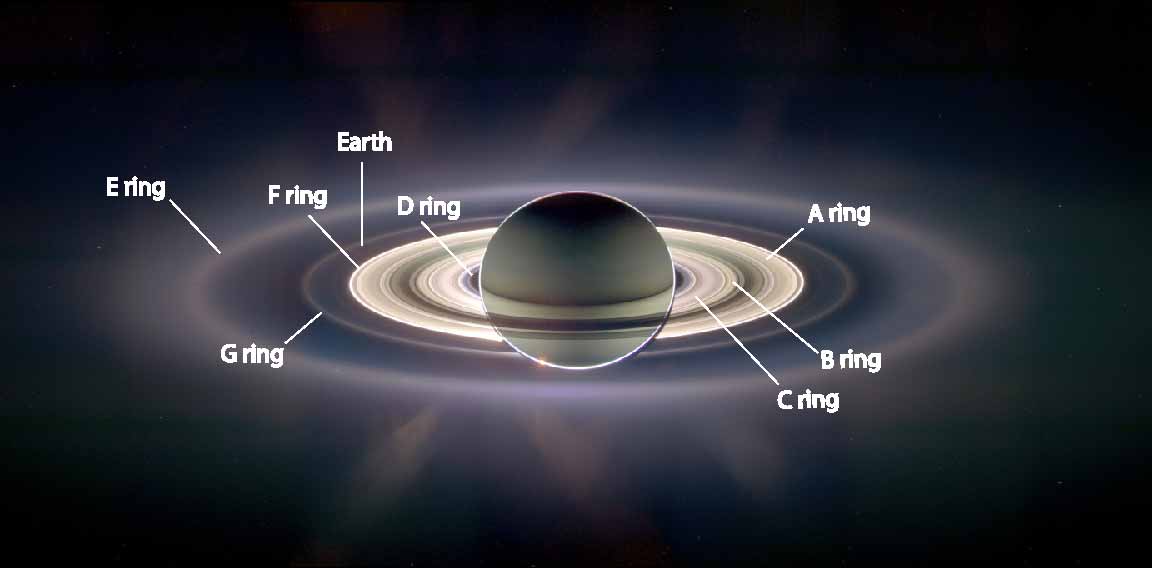
Further details became apparent on August 11, 2009, during Saturn’s equinox. This term refers to the moment when the Sun shines directly along the plane of the rings, an event that occurs once every 15 years. On that day, every surface irregularity cast a long shadow, much like a tree at dusk. It was subsequently determined that some ice formations rise more than 3 km above the rings — higher than Mount Hoverla.
During the equinox, “spokes” — dark bands longer than Earth’s diameter — were also observed. Some extend more than 16,000 kilometers, whereas Earth’s diameter is approximately 12,700 kilometers. The “spokes” appear and disappear within a few hours. They are most likely tiny ice particles lifted above the rings by an electrostatic charge, much like an electrically charged object causes hair to stand on end.
The most unexpected finding emerged from the mission’s work over the past several months. During its final dives between the planet and its nearest ring, the spacecraft passed through a stream of material falling from the rings onto Saturn. This phenomenon has been termed “ring rain.”
At that time, the rings’ mass was also determined. The spacecraft passed between the planet and the rings, where their gravitational pull produced a barely perceptible change in its speed. These changes were monitored from Earth via the spacecraft’s radio signal, and the rings’ mass was calculated from the resulting data. Combined with information about the quantity of dust in the rings, these findings provided a basis for estimating their age.
The animation documents the final phase of the Cassini mission, during which the spacecraft conducted 22 flybys through the previously unexplored region between Saturn and its rings, and presents the mission’s key achievements. Source: YouTube, NASA Jet Propulsion Laboratory
According to one estimate, the rings are no more than a few hundred million years old, meaning they may have formed when dinosaurs were already living on Earth. The authors of these calculations contend that the rings are losing material to the planet at such a rapid rate that they could nearly disappear within a comparable period. Other researchers argue that the rings merely appear young and may, in fact, be as old as the Solar System itself.
Titan’s methane seas
The Huygens probe, developed by the European Space Agency (ESA), traveled to Saturn attached to the Cassini spacecraft. After separating from Cassini on January 14, 2005, Huygens descended by parachute onto Titan, Saturn’s largest moon. Its descent through Titan’s dense, hazy atmosphere lasted two and a half hours. The landing site proved to be a plain dotted with rounded ice boulders and moistened by liquid methane. No spacecraft has ever landed farther from Earth.
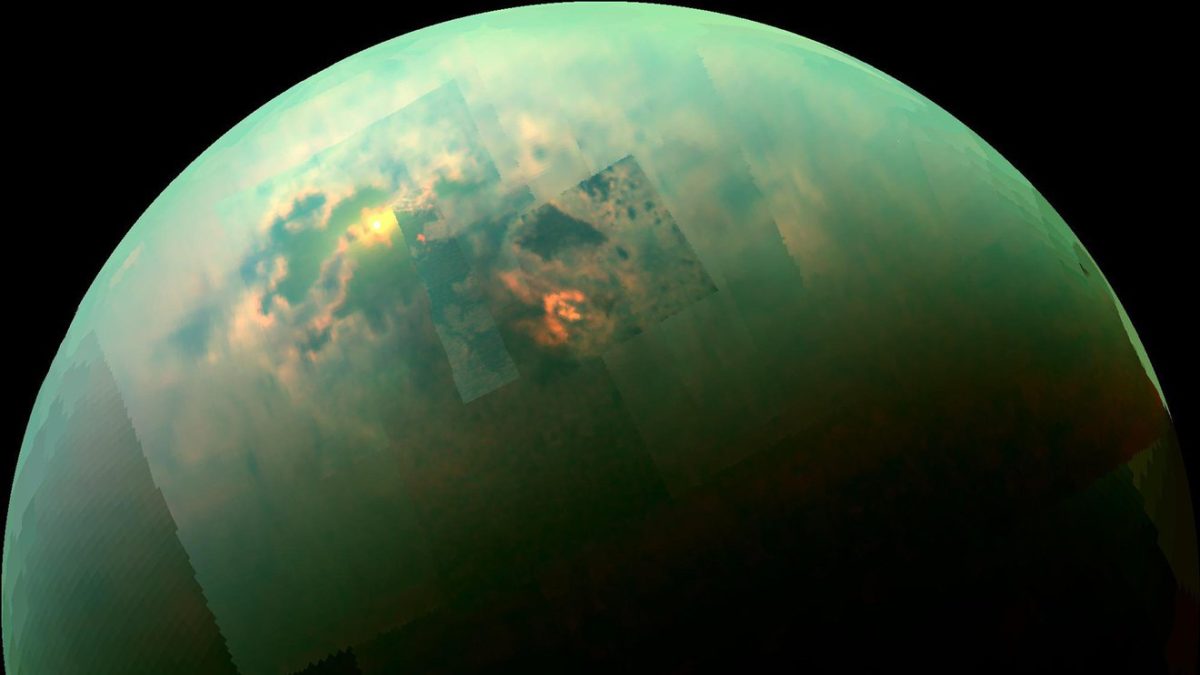
Temperatures on Titan are so low that water is as solid as rock, and the rounded boulders there are composed of ice. Instead, carbon- and hydrogen-based substances — primarily methane, which is the main component of natural gas on Earth — exist as liquids.
Over the course of numerous flybys of Titan, scientists have discovered clouds, rain, rivers, lakes, and seas, as well as dunes, mountains, and possibly even volcanoes. Methane rivers flow into a methane sea, much as rivers on Earth flow into the ocean. Titan’s atmosphere is dense and rich in nitrogen, like Earth’s. Accordingly, scientists hypothesize that Titan may resemble Earth as it existed long before life emerged. Separately, researchers have studied chemical reactions involving organic molecules on Titan, similar to those on Earth that may have preceded the emergence of the first living organisms.
This video comprises authentic images captured by the Huygens probe during its two-and-a-half-hour parachute descent to Titan on January 14, 2005. Source: YouTube, NASA Jet Propulsion Laboratory.
It is now clear why the spacecraft was not left in orbit around Saturn. Its fuel reserves were nearly depleted, and an uncontrolled Cassini could eventually have collided with one of the moons, potentially introducing biological contamination from Earth. If signs of life are ever discovered in Enceladus’s subsurface ocean or on Titan’s surface, researchers must be certain that the life did not originate on our planet. For this reason, in September 2017, the spacecraft burned up in Saturn’s atmosphere, where no such risk exists.
Twenty years from beginning to completion
The journey toward these discoveries began on October 15, 1997, at Cape Canaveral. The mission was jointly developed by NASA, ESA, and the Italian Space Agency and was named in honor of the 17th-century astronomer Giovanni Domenico Cassini, who discovered four of Saturn’s moons.
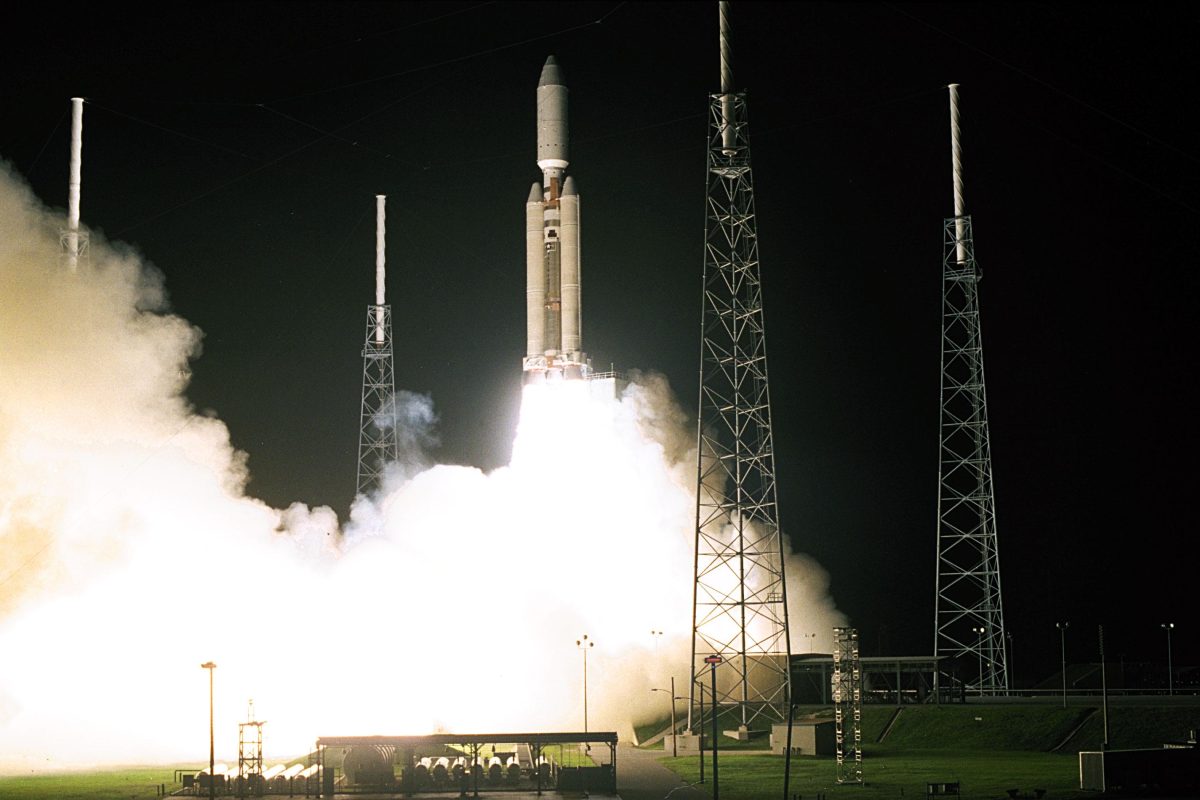
The journey lasted nearly seven years. To attain the required speed, the spacecraft’s trajectory took it past Venus twice, followed by Earth and Jupiter. Near each planet, it performed a gravitational maneuver, accelerating through the planet’s gravity while consuming minimal fuel. On July 1, 2004, the spacecraft entered Saturn’s orbit.
The Titan IVB rocket, equipped with a Centaur upper stage, launched on October 15, 1997, carrying the Cassini orbiter, with the Huygens probe attached, into space. Source: YouTube, NASA Solar System
Electricity was generated by three radioisotope generators. The plutonium within them gradually decayed, releasing heat that specialized components converted into electricity. Unlike a nuclear reactor, where nuclei undergo a chain reaction that requires continuous monitoring, these generators involved no such reaction. In total, the spacecraft carried 33 kg of plutonium — the largest quantity of radioactive material ever launched into space. Consequently, protests occurred before launch, and NASA assured the public that the plutonium capsules could withstand any accident.
Although the mission concluded nine years ago, the data collected during its course continue to produce new findings, including the discovery of organic compounds on Enceladus in 2025. NASA states that additional discoveries based on these data are expected to emerge for decades to come.
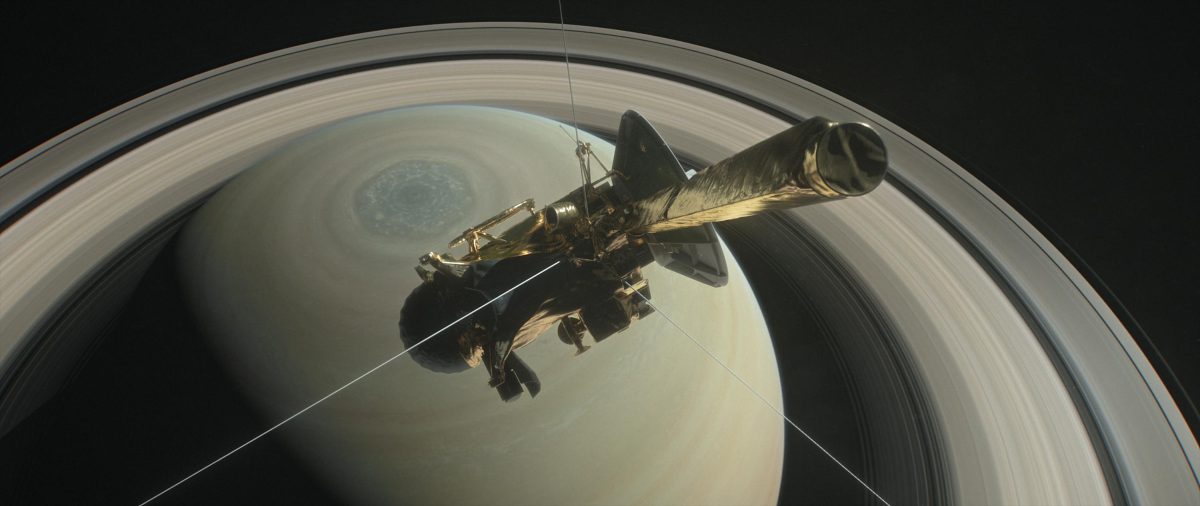
The mission concluded nine years ago, yet its data continue to be studied. During its years near Saturn, the spacecraft transmitted such a vast collection of measurements and images to Earth that hundreds of scientific articles have already been published based on them. Researchers continue to revisit the mission’s records, identifying details that had previously gone unnoticed. One example is the discovery, in 2025, of organic compounds on Enceladus in data collected in 2008. According to NASA estimates, further discoveries based on the mission’s archive will continue to emerge for decades to come.
Scientists intend to use NASA’s Dragonfly spacecraft to determine whether the chemical processes on Titan resemble those that may have given rise to life on Earth. Previously, the Huygens probe explored only a single location. The new spacecraft will be an eight-rotor drone approximately the size of a car, capable of flying between dozens of locations on the surface. Flight is easier there than on Earth because Titan’s atmosphere is four times denser. As with Cassini, a radioisotope generator will provide power. A SpaceX Falcon Heavy rocket is scheduled to launch the drone into space in July 2028, and it is expected to reach Titan approximately six years later. At each new location, the spacecraft will study the composition of surface materials.
