
Solar flares and coronal mass ejections can send intense streams of high-energy protons and other charged particles into interplanetary space. On Earth, we are protected from them by our atmosphere and magnetosphere. However, astronauts can be exposed to dangerous radiation during missions to the Moon or Mars. A powerful solar proton event can cause acute radiation sickness, and the accumulated radiation increases the long-term risk of cancer and other health effects.
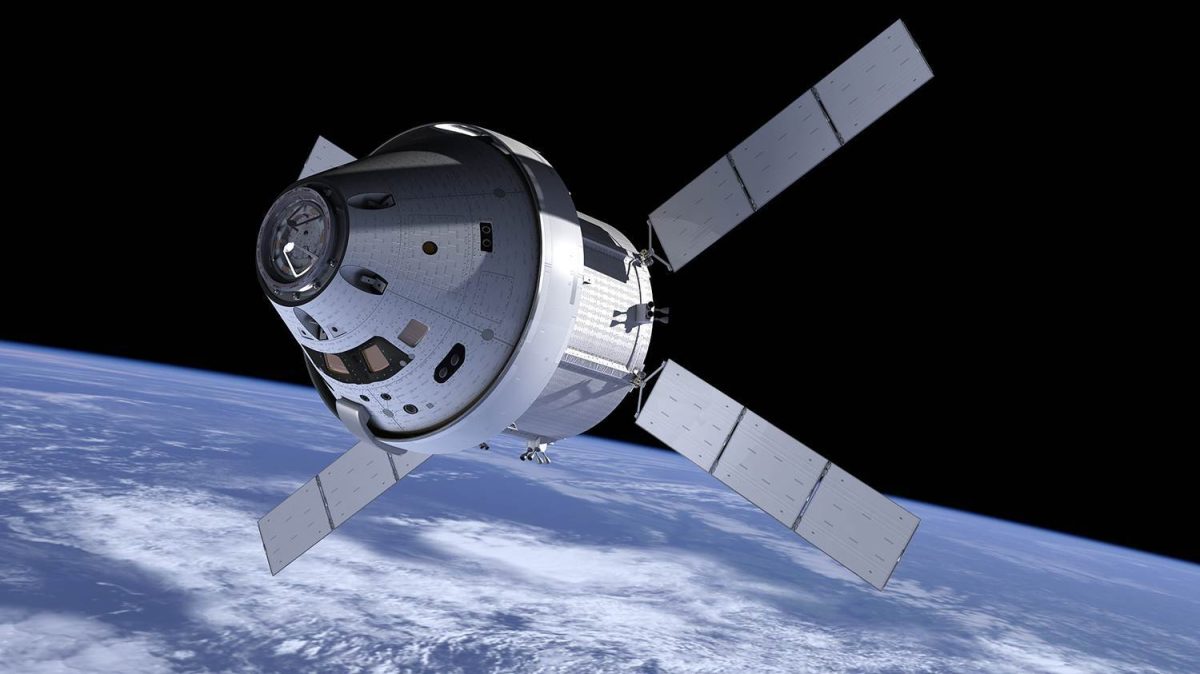
Attempts to build solid aluminum hulls, water barriers, or superconducting magnetic shields run into the main limitation of spaceflight — mass. Every additional gram of weight aboard costs enormous resources. A team from the Israeli-American startup StemRad, led by Jordan Khoury and Oren Milstein, proposed an alternative approach: shield not the entire spacecraft, but the astronaut’s body directly.
The Principle of Selective Protection
The idea of an anti-radiation suit was long considered unrealistic because heavy lead armor would make a person immobile. However, StemRad engineers took into account that tissues of the human body have different sensitivities to radiation. For example, bone marrow, which is responsible for blood formation, is significantly more vulnerable than the brain or muscles.
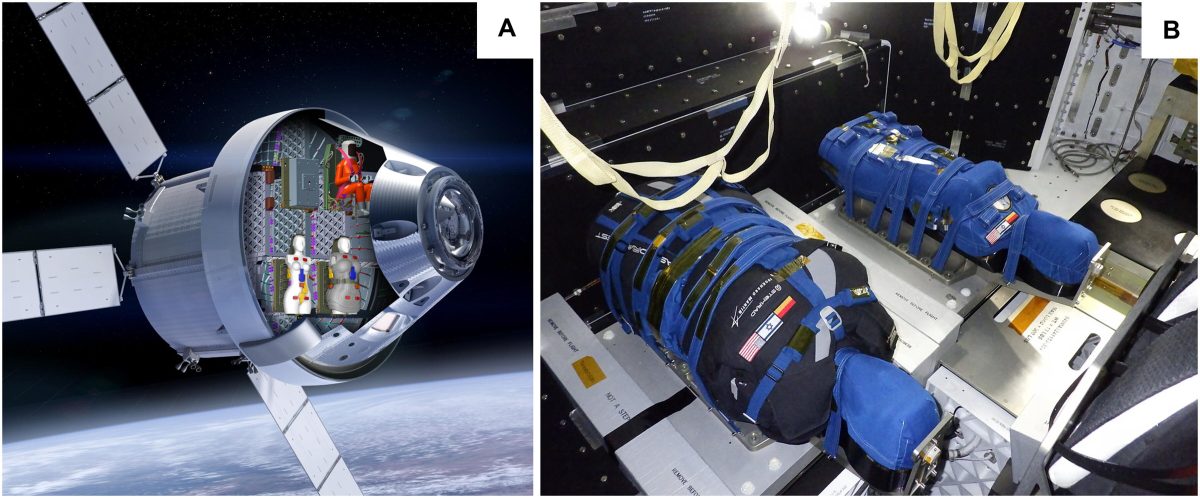
Preserving even part of the bone marrow allows the body to recover after exposure to a high radiation dose. Together with Lockheed Martin, the company developed the special AstroRad protective vest. It protects the hip area, where about half of the body’s bone marrow is located, as well as the chest, abdomen, large intestine, and reproductive organs. This targeted concept makes it possible to reduce the effective radiation dose by almost 60% without protecting the head and limbs.
A Mosaic of Flexible Polymers
The effectiveness of a protective material depends on the ratio of its atomic number to its atomic mass. Hydrogen performs best in this respect, making high-density polyethylene (HDPE) — a solid plastic with a high hydrogen content — an ideal choice.
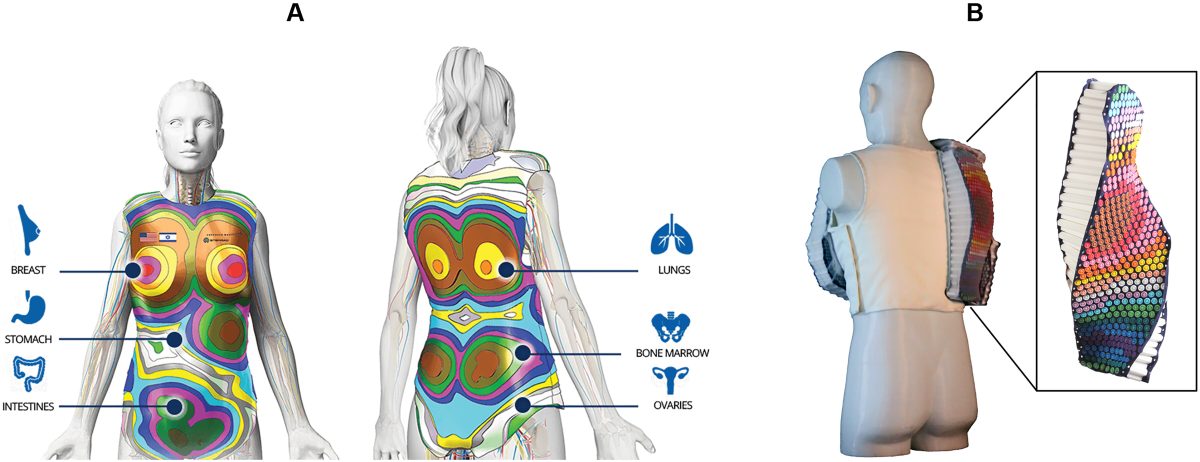
To prevent a thick layer of plastic from restricting movement, it was divided into thousands of hexagonal rods ranging from 9 to 60 mm in length and placed between layers of elastic fabric. The design was calculated using the Bethe-Bloch formula, which describes the energy loss of charged particles. The resulting vest remains solid while also being flexible and does not restrict the wearer’s movements.
Testing on Mannequins
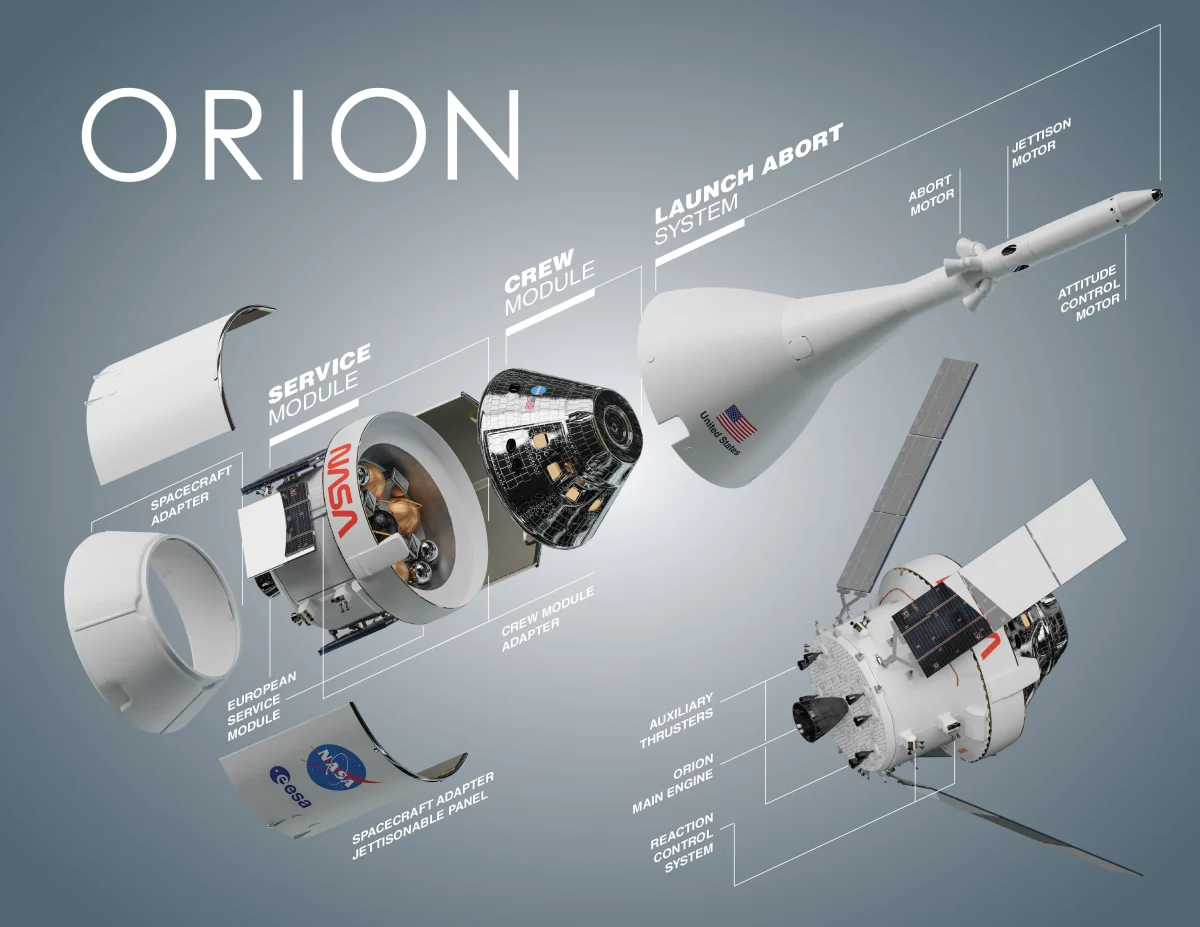
To test AstroRad, it was sent on a circumlunar flight aboard the Orion spacecraft as part of the Artemis I mission. Two mannequins were aboard: “Zohar” wearing the vest and “Helga” without protection. Thousands of internal sensors recorded radiation levels.
Since no solar storm occurred during the flight, the researchers used data from the Van Allen radiation belt and Monte Carlo simulations. Comparing these with the parameters of the 1972 and 1989 storms, the researchers found that the vest could reduces the radiation dose by ≈ 60% during typical storms in a scenario similar to the 1972 event, and by ≈ 40% during superstorms, as in the more energetic 1989 event.
According to the researchers’ calculations, this level of protection could significantly increase the time an astronaut could spend in deep space before reaching NASA’s career limit of 600 mSv: for the 1972 scenario, it would be about 193 days. For the 1989 event, the corresponding estimate is about 131 days.
Freedom of Movement and Further Optimization
AstroRad does not replace a full-fledged radiation shelter on Orion, but it allows you to provide local protection for the most sensitive organs without forcing the astronaut to remain in a confined space. This is especially important during powerful solar proton events, when the crew may need to continue performing operations. At the same time, the vest is much less effective against galactic cosmic rays – high-energy particles that come from outside the Solar System and are much more difficult to shield.
The initial version of the vest was 26 kg, which corresponds to the weight of medieval armor. Using data from the Artemis I mission, StemRad specialists have already reduced its weight to 16 kg without significant loss of protective properties. Currently, developers are working on an even lighter version for comfortable long-term wear during solar storms.
According to arstechnica.com