

The rate of star formation within the universe has decreased by more than fifty percent over the past several billion years. It would be reasonable to hypothesize that galaxies are merely depleting their raw materials. However, empirical measurements indicate otherwise. The reserves of cold hydrogen have diminished only marginally during this period.
Expected scenario
The decline in star formation has long been a central topic in the study of galactic evolution. The simplest explanation was that, over time, cold gas is depleted and there is less material available for new stars.
If the mechanism operated in accordance with this logic, the provision of raw materials would need to diminish proportionally with the decline in activity. However, astronomers have not observed any such phenomena. The peak of star formation activity transpired approximately ten billion years ago. Since that period, a gradual and extended phase of overall fading has been ongoing.
Weak signal
Neutral atomic hydrogen (HI) occupies an intermediate position between extensive cosmic gas reservoirs and the dense molecular clouds responsible for star formation. It is observed via exceedingly faint radio emissions at a wavelength of 21 centimeters.
This resulted in a deadlock. Observations of deep-sky objects were confined to limited sections of the sky, whereas wide-field surveys did not possess adequate sensitivity, resulting in signals from individual distant galaxies being obscured by noise.
Compiling millions of signals
They arrived at a solution through the integration of two distinct instruments. The Chinese 500-meter-diameter spherical radio telescope (FAST) offers high sensitivity, whereas the Dark Energy Spectroscopic Instrument (DESI) facilitates the measurement of redshifts across a large galaxy sample.
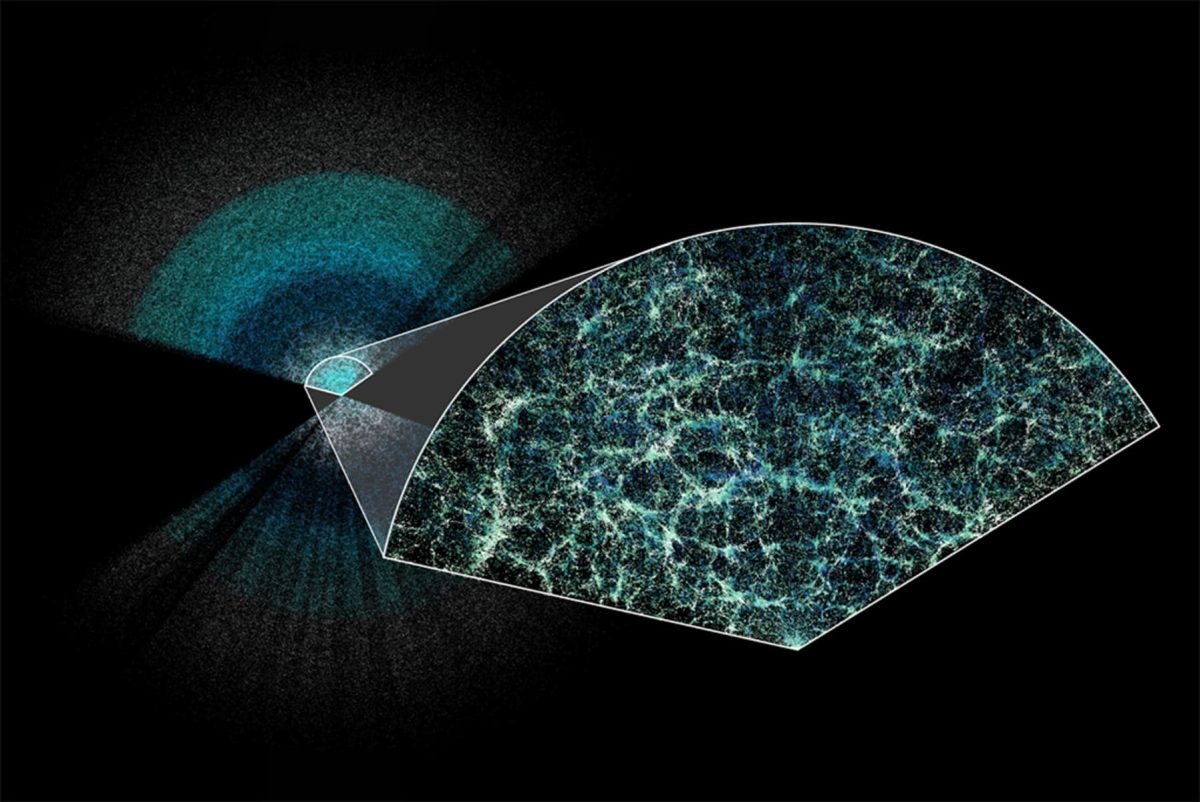
The sample comprised approximately 2.5 million galaxies, encompassing nearly one-third of the celestial sphere, as reported by phys.org. The faint emissions were aggregated according to their known redshifts, thereby facilitating the extraction of an average hydrogen line from the background noise.
This methodology does not depict individual galaxies; rather, it offers a statistically reliable average representation of millions of systems concurrently.
Discrepancy in the figures
The discrepancy between the two values was found to be considerable. Approximately 4.5 billion years ago, the rate of star formation was approximately 2.5 times greater than at present, while the density of neutral hydrogen was only 40 percent higher than current levels.
In other words, the reserves did not deplete simultaneously with the cessation of star formation. The swift consumption of gas does not account for the observed phenomena in the galaxies.
The issue of effectiveness
Stars do not form directly from atomic matter, but rather from dense molecular clouds. Neutral hydrogen exists between these two states, implying that the total volume of the reservoir is less significant than the rate at which it is converted into molecular form.
The influx of matter from the cosmic web is diminishing, resulting in a decrease in gas density. Consequently, the conversion of atomic hydrogen to molecular hydrogen occurs at a reduced rate, thereby decelerating its depletion. As a result, the quantity of molecular clouds — precursors to star formation — is gradually declining. This research was published in the esteemed peer-reviewed journal Nature Astronomy.
