

During coronal mass ejections (CMEs), the Sun releases billions of tons of magnetized plasma into the surrounding space. When such powerful streams of charged particles reach Earth, they trigger geomagnetic storms capable of disabling satellites, disrupting radio communications, damaging power grids, and exposing astronauts to lethal doses of radiation.
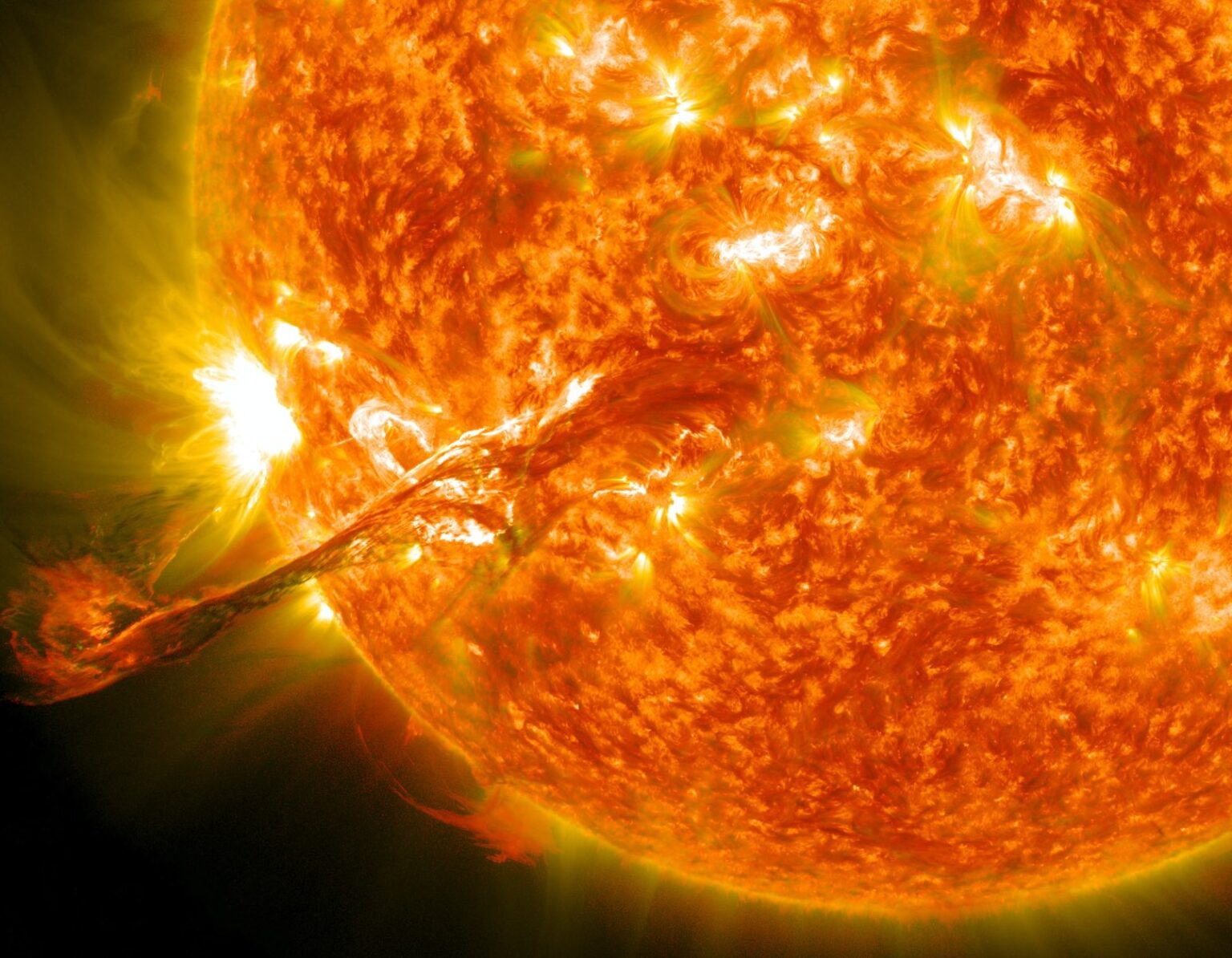
Predicting these eruptions and their subsequent movement is extremely difficult. Traditionally, astronomers analyze solar eruptions from Earth’s point of view, assuming that CMEs expand in the form of a symmetrical bubble. However, a new study from Johns Hopkins University, published in Science Advances, shows that the dangerous part of an ejection may remain completely invisible to observations from our planet.
An Accidental Discovery on the Way to Jupiter
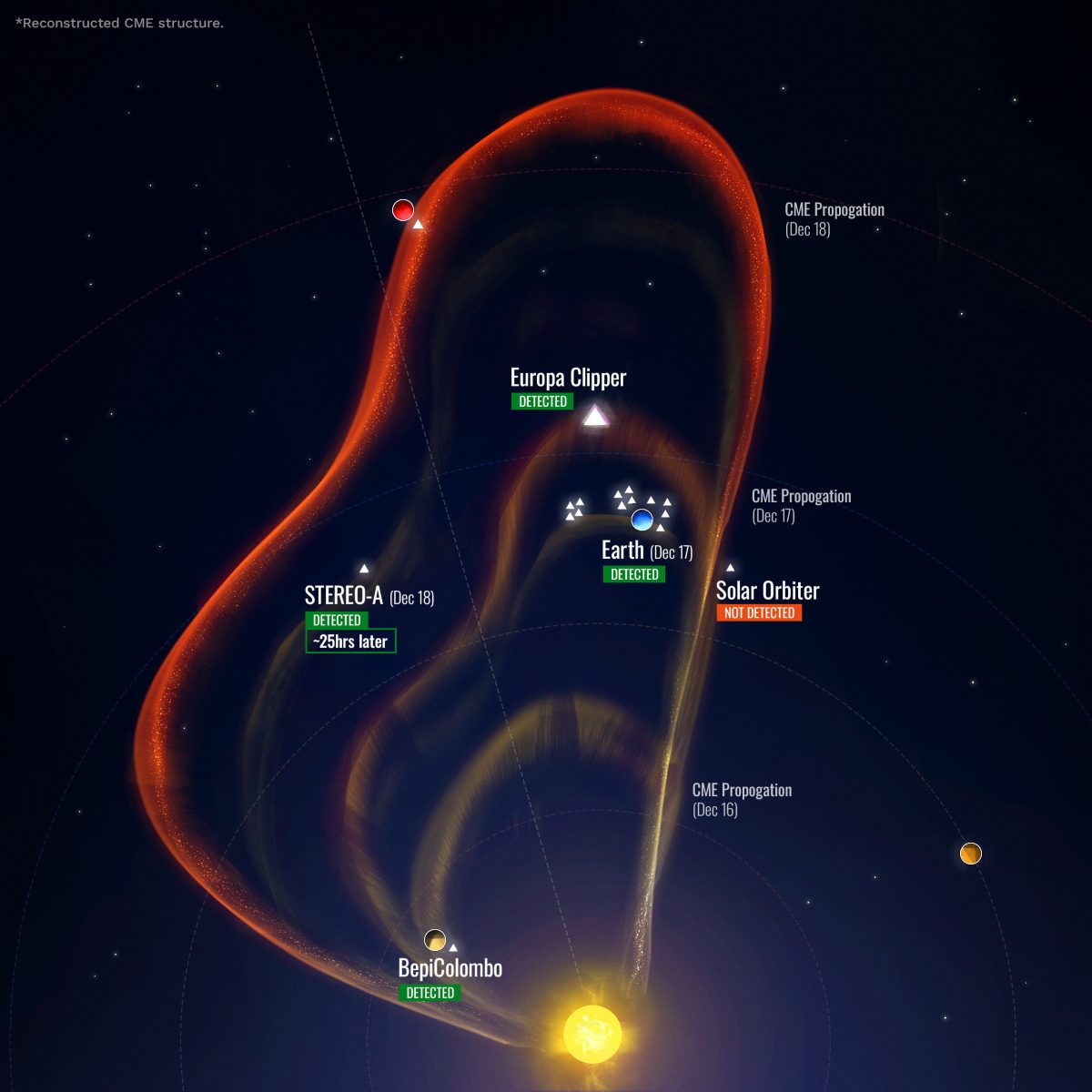
In December 2024, NASA’s Europa Clipper spacecraft was traveling toward Jupiter and carrying out a routine calibration check of its scientific instruments. During these measurements, the spacecraft detected an anomaly: the solar wind around it was significantly hotter and less dense than predicted by the models.
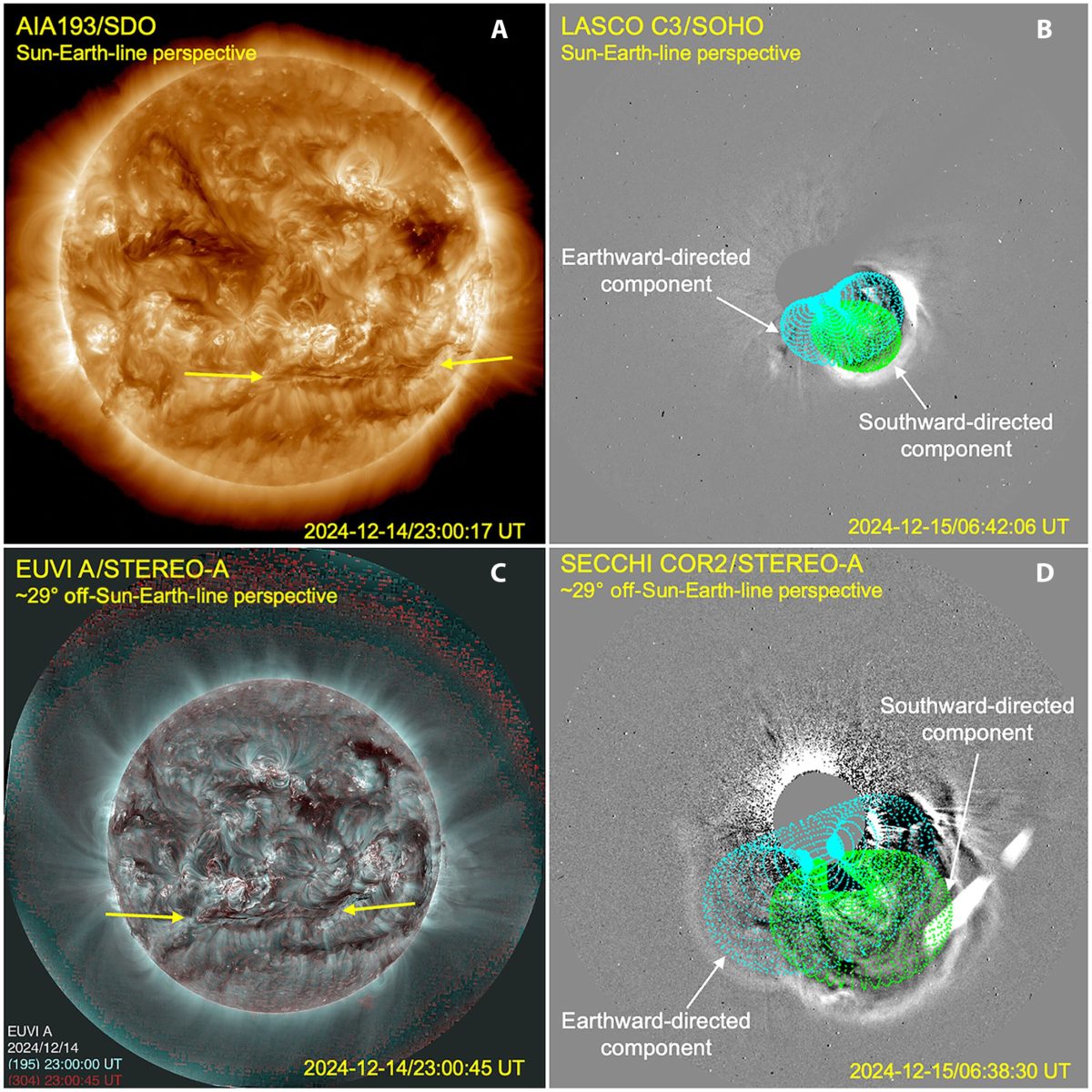
After analyzing the data, scientists determined that the spacecraft had encountered the aftermath of a CME that had occurred on the Sun several days earlier. At that time, a record-dense group of 17 spacecraft happened to be favorably positioned in the inner Solar System. By combining data from this entire network with measurements from Europa Clipper, scientists were able for the first time to fully reconstruct the real, asymmetric shape of the solar ejection.
A Threat to Expeditions
From Earth’s perspective, it appeared that the main mass of solar plasma was passing to the side and posed no threat. However, NASA’s STEREO-A spacecraft, which observed the event from the side, detected a separate asymmetric component of the ejection moving at a higher speed directly toward Earth. This region remained completely unnoticed along direct lines of sight from our planet. If the crew of a human spaceflight mission had been in the path of this hidden stream, they would have received lethal doses of radiation.
Scientists emphasize that interplanetary research missions in transit should become a permanent complement to dedicated space-weather satellites. Using research spacecraft as an early-warning network would help close the “blind spots” of Earth-based astronomy. As humanity plans longer expeditions into deep space, the ability to detect such hidden CME components in time will become a decisive factor in protecting the lives of future explorers.
Previously, we explained what a magnetic storm is in simple terms.
According to phys.org
