

A rocket that wasn’t supposed to reach orbit ended up there anyway. Rocket Lab launched a suborbital spacecraft as part of a classified government mission. The outcome of the flight came as a surprise even to observers.
Launch and Detection
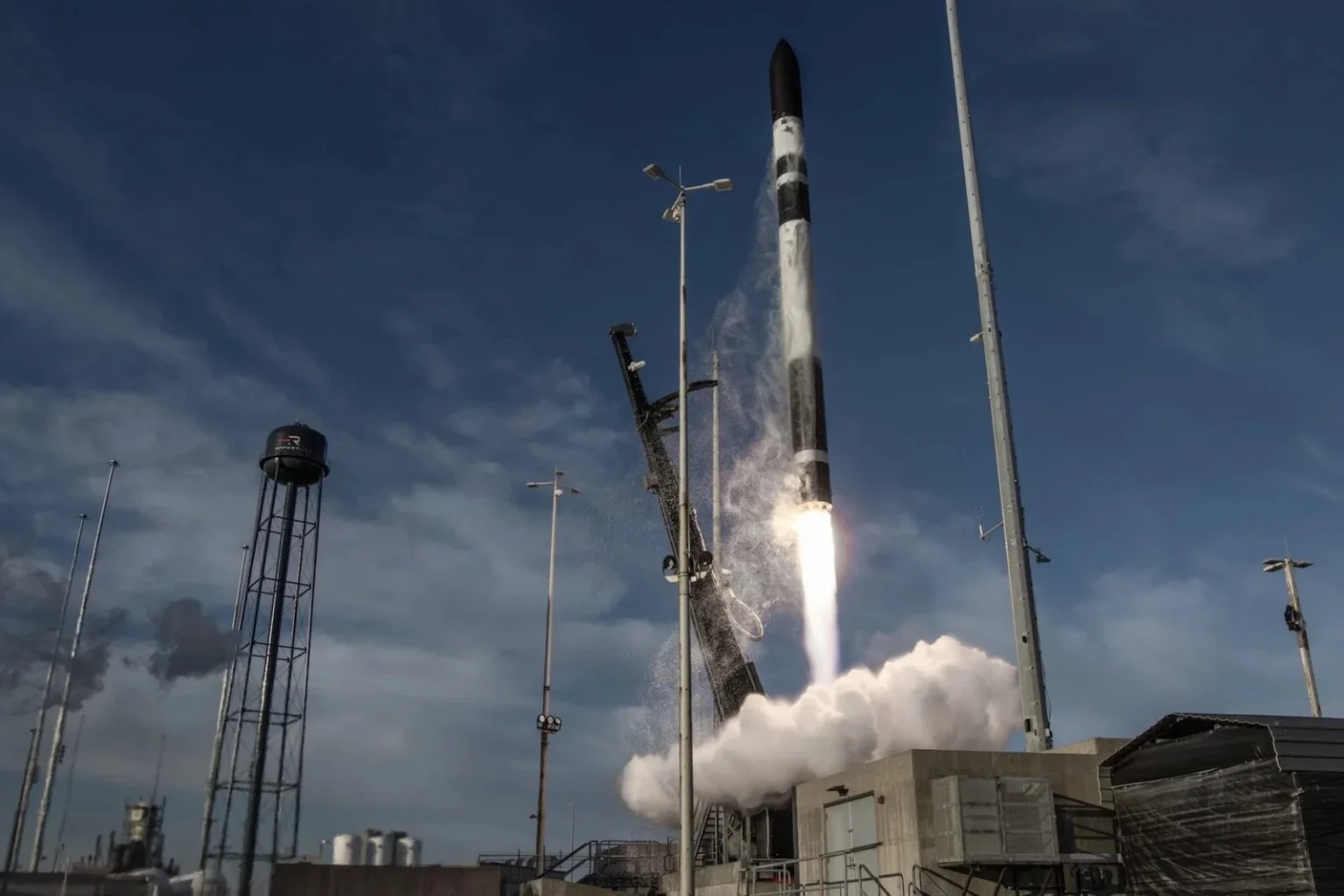
On June 11 of this year, the HASTE (Hypersonic Accelerator Suborbital Test Electron) spacecraft launched from NASA’s Wallops Flight Facility in Virginia as part of a government mission carrying a classified payload. A few days later, the spacecraft’s orbital parameters were made publicly available, and astronomer Jonathan McDowell spotted it in orbit.
According to his data, the rocket stages were tracked at an altitude of about 200 kilometers with an orbital inclination of 40 degrees. By comparison, most crewed missions to the International Space Station are launched to an altitude of about 400 kilometers, meaning that HASTE was roughly halfway to the ISS.
This spacecraft is a modified version of Rocket Lab’s Electron rocket. It is designed to fly at hypersonic speeds and is intended for testing technologies in suborbital space.
What about the payload?
The orbital data pertains only to the rocket stages, not the payload. Jonathan McDowell suggests two scenarios. In the first, the payload completed a full orbit and either burned up in the atmosphere or performed a controlled reentry. In the second, it completed nearly a full orbit, landed, and was recovered in the western United States
Specifically, the astronomer points to the Utah Test and Training Range in the Utah desert as a possible landing site. This is a U.S. Department of Defense facility where hypersonic weapons and other advanced systems are regularly tested.
Company Response
In response to an inquiry from Gizmodo, Rocket Lab stated that it had never unintentionally placed any object into orbit. It did not provide any details regarding the mission or the payload.
If Rocket Lab never unintentionally places objects into orbit, this flight could have been HASTE’s first planned orbital maneuver.
According to Gizmodo