

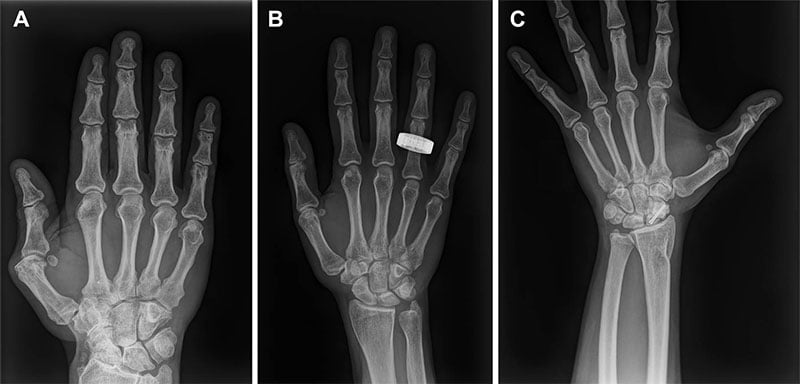
An X-ray image of a hand taken in orbit proved suitable for establishing a diagnosis. For decades, ultrasound remained the only available method of medical imaging in space. The crew of the private Fram2 mission used a portable X-ray system and obtained images that radiologists considered diagnostically adequate. None of the operators had medical training.

Images Taken in Orbit
Images were taken before launch, during the flight, and after returning to Earth in order to create a complete set for comparison. In microgravity, the crew imaged the hand, forearm, abdomen, pelvis, and chest, after first calibrating the system using a special reference object.
All X-rays were evaluated by three independent radiologists. They found no difference in overall image quality. Lower scores were given only for patient positioning in chest, pelvic, and abdominal imaging, while spatial and contrast resolution matched conventional diagnostics on Earth. The results were published in the peer-reviewed journal Radiology.
Why Only Ultrasound Was Used Until Now
X-ray systems have traditionally been bulky and added an additional radiation dose in an environment where astronauts are already exposed to significant radiation. The constant movement of objects and people in microgravity was another challenge. Any motion during imaging can blur the picture.
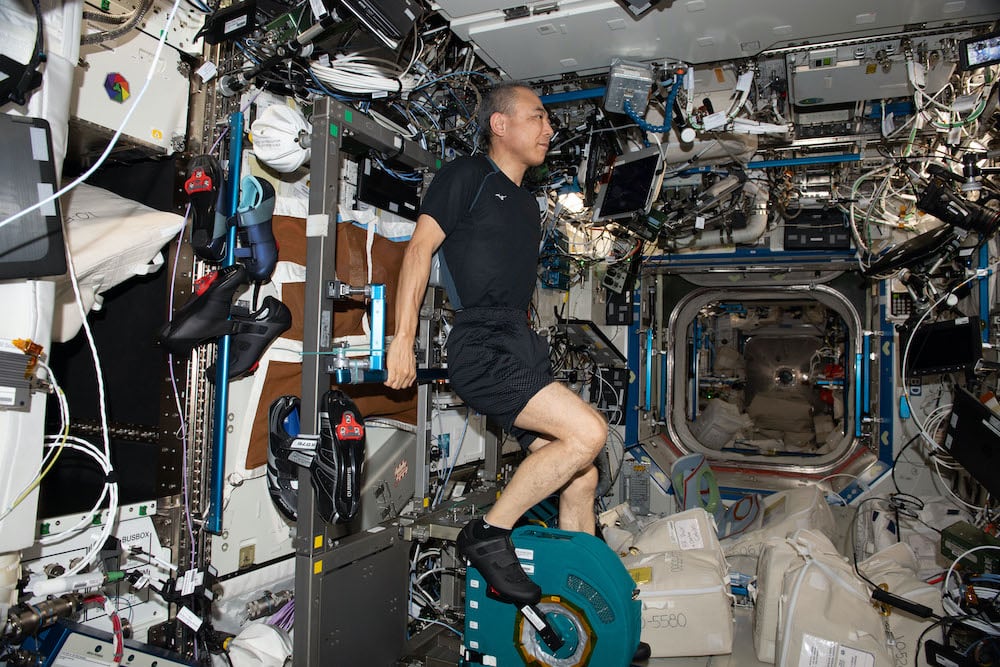
Study leader Shaina Gifford, professor of aerospace medicine at Mayo Clinic, acknowledges that this is why diagnostic X-ray imaging in orbit had long been considered technically unattainable. The situation changed with the emergence of commercial portable systems capable of operating even from solar panels and not requiring a medically trained operator, as Universe Today reports.
Four Hours of Training
Three crew members completed four hours of training on how to use the portable system. At the same time, SpaceX specialists tested the equipment for compatibility with the spacecraft and resistance to shock loads.
The concept itself was tested back in 2022 during a parabolic flight with short periods of microgravity. At that time, researchers successfully obtained a digital X-ray image of a hand. This became the basis for arranging an experiment in actual orbit, according to a release from the Radiological Society of North America.
The imaging system was provided by medical-equipment manufacturers MinXray and KA Imaging, which joined the research team together with SpaceX engineers. The device was not specifically designed for spaceflight; it was taken from an existing commercial product line. Such systems are already used at sports venues and in regions with limited access to medical care, while orbit became their most demanding test environment.
Not Only for People
The private Fram2 mission, financed by entrepreneur Chun Wang, became the first crewed flight into a polar orbit, where the spacecraft remained for more than three and a half days. An onboard X-ray system is useful not only for the crew. Looking inside electronics or a spacesuit without taking them apart is otherwise impossible, so Shaina Gifford considers technical diagnostics to be no less important than medical diagnostics.
The same compact systems are also being considered for inspecting malfunctioning satellites in orbit and for installation on future lunar rovers.
On the way to Mars, a radio signal takes between three and twenty-two minutes to reach Earth in one direction, depending on the relative positions of the planets. The crew will not be able to consult a doctor in real time, so decisions concerning a fracture or internal injury will have to be made onboard using their own X-ray image. Developers of portable systems will have to make them even smaller so that such equipment can fit within the constraints of an interplanetary spacecraft.