

The climate of our planet was shaped not only by processes occurring within it. Two new scientific studies describe how the conditions of surrounding space and the young Sun affected the temperature of Earth’s surface. In one case, the discussion concerns the Solar System’s journey through cold regions of the galaxy. In the other, it concerns powerful flares that altered the chemistry of the early atmosphere.
Through the Cold Clouds of the Galaxy
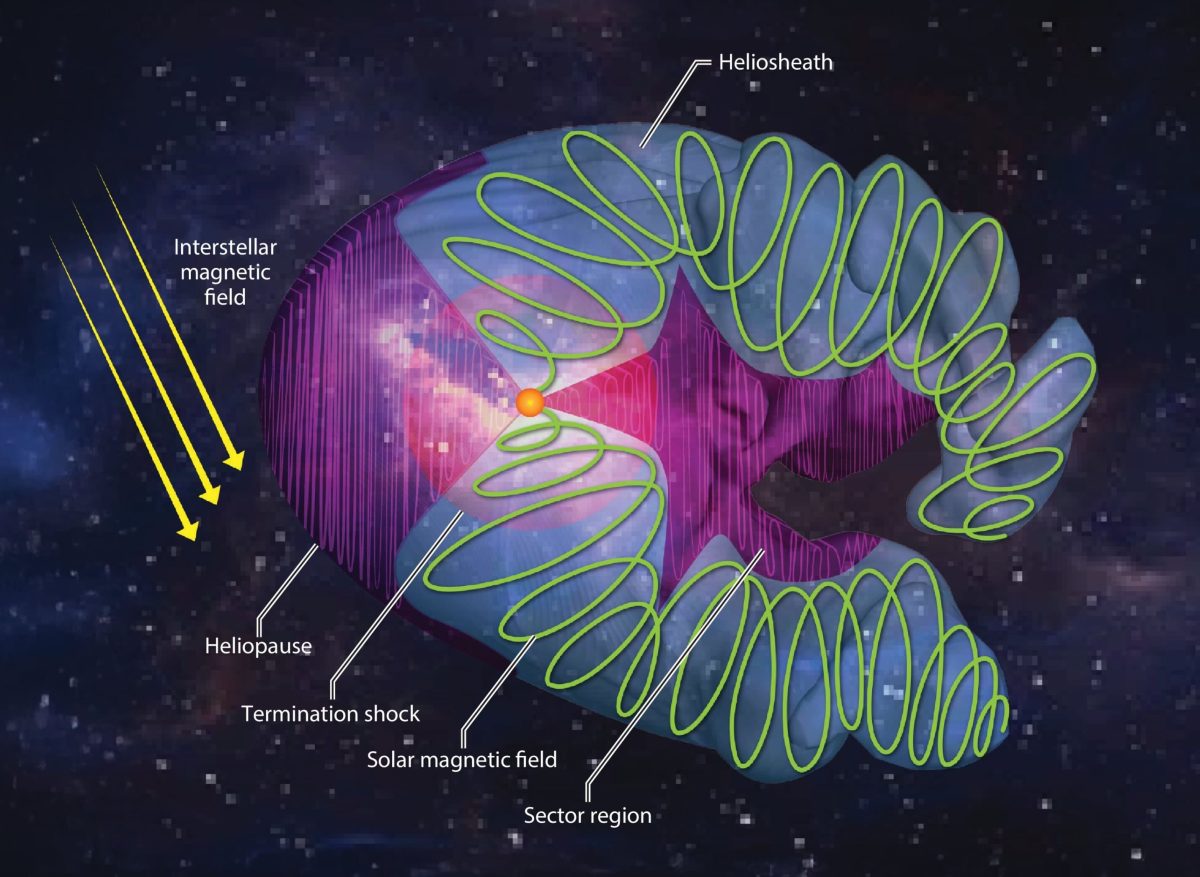
Scientists from the SHIELD center, which studies the solar wind and the large-scale dynamics of near-Sun space, reconstructed the ancient path of the heliosphere through the Milky Way using computer models. The heliosphere is the enormous bubble of charged particles surrounding the Solar System and shielding it from the interstellar medium. The research is being conducted by a team led by Merav Opher of Boston University.
As Phys.org reports, calculations showed that at least three times over the past several million years, this protective envelope encountered cold clouds of gas and dust. The pressure of the dense material compressed it so strongly that Earth temporarily found itself outside the protection.
The scale of the compression is easier to understand through comparison. Normally, the outer boundary of the solar wind lies about 120 astronomical units away, or roughly three times farther than the average distance from the Sun to Pluto. Shrinking to the size of Earth’s orbit means that the radius of the protective structure decreased by approximately 120 times, while the volume of the region it protected became more than a million times smaller.
Traces in Sediments and Snow
The three episodes are dated to periods 2–3, 6–7, and 13–14 million years ago. The modeling results agree with geological data, because elements characteristic of interstellar dust have been found in samples of deep-sea sediments, Antarctic snow, and lunar soil of precisely these ages.
When the atmosphere was exposed to a cold, dense cloud of hydrogen, the amount of water vapor in it increased, while the circulation of air masses in the upper layers changed. This affected conditions near the surface, so passage through such regions of the galaxy may have been one of the factors behind ancient climate fluctuations, including individual glaciations. The results were published in the peer-reviewed journal Annual Review of Astronomy and Astrophysics.
The Faint Young Sun Paradox
The second study concerns the faint young Sun paradox. Three billion years ago, the luminosity of our star was only 70 percent of its present value, so according to calculations the planet’s surface should have been completely frozen. Geological evidence shows the opposite, since liquid water existed on Earth long before that.
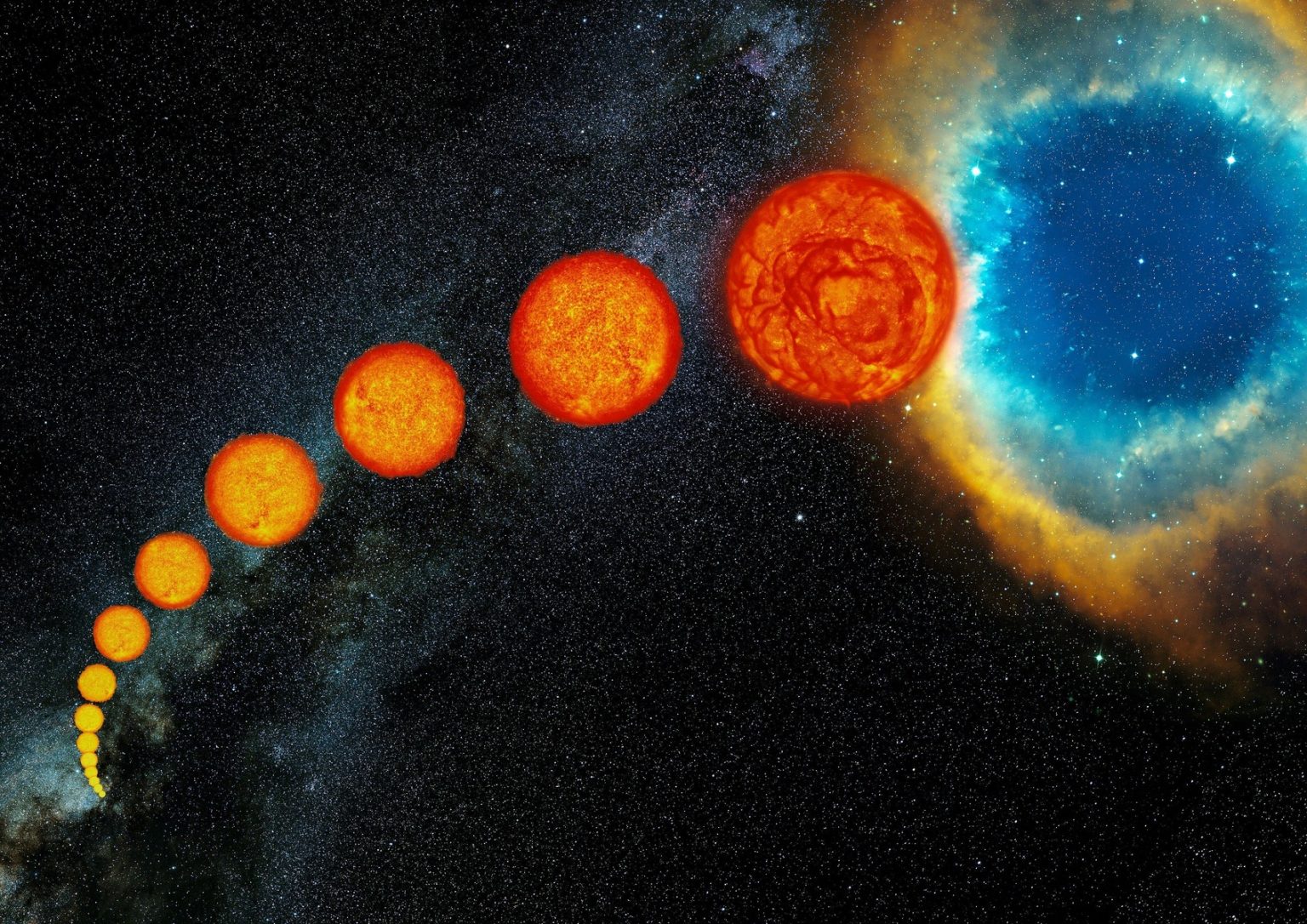
The key to solving the puzzle came from observations of young stars similar to the Sun. Data from the Kepler space telescope show that such objects produce superflares on a daily basis, releasing streams of high-energy particles around them. Scientist Vladimir Airapetian of NASA’s Goddard Space Flight Center and his co-authors suggested that similar events may also have been common on the young Sun.
In a sealed chamber, the researchers mixed molecular nitrogen, ammonia, and carbon oxides, recreating the probable composition of the primordial atmosphere. Bombarding this mixture with protons simulated particle streams from superflares. Nitrous oxide appeared among the reaction products.
This compound traps heat approximately 300 times more effectively than carbon dioxide, although ultraviolet radiation from the young star would gradually break it down again into nitrogen and oxygen. Even if only 10 percent of the generated substance survived, modeling shows that equatorial latitudes would have warmed to approximately 5 degrees Celsius.
A temperature slightly above freezing proved more favorable for assembling long chains of amino acids than warmer conditions, so this scenario may have contributed to the emergence of primordial organic matter. The findings were published in the peer-reviewed journal The Astrophysical Journal Letters.
A Shared History
The two studies describe epochs separated by billions of years, yet they point to the same conclusion. Earth formed and has always existed as part of a system with its parent star, so its history cannot be considered separately from the history of the Sun.
The heliosphere model developed at the SHIELD center is described as a digital twin because it reproduces the interaction of the protective envelope with the surrounding environment, including dense interstellar clouds. The same tool is also used to assess how habitable planetary systems around other stars may be.