

The universe is abundant with objects of remarkable magnitude. Nevertheless, the galaxy IC 1101 surpasses typical dimensions. A team of astrophysicists headed by Carlos Marrero de la Rosa from the Spanish Institute of Astrophysics of the Canary Islands has conducted the most precise measurement to date of its physical dimensions. The findings of the research, accepted for publication in the journal Astronomy & Astrophysics and available on the arXiv preprint server, demonstrate that IC 1101 is the largest known galaxy in the universe, and it continues to expand.
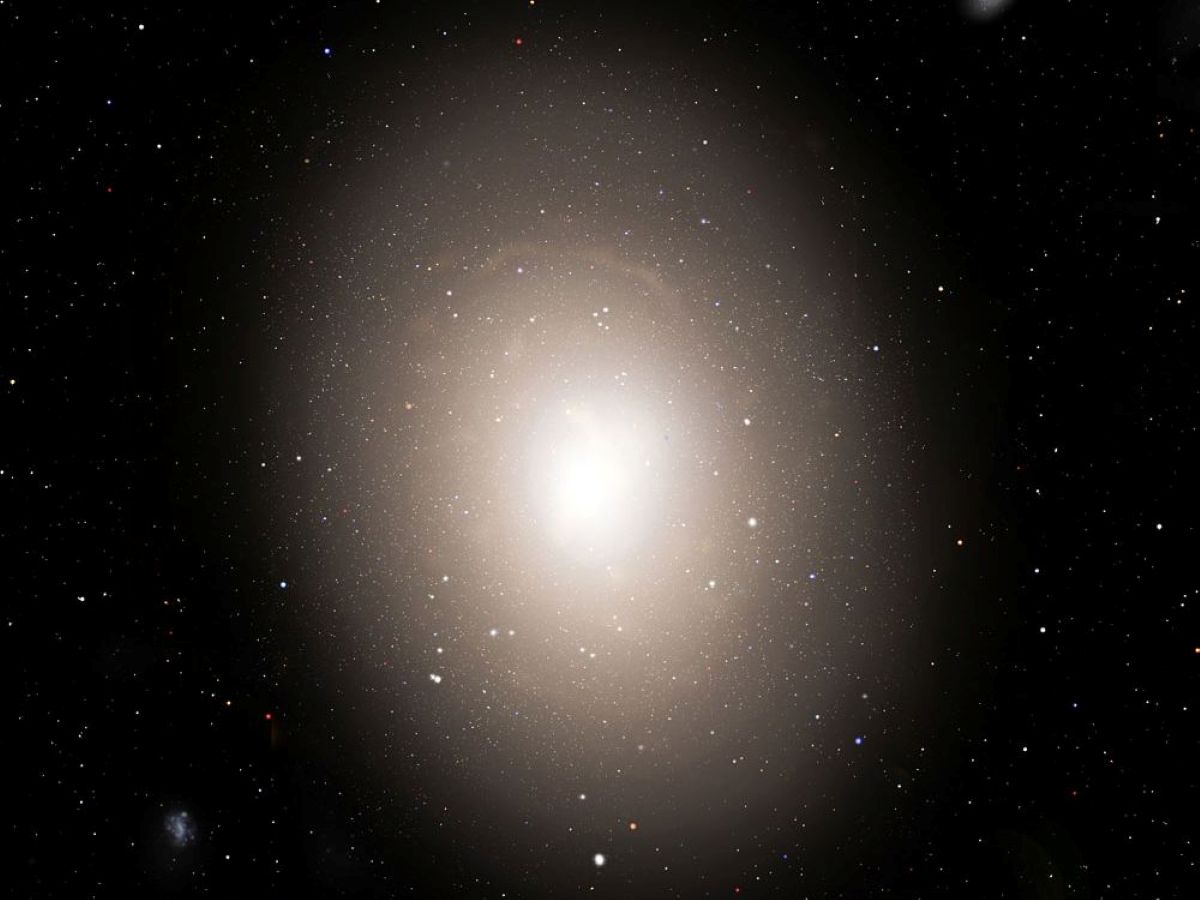
Source: Isaac Newton Telescope (INT/ING)
According to recent data, the boundary of the galaxy’s principal stellar structure is approximately 260 kiloparsecs from the core, and its overall diameter extends to 1.7 million light-years.
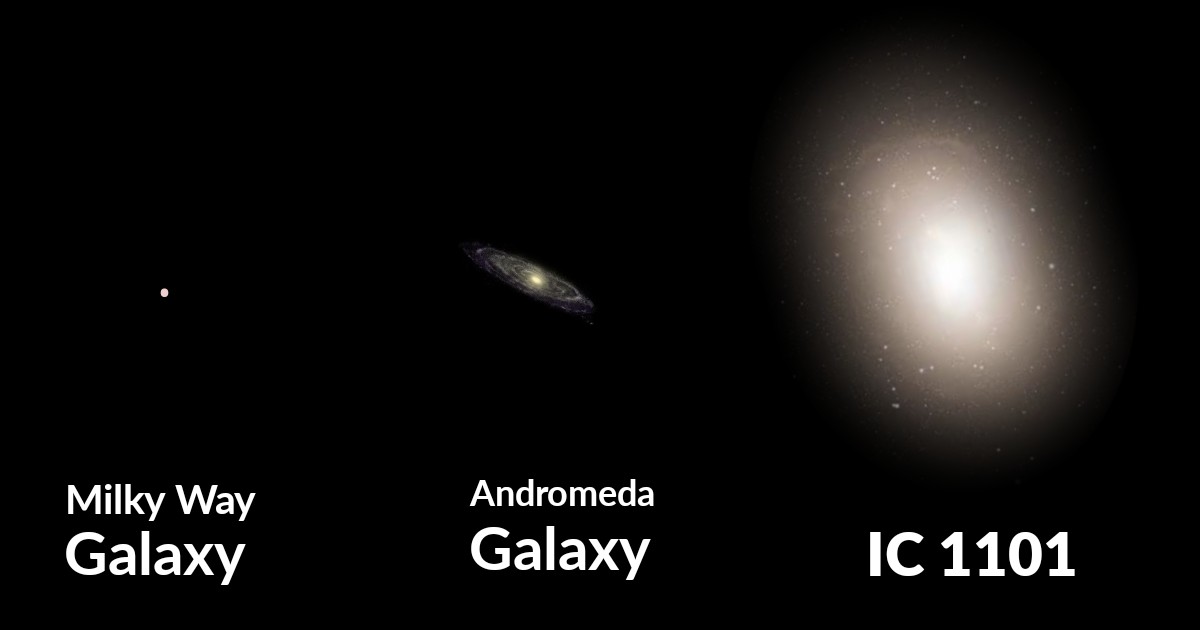
“By way of comparison: the diameter of the Milky Way’s stellar disk is about twenty times smaller,” explains Marrero de la Rosa. “If IC 1101 were placed between the Milky Way and the Andromeda Galaxy, its stellar mass would almost completely fill the space between them.”
How to delineate the boundary of the fog
The galaxy IC 1101 is situated at the core of the Abell 2029 cluster. For an extended period, accurately determining its dimensions proved to be notably challenging. Galaxies are exceedingly sparse, and the stars nearby were merely obscured by the diffuse light emanating from neighboring systems within the cluster.
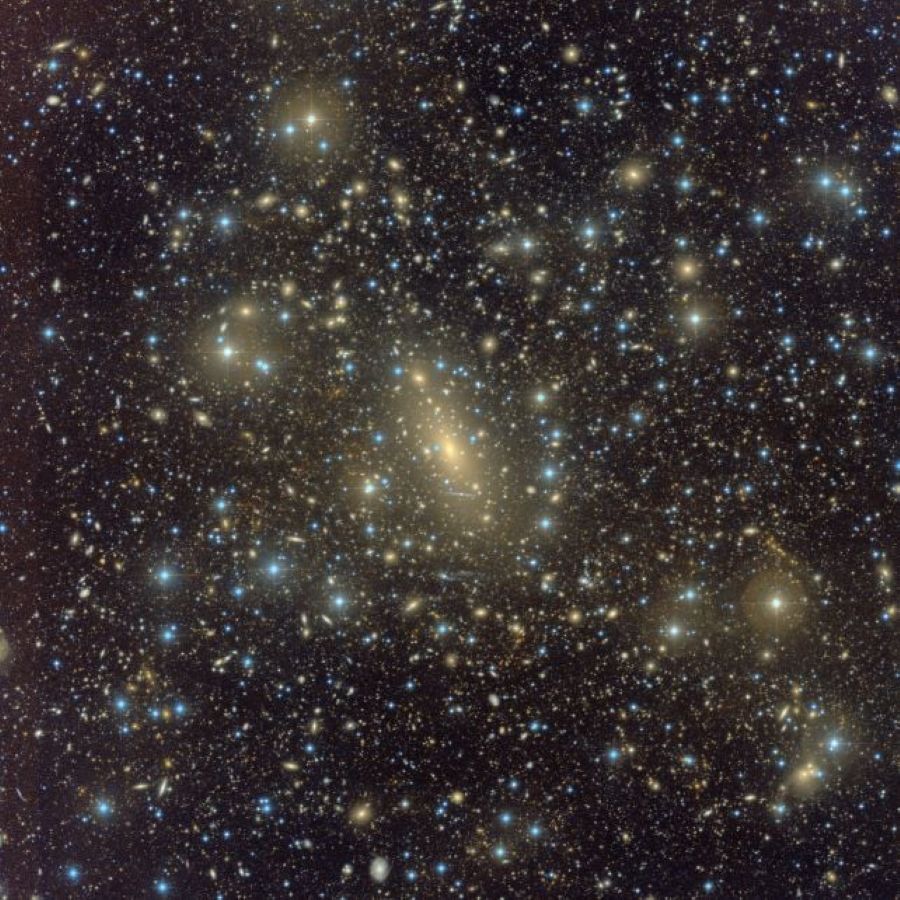
Photo: Isaac Newton Telescope (INT/ING)
To determine the precise boundaries, researchers employed the 2.5-meter Isaac Newton Telescope at the Roque de los Muchachos Observatory in Spain, capturing the most detailed images of the object. The primary challenge involved digitally eliminating the intense glow from the central region of IC 1101 and the scattered light from foreground stars.
Following the image analysis, the researchers noted that at a distance of 260 kiloparsecs from the core, multiple parameters were concurrently undergoing changes: the light distribution, stellar color, stellar mass, and the configuration and orientation of the entire system. The simultaneous variation of these parameters in various directions signified the boundary of the primary stellar structure.
Traces of ancient conflicts
Following the elimination of background noise, subtle, asymmetrical filamentary and cloud-like structures with low surface brightness became discernible within the images. These observations substantiate that IC 1101 continues to accrete matter through the absorption of smaller galaxies.
Certain external structures are consistent with large-scale disturbances observed in the X-ray emission emanating from the hot gas encasing IC 1101. This indicates that a significant merger with another galaxy cluster took place several billion years prior.
A glimpse into the future of the universe
The immense scale of such systems results from extended accretion and mergers with adjacent galaxies. Researchers regard IC 1101 as a significant observational reference point for assessing the maximum possible size of a galaxy in the contemporary universe.
The researchers intend to implement the developed methodology in the analysis of additional extensive systems. This approach aims to ascertain whether IC 1101 represents a singular, anomalous giant or if such objects have yet to be identified due to current limitations. According to the authors, IC 1101 epitomizes a galaxy of the future, illustrating an evolutionary trajectory that other massive stellar systems may eventually emulate.
We previously documented the methods by which astronomers measured the mass of the universe.
Provided by Science Alert