

A total solar eclipse will cross Europe next Wednesday. Only those located within the narrow path of the Moon’s shadow will be able to see the event in its entirety. In Ukraine, the eclipse will be only partial, and visibility will vary considerably across the country. The western regions will have the best conditions.
Path of the Shadow
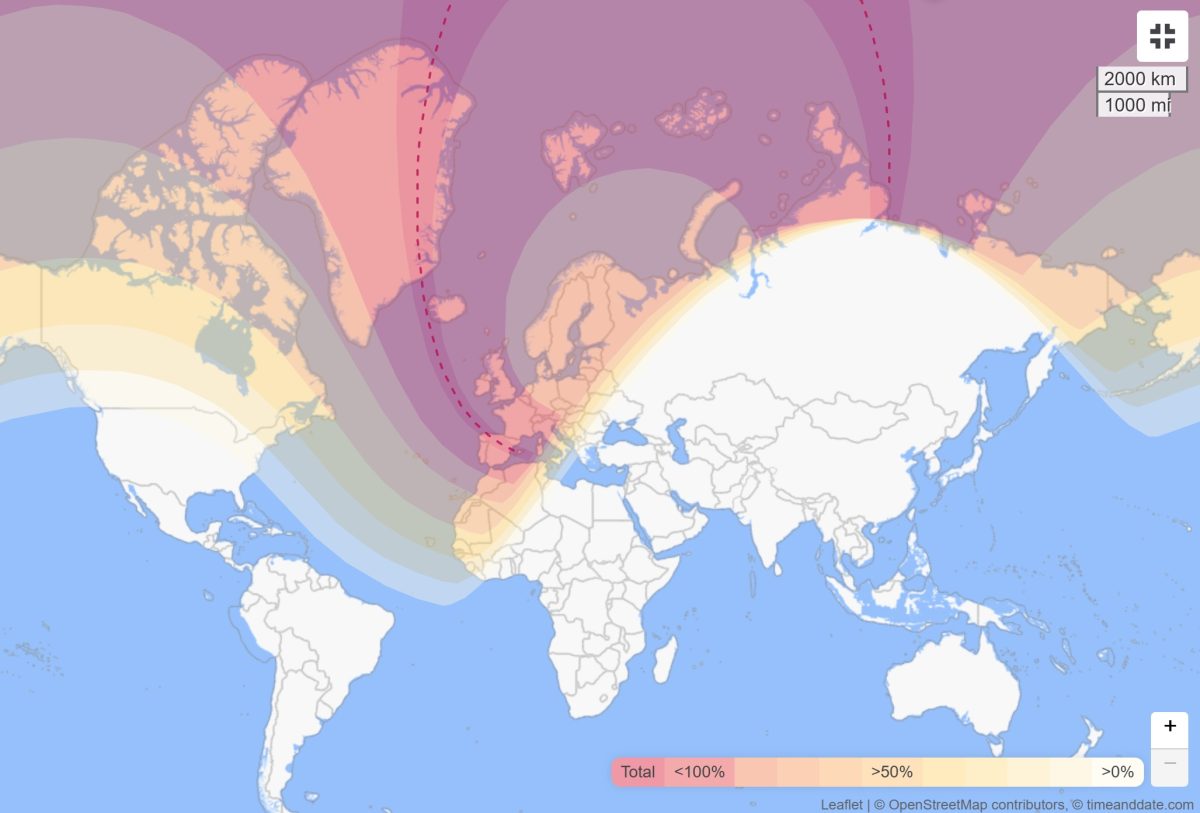
The path of totality on August 12 will begin in the Arctic, pass near the North Pole, and cover northern Russia and eastern Greenland. It will then cross the Atlantic Ocean, pass over western Iceland and northern Spain, and reach a small part of Portugal.
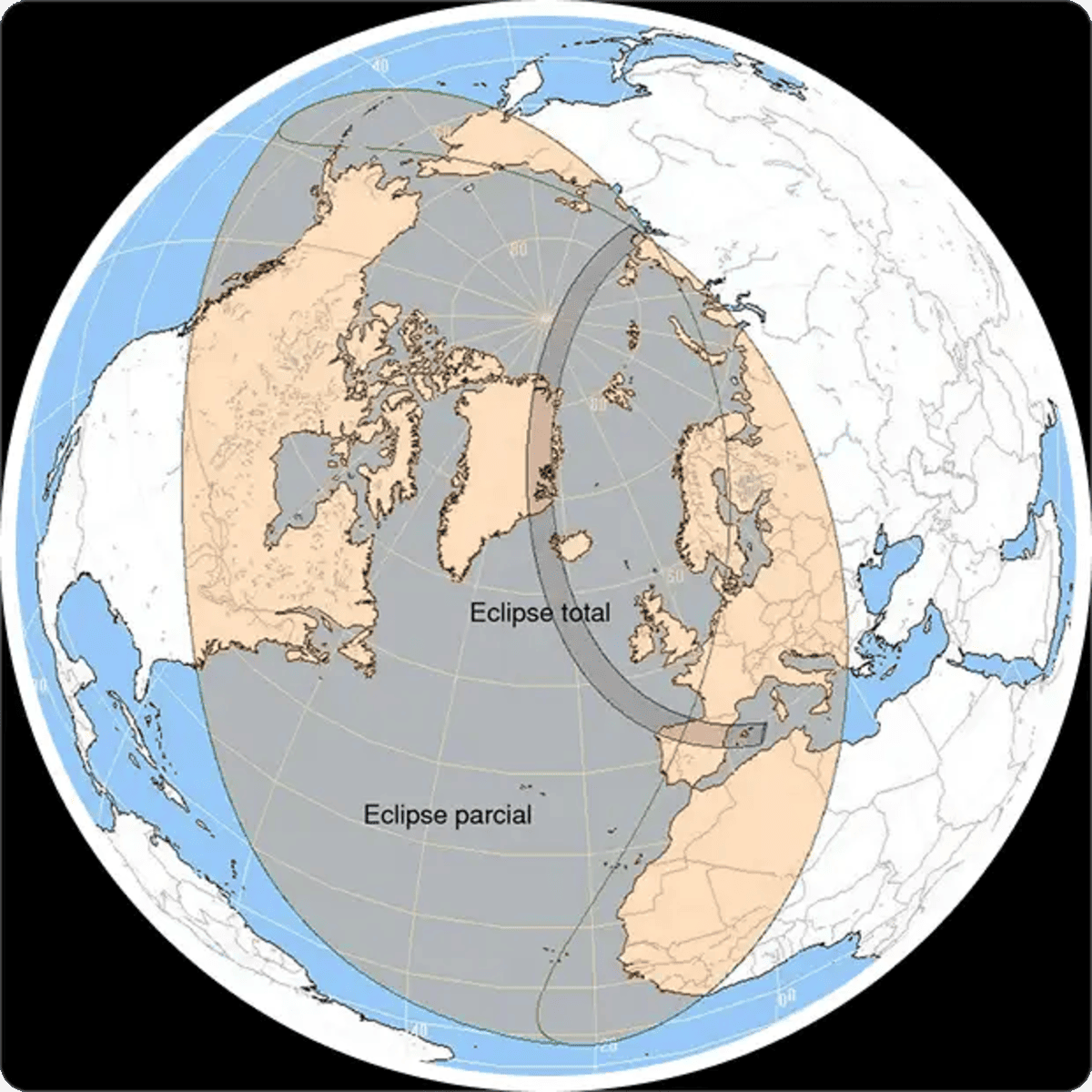
According to NASA, the partial phase will be visible across a much wider area—from Alaska to North Carolina, across most of Canada, nearly all of Europe, and northwestern Africa. For residents of European countries, the event will occur during the evening hours.
Conditions in Ukraine
Not everyone in Ukraine will be able to observe the eclipse. It will not be visible at all in the east, center, or south of the country, while in the north only a barely noticeable edge of the eclipse will appear near the horizon. This is stated in the UST astronomical-events calendar.
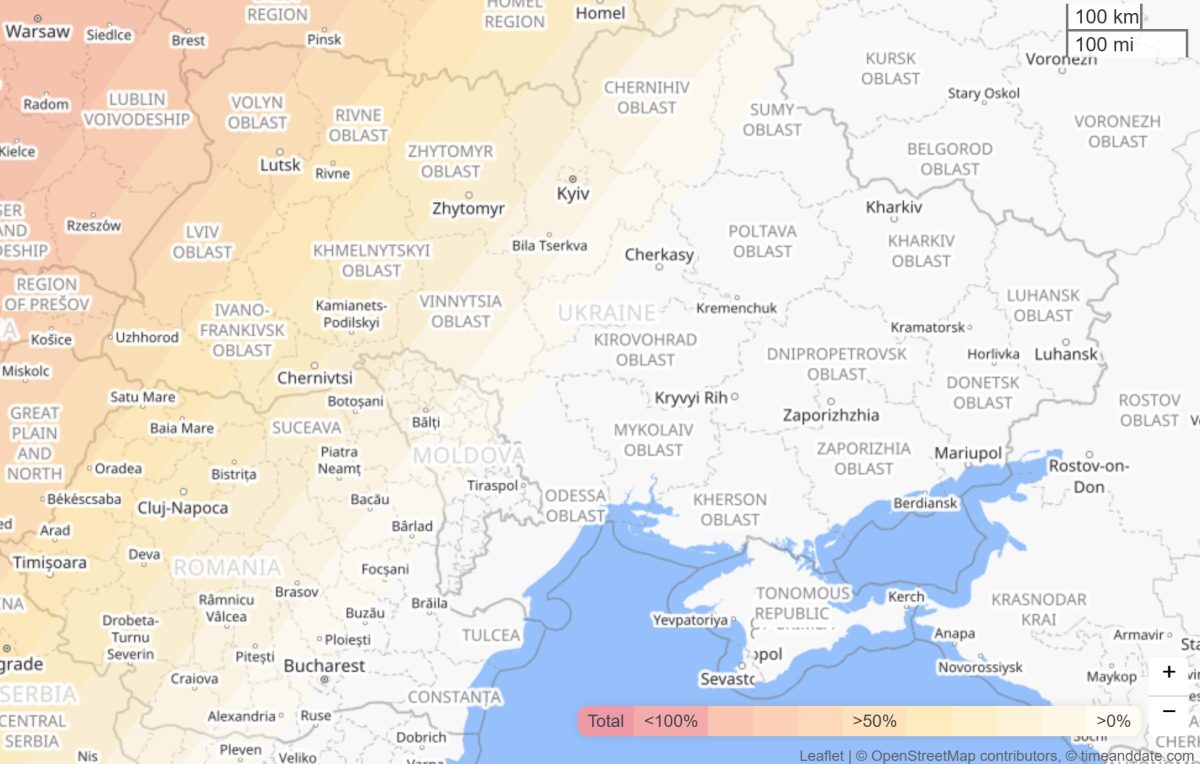
The best location in Ukraine will be the Shatsk Lakes in Volyn, where the Moon will cover 65% of the Sun’s disk. The maximum phase will occur at 8:50 p.m., while the entire event will last from 8:15 p.m. to 8:54 p.m.
The view in Kyiv will be far more modest. According to calculations by timeanddate, the partial phase will begin at 8:14 p.m. and end at 8:23 p.m., with no more than 8% of the solar disk covered.
Across Europe
Spain will have the best observing conditions in Europe, as the Moon will cover almost the entire solar disk in Madrid. In London, the figure will reach approximately 91%, while in Berlin and Vienna it will be about 85%, according to calculations based on NASA and timeanddate data compiled in the UNISTELLAR guide.
The Moon’s shadow last crossed mainland Europe on August 11, 1999. At that time, the path of totality passed through Hungary and Romania, much closer to Ukraine’s borders than it will this time.
Eye Safety
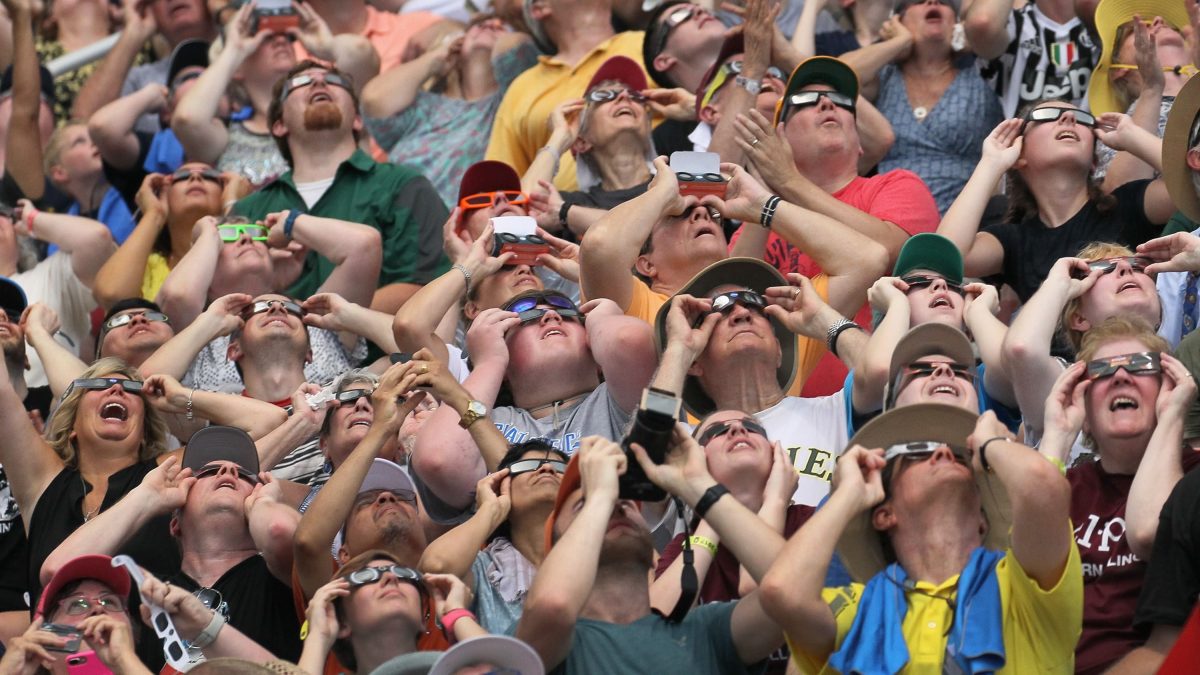
For Ukrainians observing the eclipse either in Europe or at home, it is important to remember the necessary safety precautions. Looking directly at the partial phase without protection is dangerous even when the Sun is low above the horizon. This is especially important for those currently in Europe, where there may be a temptation to remove protective glasses too early, while part of the solar disk is still exposed.
Ordinary sunglasses are not suitable. Certified filters meeting the ISO 12312-2 standard are required. They may be removed only by observers located within the path of totality, and only during the brief period when the Sun’s disk is completely covered.

Even 1% of the Sun’s exposed surface produces enough radiation to permanently damage the eye’s light-sensitive cells. CNN cites this assessment from specialists at the Instituto de Astrofísica de Canarias. Welding filters with a shade rating of at least 12 may serve as a suitable alternative, although the solar disk will appear green through them.
Observations and Scientific Research
NASA will begin a live broadcast from several locations along the path of the shadow at 7:15 p.m. Central European Summer Time. Totality will begin in Iceland at 5:45 p.m. local time and in mainland Spain at 8:28 p.m. local time.
Total Solar Eclipse 2026 — Official NASA Trailer
The event will also be available on the Universe Space Tech YouTube channel, where a live broadcast with Ukrainian-language commentary will be provided.
Scientists will study the dynamics of the solar corona from aboard a WB-57 research aircraft, which will follow the Moon’s shadow through the upper atmosphere. Student teams from American universities will launch scientific balloons in Iceland and Spain.
Measurements will be taken before, during, and after the event. This will allow scientists to determine how the sudden darkening of the sky affects Earth’s atmosphere.
