

The picture of the Moon’s turbulent youth will have to be revised. Analysis of rock from the far side revealed that the influx of cosmic bodies striking the surface declined gradually. It was previously believed that, after a brief surge, it ended almost instantaneously. The new picture also applies to Earth, because both worlds went through that period together.
Two Halves of the Same History
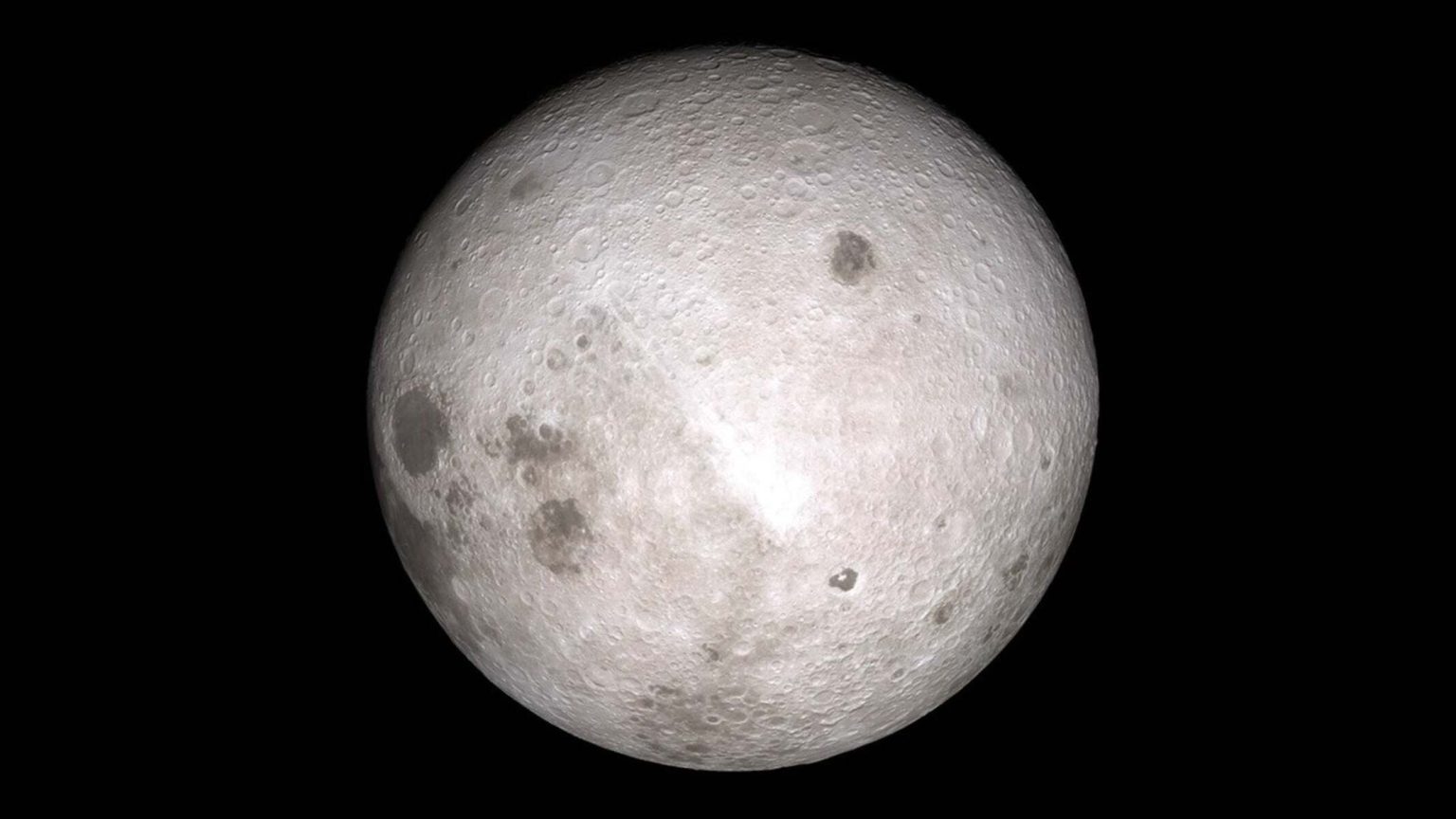
The soil delivered to Earth by the Chang’e 6 mission in June 2024 provided laboratories with material from the far side for the first time. Until then, all physical samples had come from the near side, where the Apollo missions and robotic probes of the previous century had landed.
The far side underwent significantly fewer later geological transformations, so traces of the earliest impacts have been preserved there in a less altered form. This allowed researchers to compare the two sides of the Moon directly for the first time, according to Universe Today.
Dating Using Argon Isotopes
For the analysis, researchers selected tiny particles of impact melt from the South Pole–Aitken Basin. Each fragment formed during a separate impact, when the rock briefly melted and then solidified again.
The ages of individual fragments were determined using argon–argon dating. The samples were irradiated with neutrons, after which the ratios of inert-gas isotopes were measured with a mass spectrometer. The resulting ages ranged from 4.33 to 1.13 billion years, covering more than three billion years of continuous history.
A Gradual Decline Instead of a Peak
The Late Heavy Bombardment hypothesis emerged from the results of the Apollo program. According to this model, approximately 4.1 to 3.8 billion years ago, the number of impacts increased sharply because of the migration of the giant planets, which disturbed and redirected smaller bodies.
Under that model, the episode was brief in geological terms, lasting between 20 and 200 million years, and ended abruptly. The new dates show no such peak. Instead of a narrow time window, they reveal a prolonged decline in impact intensity.
The authors do not rule out the possibility of intense bombardment during that era, but their measurements show no distinct maximum. The study was published in the peer-reviewed journal Science Advances. Earlier this year, another group from the Institute of Geology and Geophysics of the Chinese Academy of Sciences reached a similar conclusion.
What This Means for Earth
Almost no evidence of those events remains on our planet because tectonic activity and weathering erased the ancient surface. Lunar rock remains the only accessible archive of the period when the conditions for the emergence of life on Earth were only beginning to develop.
According to study co-author Fred Jourdan of Curtin University, every major impact recorded in lunar rock tells us something about conditions on the young Earth. Earth and the Moon were shaped by shared processes, so their early histories are also connected.
A Calendar for Other Planets
Planetary scientists use the decline curve of the impact flux, constructed from lunar samples, as a reference for determining the ages of surfaces on Mars, Mercury, and large asteroids. No material from those bodies suitable for laboratory dating is currently available.
The ages of Martian plains are calculated from crater density and converted into years using this calibration scale. Therefore, every revision to the lunar chronology also shifts age estimates for the rest of the inner Solar System.
