

On September 28, the European Space Agency’s interplanetary spacecraft Juice (Jupiter Icy Moons Explorer) performed another flyby of Earth. The spacecraft passed along the very edge of Earth’s atmosphere, using the gravity of its home planet as a natural accelerator to adjust its course toward Jupiter.
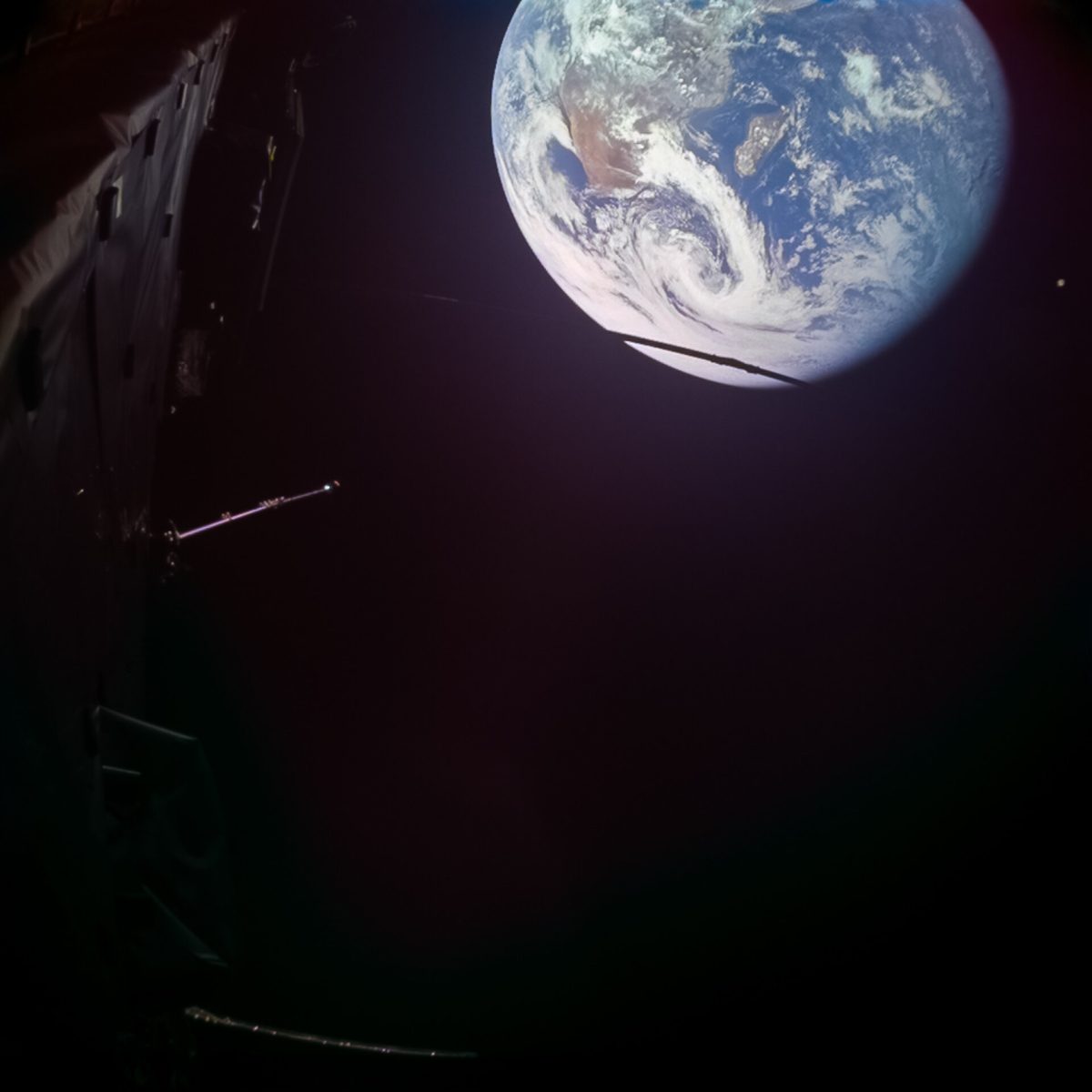
The gravity-assist maneuver allowed Juice’s trajectory to be deflected by 20° and added 3.5 km/s to its speed. Thanks to the precise work of engineers over the past four weeks, the spacecraft needed only one tiny engine burn out of six planned in order to reach the ideal trajectory.
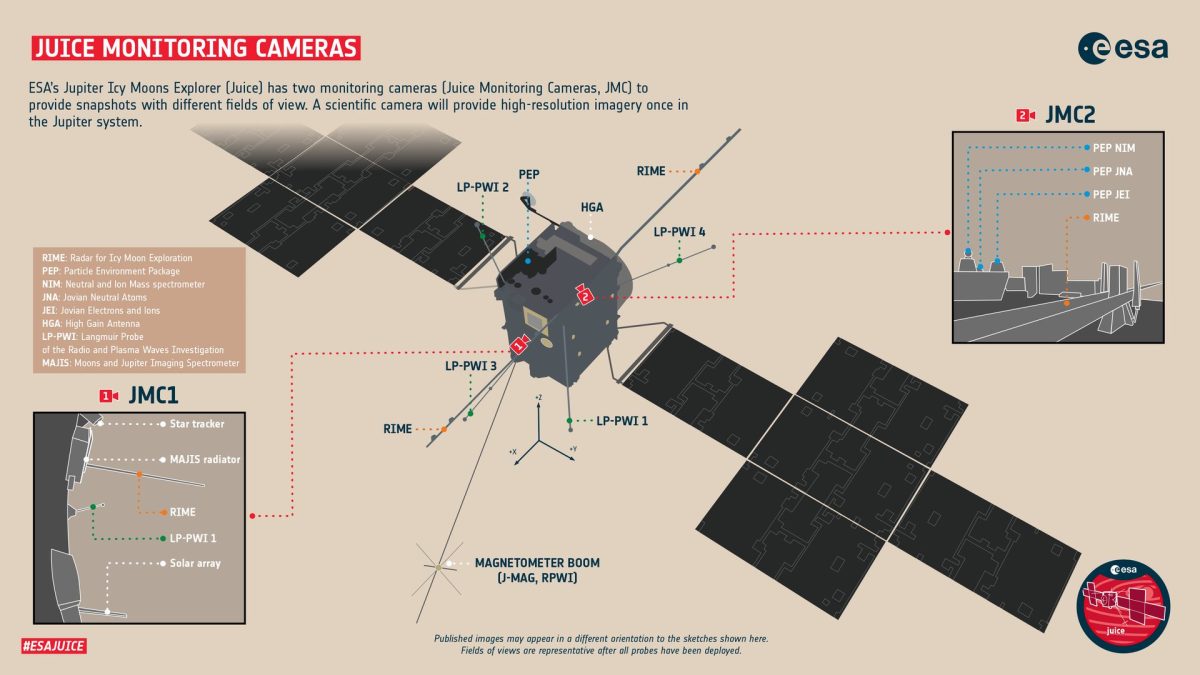
The closest approach occurred at 1:45 p.m. Kyiv time: the probe passed at an altitude of 8,640 km above the Indian Ocean, taking a series of images with its onboard cameras. According to Juice operations manager Angela Dietz, the exceptional precision of the planning made it possible to preserve significant fuel reserves that will be needed during complex maneuvers in the Jupiter system.
Earth as a Testing Ground
The Earth flyby had not only navigational but also important practical significance. It was already the third opportunity to test the spacecraft’s scientific instruments in deep space — after the Moon-Earth gravity assist in 2024 and observations of comet 3I/ATLAS in 2025.
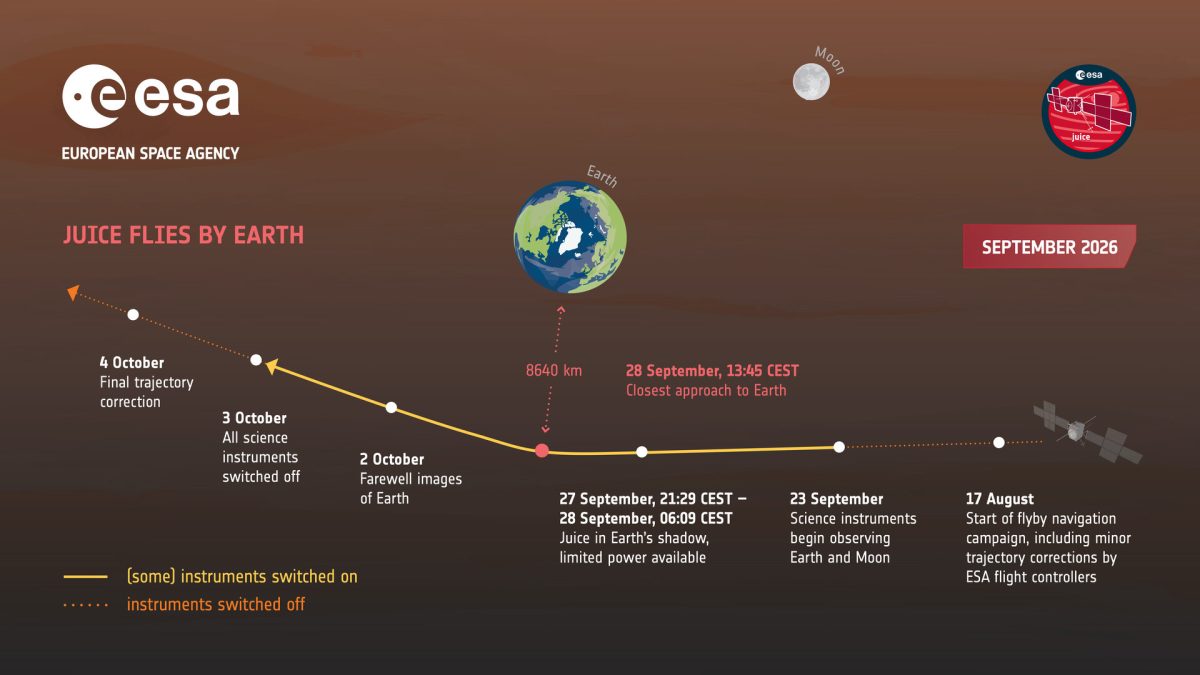
ESA operations centers spent several months coordinating the schedule for the 10 scientific instruments because onboard power resources remained strictly limited. In particular, when the spacecraft passed through Earth’s shadow and was powered entirely by batteries, engineers had to strictly prioritize calibration tasks.
During the maneuver, Juice also passed through Earth’s magnetotail — the elongated region of the magnetosphere on the side facing away from the Sun. This made it possible to measure the parameters of the magnetic field and charged particles at a great distance from the planet. At the same time, the European-Chinese Smile spacecraft observed the aurora and magnetosphere near Earth, allowing scientists to compare processes at the poles with events in the distant parts of the magnetotail.
In the near future, scientific teams expect the publication of the first high-resolution images and spectral data obtained by the JANUS scientific camera.
Next Stop — Jupiter
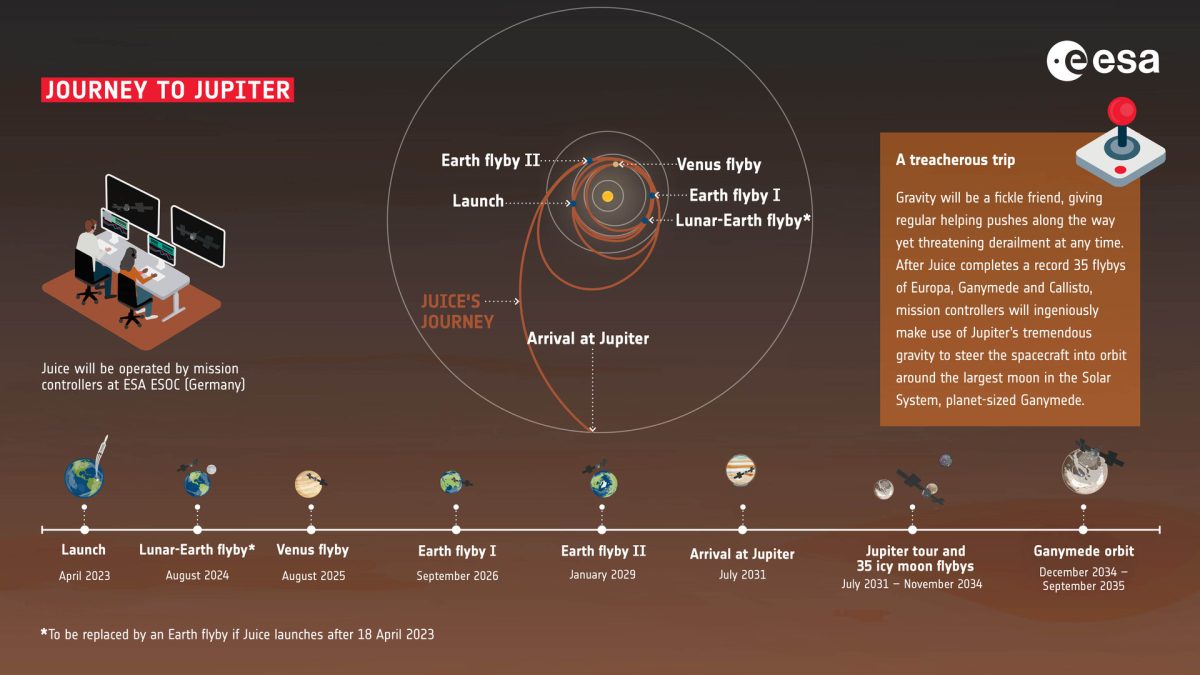
The Earth maneuver served as training for a much more difficult task: in the future, Juice will carry out 35 close flybys of Jupiter’s icy moons — Ganymede, Europa, and Callisto.
In January 2029, the spacecraft will return to Earth for the last time for a final gravity-assist maneuver that will place it on the final course toward the gas giant. Arrival at Jupiter is planned for 2031. The main goal of the mission is to investigate the potential habitability of the subsurface oceans of the icy moons.
Earlier, we reported on what interesting things JUICE will see on Europa.
Based on materials from ESA
