

A Japanese probe will set off for Phobos on October 19. The spacecraft is expected to land on the surface, collect soil samples, and deliver them to Earth. Laboratories have never before received material from another planet’s moon. By analyzing the samples’ composition, scientists hope to establish where Mars’s moons Phobos and Deimos came from.
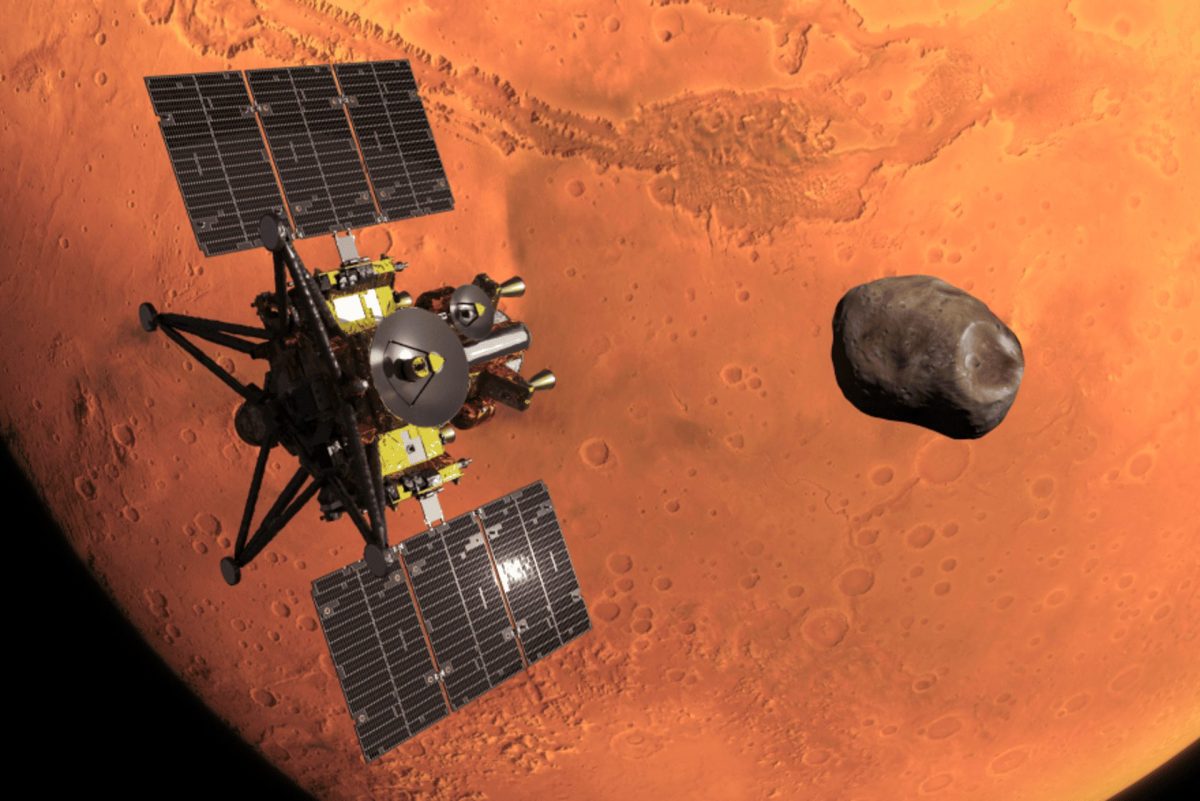
The First Landing on Phobos
An H3 rocket carrying MMX (Martian Moons eXploration) will launch from Japan’s Tanegashima Space Center on October 19 at 10:41 p.m. Kyiv time, according to ESA. The mission is led by the Japanese space agency JAXA. The probe is set to become the first spacecraft to orbit Phobos and land on another planet’s moon, then return samples from the Martian system to Earth.
The extremely weak gravity makes landing difficult. The 25-kilogram Idefix rover will weigh as much on Phobos as a 15-gram object does on Earth—roughly three sheets of office paper. Engineers developed dedicated technologies for landing, maneuvering, and collecting soil under these conditions.

Previous attempts to reach Phobos ended in failure. Contact with the Soviet Phobos 1 and Phobos 2 probes of 1988 was lost before they completed their programs near the moon, while Russia’s Phobos-Grunt never left Earth orbit in 2011.
Where Did Phobos and Deimos Come From?
No spacecraft has yet operated near the Martian moons for an extended period, so our knowledge of them comes only from brief flybys. Phobos and Deimos may be asteroids captured by the planet’s gravity. Another scenario links them to debris thrown into orbit after Mars collided with a large celestial body.
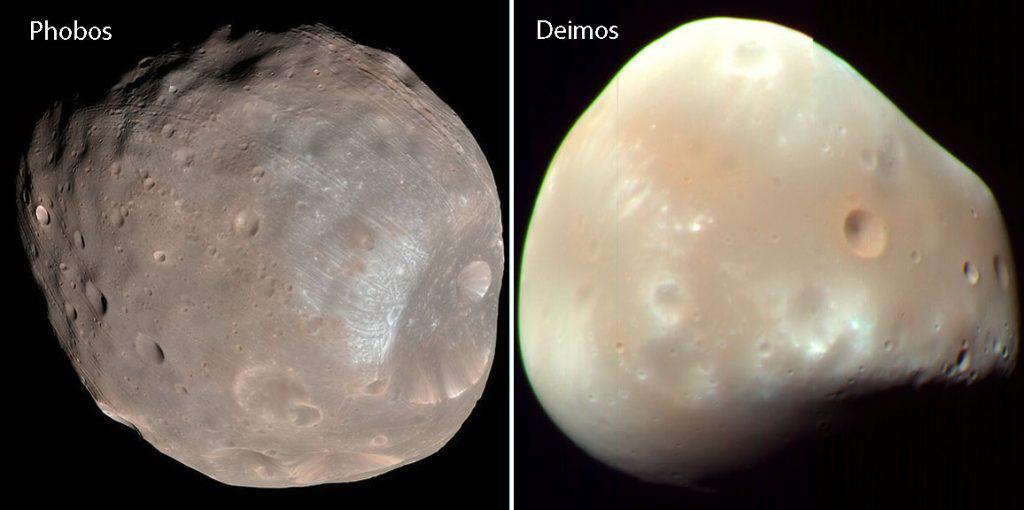
The material’s composition will help distinguish between these explanations. If the samples resemble Martian rocks, that would point to an origin in material from the planet itself. Similarities to asteroids whose material has remained largely unchanged since the Solar System formed would indicate that the moons arrived in orbit from elsewhere. ESA’s MMX project scientist, Elliot Sefton-Nash, explains that the most precise instruments are too large and sensitive for spaceflight, so the material can be studied far more thoroughly in laboratories on Earth.
The Journey to Phobos and Back
The journey will take about a year. In August 2027, the probe will enter orbit around Mars, and from September it will orbit Phobos. In early 2029, the spacecraft will deploy the Idefix rover, developed by the French space agency CNES and the German Aerospace Center (DLR), onto the surface. Idefix will collect data to support the main probe’s landing and investigate the soil’s composition.
In 2030, the probe will land on Phobos and collect at least 10 grams of material. The sample capsule will land in Australia in 2031, after which it will be transferred to Japan. The European Space Agency supplied onboard communications components and will support the spacecraft through its Estrack ground network, according to the ESA factsheet.
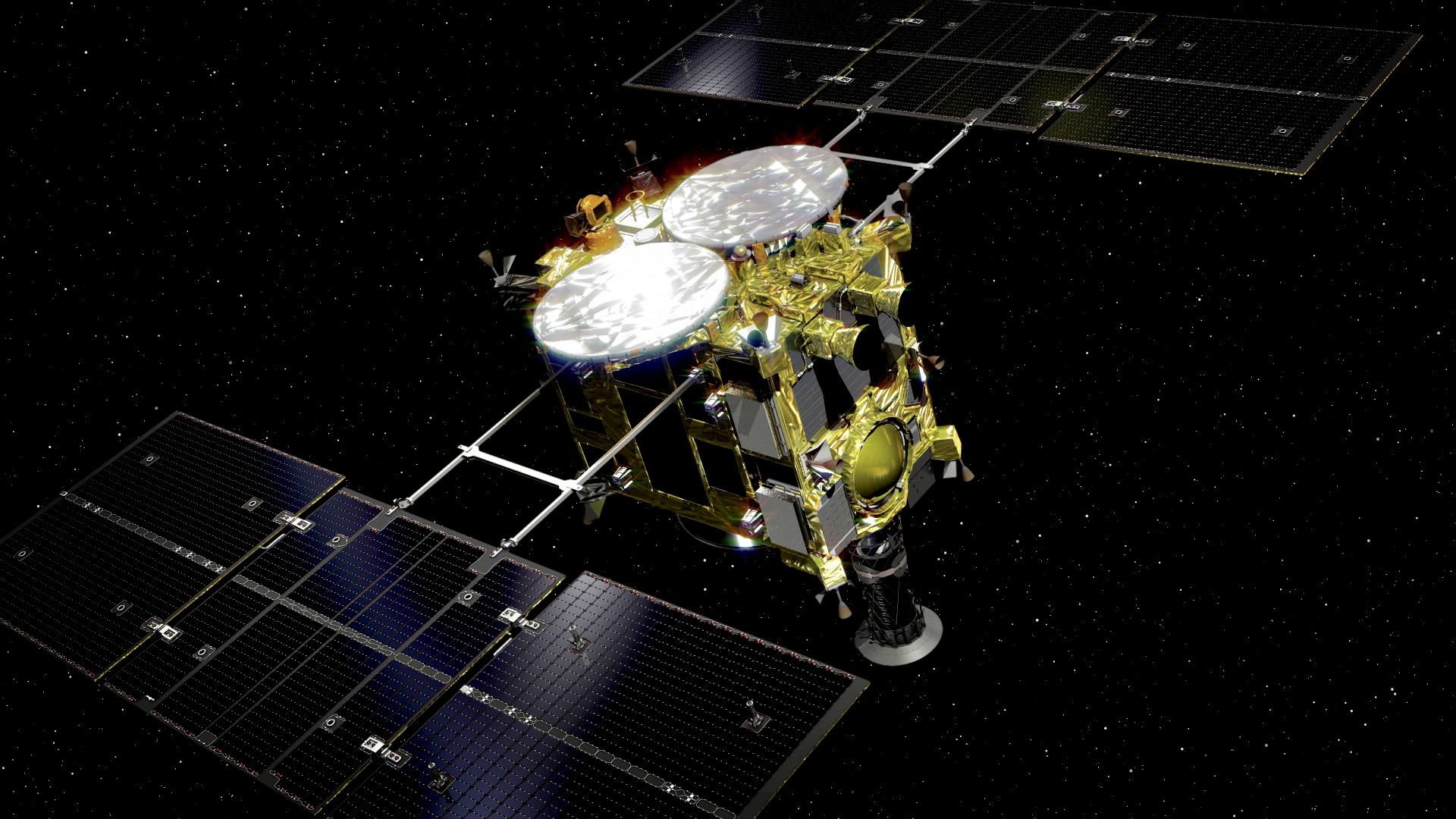
For JAXA, this is its third sample-return mission after Hayabusa and Hayabusa2, which brought back soil from the asteroids Itokawa and Ryugu. MMX was originally scheduled to launch in 2024, but was postponed because of problems with the H3 rocket. The agency’s future plans also include a comet sample-return mission.
