

The discovery of prominent gullies on Mars for a long time fueled hopes within the scientific community that the neighboring planet once had liquid water, and therefore potentially had conditions suitable for life. However, further research has significantly changed this view.
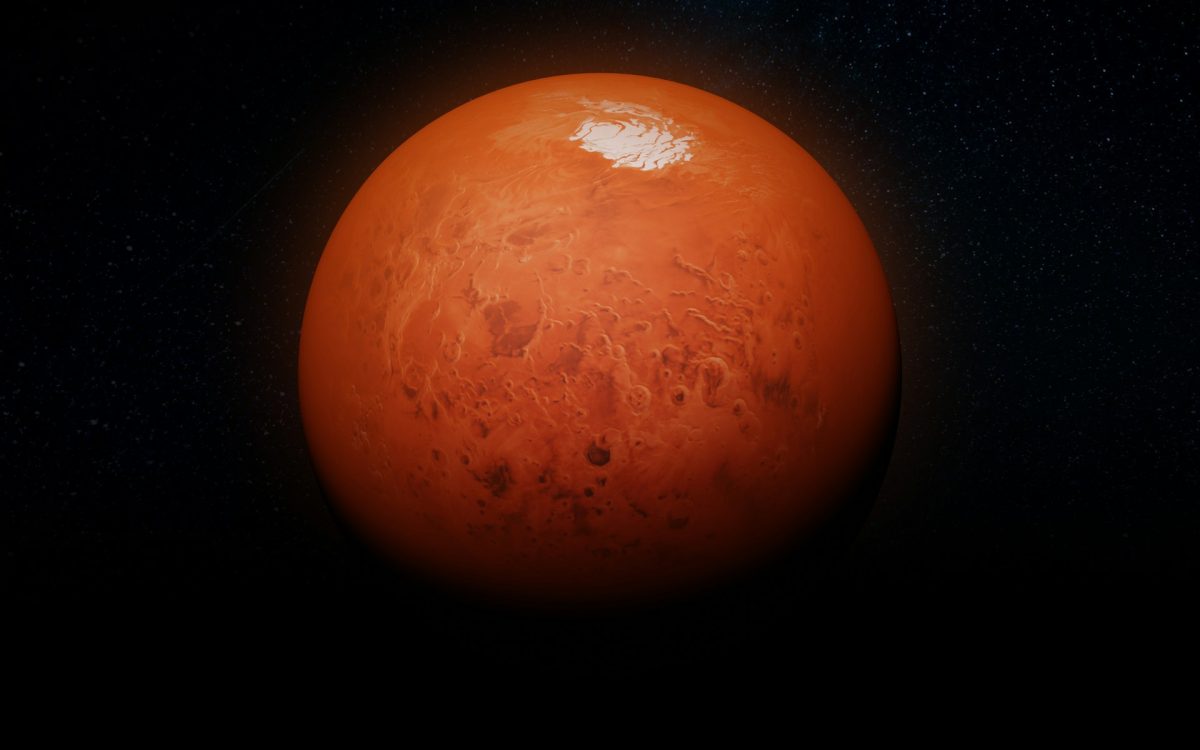
NASA specialists have found that these formations are much younger than previously believed, and that the main factor behind their appearance is the seasonal freezing of dry ice. A new study by French astrophysicists, based on many years of observations, sheds light on the exact mechanism behind this process.
The Collapse of the Water Hypothesis
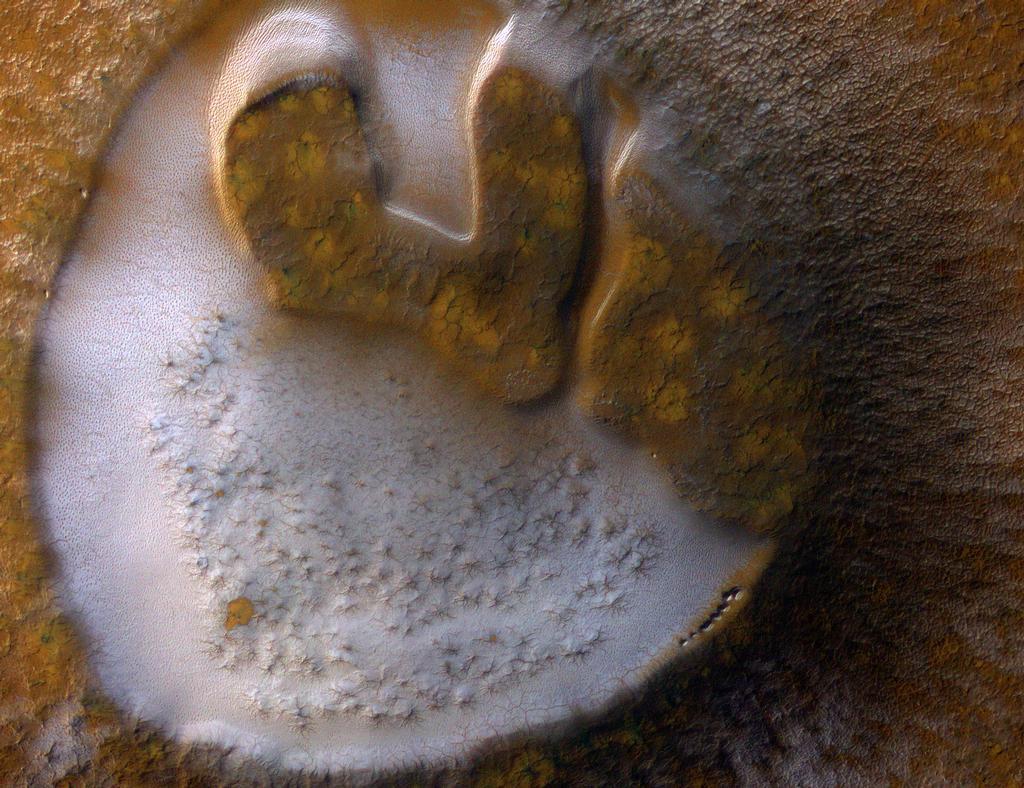
For a long time, the channels cutting through Martian slopes were considered analogous to terrestrial gullies carved by water. Images from the Mars Global Surveyor spacecraft caused a real sensation and prompted a wave of scientific publications about the presence of liquid water on the planet.
Despite the prevailing optimism, some researchers expressed alternative views. As early as 2002, Australian geologist Nick Hoffman suggested that the gullies were the result of frozen CO₂. At the time, his idea was met with skepticism, but modern data confirm that such assumptions were well founded.
To test the theories, a French team of scientists analyzed data from the Mars Express and Mars Reconnaissance Orbiter spacecraft, focusing on Sisyphi Cavi, a region near Mars’ south pole. Spectral analysis during the Martian spring revealed no traces of water, effectively ruling it out as a factor in gully formation in this area.
Dry Ice Instead of Geysers
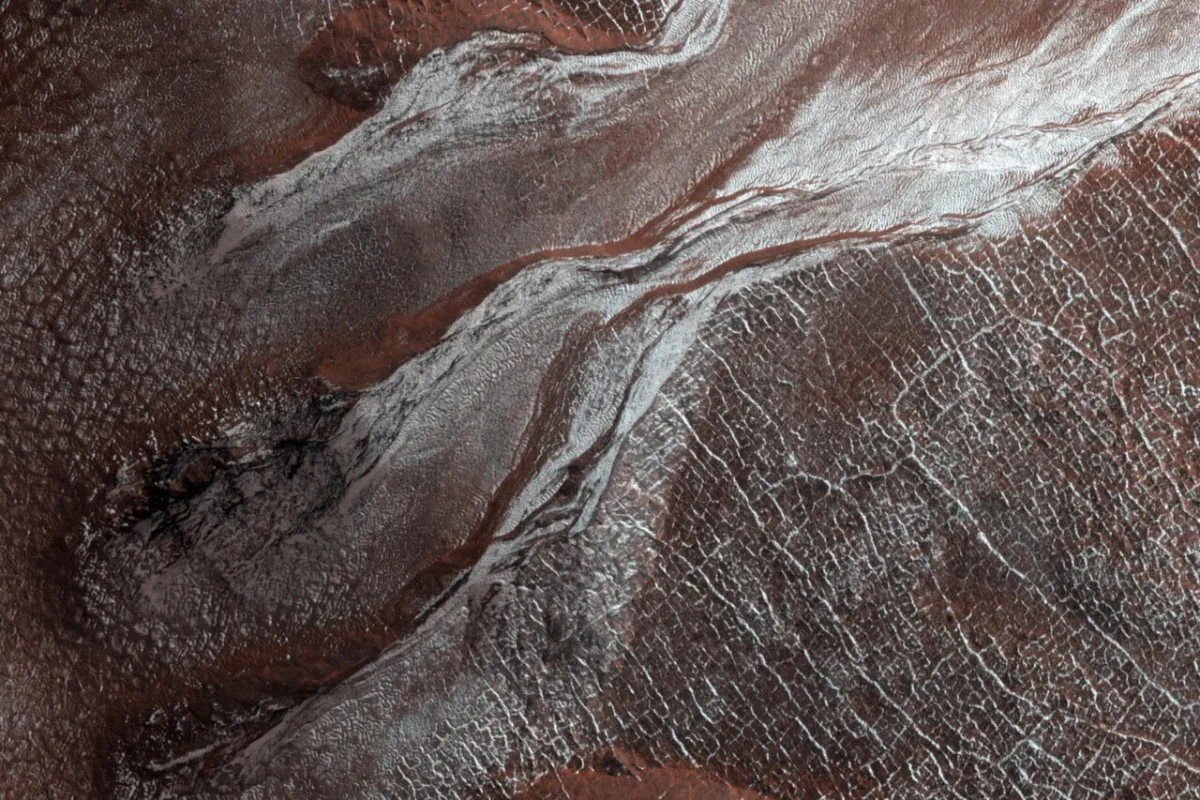
Having ruled out the involvement of water, the scientists tested another popular hypothesis — the influence of carbon dioxide geysers. Comparative analysis revealed a significant timing discrepancy: dark spots caused by geyser activity appear much earlier than the gullies themselves. Physical and temporal constraints indicate that the connection between these phenomena is extremely weak.
Instead of geysers, the researchers proposed a fluidization model that occurs during the later stages of seasonal CO₂ ice sublimation. During this process, bubbles of carbon dioxide are released, creating a kind of “lubricating” effect. Dry ice and dust effectively levitate above the surface, similar to an air-hockey puck gliding on a thin cushion of air.
Features of the Martian Landscape
Landslides consisting of a mixture of Martian ice and regolith flow down slopes, carving deep trenches. Although the resulting terrain visually resembles terrestrial gullies formed by water, the Martian structures have a fundamentally different origin.
The researchers note that gullies at lower elevations may form through somewhat different mechanisms, and the study of these processes is ongoing. Although these gullies turned out to be the result of dry-ice activity, this does not rule out other avenues in the search for water on Mars.
Previously, we showed what winter on Mars looks like.
According to Gizmodo