

Fresh vegetables and salad may become part of the diet of future Moon residents. The space agencies of the United States and Canada, together with the German Aerospace Center, have agreed to prepare a ground-based prototype of a plant-growing module for a lunar base. They want to test how crops grow under reduced pressure and how the greenhouse exchanges oxygen, carbon dioxide, and water with the living module. Long-duration expeditions to the Moon, and later to Mars, will largely depend on this.
Preparatory Stage of the Project
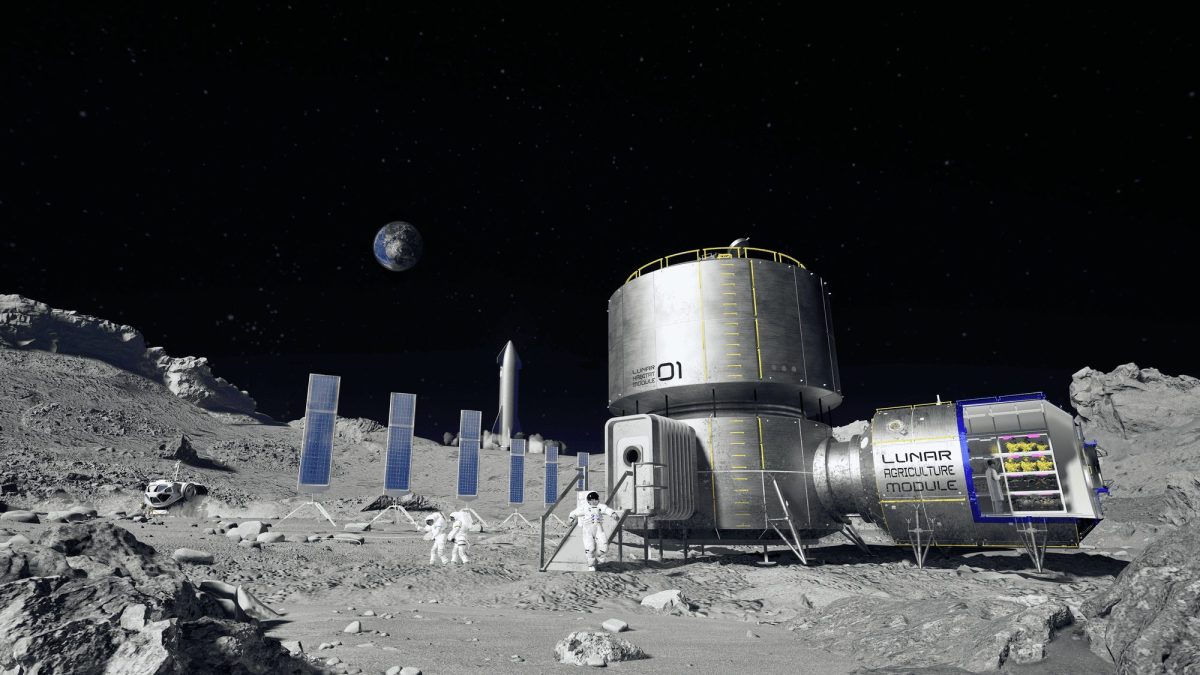
NASA, the Canadian Space Agency (CSA), and the German Aerospace Center (DLR) signed a memorandum of understanding in August 2026. As DLR reports, the document currently concerns only preparatory work on the ground demonstrator of the Lunar Agricultural Module (LAM-GTD). The parties will decide later whether it should be built. If so, the facility is expected to be completed no later than 2032.
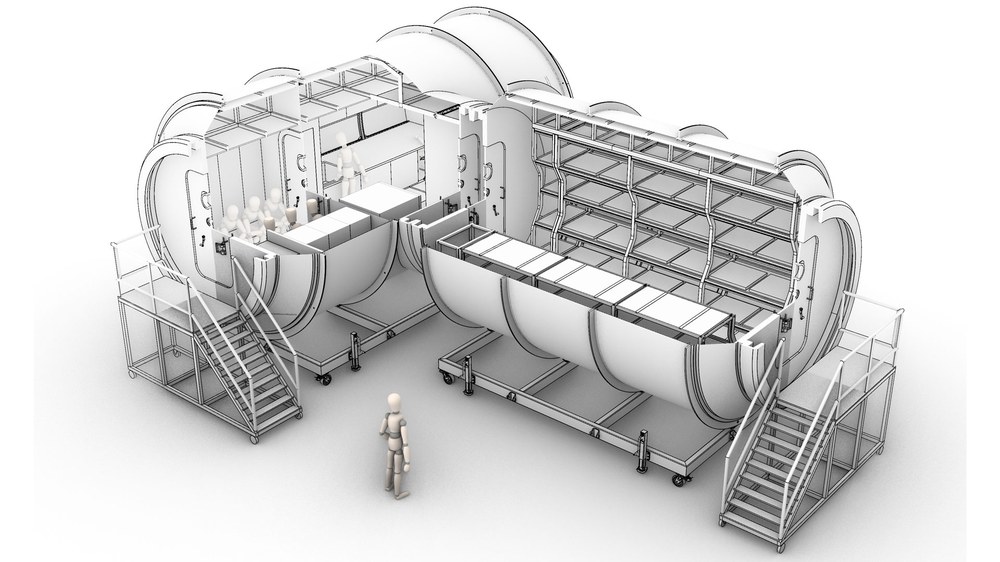
According to the concept, the greenhouse for growing high-density crops will be connected to the crew living module through an airlock chamber that will regulate pressure and gas composition. The crew compartment itself will not be reproduced separately; it will be replaced by the HabSim simulator. Teams from several DLR institutes, NASA, CSA, and the National Research Council of Canada are working on the project.
Reduced-Pressure Conditions
The project is intended to show how plants grow in a controlled environment at pressure lower than that on Earth. Similar conditions are expected at the future base near the Moon’s south pole, which NASA and its partners plan to build under the Moon Base project.
This choice is not accidental. NASA has studied an atmosphere for lunar habitat modules with a pressure of about 56 kPa, slightly more than half of Earth’s 101 kPa at sea level. In a spacesuit, the pressure is even lower, about 30 kPa. The smaller the difference between the pressure inside the module and inside the spacesuit, the shorter the preparation time for going outside, because with a large pressure difference an astronaut must breathe pure oxygen for a long time to avoid decompression sickness.
Researchers will also separately study the exchange of air and water between the greenhouse and the crew compartment. Plants absorb carbon dioxide, release oxygen, and return water to the circulation cycle, so part of the load on life-support systems can be transferred to them.
Experience from Antarctica
DLR has already experimented with growing food in isolation. Beginning in 2018, the EDEN ISS Antarctic greenhouse team spent five years collecting data on equipment reliability, crop yields, microbiology, and food safety.
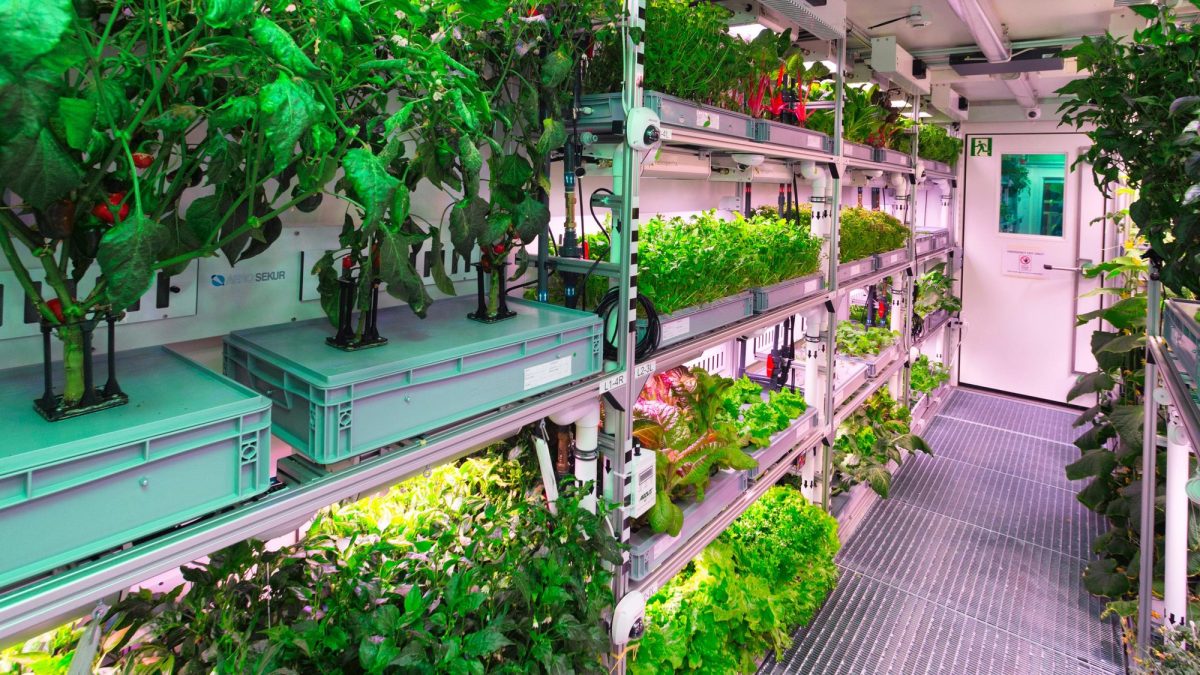
Engineers recorded how much electricity, water, and working time such a facility requires. These resources will be limited on a lunar base, so such figures will be needed already at the design stage.
All of these data were obtained under normal Earth pressure. How plants will behave in the rarefied atmosphere of a lunar base will be shown by the new prototype.
More Than Calories
Fresh greens will not replace astronauts’ usual diet but will supplement it. Long-life packaged rations will continue to form the basis of their food, while plants will add variety.
Their benefits are not limited to nutrition. DLR emphasizes that plants support the psychological well-being of the crew. The EDEN ISS team in Antarctica studied this aspect as well. The farther expeditions travel from Earth, the more important such capabilities will become.
Greenhouses for Deserts
The project’s results may also prove useful on Earth. Specialized greenhouse designs could be suitable for dry desert regions where water must be conserved.
Controlled food cultivation offers another advantage. DLR expects that such technologies could help reduce pesticide use and improve food quality, although the mechanism behind this effect is not explained in the announcement.
