

NASA’s Curiosity rover, which has been operating on the surface of the Red Planet for more than 14 years, has once again surprised the scientific community. While exploring the slopes of Mount Sharp, the rover encountered geological features that scientists had not previously observed in this region.
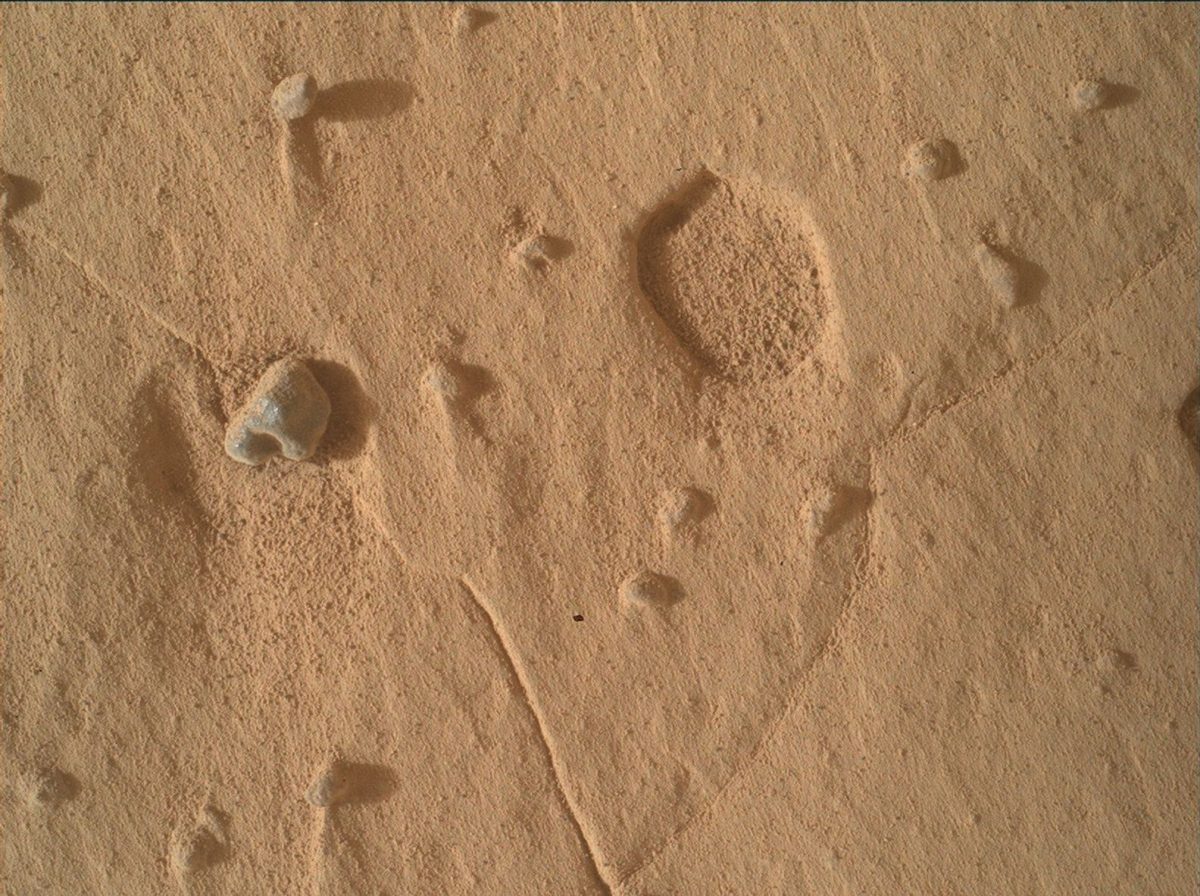
According to Michelle Minitti, deputy principal investigator for the MAHLI (Mars Hand Lens Imager) camera, observations in both of the rover’s working areas revealed “features unlike anything seen before.” The images captured numerous broad yet shallow pits scattered across the rock surface.
What Makes These Depressions Unusual?
Small cavities and craters are common features of the Martian landscape. However, the newly discovered structures differ significantly in their proportions and structure. According to the researchers, the pits are much wider and shallower than those observed previously. In addition, they contain no visible remnants of objects or formations that might once have occupied them or created the depressions.
To study these mysterious structures in detail, the mission team used virtually the entire arsenal of Curiosity’s scientific instruments, including:
- MAHLI — a macro camera for close-up imaging of rocks;
- Mastcam — a multispectral system of the rover’s main cameras;
- ChemCam — an instrument for laser-induced breakdown spectroscopy;
- APX — an alpha-particle X-ray spectrometer.
Initial analysis showed that the material inside these pits contains interesting layers whose chemical composition differs noticeably from the surrounding bedrock.
Scientists are continuing to process the data in order to determine how these pits formed, when they appeared, and what new information they may reveal about Mars’ past.
Previously, we reported on how rocks resembling dinosaur skin were discovered on Mars.
According to NASA