

The search for extraterrestrial life and worlds suitable for it requires extraordinary precision. A new study led by astronomers from the University of Michigan, published in The Astrophysical Journal, has established record sensitivity limits while observing one of the nearest binary star systems to us — 70 Ophiuchi AB (70 Oph AB).
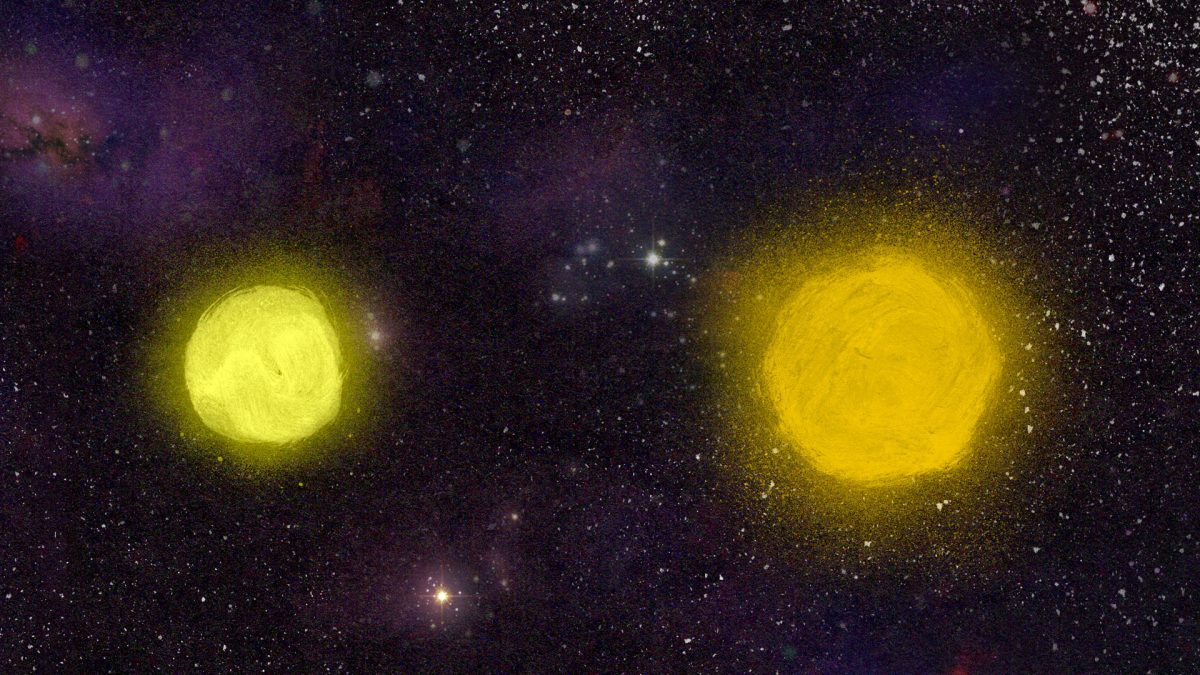
This system has a rich history. In 1855, British astronomer William Jacob claimed to have detected a planet there, making 70 Oph AB the first officially proposed exoplanet-host candidate in the history of astronomy. However, modern calculations have shown otherwise — there is no gas giant with a mass equal to or greater than Jupiter’s in the inner regions of this system.
Although the absence of a large planet may seem disappointing, for scientists it is an important breakthrough. It narrows the search range and opens the way to detecting smaller, potentially habitable planets.
Why Does 70 Oph AB Attract Astronomers’ Attention?
About half of the stellar systems in the Milky Way consist of two or more stars. They are ideal laboratories for understanding how planetary systems form and evolve.
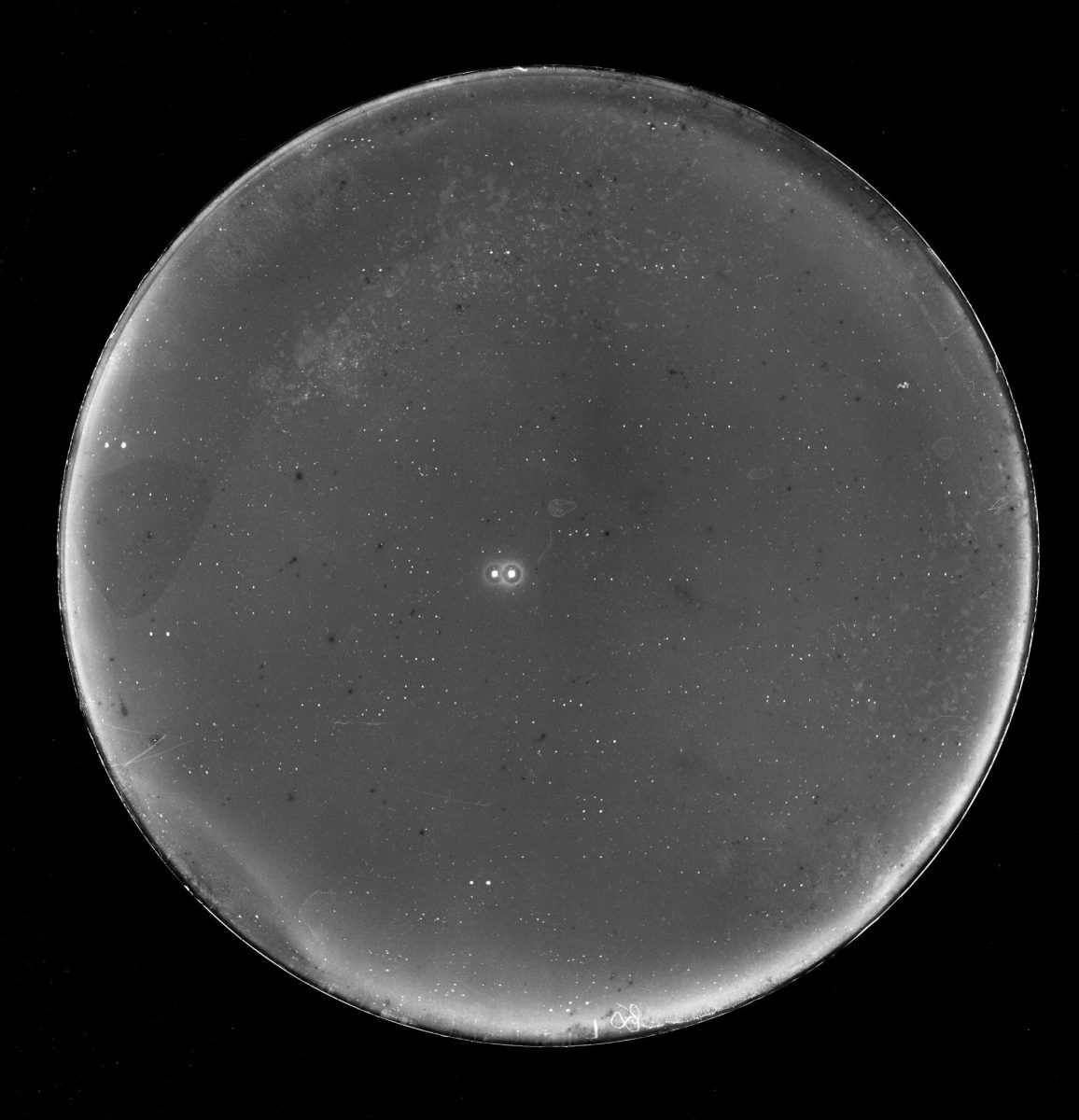
The 70 Oph AB system is located about 16 light-years from Earth. This makes it the third-closest binary system to our Solar System after Alpha Centauri (4.2 light-years) and 61 Cygni (11.4 light-years). Thanks to the extensive set of observations of the orbits of the system’s two stars, 70 Oph A and 70 Oph B are now among the most precisely characterized stellar orbits in science.
The Hypothetical Jupiter Turned Out to Be a Mistake
For 171 years, even the most advanced measurements of the stars’ radial velocities showed periodic “wobbles.” Until now, these deviations had been explained by the gravitational influence of a hypothetical Jupiter.
To settle the issue, the researchers collected a full century of observational data and also conducted new ultra-precise observations using the 6.5-meter Magellan Clay Telescope at Las Campanas Observatory in Chile and the 2.7-meter Harlan J. Smith Telescope at McDonald Observatory in Texas.
The analysis showed that the “wobbles” were caused not by the gravity of a planet, but by processes on the surfaces of the stars themselves — so-called stellar activity, such as spots or prominences. The inner region of the system is completely free of Jupiters: none are present within 5 astronomical units (AU) of 70 Oph A or within 0.5 AU of 70 Oph B.
“This is a cautionary tale about how stellar activity can mimic planetary signals,” Michael Meyer, senior co-author and chair of the University of Michigan’s Department of Astronomy, commented on the study’s findings.
A Chance for Earth-Like Worlds
The absence of massive gas giants does not mean that the system is empty. On the contrary, it leaves the door open for smaller planets the size of Saturn, Earth, or even smaller in the so-called habitable zone. This is the region around a star where surface temperatures allow water to remain liquid.
A precise understanding of the boundaries of the 70 Oph AB system makes it possible to develop optimized search strategies for future missions. The system has already attracted the attention of developers of the prospective SHERA spacecraft, as well as NASA’s future flagship project, the Habitable Worlds Observatory, which will search for signs of life on rocky exoplanets.
Previously, we reported on the TOP 5 misconceptions in space science.
Based on materials from phy.org
