

Neptune possesses a ring system that was officially identified 37 years ago. However, the history concerning the existence of these rings extends significantly further and encompasses a mystery intricately linked to their characteristics
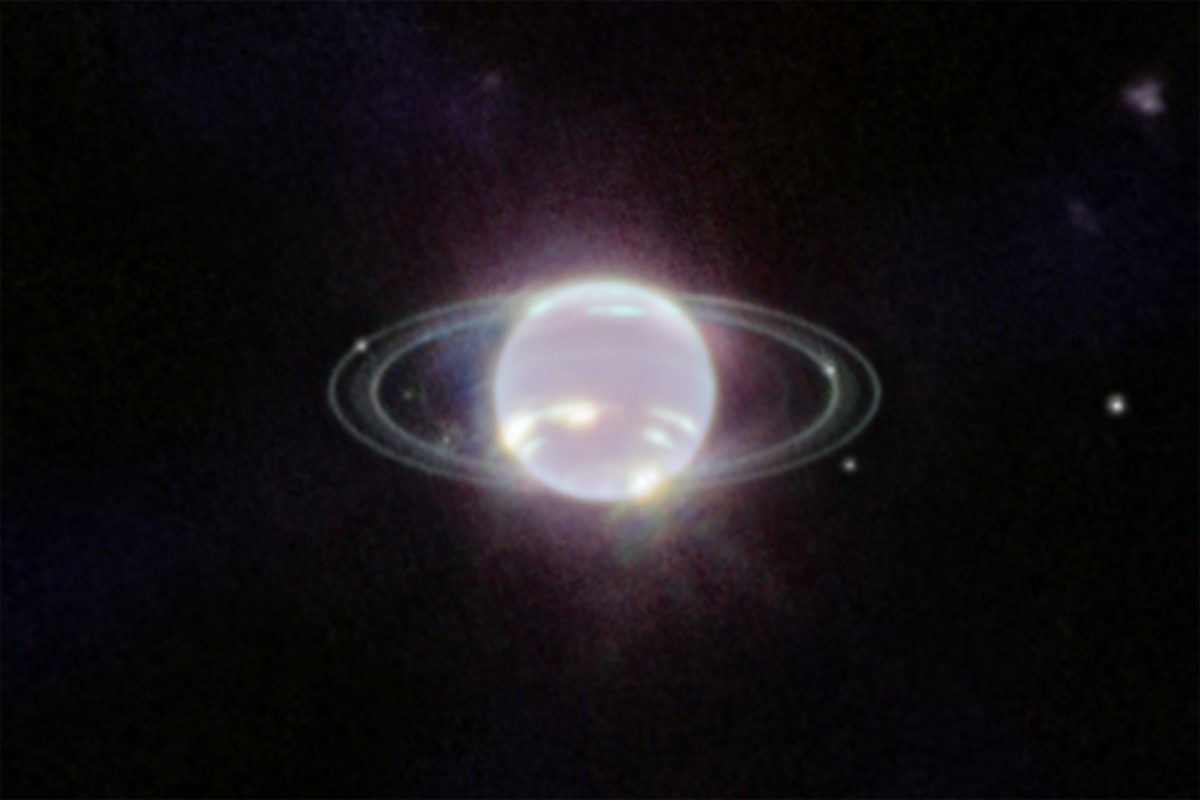
The discovery of Neptune’s rings
Neptune is recognized as the eighth planet from the Sun and is the most distant one in the Solar System. Its average distance from the Sun measures approximately 4.5 billion kilometers. Nonetheless, it is well known that Neptune possesses a ring system. However, evidence of these rings was observed much earlier. William Lassell first reported their discovery in 1846, shortly after the planet itself was identified.
However, it soon became evident that this was simply a consequence of the limitations inherent in the telescope he employed. The rings were neglected for a period of one hundred years. Their potential existence was reconsidered in 1966, when astronomers observed a planetary occultation and observed that it transpired marginally earlier than anticipated.
However, at that time, this report was disregarded and was not revisited until 1977, when Uranus’s rings were subsequently discovered through a similar methodology.
In 1984, astronomers resumed observations of the planet’s occultation of stars and made a noteworthy discovery: the eclipse was observed on one side of the planet, but not on the opposite side. This finding supported the hypothesis that Neptune is encircled by a system of open rings or arcs.
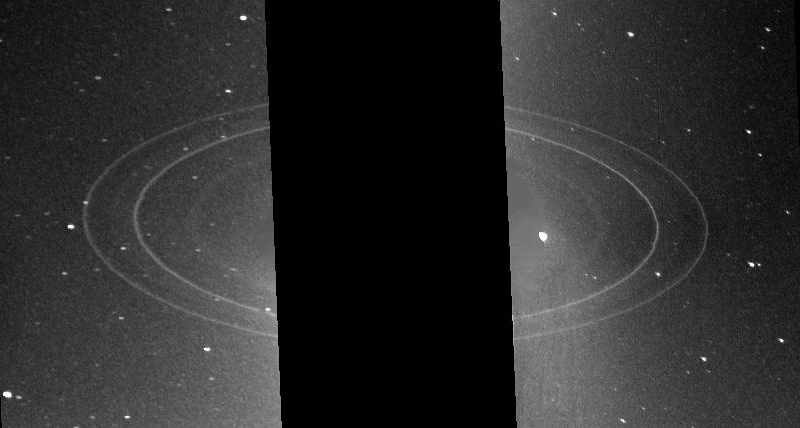
Scientists were unable to comprehend the mechanism behind this phenomenon; however, they were powerless to intervene, as the ground-based telescopes available at the time lacked the capability to observe the rings directly.
It was not until August 22, 1989, that the Voyager 2 spacecraft conducted a flyby of Neptune and, for the first time, captured photographs of Neptune’s rings, thereby confirming their existence. Additionally, it provided further insight by demonstrating that the majority of the planet’s rings are, in fact, closed.
Structure of the rings
Scientists have long debated whether at least one of Neptune’s rings is actually open, as this would strongly contradict orbital mechanics. However, they ultimately concluded that the planet’s four moons, which orbit within the ring system, exert a significant influence on the uniformity of the rings.
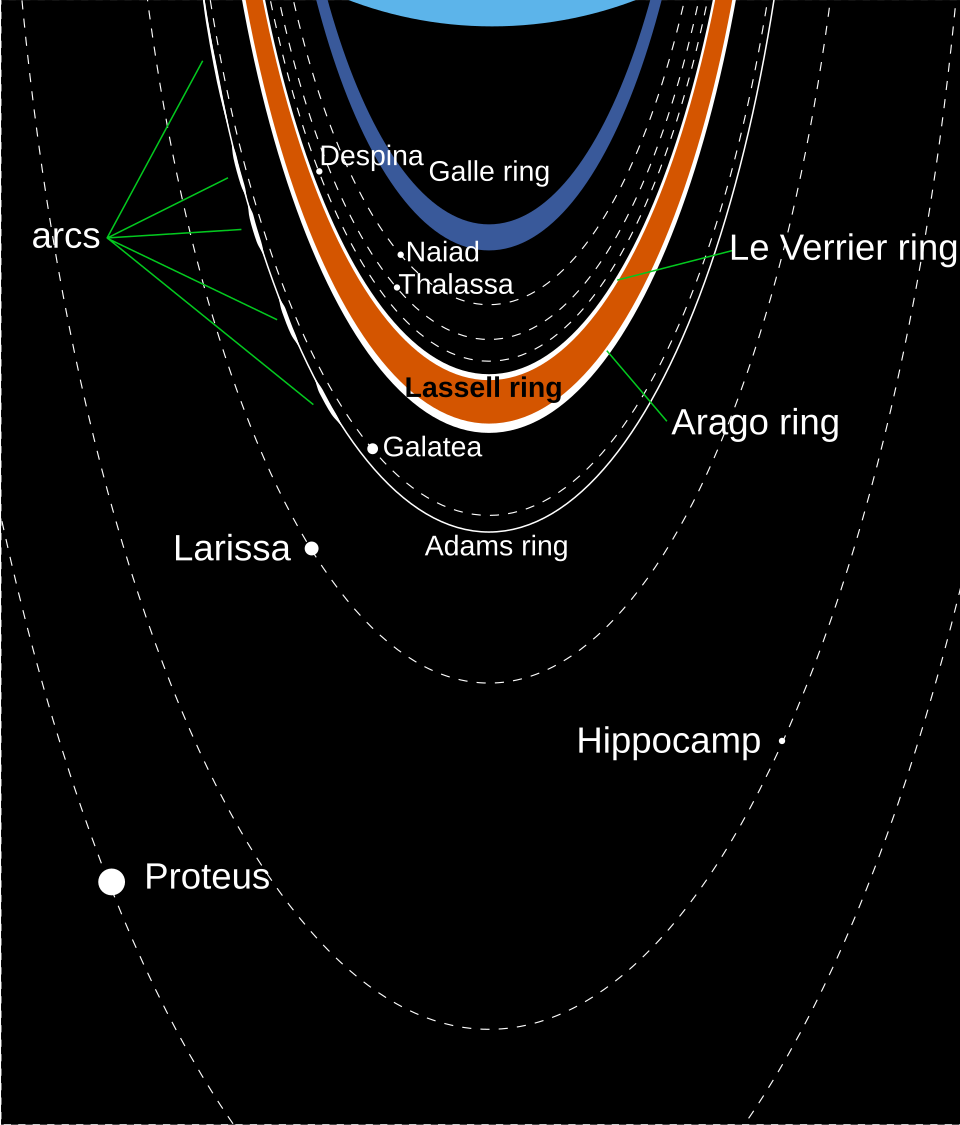
The Galle ring is situated nearest to Neptune’s surface. Its innermost boundary is positioned 41,000 km from the planet, with a width of approximately 2,000 km. Comprising primarily fine dust, it is exceedingly faint.
Subsequently, the narrow and luminous Le Verrier ring is introduced, measuring merely 113 km in width with an outer radius of 53,000 km. Within this ring, in closer proximity to its inner boundary, orbits the Despina moon. Despina exhibits an irregular shape, with an approximate radius of 150 km. Additionally, two other moons, Naiad and Thalassa, are situated in the space between the Galle and Le Verrier rings.
Immediately beyond the Le Verrier ring lies the relatively sparse Lassell ring. Its width is approximately 4,000 km. At its outer edge begins the narrow and luminous Arago ring, which has a width of only 100 km.
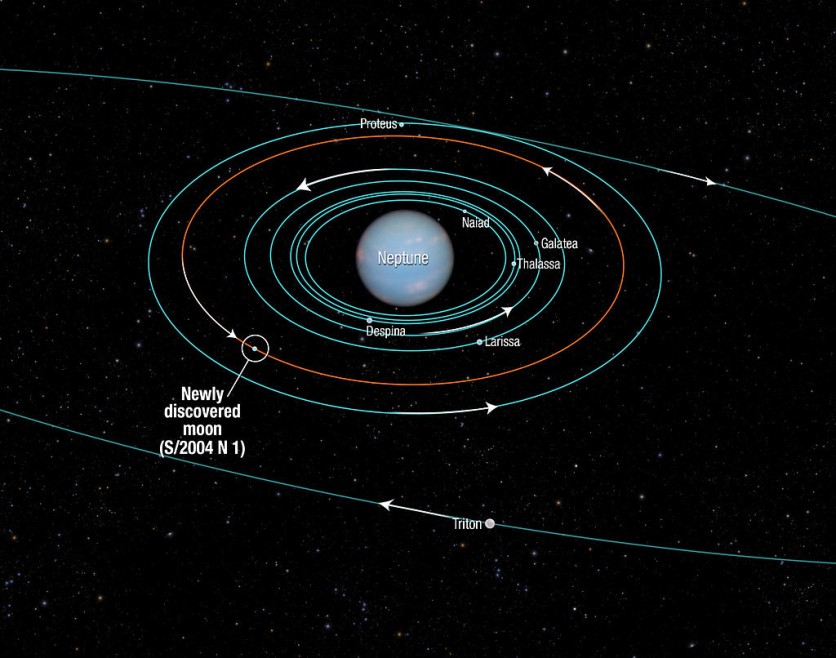
Subsequently, a gap is observed through which a secondary small satellite, Galatea, orbits. This is followed by the most notable object within the system — the Adams ring. The Adams ring is the subject of considerable debate among scientists, as it appears to comprise five distinct arcs. More comprehensive investigations reveal that these arcs are essentially irregularities along the edges of a continuous ring; nonetheless, the structure remains highly unusual.
The mystery of the rings’ origin
Presently, the most significant enigma concerning Neptune’s rings pertains to their origin. The dominant hypothesis posits that the rings emerged significantly after the formation of the planet, as a consequence of the disintegration of one of its natural satellites.
Nevertheless, in actuality, this entire configuration — with multiple distinct rings and medium-sized moons positioned between them — indicates a considerably more intriguing formation process. The Neptune system is abundant with peculiar phenomena. Specifically, some research demonstrates that the various rings originated from different dust fractions and diverse moons.
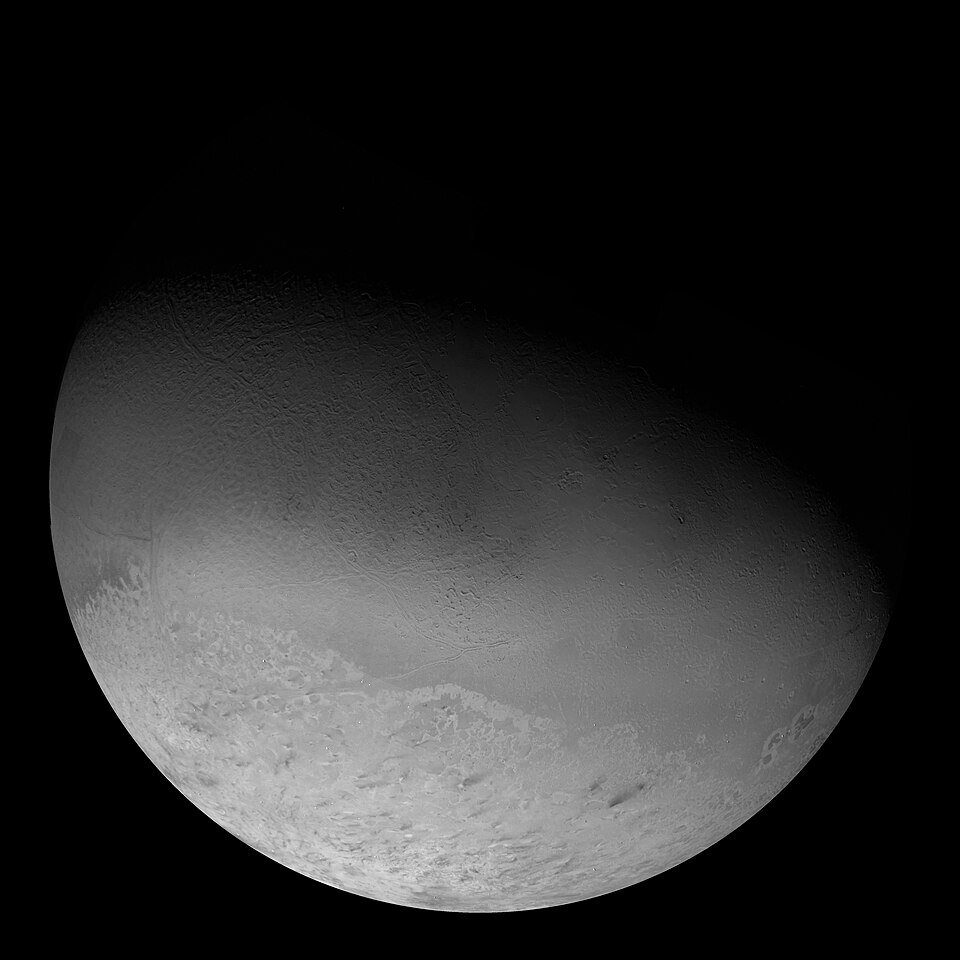
Among the moons themselves, there are no large ones, but there is one that is truly enormous — Triton — though it was clearly once captured by the gravitational pull of the ice giant. Additionally, several small moons in very low orbits exhibit mineral compositions that could only have developed in the presence of substantial liquid water — an element that could never have existed on them previously.
All of this indicates that the fundamental cause of Neptune’s remarkable rings was, indeed, the capture of Triton. Prior to this event, the planet was orbited by several large moons; however, the gravitational influence of the newly arrived Triton generated chaos, resulting in collisions that ultimately led to the current configuration of the system. Whether this hypothesis is accurate remains a subject of ongoing scientific investigation.