

The Pleiades is among the nearest open star clusters to Earth. It is observable within the constellation Taurus, in proximity to its brightest star, Aldebaran. The cluster comprises several thousand stars.
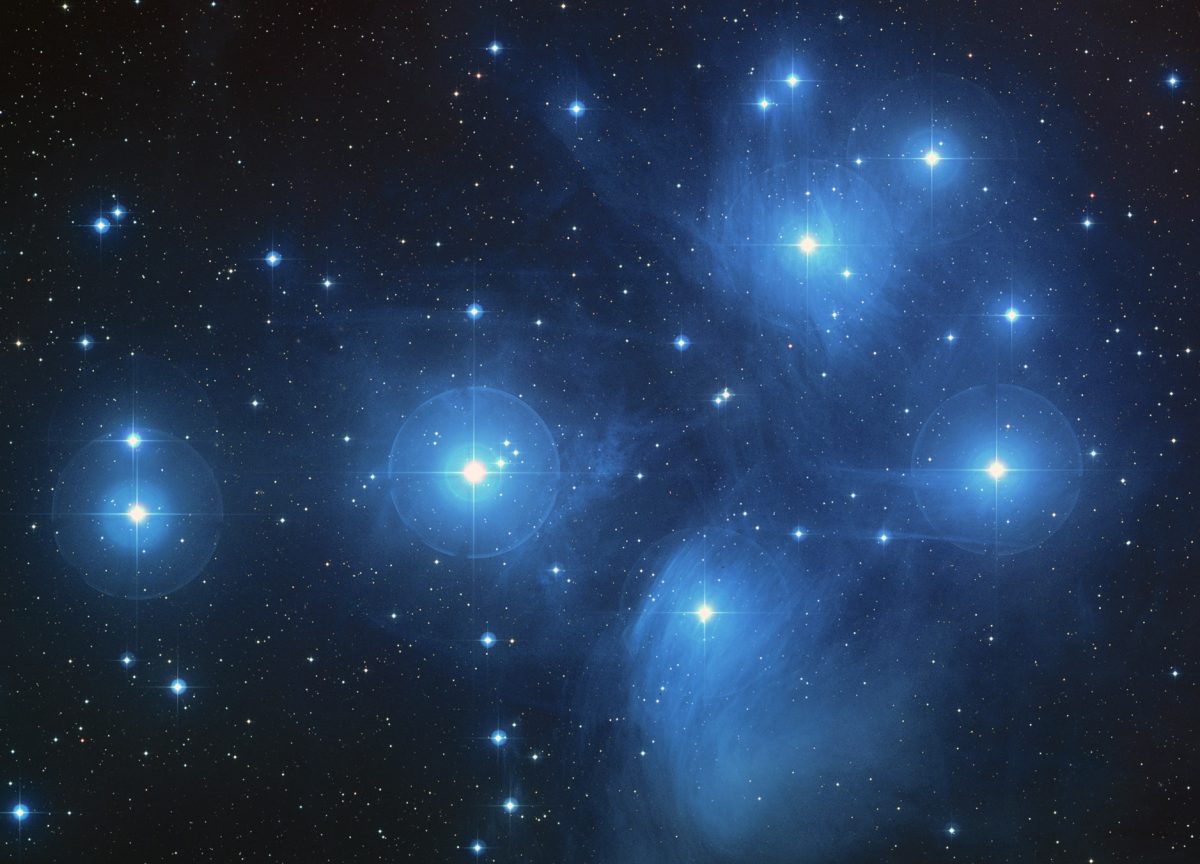
Pleiades
On August 7, 2026, the Moon will transit near the Pleiades star cluster, situated within the constellation Taurus. In the celestial sphere, it manifests as a collection of diminutive stars adjacent to the luminous star Aldebaran. The number of stars discernible to the naked eye is contingent upon the observer’s visual acuity.
This constellation is known by various names. The primary designation pertains to an ancient Greek myth involving the seven daughters of the Titan Atlas, who were subject to harassment by the hunter Orion, who had commenced their pursuit. In order to rescue them, the gods positioned them in the sky.
According to mythological accounts, the Pleiades were believed to comprise seven sisters: Alcyone, Celaeno, Maia, Merope, Asterope, Taygete, and Electra. Consequently, this grouping is commonly referred to as the Seven Sisters. In reality, there are seven stars within this cluster that possess a magnitude brighter than 5. It is important to note, however, that the human eye can theoretically distinguish objects up to a magnitude of 6.5, and within the Pleiades, there are a total of sixteen stars with such brightness levels.
The most luminous star within the Pleiades cluster is Alcyone. Its apparent magnitude is 2.9, indicating that if it were observed as an isolated star, it would not be regarded as exceptionally bright, yet it remains noteworthy. In reality, it is a young, exceedingly hot giant star. Possessing a mass seven times that of our Sun, its radius is eight times greater, and it emits approximately 2,000 times more light.
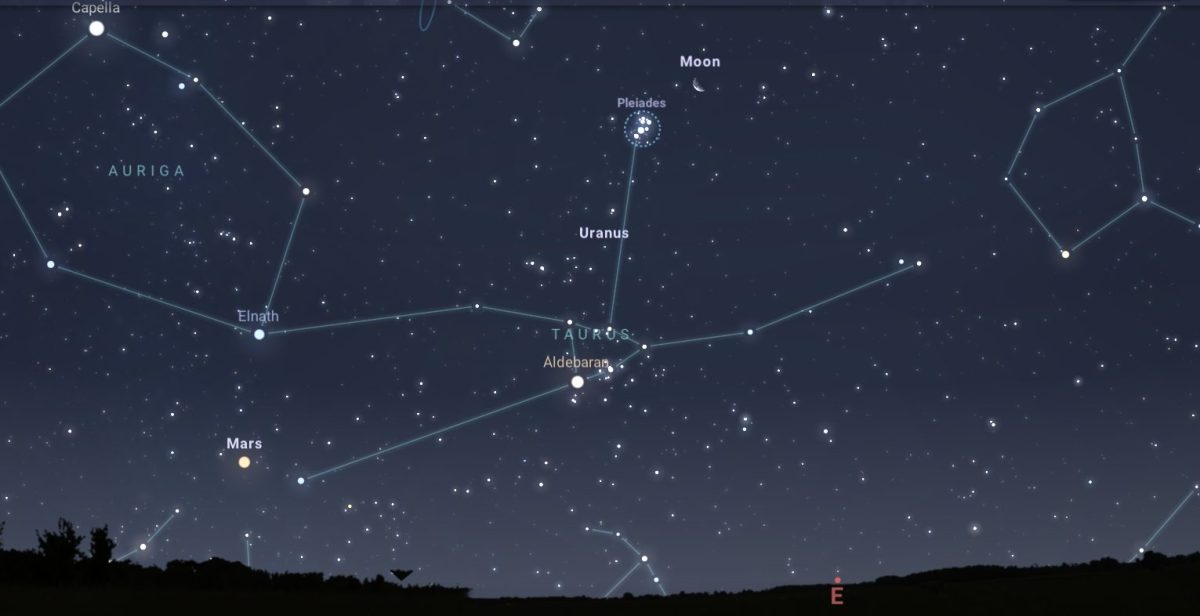
Nevertheless, the objects are extremely densely packed and diminutive, rendering it challenging for the human brain to distinguish individual sources — apart from the fact that numerous light sources are present. This is precisely the origin of the Ukrainian name for this cluster — Stozhary.
An additional intriguing piece of information concerning the name of the Pleiades pertains to Japan. In this country, the star cluster is known by two names. The first is Mutsuraboshi, meaning “six sisters,” which again alludes to the numerous stars present in the cluster; however, it is challenging to determine the precise number of stars.
However, there exists a secondary name, which literally signifies “gathered together” and phonologically resembles “Subaru” in Japanese. This is the designation of the primary telescope at the National Astronomical Observatory of Japan. Notably, the automotive manufacturer bearing the same name is considerably more renowned. The emblem of the company features stars representing the Pleiades.

What insights does astronomy provide regarding the Pleiades?
What is the actual number of stars within a star cluster? Astronomers have identified approximately 1,200 members; however, this figure does not constitute the definitive answer. The core issue resides in the very understanding of the nature of such objects. These clusters originate from a substantial gas and dust cloud that forms collectively, with negligible separation between the constituent stars.
Regarding the Pleiades, this event transpired approximately 115 million years ago; in other words, relative to the Sun, all the stars within this cluster are relatively young. At the time of their initial formation, they were positioned considerably closer to one another than their current separation. Presently, the cluster extends over a distance of 12 light-years.
Scientists have a more sophisticated method than merely counting stars. They utilized data on the cluster’s gravitational effects on adjacent stars and deduced that its total mass is approximately 800 solar masses.
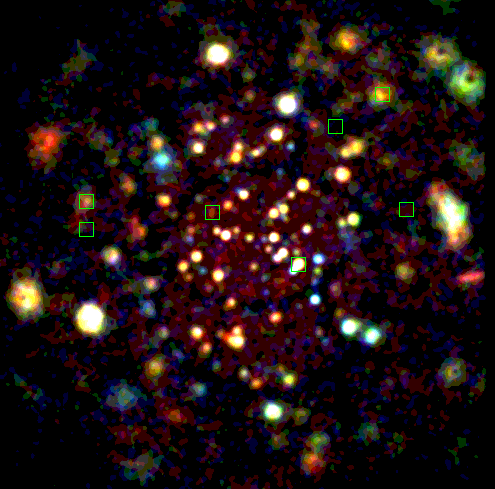
While it may appear that there are fewer than 1,200 stars observable, astronomers possess a comprehensive understanding of the typical distribution ratio of stars of varying masses in the universe. The mass of the Pleiades cluster indicates that it contains approximately 3,000 stars. However, the majority of these are red and brown dwarfs that remain beyond our current observational capabilities.
What is the distance between the Pleiades and us?
The Pleiades constitute one of the nearest open star clusters to our planet. Scientists are nearly certain of this fact; however, the precise distances to individual stars within the cluster or to its center of mass remain uncertain. Typically, different measurement methods produce approximately consistent results, yet this has not been the case here. The initial measurement of the distance to the Pleiades was conducted in 1999 by the Hipparcos space telescope, which estimated it at 125 light-years. Subsequently, in 2004, the same distance was measured using the Hubble Space Telescope, yielding a value of 134.6 light-years. It is noteworthy that the Hipparcos instrument was specifically designed for astrometric studies, whereas the Hubble was not primarily intended for such research. This discrepancy instigated extensive discussions spanning two decades, which have only recently been resolved.
The fact is that in 2009, scientists reexamined the Hipparcos data and concluded that they had been wrong — but not in the way everyone had expected. The distance to the Pleiades turned out to be approximately 120 light-years, meaning that the difference between the two measurements had actually increased.
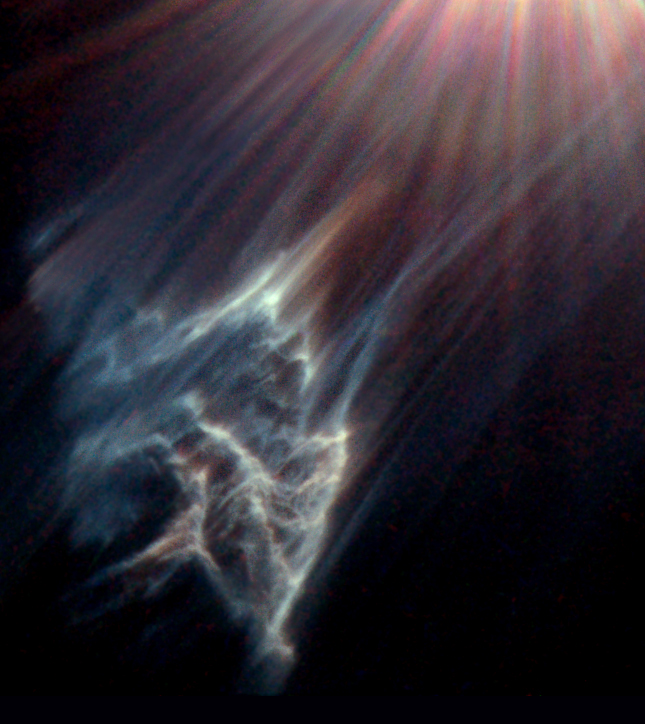
In 2012, a subsequent analysis revealed that a distinctive characteristic of the cluster itself might have led to substantial inaccuracies in the measurement, and that the actual distance to it was determined to be 126 or 132 light-years — values that align more closely with those reported by Hubble, yet still diverge from his original measurements.
In 2014, a novel measurement employing ultra-long baseline interferometry facilitated the determination of a revised figure — 136 light-years. Data obtained from three releases of the Gaia space telescope — in 2016, 2018, and 2023 — ultimately resolved the ongoing discourse. These releases provided distance estimations of 134, 136.2, and 135.74 light-years, respectively. Consequently, this range is deemed to be the most accurate approximation of the true distance.
The future of the Pleiades
An additional intriguing aspect of the Pleiades pertains to their future development. Similar to other open star clusters, they are maintained by gravitational forces that are progressively diminishing as a result of their slight spatial separation. The increasing distance between the stars correlates with a reduction in these gravitational forces. Empirical research indicates that the 3,000 stars presently within the Pleiades constitute merely one-third of their original stellar population.

Furthermore, it is important to bear in mind that the most massive stars within a cluster undergo rapid evolution. Within a span of only a few hundred million years, many of these stars will reach the end of their life cycles, becoming white dwarfs, neutron stars, or black holes. The remaining stars will progressively diminish and fade into the expanses of space.
In about 600 million years, only a quarter of all the stars currently present in the cluster will remain. And in a billion years, their number will drop to just a few dozen. In fact, there are quite a few such groups of stars that are no longer bound together by gravity but continue to move in more or less the same direction around us. The Sun itself was once born in such a cluster.
In any event, the Pleiades continue to be among the most captivating celestial objects visible to all observers in the night sky. Therefore, do not miss the opportunity to observe them.
