

Could the surface of our Moon be hiding evidence of extraterrestrial intelligence? A group of researchers from the SETI project believes that our natural satellite could serve as a giant repository for fragments of technology left behind by alien civilizations. In their paper for the International Journal of Astrobiology, the scientists suggest that the search should focus not only on radio signals, but also on physical traces — microscopic technosignatures.
Cosmic “Microplastics” from Distant Worlds
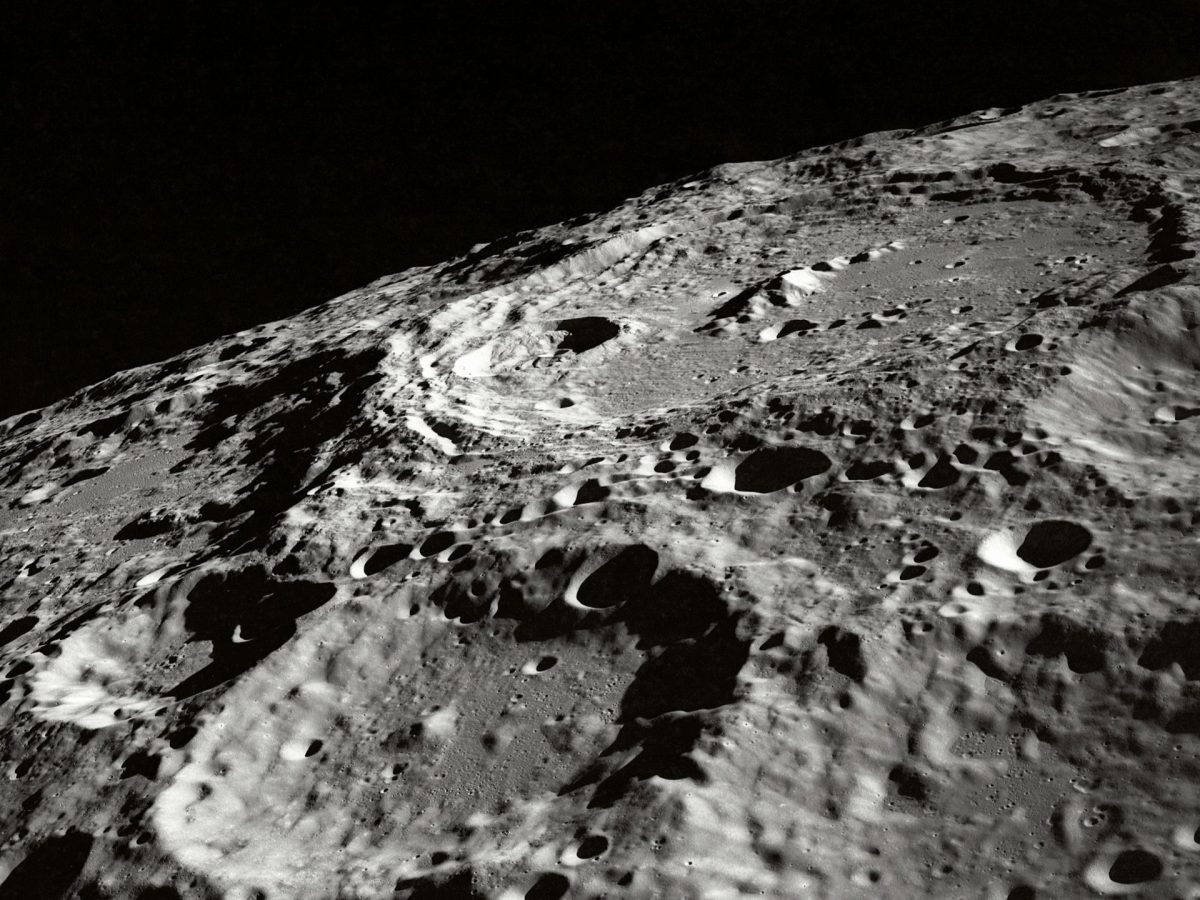
Imagine an advanced extraterrestrial civilization that built city-sized orbital stations, solar farms around stars, or gigantic mines. Over time, under the influence of entropy, radiation and micrometeorites, this infrastructure would deteriorate. Tiny fragments only a few microns across could break away and drift through space, much like microplastics in Earth’s oceans.
“If any other technological civilization has ever existed in our galaxy, then the hypothesis that some of its particles may be present on the Moon is entirely reasonable,” says study leader Lewis Pino of the SETI Institute and Birkbeck, University of London.
The Legacy of a Ukrainian Scientist
The idea of searching for artifacts on Earth’s satellite is based on the work of Ukrainian researcher Oleksii Arkhipov, who proposed as early as the 1990s that the Moon could collect interstellar dust of artificial origin. In honor of the Ukrainian scientist, the authors of the new study named such hypothetical microparticles “Arkhipov particles.”
The scientists also considered the possible existence of “Bracewell particles” — tiny probes or autonomous machines that extraterrestrials might have sent out to explore the Universe, based on a concept proposed by physicist Ronald Bracewell in the 1960s.
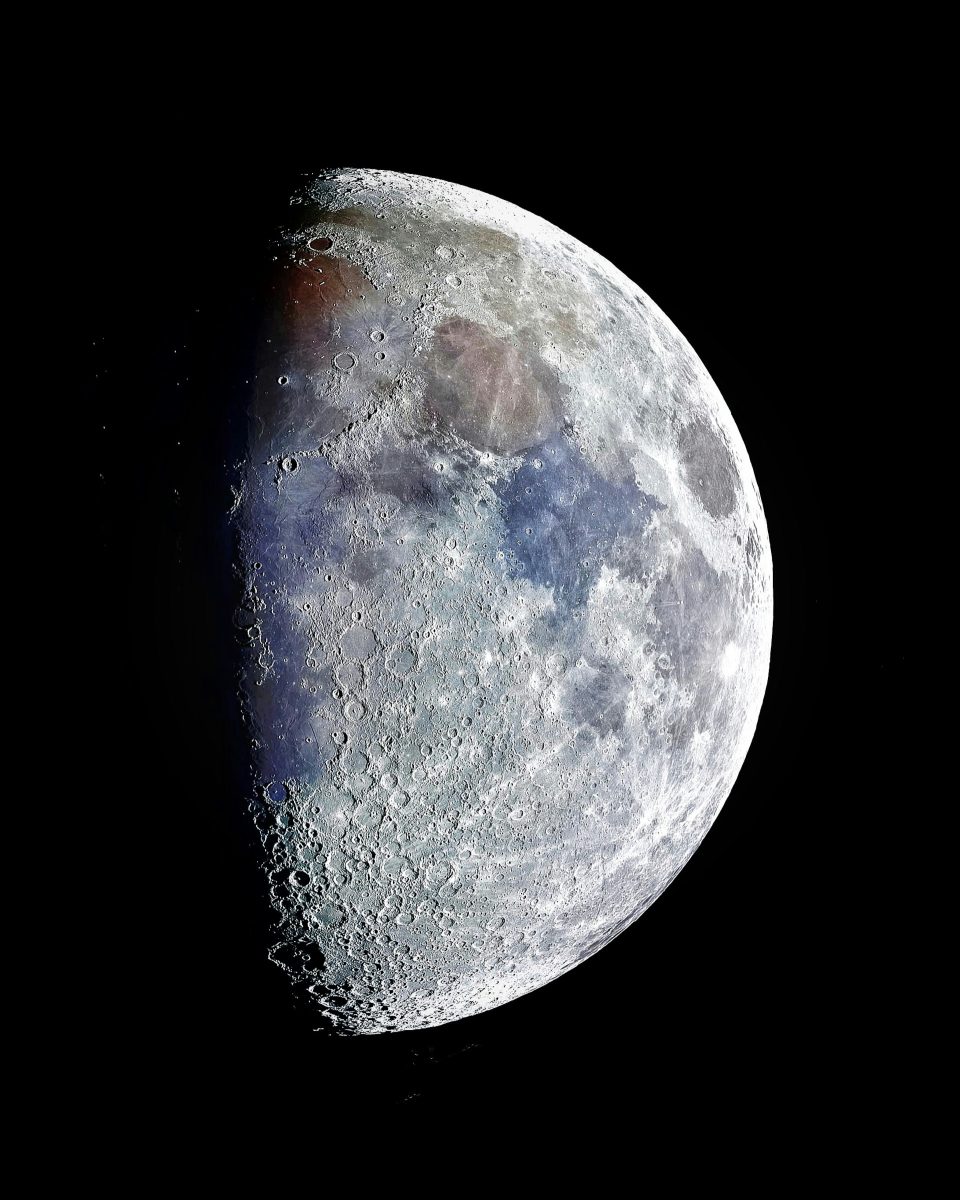
The team mathematically modeled the motion of such objects through the Galaxy and showed that their trajectories could indeed intersect the Solar System, while the particles themselves could survive impact with the lunar surface.
How Do You Find a Needle in a Cosmic Haystack?
Testing this hypothesis is difficult but entirely feasible as a scientific task. The researchers propose that future lunar missions, including NASA’s Artemis program, sift through approximately 1 m³ of lunar soil. Special analyzers would then examine the material for artificial metallic or chemical compounds.
The main challenge is distinguishing extraterrestrial materials from human-made debris, because decades of space exploration have left a considerable amount of terrestrial hardware on the Moon, including the Soviet Luna 9 probe. Precise analysis of isotopic and chemical composition could make it possible to tell them apart.
The scientists acknowledge that the chance of finding even a single extraterrestrial technosignature is extremely small. However, confirmation of even one “Arkhipov particle” would provide a definitive answer to one of humanity’s greatest questions — and prove that the Universe is inhabited by life.
Previously, we reported on how astronomers criticized a project searching for extraterrestrial civilizations.
according to The New York Times
