

Have you ever pondered the origins of the space age? It is widely recognized that it commenced with a vigorous rivalry between the USSR and the United States. However, what was the nature of this rivalry when examining the specific spacecraft that were launched into space prior to 1960? Let us examine the first ten satellites to be launched into orbit.
The commencement of the space race
It is widely acknowledged that the first artificial Earth satellite was launched on October 4, 1957, marked by its characteristic “beep-beep-beep,” which initiated the space race between the USSR and the United States. Nonetheless, when examining this rivalry, it is common for individuals to immediately focus on Yuri Gagarin’s flight subsequent to this event, often only briefly referencing Belka and Strelka. Such discussions may inadvertently create the impression that no significant activities occurred in space between 1957 and 1961.
In fact, it was during this period that the most intense “duel” between the two countries occurred, as early as 1962, when the United Kingdom joined them, followed by other nations that subsequently launched their own satellites.
The first ten satellites were solely entrusted to two nations: the United States and the Soviet Union. Their launches occurred prior to 1960, representing a span of merely fifteen months. How did this development transpire?
1. Sputnik 1
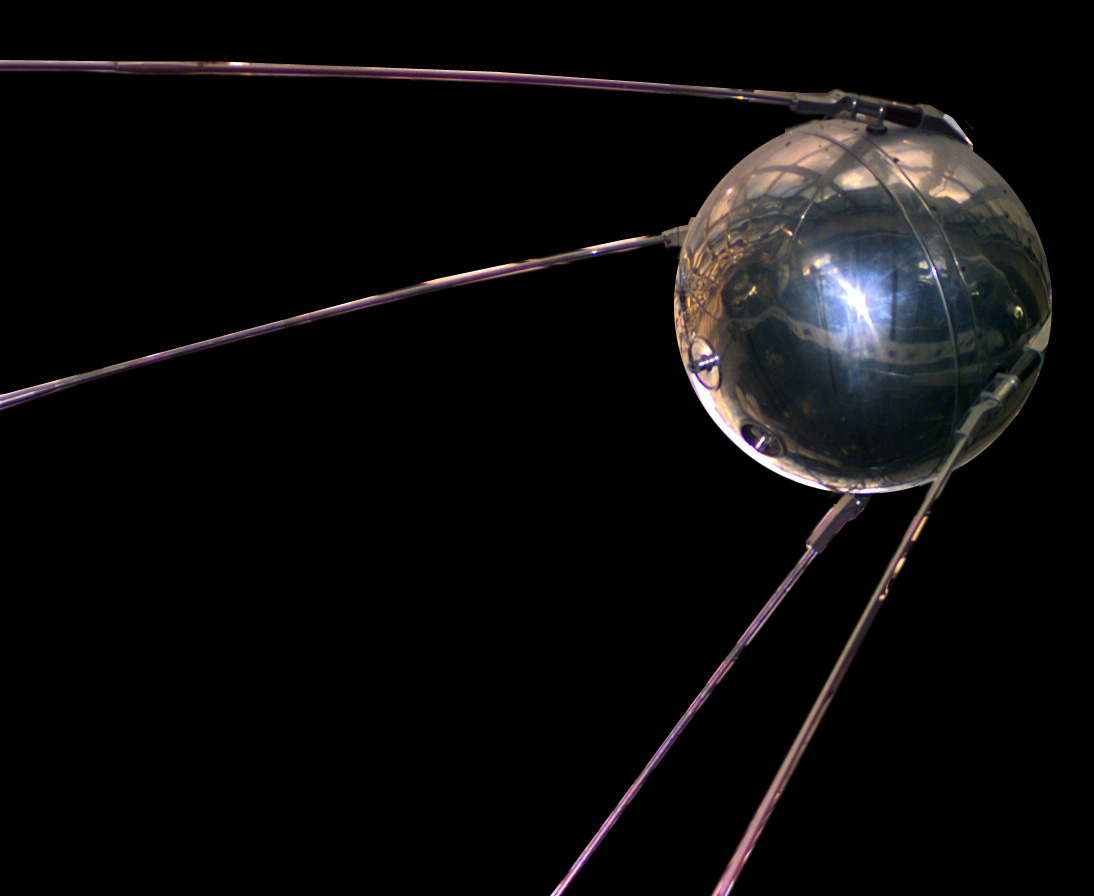
The inaugural satellite, deployed into orbit on October 4, 1957, generated a significant global sensation, which at times escalated into outright panic. However, it was, in essence, a remarkably simple apparatus — a metal sphere measuring 58 centimeters in diameter, assembled from two hemispherical halves.
Inside, only batteries and a transmitter were present, while two pairs of antennas extended from the exterior — 2.4 m and 2.9 m long — contributing to the spacecraft’s distinctive appearance. “Sputnik 1” remained in orbit until January 4, 1958, lasting approximately three months.
2. Sputnik 2
The second successful satellite in Earth’s orbit also belonged to the USSR. It was launched just one month after the first — on November 3, 1957. It was already much more complex than the first and was shaped like a cone, 4 meters tall and weighing 508 kg.
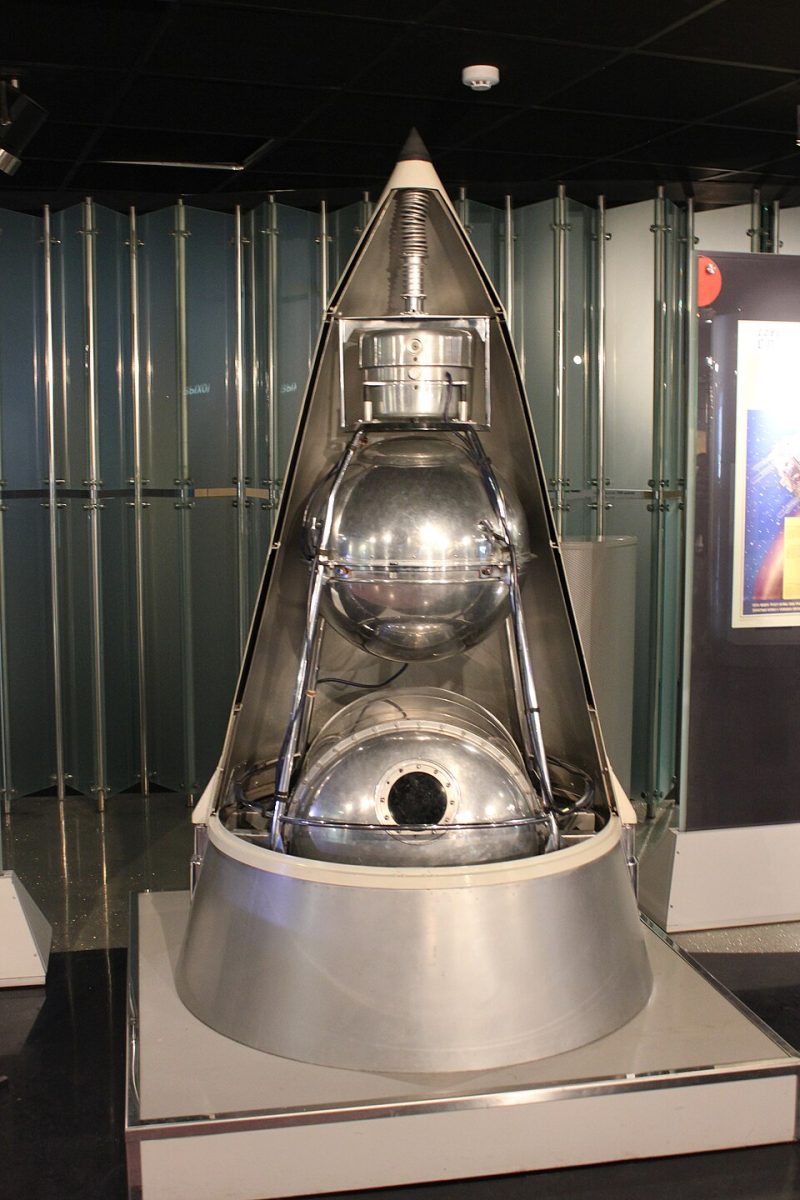
“Sputnik 2” encompassed more than merely a transmitter and scientific instruments. Within it was a diminutive container furnished with an air regeneration system. Enclosed therein was a passenger — a dog named Laika. She became the first living organism to journey beyond Earth.
Regarding Laika, her mission was inherently irreversible from the outset. Serhii Korolov, driven by the Soviet leadership’s strategic imperative to maintain dominance in the space race, consented to this mission despite the absence of a return system to Earth. Consequently, the plan was to euthanize the dog with a lethal injection prior to re-entry into the Earth’s atmosphere. However, this measure was ultimately unnecessary. During the initial orbits, the temperature within the compartment increased precipitously, leading to Laika’s death due to hyperthermia.
3. Explorer-1
On February 1, 1958, the United States successfully launched its inaugural satellite, which became the third spacecraft to orbit the Earth. It was very compact: the mass of the fourth stage was about 13.9 kg, and 8.3 kg was for scientific instruments. A feature of the design was that the satellite was integrated with the fourth stage of the Juno I rocket, which actually became part of the orbiting vehicle. In total, Explorer-1 weighed only 21.5 kg.
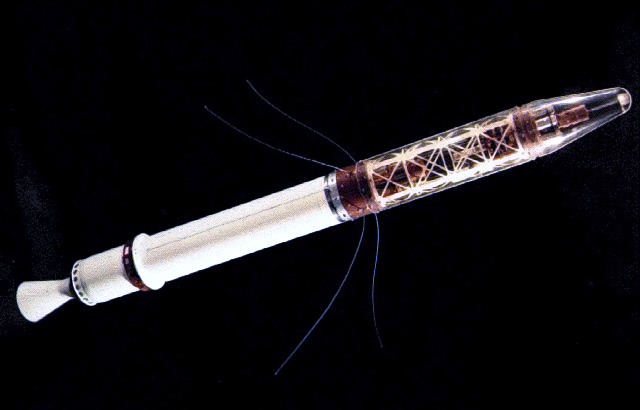
Explorer-1 was launched into a much higher orbit than its Soviet predecessors. Its apogee reached approximately 2550 km. On board were not only a transmitter, but also scientific instruments – a micrometeorite detector and a Geiger counter for measuring the flow of high-energy charged particles. It was the latter that provided the first data that led to the discovery of the Earth’s radiation belts, which were later called the Van Allen belts.
Thanks to its high orbit, Explorer-1 remained around the Earth much longer than the Soviet ones. However, it transmitted scientific data for only a few months: the last signal was received on May 23, 1958. The device itself remained in orbit for almost 12 more years and burned up in the atmosphere on March 31, 1970, having made more than 58 thousand revolutions around the Earth.
4. Vanguard-1
Following the successful deployment of Explorer-1, NASA proceeded to launch its second satellite. Vanguard-1, one of the smallest early satellites, was launched on March 17, 1958, becoming the second American satellite and the fourth to orbit the Earth. It was an extremely compact device—an aluminum sphere about 6.5 inches (16.5 cm) in diameter with six small rod antennas. Vanguard-1 weighed only 1474 g.
Unlike Explorer-1, Vanguard-1 did not have a complex set of scientific instruments. It carried two radio transmitters, and changes in the frequency of their signals made it possible to estimate the temperature of the device. The device was made compact due to the fact that in the era of the dominance of vacuum tubes, semiconductor electronics were used on it for the first time. The main scientific result of the mission was accurate geodetic measurements: the satellite’s movement made it possible to better determine the shape of the Earth and to find that it deviates somewhat from a perfect sphere.
Vanguard-1 was the world’s first solar-powered satellite. Despite losing contact in 1964, it is still in orbit and remains the oldest artificial object still orbiting Earth.
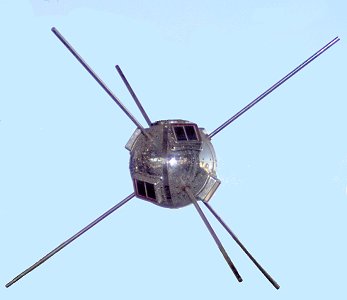
However, what truly made Vanguard-1 remarkable was its orbit. It had an apogee of 3,969 km and a perigee of 654 km. It was precisely because of this orbit that the satellite remained in orbit even after it ceased to function. It remains the oldest man-made object in space to this day.
5. Explorer-3
Shortly following the triumph of Vanguard-1, Explorer-3 was launched into space on March 26, 1958. Its design was identical to that of the initial successful spacecraft in the series; in fact, it was not even separated from the rocket’s upper stage.
With an apogee of 2,799 km and a perigee of 186 km, it remained in orbit for a comparatively brief duration — 93 days. The primary accomplishment of Explorer 3 was to confirm the presence of Earth’s radiation belts. Furthermore, this mission enabled the United States to assume a leading position in the number of spacecraft successfully launched into orbit.
6. Sputnik 3
Subsequently, the Soviet Union once again endeavored to surpass the United States and even to forge ahead. On May 15, 1958, the launch of “Sputnik 3” into space was undertaken. In many respects, it bore a resemblance to “Sputnik 2.” It was fundamentally the same 3.75-meter-tall cone weighing 1,327 kilograms. However, instead of a canine, it housed a substantial array of scientific instruments.
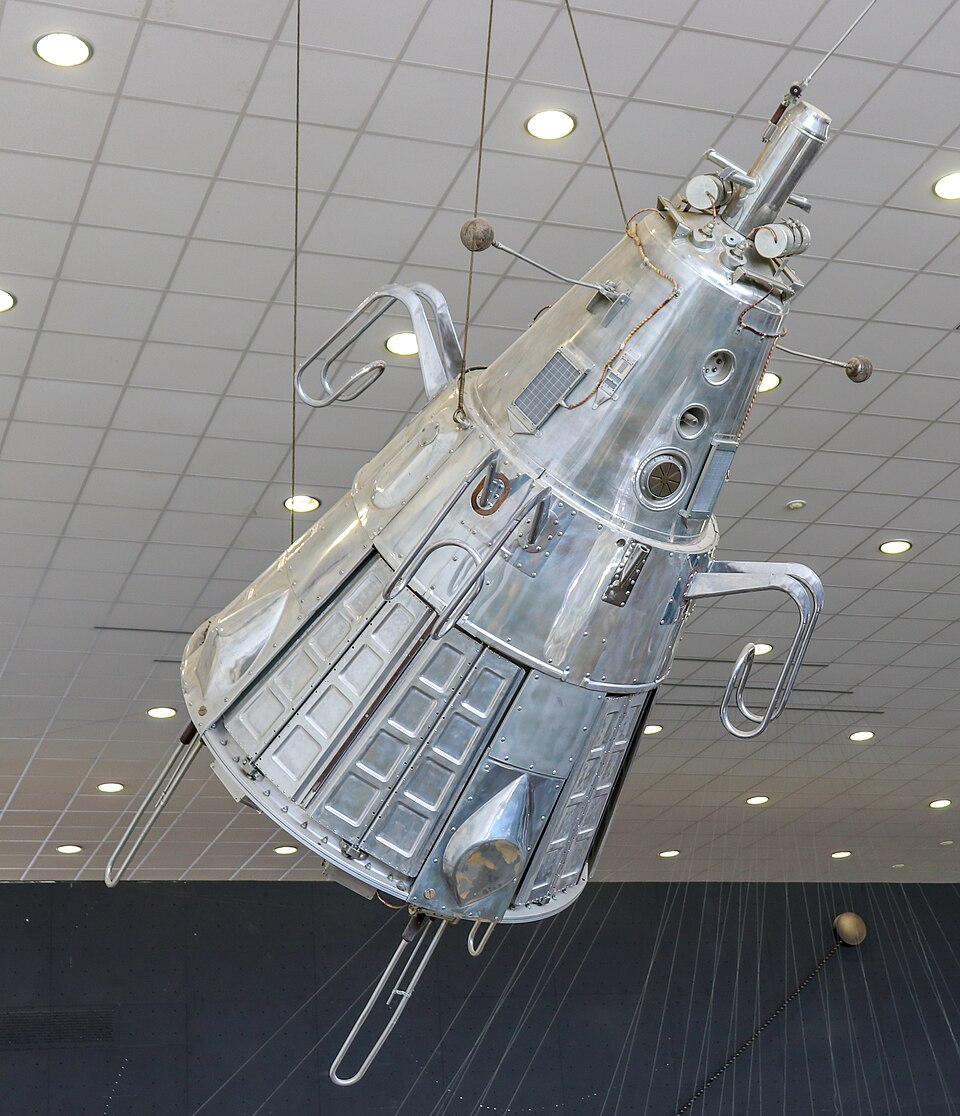
“Sputnik 3” entered orbit with an apogee of 1,864 km and a perigee of 217 km, commencing the investigation of atmospheric composition at high altitudes, the Earth’s magnetic field, and high-energy particles originating from deep space. Notably, it was on this satellite that a solar flare was first documented outside Earth’s atmosphere.
Sputnik 3 was also the first spacecraft to be equipped with experimental solar panels. Consequently, it was able to maintain operational status even after its chemical batteries decommissioned. The spacecraft ultimately ceased operation on April 6, 1960.
7. Explorer-4
On July 26, 1958, the United States reestablished its leading position in the number of successfully launched spacecraft, with the launch of Explorer-4. Its design closely resembled that of preceding spacecraft in this series; however, it was equipped with a significantly more advanced system dedicated to the study of cosmic radiation. This system comprised up to four detectors.
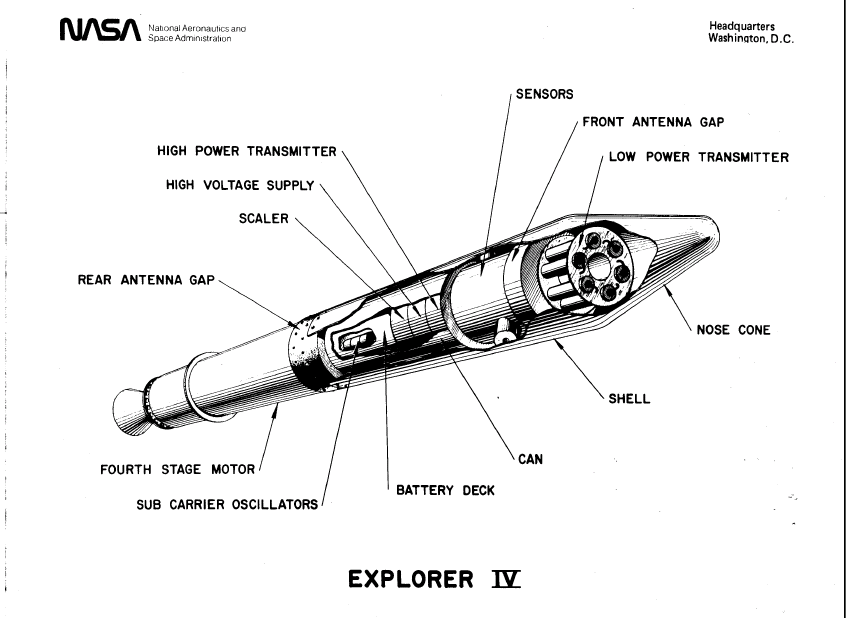
This device made it possible to study in detail the high-energy particles in the Earth’s radiation belts, including electrons and protons. Communication with Explorer 4 was maintained until October 5, 1958, after which it stopped transmitting scientific data. The device itself remained in orbit for almost ten more months, leaving it on July 23, 1959.
8. Pioneer-1
On October 11, 1958, the United States launched a spacecraft into space that, strictly speaking, should not have been included in this list. It was the Pioneer 1 space probe, designed to study the Moon.
Formally, the launch is regarded as successful, as the rocket did not experience an explosion during liftoff. However, it did not attain the planned trajectory. In actuality, it was a suborbital flight — a notably high and prolonged journey. Achieving an apogee of 113,854 km (equivalent to nearly one-third of the distance to the Moon), the flight persisted for a total of 43 hours.
This implies that during the Pioneer 1 mission, Earth completed more than one full rotation, rendering the question of whether to consider it equivalent to a satellite a subject of debate. Nonetheless, the mission was not without significance. For the first time, a point so distant from Earth was reached, enabling scientists to gather valuable information about the environment in that region, particularly concerning the presence of radiation hazardous to humans.
9. Pioneer-3
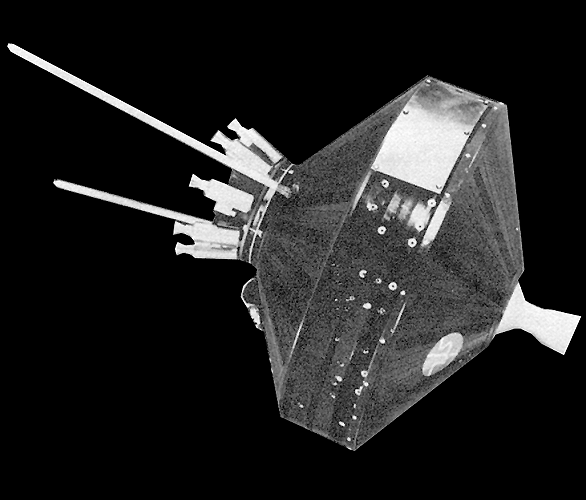
On December 6, 1958, the Pioneer 3 spacecraft was launched toward the Moon. Once again, it is challenging to definitively classify the launch as either a success or a failure. The rocket did not explode; however, it failed to deliver the spacecraft to its intended destination.
The event ultimately culminated in a 38-hour parabolic flight conducted at an altitude of 102,000 km. The classification of the craft as a satellite remains a subject of debate. However, the duration of the flight was sufficient to demonstrate the presence of a second radiation belt encircling Earth.
10. SCORE
Ultimately, on December 18, 1958, the United States inaugurated the Signal Communications by Orbiting Relay Equipment (SCORE) mission. TIt was the world’s first active communications satellite. It carried two experimental transceivers that could provide a single voice channel. SCORE also transmitted a recorded Christmas address by U.S. President Dwight Eisenhower, the first voice message transmitted via satellite. The spacecraft remained in orbit for about 34 days, 13 of which were spent as an active repeater.
