

Imagine being on a planet whose cosmic shield suddenly stops working. Around 41,000 years ago, Earth experienced precisely such a dramatic event—a complete reversal and collapse of its geomagnetic field. Today, thanks to data from the European Space Agency’s (ESA) Swarm satellite mission and studies of ancient rocks, geophysicists have translated this process into sound.
A Symphony of Geomagnetic Chaos
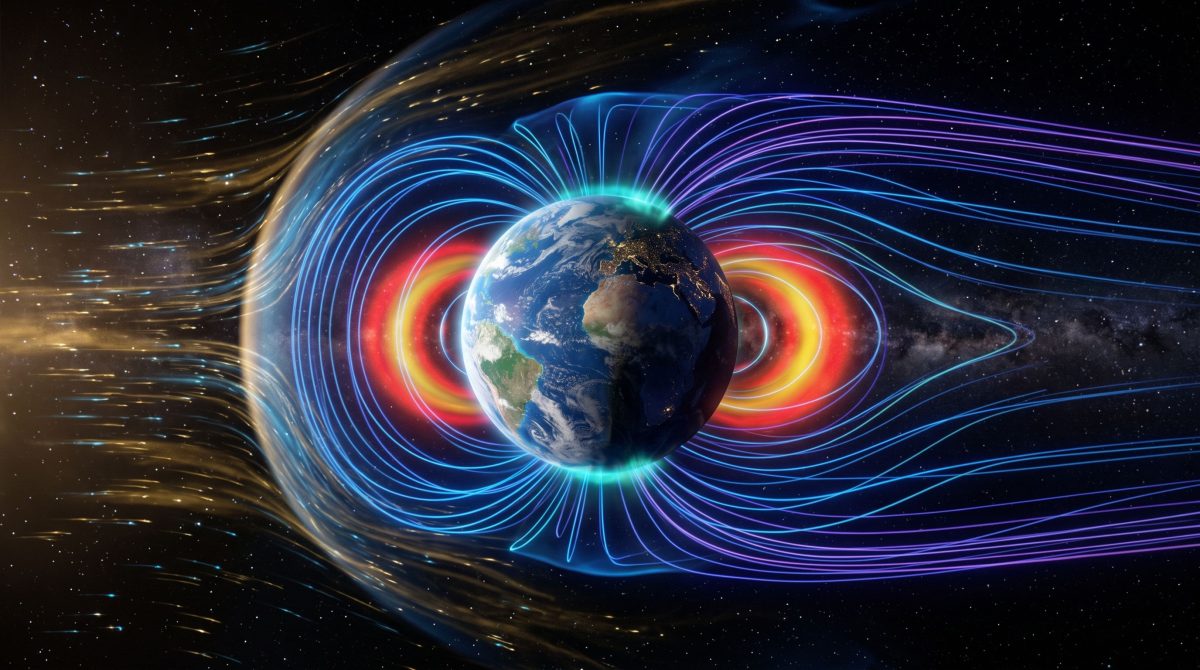
The process of converting numerical data into sound resembles composing music from a score written by the planet itself tens of thousands of years ago. To convey the magnetic field’s convulsions and gradual weakening, scientists supplemented the graphs with the sounds of cracking wood and the ominous rumbling of rocks. It sounds nothing like a peaceful, comfortable home for living organisms.
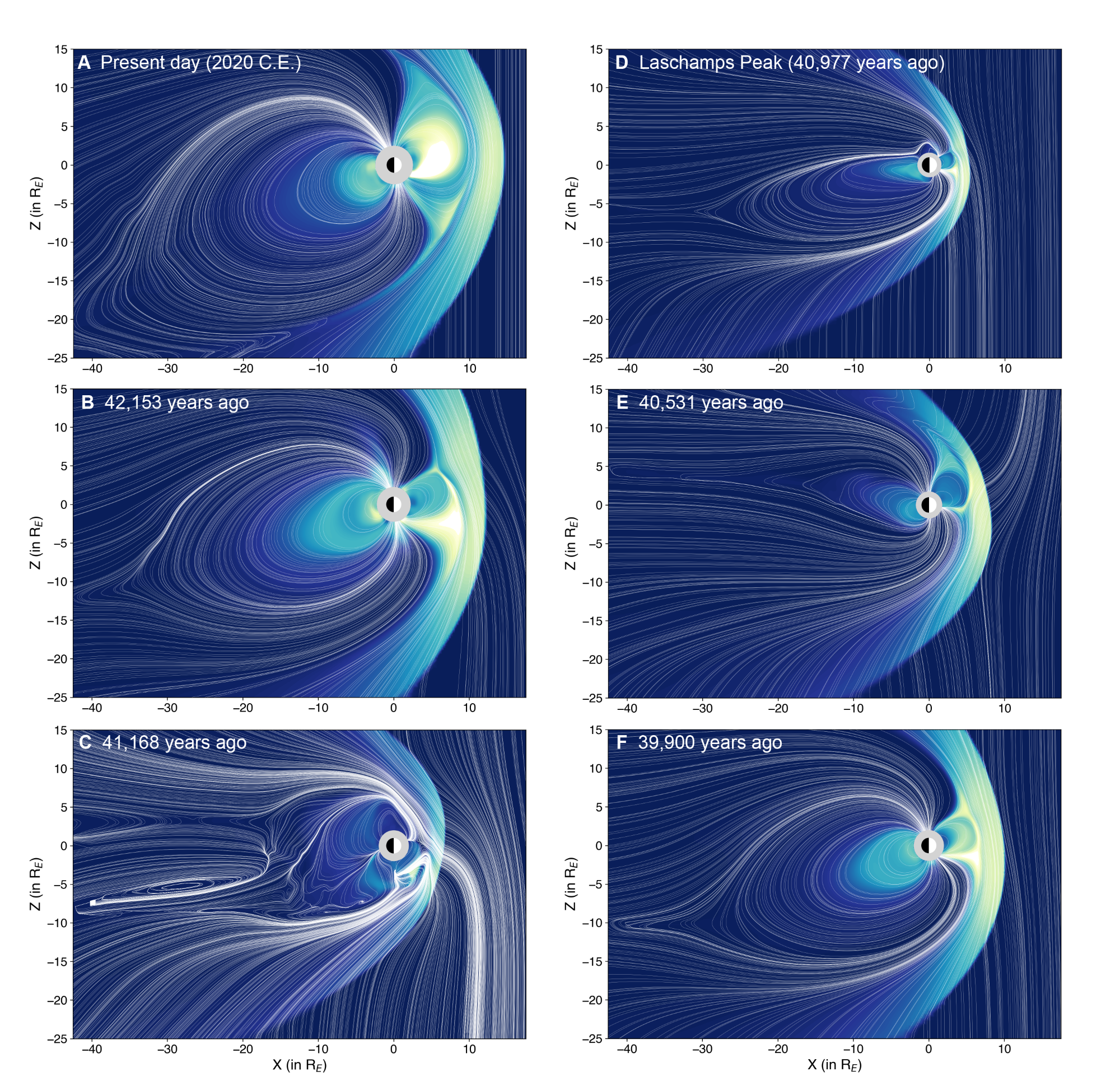
Normally, Earth’s magnetic field, generated by the movement of liquid metal in its core, forms orderly, closed field lines. It extends tens to hundreds of thousands of kilometers into space, deflecting deadly solar particles. From time to time, however, this system breaks down completely.
The Laschamp Event: When the Shield Switched Off
This particular cataclysm became known as the “Laschamp excursion,” named after the lava flows in France where evidence of it was first discovered.
During the reversal, which lasted around 250 years, the field’s strength dropped to a mere 5% of its usual level. It remained in this weakened state for approximately 440 years. Light isotopes of beryllium-10 in ice cores confirm that the flux of cosmic radiation penetrating the atmosphere doubled at the time, damaging the ozone layer.
Researchers suggest that this “radiation blast” may have caused the extinction of Australia’s megafauna. Interestingly, this period also coincides with a surge in some of the earliest cave paintings—perhaps intense radiation simply forced early humans to spend long periods sheltering underground.
Could It Happen Again?
Even after recovering, the field took a long time to return to normal. This raises a natural question: could something similar happen again in the near future?
Right now, Earth is displaying unusual behavior. The magnetic north pole is rapidly drifting from Canada toward Siberia, forcing scientists to regularly update navigation maps. In addition, the South Atlantic is home to the so-called South Atlantic Anomaly—a giant “dent” in the magnetic field whose area expanded between 2014 and 2025 by an amount comparable to half of continental Europe.
Experts offer reassurance: the appearance of such weak regions does not necessarily signal the beginning of a global geomagnetic reversal. Nevertheless, studying extreme events from the past is critically important for forecasting space weather and assessing risks to our technological civilization.
We previously reported on how Earth’s core changed its direction of motion.
Based on material from Science Alert.
