

Engineers have developed a special gun that emits a weak stream of plasma. It is sufficient to clean and disinfect clothing and objects in space without using scarce water.
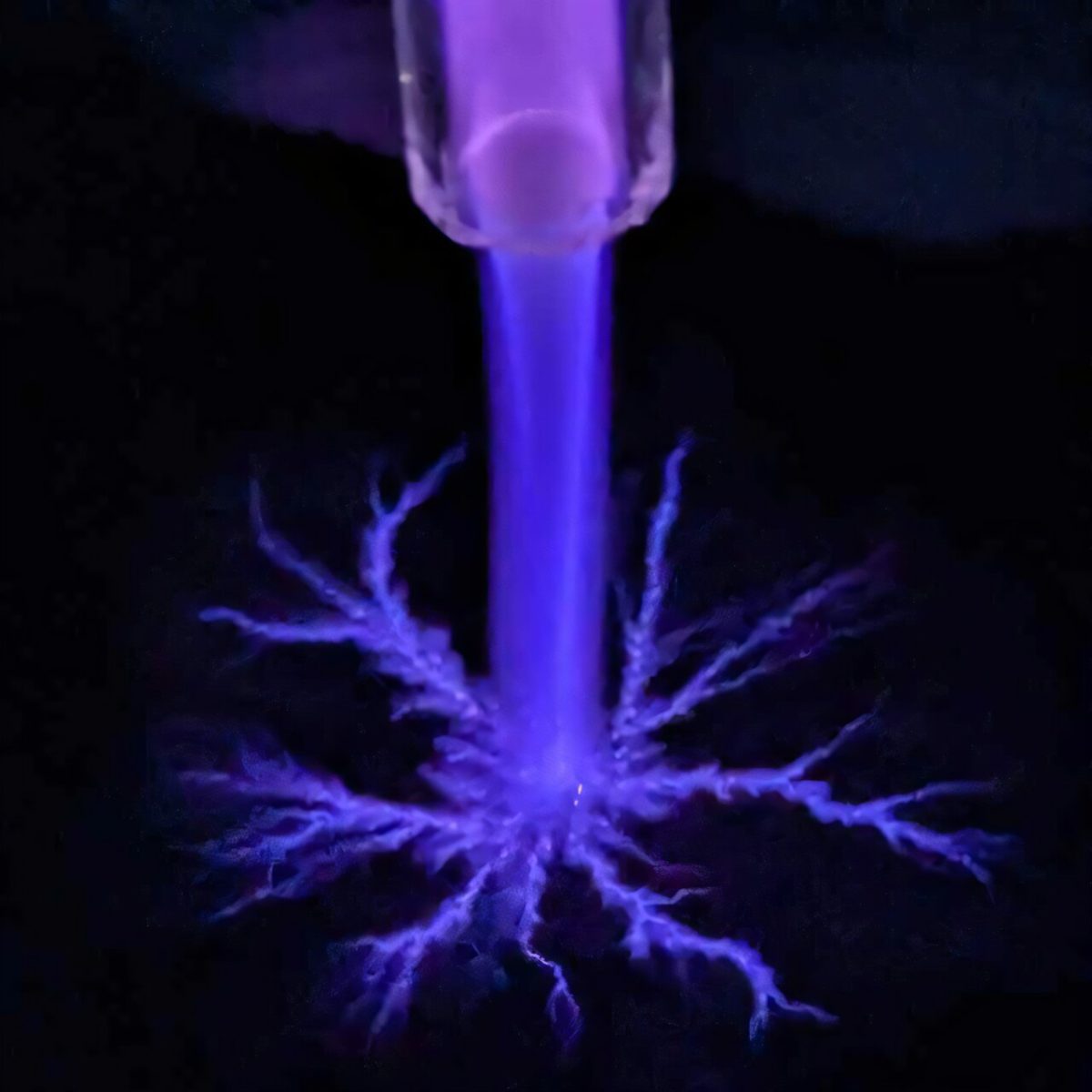
A Plasma Gun for Space
Researchers from the University of Alabama in Huntsville, with the assistance of specialists from NASA’s Marshall Space Flight Center, have developed a system that could help astronauts keep their belongings clean in space. It is essentially a type of plasma gun, phys.org reports.
Keeping clothing clean and safe for astronauts’ health is genuinely difficult in space. Although spacecraft and space stations themselves are very clean and contain neither loose soil nor standing water—the main breeding grounds for dirt and microorganisms—this does not mean that microbes are absent altogether. The human body itself hosts numerous microorganisms, while dead skin particles combined with sweat are among the main sources of dust even in our homes.
The problem is that washing clothes or other items in space is extremely difficult. Every milligram of water has to be carefully accounted for, and in microgravity water tends to gather into large droplets and float away. At the same time, astronauts may remain aboard a station for months or even years. That is why scientists are actively searching for alternative cleaning methods.
Why Plasma?
But why did the researchers choose plasma? After all, plasma is widely known as a high-temperature state of matter. Does that mean they simply want to burn clothing in order to remove dirt?
Not exactly. The device produces only a very small amount of plasma by splitting individual atoms into positively charged ions and negatively charged electrons. There are far too few of them to significantly heat an object when they come into contact with it.
So how does the “plasma gun” actually work? The ions and high-energy electrons generate reactive oxygen species such as O₃ and OH. These compounds are highly reactive toward organic substances. Put simply, they can penetrate bacterial cells and destroy their membranes or break down organic dirt stuck to surfaces.
Overall, the process is most similar to using hydrogen peroxide, with one important difference: reactive oxygen species can be produced precisely where they are needed and directly from the surrounding air. The researchers suggest that the device could be used not only in orbit but also on Earth, including for cleaning and disinfecting furniture.
In addition to their disinfecting effect, reactive oxygen species generated by the plasma gun can stimulate plant growth. For this reason, scientists also see potential future applications for the technology in space agriculture.
For now, however, the technology works only under laboratory conditions, and even its inventors acknowledge that it still has a long way to go before it becomes suitable for practical everyday use.
